A well-placed mirror can change the character of a room before you have moved a single piece of furniture.
It can catch the pale morning light from a window and carry it into a darker corner. It can make a narrow hallway seem more generous, bring a glimpse of the garden indoors or turn an ordinary fireplace into the natural focus of a room.
Mirrors are practical, of course, but their real value in interior design lies in what they allow us to see differently. Used thoughtfully, they become part of the architecture of a home — shaping light, altering our sense of space and creating views where previously there were none.
The secret is not simply to find an empty wall and hang a mirror on it. It is to consider what the mirror will reflect, how it relates to the proportions of the room and what you would like it to achieve.
Here are some of our favourite ways to decorate with mirrors and make more of the light, space and character already present in your home.
Use Mirrors to Bring More Light into a Room
There are rooms in almost every home that seem reluctant to embrace the daylight. Perhaps they face north, have a small window or sit in the middle of the house where sunshine rarely reaches.
A mirror can help.
Positioned opposite or at an angle to a window, a generously sized mirror catches natural light and reflects it back into the room. The effect can be particularly lovely when the mirror also captures a patch of blue sky, the movement of trees or another attractive outdoor view.
There is no need to place it directly opposite the window. In fact, experimenting with the angle can produce a softer result. Watch how the light travels through the room at different times of day and position your mirror where it can make the most of it.
Lamps and wall lights can work in much the same way after dusk. A mirror placed near a table lamp or wall light gently multiplies its glow, creating warmth without making the room excessively bright.
The aim is not simply to create more light, but to make better use of the light you already have.
Make a Hallway Feel Lighter and More Generous
Hallways are hardworking spaces. They greet us when we come home, gather shoes and coats, connect one room with another and yet are often among the smallest and darkest areas of the house.
This makes them particularly well suited to mirrors.
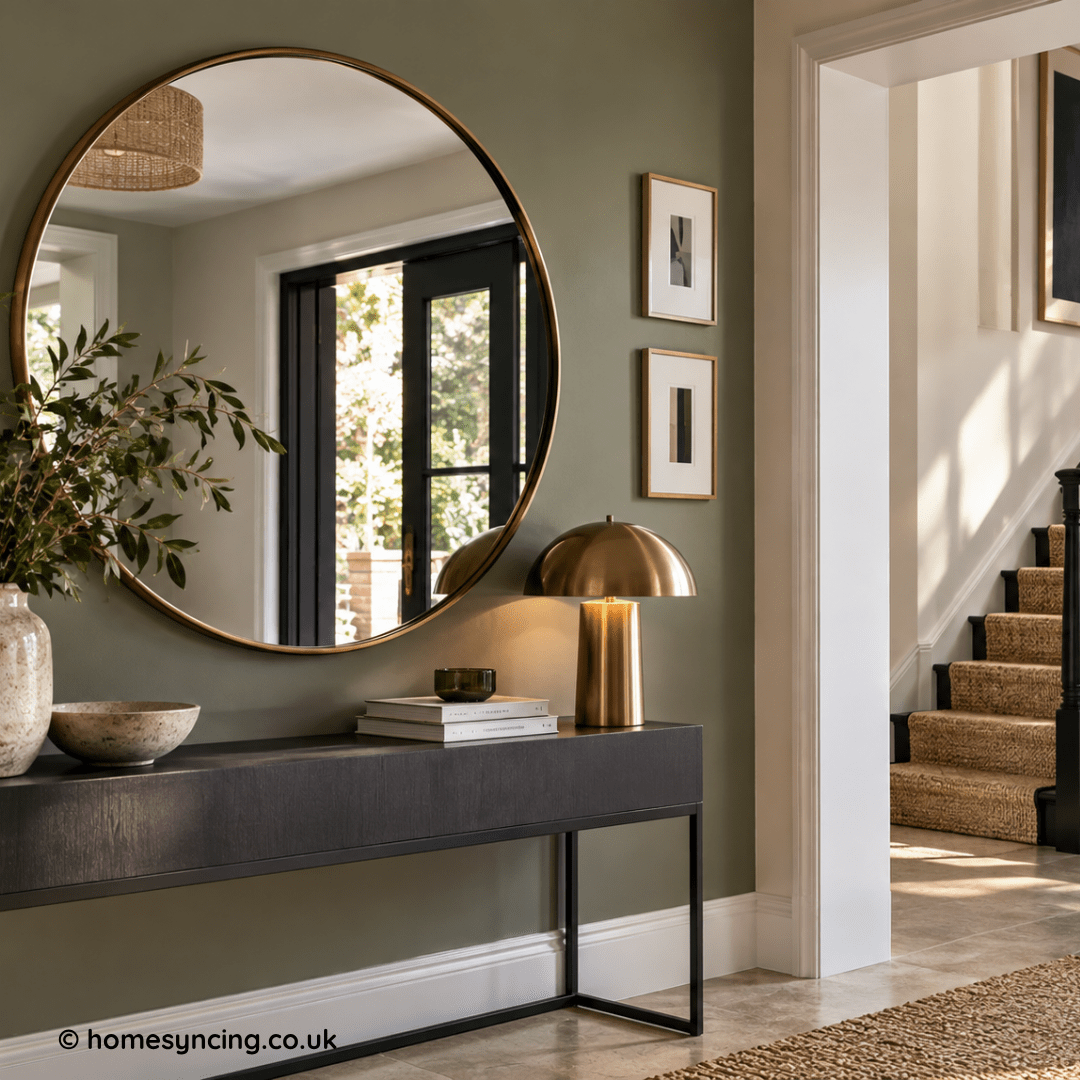
A large round mirror above a slim console table can soften the straight lines of a narrow hallway, while a tall mirror can emphasise ceiling height. In a particularly tight space, a broad horizontal mirror can visually widen the wall.
Before hanging one, stand where you will normally see it and consider the reflection.
A mirror facing an attractive doorway, piece of artwork or view into another room creates an additional layer of interest. One reflecting a crowded coat rack is rather less successful.
This small consideration — designing the reflection as carefully as the wall itself — is one of the simplest ways to make mirrors look considered rather than merely convenient.
Create a View Where There Isn’t One
One of the cleverest uses of mirrors is to create the impression of another opening in the room.
A large mirror positioned to reflect a garden can almost become a second window. Greenery, changing skies and seasonal colour appear within the room, and the boundary between indoors and out feels a little less definite.
This can work beautifully in dining rooms and living rooms where the real window sits to one side rather than directly in front of you.
Window-style mirrors can achieve a similar effect in rooms without an obvious outlook, although restraint is worthwhile. Choose a simple design whose proportions suit the architecture of your home rather than something overly decorative.
Done well, the eye notices the apparent view before it notices the trick.
Give a Small Room a Greater Sense of Space
Mirrors cannot make a room physically larger, but they can alter how we perceive its boundaries.
A large mirror reflects not only light but also floor, furniture and architectural details, effectively giving the eye somewhere further to travel. This can be particularly useful in a small living room, compact bedroom, entrance hall or dining area.
Scale matters here.
It can be tempting to choose a small mirror for a small room, but a larger design will often have considerably more impact. One substantial mirror can make a wall seem to recede, whereas several little ones may make the same space feel busier.
A tall mirror can also draw attention upwards, making the ceiling appear higher and bringing a welcome sense of vertical space.
Make More of a Fireplace
There is a reason mirrors have been hung above fireplaces for generations.
The fireplace naturally anchors a room, and a mirror above it strengthens that sense of symmetry while introducing another source of reflected light.
The proportions are important. A mirror that is too small can appear rather lost above a substantial mantelpiece, while one that overwhelms the chimney breast can upset the balance of the room.
Look for a size that relates comfortably to the width of the fireplace below.
In a period interior, an aged or gently decorative frame can sit happily alongside traditional architectural details. In a more contemporary room, a simple round, arched or slim-framed mirror provides contrast without competing with the fireplace itself.
And once again, consider the reflection. A mirror above a mantel often sits high enough to reflect a ceiling or bare wall. If possible, position it so that it catches a pendant light, artwork, window or some other interesting element of the room.
Bring Forgotten Alcoves to Life
Alcoves have a habit of becoming repositories for things we do not quite know where else to put.
Mirrors offer another possibility.
A mirror fitted to the back of an alcove creates depth and allows objects displayed in front of it to be seen from several angles. Glassware, ceramics and sculptural objects can look particularly effective, especially when softly illuminated.
In traditional rooms, antiqued or lightly foxed mirror glass can produce a gentler reflection than pristine modern glass. It gives depth without turning the alcove into something resembling a bathroom cabinet.
Pairing the mirror with discreet wall lighting or a small lamp adds another layer after dark.
It is a lovely way to turn an awkward architectural recess into a deliberate feature.
Let a Floor-Standing Mirror Become Part of the Furniture
Not every mirror needs to be hung.
A large floor-standing mirror can have the presence of a piece of furniture, particularly in a bedroom, dressing room or generous landing.
Leaning a substantial mirror against a wall gives a room a more relaxed quality than fixing it formally above furniture. It also allows the mirror to capture more of the room, creating a greater feeling of depth.
The frame can introduce another useful material into the scheme — timber for warmth, aged brass for a subtle gleam or a simple painted finish that relates to the walls.
There is a practical consideration, however. Large leaning mirrors should always be appropriately secured, particularly in homes with children or pets. The relaxed appearance need not mean the mirror itself is unsecured.
Use Shape to Change the Rhythm of a Room
Look around most homes and you will find rectangles everywhere: doors, windows, cupboards, pictures, tables and television screens.
A mirror offers an easy opportunity to introduce another shape.
Round and oval mirrors soften rooms dominated by straight architectural lines. Arched mirrors can introduce height without feeling severe, while irregular and more sculptural designs can act almost like artwork.
The key is knowing when the room already has enough going on.
If you have patterned wallpaper, colourful artwork and strongly shaped furniture, a simple mirror may provide the quieter note the scheme needs. In a restrained interior, however, an unusual shape can provide just enough character to bring the room to life.
A statement mirror does not necessarily need an elaborate frame. Sometimes shape and scale are statement enough.
Choose a Frame That Belongs in the Room
A mirror frame is another opportunity to introduce colour, texture and material.
Warm timber can make a contemporary room feel more relaxed. Dark metal provides definition against pale walls. Brass catches changing light beautifully, while a painted frame can quietly echo another colour elsewhere in the room.
There is no rule that says everything must match.
In fact, rooms often become more interesting when finishes are related rather than identical. An aged brass mirror does not require every lamp, handle and candlestick to be aged brass too.
Think of the frame as you would the frame around a painting: it should complement what surrounds it without becoming a distraction.
Use Mirrors in Groups — Sparingly
A collection of smaller mirrors can work wonderfully on a staircase, landing or generous wall, particularly if the pieces have been collected over time.
The most convincing arrangements tend to share something in common — perhaps similar frames, related shapes or a consistent period — without being completely identical.
Before reaching for the hammer, lay the arrangement out on the floor.
Start with the largest mirror and allow the smaller pieces to develop around it. Keep enough space between them for each shape to be appreciated.
There is a fine line between a collection and visual clutter. If the wall already contains plenty of architectural detail, one beautifully proportioned mirror may ultimately say more.
Think About What the Mirror Sees
This is perhaps the most important rule of all.
Every mirror creates another picture within the room.
Before deciding where it belongs, stand in front of the proposed position and look behind you. That is approximately what the mirror is going to bring into view.
A reflection of a window, artwork, fireplace, handsome piece of furniture or doorway into another attractive room adds something. A reflection of a television, open bathroom door or pile of paperwork probably does not.
This is also why moving a mirror by only a few centimetres can sometimes make an unexpectedly large difference.
Interior designers do not simply decorate the surface on which a mirror hangs. They design the view within it.
Living with Mirrors
The most successful interiors rarely reveal all their tricks immediately.
A mirror might first be noticed for its beautiful frame, and only later for the way it catches the last of the afternoon sun. Another might appear to be simply part of a hallway arrangement until you realise that it is reflecting the garden at the other end of the house.
That is where mirrors become particularly rewarding.
They respond to a home as it changes throughout the day. Morning light becomes evening lamplight; an open door becomes part of the view; bare winter branches give way to summer greenery.
So when choosing where to place mirrors in your home, begin not with the mirror but with the room.
Look for the light worth capturing, the view worth repeating and the corner that could benefit from a little more depth. Consider proportion and shape, but leave room for instinct too.
A thoughtfully placed mirror does more than show us our reflection.
It allows us to see the home itself in an entirely new light.
Our Mirrors can be found here.
Further reading: How to choose the perfect mirror for your home