Interior trends arrive and disappear with remarkable speed.
One year, homes are filled with cool grey tones and polished minimalism. The next, bold patterns and dramatic colours take centre stage. Yet while fashions shift endlessly, certain interiors continue to feel beautiful decade after decade. They age gently rather than becoming outdated. They settle into a home naturally, gathering warmth and character over time.
Perhaps that is because truly timeless interiors are not driven by trends at all.
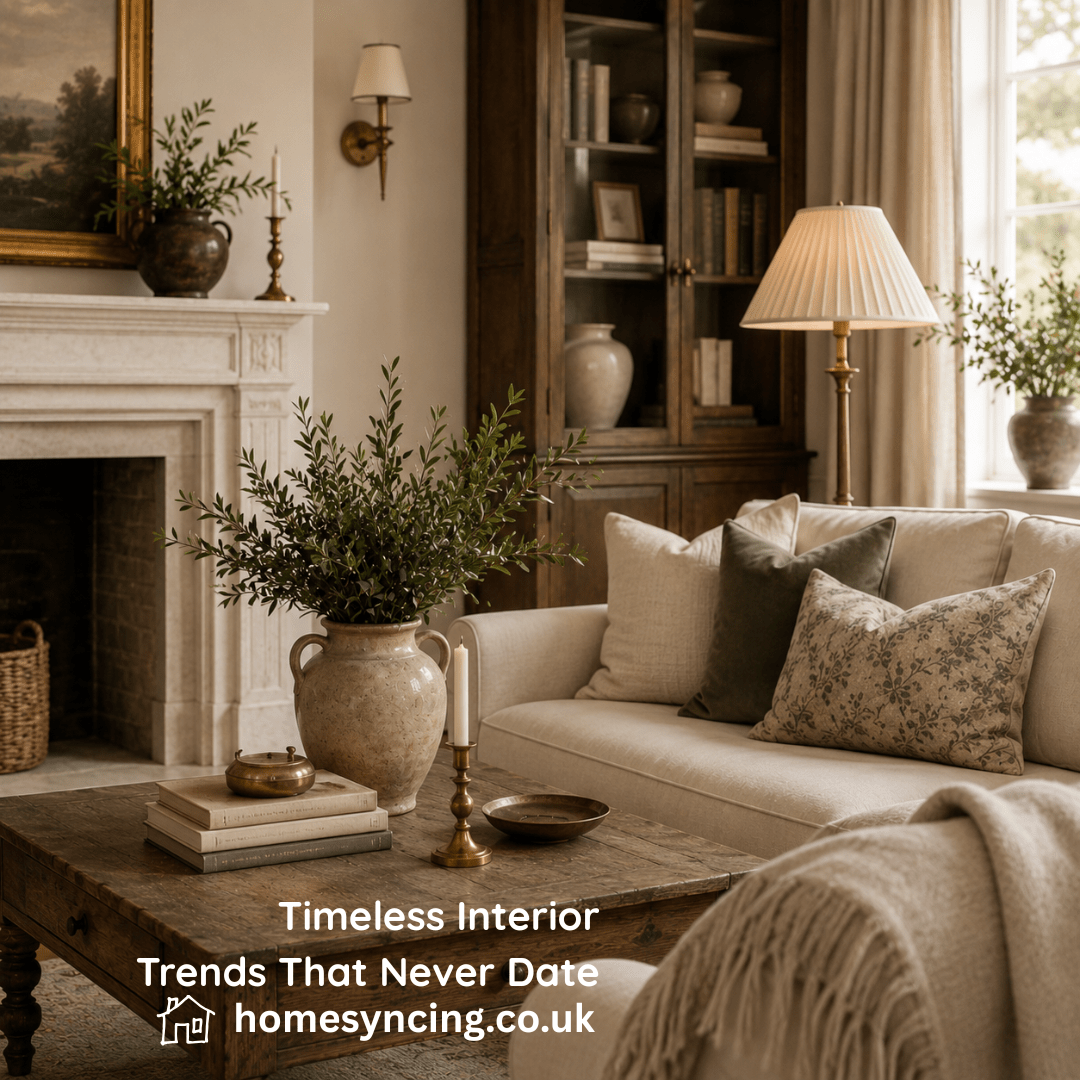
Instead, they are shaped by materials, craftsmanship and atmosphere. They draw quietly from history, nature and everyday comfort rather than passing fashions. Across country cottages, Georgian townhouses and historic homes throughout Britain, many of the same details continue to appear generation after generation — natural wood worn smooth with use, linen curtains lifting softly at an open window, brass fittings dulled beautifully with age.
These are interiors designed not simply to impress, but to endure.
Natural wood sits at the heart of many timeless homes because it carries an honesty few materials can replicate. Oak tables marked gently by years of family meals. Pine dressers stacked with everyday crockery. Walnut desks positioned beside windows for morning light. Wood softens a room instinctively, bringing warmth and texture that never feels forced.
Unlike synthetic finishes that often date quickly, natural timber changes beautifully over time. Scratches, faded patches and softened edges become part of the story of a home rather than flaws to conceal. Historic houses understand this well. Floors creak gently beneath footsteps. Banisters shine where hands have passed over them for generations. Wear becomes character.
Linen has endured for similar reasons.
There is something wonderfully relaxed about linen interiors. Curtains never hang too stiffly. Bedding gathers softly in natural folds. Tablecloths wrinkle gently after long lunches shared with friends. Linen allows rooms to feel elegant without becoming formal.
Its appeal lies partly in imperfection. The texture catches light beautifully and creates movement within a room, softening harder surfaces like stone, wood and metal. In bedrooms especially, linen bedding brings an effortless calm that feels both luxurious and deeply comforting.
Soft neutral colours remain equally enduring because they create space for light and atmosphere to shift throughout the day.
Warm whites, chalky creams, stone shades and muted earth tones provide a quiet backdrop that rarely overwhelms a room. Rather than dominating attention, these colours allow architectural details, furniture and natural textures to take centre stage.
Historic interiors often rely on this balance instinctively. Gentle paint colours reflect changing daylight rather than fighting against it. Rooms feel calm during bright summer mornings and cocooning during darker winter evenings.
Importantly, timeless neutrals are rarely stark. There is warmth within them — hints of clay, oat, parchment and weathered stone. They echo landscapes beyond the window and connect interiors subtly to the natural world outside.
Antique brass carries a similar sense of quiet permanence.
Unlike highly polished chrome or trend-led metallic finishes, brass ages gracefully. Door handles soften with touch. Lamps gather warmth through patina. Kitchen fittings develop richness over years of use. There is something deeply reassuring about materials that improve rather than deteriorate with time.
Brass also works beautifully because it bridges styles so effortlessly. It sits comfortably beside traditional furniture yet feels equally at home within more contemporary interiors. This adaptability is often what makes a design truly timeless — the ability to evolve gently rather than remain fixed to one particular era.
Heritage-inspired interiors continue to resonate because they prioritise comfort, craftsmanship and longevity over novelty.
This does not necessarily mean filling homes with antiques or recreating historic rooms exactly as they once appeared. Instead, it is about borrowing the principles that made those interiors feel enduring in the first place.
Layered textures. Thoughtful furniture placement. Natural materials. Rooms designed for conversation, reading, gathering and rest.
Many older homes were arranged around daily rituals rather than visual perfection alone. Fireside chairs angled towards warmth and conversation. Long farmhouse tables positioned for family meals. Window seats built to capture changing light across gardens and countryside.
These details continue to appeal because they support how people genuinely wish to live.
Timeless interiors also resist excess.
There is breathing space within them. Shelves are curated rather than crowded. Furniture serves a purpose beyond decoration. Rooms unfold gradually instead of revealing everything at once. This restraint creates calm, allowing homes to feel welcoming rather than overwhelming.
Perhaps this growing appreciation for timeless interiors reflects something deeper within modern life itself.
In a world increasingly fast-paced and disposable, people are drawn towards homes that feel grounding and lasting. Interiors that age well offer reassurance. They encourage slower, more thoughtful living and remind us that beauty does not need constant reinvention.
And ultimately, that may be why certain styles never truly date.
Because they are rooted not in fashion, but in feeling.
Warmth. Comfort. Simplicity. Craftsmanship. Light.
The very things that have always made a house feel like home.
Further Reading: Affordable Decorating Ideas That Will Transform Your Home, Sustainable Chic: A Beginner’s Guide to Circular Design, Small Room, Big Impact
Daily Inspiration: Follow Us on Instagram, BlueSky, Threads , Pinterest, Twitter, TikTok