There is something deeply comforting about walking into a bedroom that instantly encourages you to slow down.
The curtains are half drawn against the evening sky. Lamps glow softly beside the bed. Fresh linen carries the faint scent of lavender. Cushions sit slightly imperfectly against crumpled bedding, inviting rest rather than display. The room feels calm, unhurried and restorative — less like somewhere designed merely for sleeping and more like a quiet retreat from the noise of everyday life.
Perhaps that is why boutique hotels continue to hold such appeal. Beyond beautiful interiors, they offer something people increasingly crave: atmosphere. A sense of pause. Spaces designed carefully enough to make us feel cared for the moment we arrive.
Yet creating this feeling at home rarely depends upon extravagance. The most restful bedrooms are often the simplest. Rooms where colour, texture, lighting and furniture work gently together to create ease.
Historically, bedrooms were not always designed with comfort as their central purpose. In many older homes, bedrooms were practical, often cold spaces, furnished modestly and used largely for necessity rather than retreat. Today, however, our understanding of rest has shifted entirely.
Bedrooms have become sanctuaries.
In a world filled with constant notifications, harsh lighting and endless distraction, the bedroom offers one of the few opportunities to step away from stimulation and return to quiet. The way a room feels emotionally has become just as important as how it functions physically.
And often, the transformation begins with the bed itself.
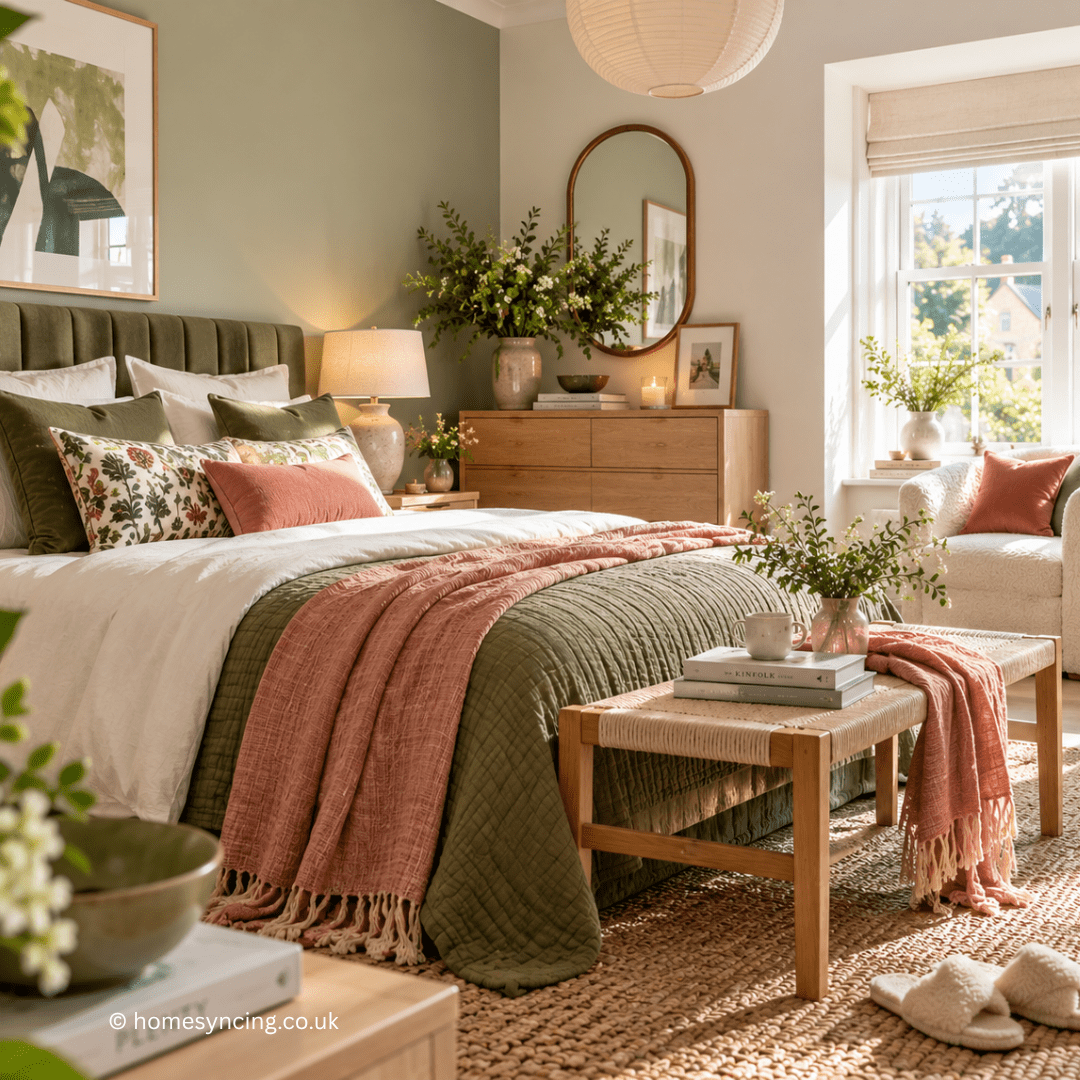
There is a noticeable difference between a bed made purely for appearance and one layered for genuine comfort. Boutique hotels understand this instinctively. Bedding is rarely flat or overly structured. Instead, layers create softness and warmth. Crisp cotton sheets beneath textured quilts. Linen pillowcases alongside heavier cushions. A wool throw folded loosely across the end of the bed.
These layers invite rest not simply because they look beautiful, but because they appeal to the senses. Texture creates comfort visually long before we climb beneath the covers.
Natural fabrics play an important role in this atmosphere. Linen softens over time and carries an effortless, relaxed quality. Cotton remains cool and breathable. Wool adds warmth through colder months without feeling overly heavy. Together, these materials create a bedroom that feels lived in rather than staged.
Colour shapes the mood just as deeply.
The most restful bedrooms rarely rely on bright contrast or strong visual noise. Instead, they borrow gently from nature. Soft stone shades, muted greens, warm whites, dusty blues and earthy neutrals all create a sense of stillness.
There is something undeniably calming about colours that echo landscapes beyond the window. Sage greens reminiscent of gardens after rain. Sand tones that carry warmth even on grey mornings. Deep blue-greys that feel cocooning as daylight fades.
Importantly, restful colour palettes do not need to feel cold or minimalist. Warmth matters enormously in a bedroom. A room should feel enveloping, particularly during long winter evenings when comfort becomes essential.
Lighting perhaps changes a bedroom more dramatically than any other single element.
Overhead lights alone often leave bedrooms feeling functional rather than restorative. Softer layers of lighting create depth and gentleness instead. Bedside lamps cast pools of warm light for reading. Wall lights soften corners. Candles flicker quietly across dressing tables and shelves.
The most inviting bedrooms allow darkness to arrive gradually.
Boutique hotels often use lighting to create emotional calm rather than brightness, and the same principle works beautifully at home. Warm bulbs, dimmable lamps and shaded lighting immediately make a room feel more restful.
Furniture choices also shape how a bedroom functions emotionally.
Crowded rooms rarely feel peaceful. Bedrooms benefit from thoughtful restraint — furniture chosen carefully for comfort, proportion and purpose rather than excess. A bedside table with space for books and tea. A comfortable chair in the corner for quiet mornings. Storage that conceals rather than overwhelms.
The most relaxing bedrooms often leave a little empty space visible. Floorboards uncovered by unnecessary furniture. Shelves with breathing room between objects. Surfaces that feel calm rather than crowded.
This sense of space allows the mind to settle too.
Scent quietly completes the atmosphere in ways people often underestimate.
Lavender resting beside the bed. Eucalyptus hanging gently from a wardrobe handle. Fresh linen dried outdoors carrying traces of summer air. These subtle details create familiarity and comfort that linger long after the lights are switched off.
Even sound influences how a bedroom feels. Thick curtains soften noise from outside. Rugs absorb echoes. Upholstered headboards and layered textiles help create a quieter, gentler room overall.
And perhaps that is the true secret behind creating a restful bedroom retreat.
It is not about recreating luxury for appearance alone.
It is about designing a room that allows rest to happen more naturally. A room that softens the edges of busy days. Somewhere that welcomes you at the end of winter evenings, rainy afternoons and exhausting weeks with warmth and quiet reassurance.
Because the best bedrooms are not simply places where we sleep.
They are places where we recover.
Further Reading: Affordable Decorating Ideas That Will Transform Your Home, Sustainable Chic: A Beginner’s Guide to Circular Design, Small Room, Big Impact
Daily Inspiration: Follow Us on Instagram, BlueSky, Threads , Pinterest, Twitter, TikTok