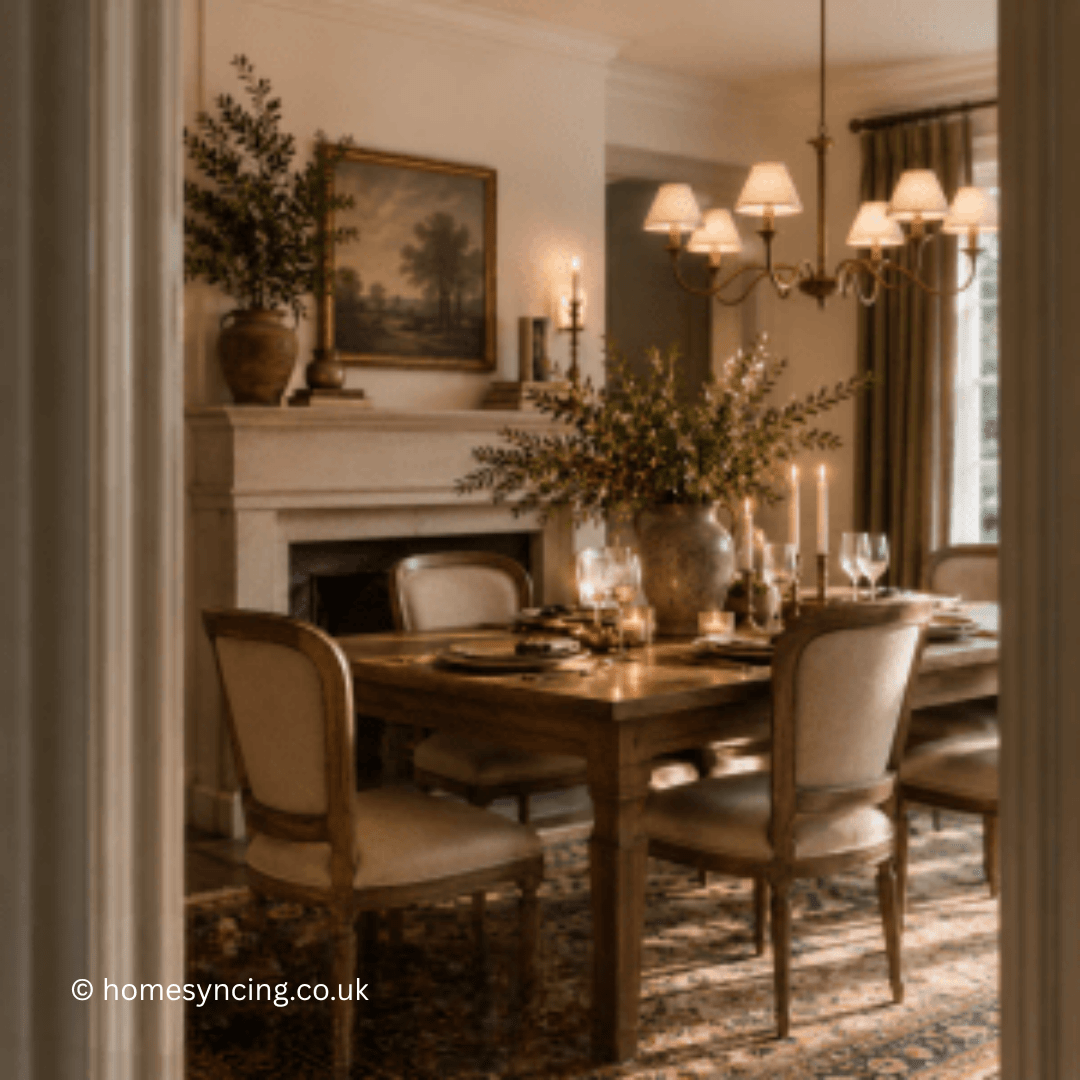
There was a time when the dining room quietly disappeared from many homes.
Tables were pushed into kitchen corners. Meals were balanced on laps in front of televisions. Busy schedules and hurried evenings slowly transformed dining spaces into somewhere occasional rather than essential. Formal dining rooms, in particular, were often viewed as unnecessary luxuries — rooms reserved for Christmas lunch or untouched beneath carefully arranged chandeliers.
And yet, something has shifted once again.
Across homes both large and small, people are rediscovering the simple importance of gathering around a table. Not for perfection or ceremony, but for connection. For conversation stretching long after plates are cleared. For slowing the rhythm of everyday life, even briefly, and returning to rituals that feel grounding and human.
The dining room, in many ways, is returning not as a formal showpiece, but as the emotional centre of the home.
Historically, dining spaces have always carried significance far beyond food itself. In cottages, farmhouses and historic homes across Britain, tables were places where life unfolded collectively. Bread was sliced beside candlelight. Letters were written after supper. Children learnt, families argued, guests lingered and stories passed between generations.
The table anchored the household.
Even today, some of the most memorable moments in life still happen gathered around one. Sunday roasts shared slowly while rain taps against windows. Tea poured for visiting friends. Birthday candles glowing softly in dim evening light. Quiet weekday meals after difficult days.
A dining space offers something modern life often lacks — uninterrupted presence.
Perhaps that is why people are increasingly drawn towards creating dining rooms that feel welcoming, relaxed and deeply lived in rather than overly formal. The modern dining room is no longer about preserving untouched perfection. Instead, it is about atmosphere.
And atmosphere begins with the table itself.
Natural wood continues to hold enduring appeal because it immediately introduces warmth and familiarity. Oak, pine and walnut dining tables soften beautifully with time, collecting marks and memories rather than losing value through wear. Scratches from family dinners and faded patches from sunlight become part of the room’s story.
Round tables create intimacy in smaller spaces, encouraging conversation to flow more naturally. Long rectangular farmhouse tables suit larger gatherings beautifully, drawing people together while allowing the room to feel generous and sociable.
Importantly, the dining room no longer needs to exist as a separate formal room to feel special. In many homes, even the smallest corner can become somewhere inviting with thoughtful design.
A simple table beside a window. A bench softened with cushions. A pendant light hanging low overhead. Shelves lined with ceramics and glassware gathered over time rather than purchased all at once. These details transform everyday dining into something slower and more intentional.
Lighting changes dining spaces dramatically.
Harsh ceiling lights rarely encourage lingering. Softer lighting creates intimacy instead. Pendant lamps positioned low above a table help define the dining area even within open-plan homes, while candles and table lamps soften the atmosphere further as evening falls.
Some of the most welcoming dining spaces feel almost cocooning at night — pools of warm light surrounded by darker corners and gentle shadows. Restaurants have long understood this balance, but increasingly people are bringing the same layered warmth into their own homes.
Texture also plays an important role in making dining rooms feel comfortable rather than staged.
Linen tablecloths draped casually across wooden tables. Woven placemats. Upholstered chairs softened with use. Fresh flowers gathered loosely from the garden. These layers create ease and warmth without demanding perfection.
There is also a growing appreciation for dining spaces that evolve naturally throughout the day.
Morning coffee beside newspapers and sunlight. Afternoon homework spread across the table. Evening meals shared beneath soft lighting. The modern dining room is expected to work harder than before — not only for entertaining guests, but for supporting everyday life itself.
Storage has become part of this evolution too. Dressers, sideboards and open shelving help dining areas remain practical while adding character. Glassware catches the light beautifully behind cabinet doors. Stacks of plates and bowls create a sense of abundance and hospitality. Vintage finds mixed with modern pieces prevent rooms from feeling overly styled.
And perhaps that is the real charm of today’s dining rooms.
They are becoming less formal and more personal.
Less about presentation and more about belonging.
Because in the end, people rarely remember perfectly arranged interiors. They remember the feeling of warmth around a table. The sound of laughter carrying late into the evening. The comfort of shared meals after long days.
The dining room’s return is not truly about furniture or trends at all.
It is about rediscovering the quiet importance of gathering together.
Something humans have always needed, and perhaps always will.
Take a Look at our Range of Dining Tables 🥄
Further Reading: Affordable Decorating Ideas That Will Transform Your Home, Sustainable Chic: A Beginner’s Guide to Circular Design, Small Room, Big Impact
Daily Inspiration: Follow Us on Instagram, BlueSky, Threads , Pinterest, Twitter, TikTok