How to Choose Garden Furniture

A garden is rarely used in quite the way we imagine when looking at an empty patio.

Once summer arrives, chairs migrate towards the last patch of evening sunshine. Children appear with games. Lunch stretches into the afternoon. Extra seats are pulled around the table and, as the temperature falls, somebody goes indoors in search of blankets.

Good garden furniture should accommodate all of this without making the garden feel as though it has been furnished like another room.

The best pieces belong comfortably in their surroundings. Timber gradually weathers, woven furniture softens hard paving and a well-positioned bench gives you a reason to sit somewhere you might otherwise have hurried past.

Whether you are furnishing a small courtyard, a family garden or a generous terrace, choosing the right garden furniture begins not with what is fashionable, but with how you want to use the space.

Begin with How You Use Your Garden

Before deciding between teak, aluminium or rattan garden furniture, think about what actually happens outside your home.

Do you regularly eat outdoors? Do you need somewhere for a family of four or a table capable of accommodating ten people at weekends? Is the garden primarily somewhere to relax with a book, or does it become the centre of family life whenever the weather permits?

A large dining set makes sense for enthusiastic hosts but can overwhelm a garden where meals are rarely eaten outside. Equally, an attractive pair of lounge chairs may prove frustrating if what you really need is somewhere for everyone to sit around supper.

Write down the activities that matter most.

For a family garden these might include outdoor dining, relaxed seating, children’s play, entertaining friends and somewhere quiet to sit with a cup of tea.

Once those priorities are clear, choosing the furniture becomes much easier.

Measure Before You Buy Garden Furniture

Garden furniture often looks deceptively small in a showroom or photograph.

A six-seater dining table can occupy a substantial area once the chairs are pulled out, while a deep outdoor sofa may extend much further into a terrace than its dimensions initially suggest.

Measure the available space carefully before buying anything.

Record the width and length of your patio, terrace or deck, but also note doors, steps, planting beds, paths, drains and other permanent features.

Then mark out the proposed furniture.

Garden canes, chalk or masking tape can help you visualise a table or sofa at full scale. Cardboard boxes are useful for understanding the bulk of larger pieces.

Don’t simply ask whether the furniture fits. Consider whether people can use it comfortably.

As a practical starting point, allow roughly 75–90cm behind dining chairs where possible so they can be pulled out without immediately meeting a wall, planter or another piece of furniture. Where the space also forms an important route through the garden, more room may be needed.

The same principle applies to outdoor sofas and coffee tables. There should be enough space to move around them without having to squeeze through narrow gaps.

Let the Garden Decide Where the Furniture Goes

One of the most useful things you can do before furnishing a garden is simply observe it.

Notice where the morning sun falls and which areas remain shaded in the afternoon. Look for the spot that catches the last light of the evening and pay attention to the prevailing wind.

A terrace immediately outside the kitchen may be the obvious place for a dining table because food and crockery can be carried outside easily.

But the best place for a bench may be entirely different.

Perhaps there is a sheltered corner overlooking a flower border, a sunny wall that remains warm into the evening or a view back towards the house that you rarely stop to appreciate.

Garden furniture can encourage you to use parts of the garden that would otherwise be passed by.

In that sense, choosing where to sit is as important as choosing what to sit on.

Choosing an Outdoor Dining Set

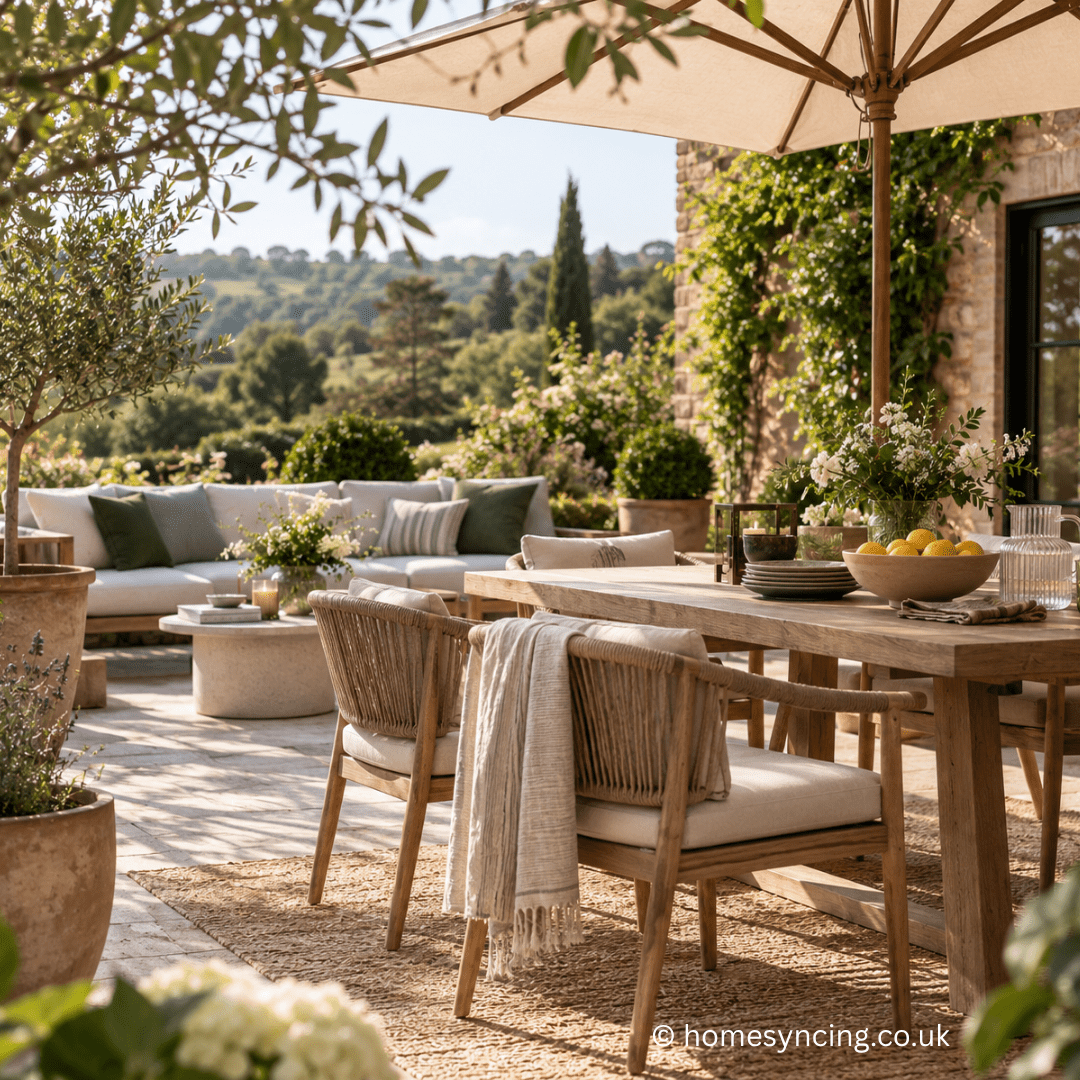
For many households, an outdoor dining table and chairs form the heart of the garden during warmer months.

Think carefully about capacity.

If four people use the table every day but eight regularly gather at weekends, an extendable garden table can be more practical than permanently filling the terrace with an oversized one.

Round tables are sociable and can work particularly well in square spaces. Rectangular tables generally make efficient use of long patios and are easier to position against the lines of a house.

The chairs matter just as much.

Armchairs are comfortable but require more room. Armless dining chairs can be positioned closer together, while benches provide flexible seating for children and unexpected guests.

If you intend to spend long evenings at the table, comfort is worth prioritising over appearance alone.

Creating a Garden Lounge Area

An outdoor sofa can change the way a garden is used.

Rather than sitting formally around a dining table, a garden lounge set creates somewhere for reading, talking and lingering outdoors after a meal.

Modular garden furniture is particularly useful for families because individual sections can be rearranged as requirements change.

A corner configuration might suit everyday life, while separate chairs and sofa sections can be moved into a more conversational arrangement when friends visit.

Consider the depth of the seats before buying. Some garden sofas are designed for upright conversation; others are deep enough for lounging.

Neither is necessarily better – it depends on how you prefer to sit.

And remember the cushions.

A beautifully upholstered outdoor sofa becomes rather less convenient if its cushions require an elaborate journey through the house every time rain threatens.

Don’t Overlook Garden Benches

There is something particularly appealing about a garden bench.

Unlike a full furniture set, it doesn’t demand an entire entertaining area. A bench can sit quietly beneath a tree, beside a path or against a sunny wall and gradually become part of the garden.

Position it somewhere with a reason to stop.

That might be opposite a favourite border, beneath a climbing rose or in a place that catches the evening sun.

Timber benches weather particularly gracefully and can look better once the garden has begun growing around them.

Small stools and occasional tables can also be useful. They are easy to move and can provide extra seating or somewhere to put a drink without cluttering the garden with permanent furniture.

Which Garden Furniture Material Is Best?

The best material for garden furniture depends on appearance, maintenance, weight, storage and how exposed the garden is.

No material is entirely maintenance-free, so it is worth understanding what you are buying.

Teak and Hardwood Garden Furniture

Timber has an obvious affinity with a garden.

Good-quality teak is particularly popular because its natural oils make it durable outdoors. Left untreated, teak gradually develops a soft silver-grey surface.

Some people love this weathered appearance; others prefer the warmer colour of newer timber and choose to maintain it accordingly.

Whatever your preference, follow the manufacturer’s care instructions rather than automatically applying oils or treatments. Different products and finishes require different maintenance.

Other hardwoods can also perform well outdoors, although durability varies considerably between species.

When buying new timber garden furniture, look for credible certification demonstrating that the wood has come from responsibly managed sources, such as FSC certification where appropriate.

Aluminium Garden Furniture

Aluminium works particularly well where furniture needs to be moved regularly.

It is relatively lightweight and does not rust in the same way as iron or ordinary steel, making it a practical choice for contemporary outdoor furniture.

Powder-coated aluminium is available in everything from muted greens and warm neutrals to dark charcoal finishes.

Check the quality of the coating and construction. Scratches and damaged finishes can shorten the life of poorly made pieces, while very lightweight furniture may be less suitable for exposed or windy gardens.

Rattan and Woven Garden Furniture

The appearance of woven furniture suits gardens particularly well because it introduces texture without feeling heavy.

Much of the furniture sold as rattan garden furniture for outdoor use is actually made from synthetic woven material designed to withstand the weather better than natural rattan.

Natural rattan is generally better suited to interiors, conservatories and well-protected spaces unless specifically designed and treated for outdoor conditions.

If choosing synthetic woven furniture, inspect the frame beneath it as well as the weave itself. A good-quality frame and UV-resistant material will usually prove a better investment than a cheaper set that becomes brittle or faded quickly.

Steel and Iron Garden Furniture

Metal furniture can bring wonderful structure to a garden.

Traditional painted ironwork suits cottage gardens and older properties particularly well, while slender steel designs can feel much more contemporary.

The disadvantage is weight and, depending on the metal and finish, the possibility of corrosion.

Look for appropriate protective finishes and deal with chips before rust has an opportunity to spread.

The weight can also be an advantage in an exposed garden where lighter furniture is easily moved by strong winds.

Plastic and Recycled Garden Furniture

Plastic garden furniture has changed considerably.

Contemporary moulded designs can be attractive, practical and easy to clean, while furniture made partly or wholly from recycled plastics provides another option for outdoor spaces.

Quality varies.

Look beyond the initial appearance and consider UV resistance, repairability and how the furniture can eventually be recycled or disposed of.

Buying something durable enough to use for many years is generally preferable to replacing inexpensive furniture every few seasons.

Think About British Weather

Few gardens in Britain enjoy predictable weather.

Furniture may experience strong sunshine, prolonged rain, frost, wind and occasionally all four within a surprisingly short period.

Consider how exposed your garden is.

A sheltered courtyard creates very different conditions from a coastal terrace or an open garden on higher ground.

Lightweight chairs that are perfectly practical in a protected city garden may be frustrating somewhere windy. Likewise, furniture that requires constant covering can become tiresome in a garden where rain showers are frequent.

Check whether cushions are water-resistant or genuinely designed to remain outdoors, and understand that ‘weather-resistant’ does not necessarily mean indestructible.

Even furniture intended for outdoor use generally lasts longer when it is looked after.

Plan for Shade

Comfort outdoors isn’t only about the chair.

A sunny terrace can become unpleasantly hot during the middle of the day, so consider shade at the same time as the furniture.

A large parasol is the simplest solution, but check whether there is enough room for the base and whether the canopy can be positioned effectively as the sun moves.

Pergolas, awnings and trees can provide more permanent shade.

If you are planning an outdoor dining area from scratch, incorporating shade from the beginning often produces a much more useful space than trying to add it afterwards.

Consider an Outdoor Fire Pit Carefully

Fire pits can extend the amount of time spent outside during cooler evenings and create a natural gathering point.

They do, however, require sensible planning.

Position any fire feature well away from buildings, fences, overhanging branches, dry planting and combustible furniture, and follow the manufacturer’s guidance regarding safe clearances and suitable surfaces.

Local restrictions may also apply to outdoor burning or smoke, so check the rules where you live.

For families with young children or pets, consider whether an open flame is appropriate for the way the garden is used.

Warm blankets and good outdoor lighting can sometimes achieve much of the atmosphere with considerably less complication.

Don’t Forget Storage

Storage is one of the least glamorous parts of choosing garden furniture and one of the most important.

Where will the cushions go when heavy rain is forecast?

Can the parasol be stored over winter?

Do the chairs stack?

Can the table remain outdoors throughout the year?

A weather-resistant cushion box can be useful, provided it is designed to keep its contents dry and has adequate ventilation.

Sheds, garages and outbuildings provide better winter protection for furniture that isn’t intended to remain permanently outside.

In a small garden, folding or stackable chairs can free up valuable space when they aren’t required.

Think about all of this before buying rather than discovering afterwards that six large chairs have nowhere to go in November.

Choose Garden Furniture That Suits the House

Outdoor furniture doesn’t have to match the architecture precisely, but it should feel comfortable beside it.

Against an old brick or stone house, timber, painted metal and woven textures often sit particularly naturally.

Contemporary extensions can take cleaner forms and powder-coated metals, although the contrast of an old timber table against modern glazing can be very effective.

Colour can help connect the furniture to the garden.

Soft greens, earthy reds, warm neutrals and natural timber tend to settle easily among planting. Stronger colours can work beautifully too, particularly when repeated in pots, cushions or flowers.

Avoid trying to coordinate everything perfectly.

Gardens are full of changing colours, irregular forms and different textures. Outdoor furniture can afford to be similarly relaxed.

Add Comfort with Outdoor Textiles

Cushions, seat pads and throws can make even simple garden furniture much more inviting.

They are also an easy way to introduce pattern.

Stripes, checks, botanical motifs and small-scale prints sit comfortably outdoors and can help bridge the gap between furniture and planting.

An outdoor rug can define a seating area on a large terrace, but choose one specifically made for exterior use and consider whether it can dry properly after rain.

Textiles are where you can afford to be more seasonal.

Furniture may remain for a decade or more; cushions are much easier to change.

Buy Less, but Buy Well

A large matching garden furniture set isn’t always necessary.

You may get more pleasure from one excellent table, comfortable chairs and a well-positioned bench than from filling every corner with furniture.

Look at how pieces are constructed.

Are the joints sound? Does the table wobble? Can damaged parts be repaired? Are replacement cushions available? Can the material be refinished?

Garden furniture lives a demanding life.

A piece that can be maintained, repaired and eventually passed on is often a better investment than something designed to last only a few summers.

Second-hand furniture is worth considering too. Good-quality timber and metal pieces can often be cleaned, repaired or refinished, gaining character in the process.

Allow the Garden to Remain a Garden

There is a temptation when creating an outdoor living space to reproduce an indoor sitting room almost exactly outside.

But gardens have qualities of their own.

Leaves fall onto tables. Birds visit. Flowers scatter petals across the paving. Timber changes colour and the position of the sun alters throughout the year.

The most successful garden furniture works with these changes rather than attempting to exclude them.

Choose pieces that are comfortable, durable and appropriate for the space. Give people somewhere to eat together, somewhere to stretch out and perhaps one quiet seat away from everything else.

Then allow the planting to grow around them.

Because ultimately, the best garden furniture doesn’t make you admire the furniture.

It makes you want to go outside and stay there.

Ready to get started? Browse our latest garden furniture collections and transform your outdoor space today!
For Daily Inspiration Follow Us on Instagram

What is Boucle – Boucle Interior Furnishings

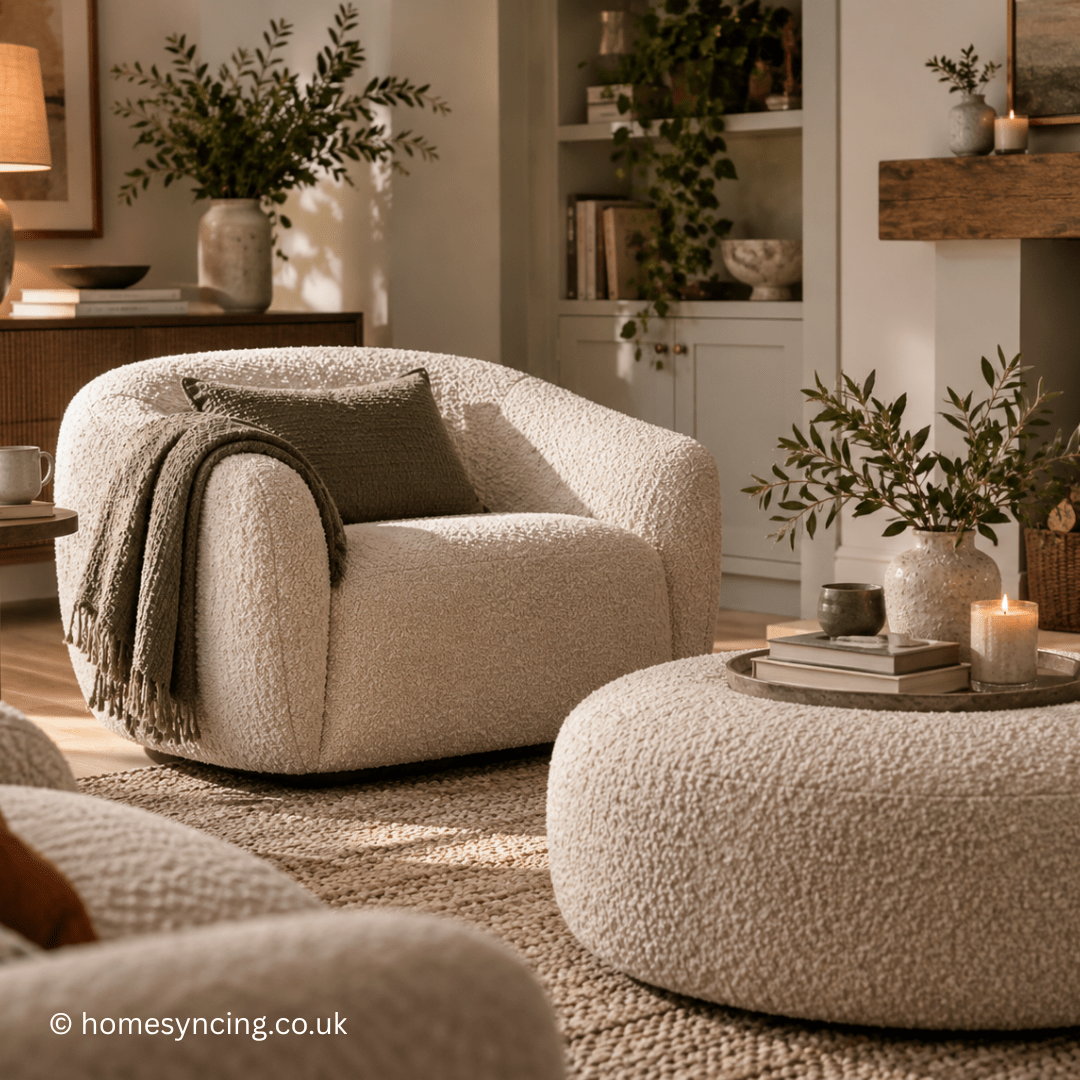
Bouclé, derived from the French word for “curl” or “loop”, refers to a fabric made from looped yarns, creating a curly, textured surface. This fabric is both visually appealing and tactile, adding an element of depth and interest to various applications.

Texture: Its unique, nubby texture adds warmth and cosiness to any space.

  • Versatility: BouclĂ© can effortlessly blend with various design styles, from modern to traditional.
  • Elegance: The luxurious feel of bouclĂ© fabric elevates the aesthetic appeal of furniture and accessories.

How to Coordinate Bouclé with Your Existing Interior?

Incorporating bouclé into your home decor is easier than you might think. Here are a few tips:

  • Neutral Palette: BouclĂ© looks stunning in neutral colors like white, beige, and gray. Pair it with other neutral tones for a cohesive look.
  • Mix Textures: Combine bouclĂ© with other textured fabrics like velvet or linen to create a rich, layered effect.
  • Statement Pieces: Use bouclĂ© on statement furniture pieces such as armchairs or ottomans to make them stand out.

How to Care for Bouclé Furnishings

Proper care ensures your bouclé furnishings remain beautiful and durable. Here’s how to do it:

  • Regular Vacuuming: Use a vacuum with a soft brush attachment to remove dust and debris.
  • Spot Cleaning: Gently clean spills with a damp cloth and mild detergent. Avoid rubbing, as this can damage the fabric.
  • Professional Cleaning: For deeper cleaning, consider professional upholstery services to maintain the fabric’s texture and integrity.

Bouclé fabric is a stylish and practical choice that adds charm and sophistication to any interior.

Take a look at our range of Boucle Furniture here.

For Daily Inspiration, Follow Us on Instagram

Home Décor Mistakes That Look Cheap

When it comes to designing our homes, we all want it to look stylish, chic and expensive. However, this can be difficult to achieve when you are decorating on a budget. But, don’t worry, here are eight things that are making your home look cheap and how to fix it on a budget.

A house is made of brick and mortar.  But a home is Made by the people who live there.  M K Soni

Lack of Lighting – One common mistake that homeowners make is not having enough lighting in their home. A poorly lit room can look dull and uninviting. However, you don’t have to spend a lot of money on fancy lighting fixtures to solve this problem. You can simply add more lamps or even some fairy lights to brighten up the room.

Misaligned Curtains – The way you hang your curtains can affect the overall look of the room. If your curtains are too short or too long, they can make your room look drab and cheap. A quick fix would be to hang your curtains high and wide to create the illusion of a bigger window.

Cluttered Surfaces – A cluttered surface can make a room look messy and disorganised. The solution is to have a designated spot for your things, like a shelf or a drawer. You can also use decorative boxes or trays to keep your items in place.

Cheap Bedding – Your bedding is one of the first things people notice when they enter your bedroom. If you have cheap-looking sheets and comforters, it can make your entire bedroom look cheap. Invest in quality bedding and choose something that fits your aesthetic.

Mismatched Furniture – Matching furniture can make your home look put together and sophisticated. But, if you can’t afford to buy a whole matching set, try mixing and matching pieces from different sets. Look for furniture that has similar colours or styles.

Boring Walls – Empty walls can make a room look unfinished and uninviting. Add some character to your walls by hanging art, mirrors or even shelves. You can also paint an accent wall to add some depth to the room.

Tiny Rugs – A small rug can make a room look cramped and unbalanced. If your rug is too small, it can look like an afterthought. Invest in a large rug that fits the room and anchors the furniture.

Lack of Greenery – Plants and flowers add life to your home and can make it feel more welcoming. If you don’t have a green thumb, start with easy-to-care-for plants like succulents or spider plants. You can also add some silk flowers to your home for a more long-term solution.

Home decorating can be difficult, especially when you’re on a budget. But, with a little creativity and some attention to detail, you can make your home look stylish and sophisticated.  So, go ahead and start transforming your home today!

Further Reading: Your Home Should Be Your Sanctuary, Transform Your Space with Rich Jewel Tones, Illuminate Your Space with Statement Lighting

Follow Us in Instagram for Daily Inspiration

Create your Own Perfect Bedroom Sleep Sanctuary

As we all know, sleep is extremely significant for our health and well-being. A good night’s sleep can help rejuvenate our body and mind and allow us to be productive throughout the day. However, creating an environment that is conducive to sleep can be a challenge for many of us. With so many distractions and stimuli around us, it can be hard to relax and unwind. Thankfully, by following a few simple interior design tips, you can create your very own perfect bedroom sleep sanctuary. Here are our top suggestions for creating a peaceful and blissful sleep space.

"Sleep is the golden chain that ties health and our bodies together." - Thomas Dekker

Invest in a good quality mattress and pillows

One of the most important factors for a good night’s sleep is a comfortable bed. Investing in a good quality mattress and pillows is important in order to have a comfortable and supportive sleep. Keep in mind that a mattress should be replaced about every eight years, and pillows every one to two years, depending on their quality and condition.

Soft and soothing colours

The colours you choose for your bedroom can have a huge impact on your mood and sense of relaxation. Opt for soft, neutral shades like pastels or muted greens and blues to create a calm and serene atmosphere. Bright colours like red or orange should be avoided as they can be too stimulating. You can add a touch of vibrancy to your room by including plants, artwork or decorative pillows in natural hues and colours.

Lighting is key

Lighting plays a crucial role in creating a sleep sanctuary. A good idea is to install dimmer switches or use lamps with low wattage bulbs to create a soft and relaxing ambiance in your bedroom. Blackout curtains can also be a great option to block out any light from the outside.

Keep it clutter-free

A cluttered bedroom can be distracting and stressful, making it difficult to unwind at the end of the day. To make your bedroom more serene, take time to declutter and keep things organized and neat. Store away any items that aren’t directly related to sleep including work projects and exercise equipment.

Choose comfortable bedding

Your bedding should be soft and made of natural materials, such as cotton or linen. They should be comfortable and provide a relaxing feeling. You should also choose bed coverings that are easily washable and warm enough for your climate. When choosing covers, designs that are simple or classic are recommended if you want to achieve a sleep-friendly appearance to your bedroom. Creating a perfect bedroom sleep sanctuary is about more than just a comfortable bed. It’s the ambiance of the room that makes a big difference, ensuring that it is a quiet, clean and serene environment that is conducive to sleep. By incorporating the above design elements, you’ll be able to create an oasis for yourself that promotes restorative sleep. It may take a bit of time and investment, but it’s worth it for the benefits of having a good night’s sleep.

Further Reading: Ignite your Inner Light with Chakra Meditation Candles, Explore the Benefits of Meditation

For Daily Inspiration Follow Us on Instagram

Creating an Inviting Entrance: Enhancing the First Impression of Your Home

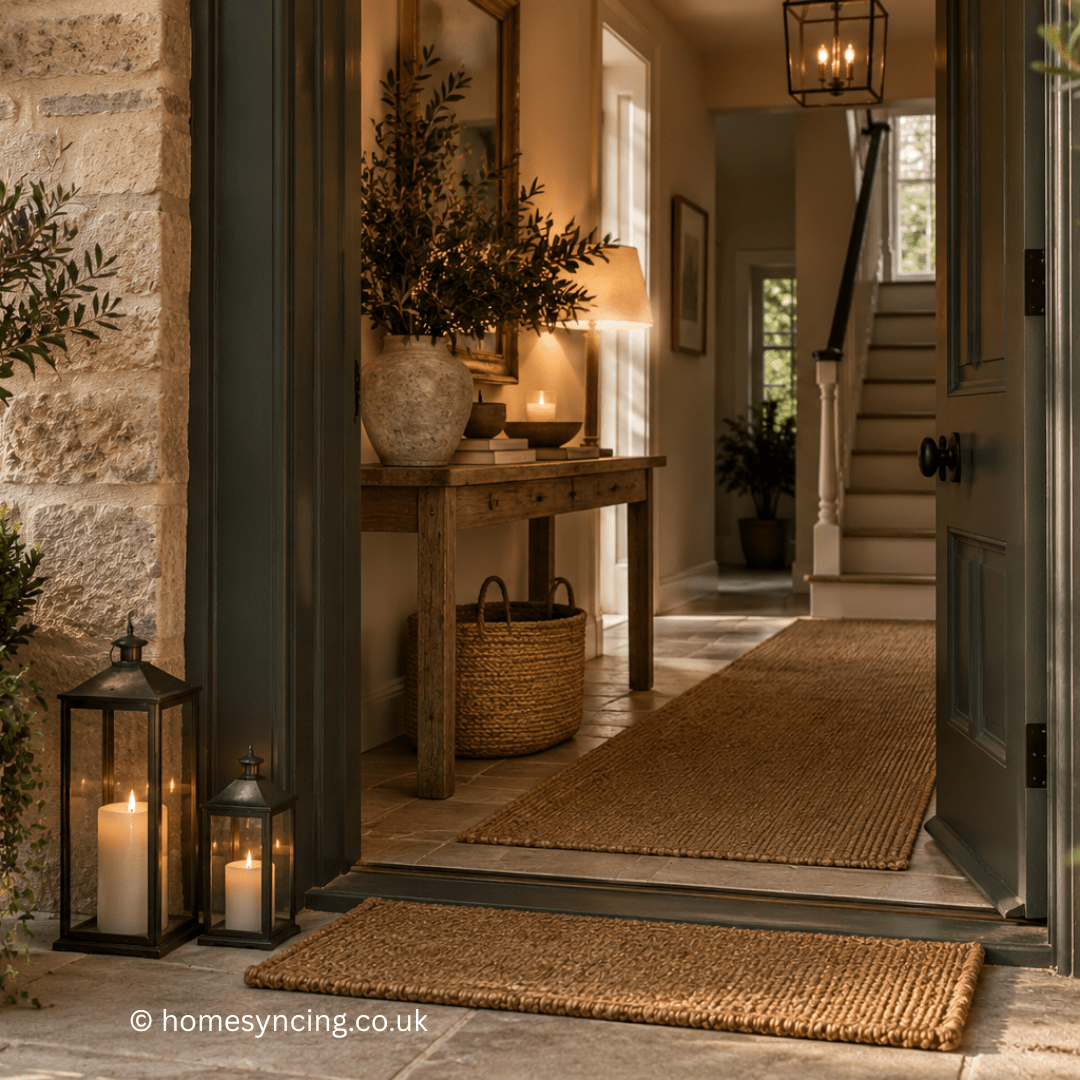
Your entrance is far more than a doorway—it’s the first chapter of your home’s story. It offers visitors a glimpse of your style, sets expectations for what lies beyond and creates an immediate emotional response. Whether it’s a grand hallway, a compact porch or a simple front step, a thoughtfully designed entrance can make your home feel warm, welcoming and effortlessly organised.

The good news is that creating an inviting entrance doesn’t require a complete renovation. With careful planning, practical storage, thoughtful lighting and a few decorative touches, you can transform this often-overlooked space into one of the most impactful areas of your home.

Why Your Entrance Matters

First impressions are formed within seconds. The entrance to your home creates an immediate sense of comfort, elegance, personality or practicality. It’s also one of the hardest-working spaces in the house, coping with shoes, coats, bags, parcels, muddy paws and the daily comings and goings of family life.

A successful entrance should strike a balance between style and function. It needs to look inviting while providing practical solutions that help keep the rest of the home organised.

Prioritise Functionality First

Before selecting colours, furniture or accessories, consider how your entrance is used every day.

Ask yourself:

  • Do children regularly leave school bags and shoes by the door?
  • Do you need somewhere to store dog leads, umbrellas or sports equipment?
  • Is there enough space for guests to remove coats comfortably?
  • Could better organisation reduce clutter elsewhere in the home?

Designing around real-life habits creates a space that works beautifully as well as looking attractive.

Create Room to Move

A clutter-free entrance immediately feels more welcoming. Even in smaller spaces, maintaining clear pathways helps create a sense of openness and ease.

Where possible:

  • Avoid oversized furniture that obstructs movement.
  • Keep walkways clear.
  • Use slimline storage solutions in narrow hallways.
  • Choose furniture that serves multiple purposes.

A spacious-feeling entrance encourages a smoother flow through the home and instantly creates a positive first impression.

Smart Storage Solutions

One of the most important elements of any entrance is effective storage.

Without it, everyday items quickly accumulate and create visual clutter. Thoughtful storage helps maintain a tidy and welcoming environment.

Popular entrance storage ideas include:

  • Wall-mounted hooks for coats, hats and bags.
  • Built-in cabinetry for a seamless look.
  • Shoe cabinets that conceal footwear while maximising floor space.
  • Woven baskets for seasonal accessories.
  • Console tables with drawers for keys, post and everyday essentials.
  • Storage benches that combine seating and hidden organisation.

When everything has a designated place, your entrance remains calm, organised and ready to welcome visitors.

Add Practical Seating

A bench or chair is often overlooked but can significantly improve both comfort and functionality.

Seating provides a convenient spot to:

  • Put on or remove shoes.
  • Place shopping bags temporarily.
  • Wait comfortably before heading out.
  • Create a more welcoming atmosphere for guests.

Storage benches are particularly useful, offering hidden space for shoes, blankets or outdoor accessories.

Lighting: Creating Warmth and Atmosphere

Lighting is one of the most powerful tools in entrance design. It influences mood, highlights architectural features and ensures the space remains welcoming at all times of day.

Maximise Natural Light

Natural light instantly makes a home feel more inviting.

If you’re renovating or updating your entrance, consider:

  • Glass-panelled front doors.
  • Sidelights beside the entrance door.
  • Roof lanterns or skylights where appropriate.
  • Mirrors positioned to reflect daylight deeper into the space.

Natural light creates a bright and uplifting atmosphere while making even smaller entrances feel larger.

Make a Statement with Decorative Lighting

A beautiful light fitting can become the focal point of your entrance.

Depending on your style, consider:

  • Elegant chandeliers for classic interiors.
  • Oversized pendant lights for contemporary homes.
  • Industrial-style fittings for modern spaces.
  • Wall sconces for a softer, layered effect.

Lighting should feel welcoming rather than harsh, creating a warm transition from the outside world into your home.

Layer Your Lighting

Combining different light sources creates depth and ambience.

Layered lighting might include:

  • Overhead lighting for general illumination.
  • Wall lights for warmth.
  • Accent lighting to highlight artwork or architectural features.
  • LED lighting beneath shelving or cabinetry.

This combination creates a sophisticated and inviting atmosphere throughout the day and evening.

Bring Personality Through Colour and Décor

Your entrance provides an opportunity to introduce your home’s personality from the moment someone steps inside.

Introduce Colour with Confidence

Colour can dramatically influence how a space feels.

Soft neutrals create calm and elegance, while deeper tones add drama and sophistication. Even small accents such as cushions, artwork, rugs or painted furniture can inject warmth and character.

Popular entrance colours include:

  • Sage green for a calming, nature-inspired feel.
  • Warm terracotta for welcoming energy.
  • Deep navy for timeless sophistication.
  • Soft greys and creams for versatility.

Incorporate Greenery

Plants instantly make a home feel more alive and welcoming.

They add:

  • Natural texture.
  • Visual softness.
  • Improved air quality.
  • A calming connection to nature.

Even compact entrances can benefit from a small potted plant, while larger hallways may accommodate statement trees, oversized planters or decorative arrangements.

Display Meaningful Artwork

Artwork helps create a memorable entrance and gives visitors insight into your personality.

Consider:

  • A gallery wall of family photographs.
  • Large-scale statement artwork.
  • Framed prints that complement your interior style.
  • Sculptural pieces displayed on a console table.

Art adds depth, warmth and individuality, transforming an entrance from purely functional to truly personal.

The Importance of Scale and Balance

One of the most common design mistakes is choosing furniture or accessories that are disproportionate to the space.

Create a Strong Focal Point

Every successful entrance benefits from a focal feature.

This could be:

  • A statement mirror.
  • A beautiful console table.
  • A dramatic light fitting.
  • A large piece of artwork.
  • A decorative staircase.

A focal point draws the eye and helps establish visual structure.

Use Symmetry for a Polished Look

Symmetry naturally creates a sense of order and elegance.

Simple examples include:

  • Matching table lamps.
  • Pairs of planters beside the front door.
  • Balanced artwork arrangements.
  • Identical wall sconces on either side of a mirror.

These subtle details create a welcoming sense of harmony and refinement.

Don’t Forget Kerb Appeal

Creating an inviting entrance starts before anyone steps through the door.

The exterior entrance should feel just as welcoming as the interior.

Simple updates can include:

  • Fresh paint on the front door.
  • Attractive outdoor lighting.
  • Seasonal wreaths.
  • Well-maintained planting.
  • Stylish house numbers.
  • A quality doormat.

These finishing touches immediately elevate your home’s appearance and create a positive first impression.

A Welcoming Entrance Starts Here

An inviting entrance is about more than appearance. It’s about creating a space that welcomes you home every day while making guests feel instantly comfortable.

By combining practical storage, thoughtful lighting, personal décor and carefully chosen furnishings, you can create an entrance that feels organised, stylish and genuinely welcoming.

Whether your space is large or small, every entrance has the potential to make a lasting impression. After all, great design begins the moment the door opens.

Further Reading: Your Home Should Be Your Sanctuary, Illuminate Your Space with Statement Lighting

Follow us on Instagram for Daily Inspiration

Translate »