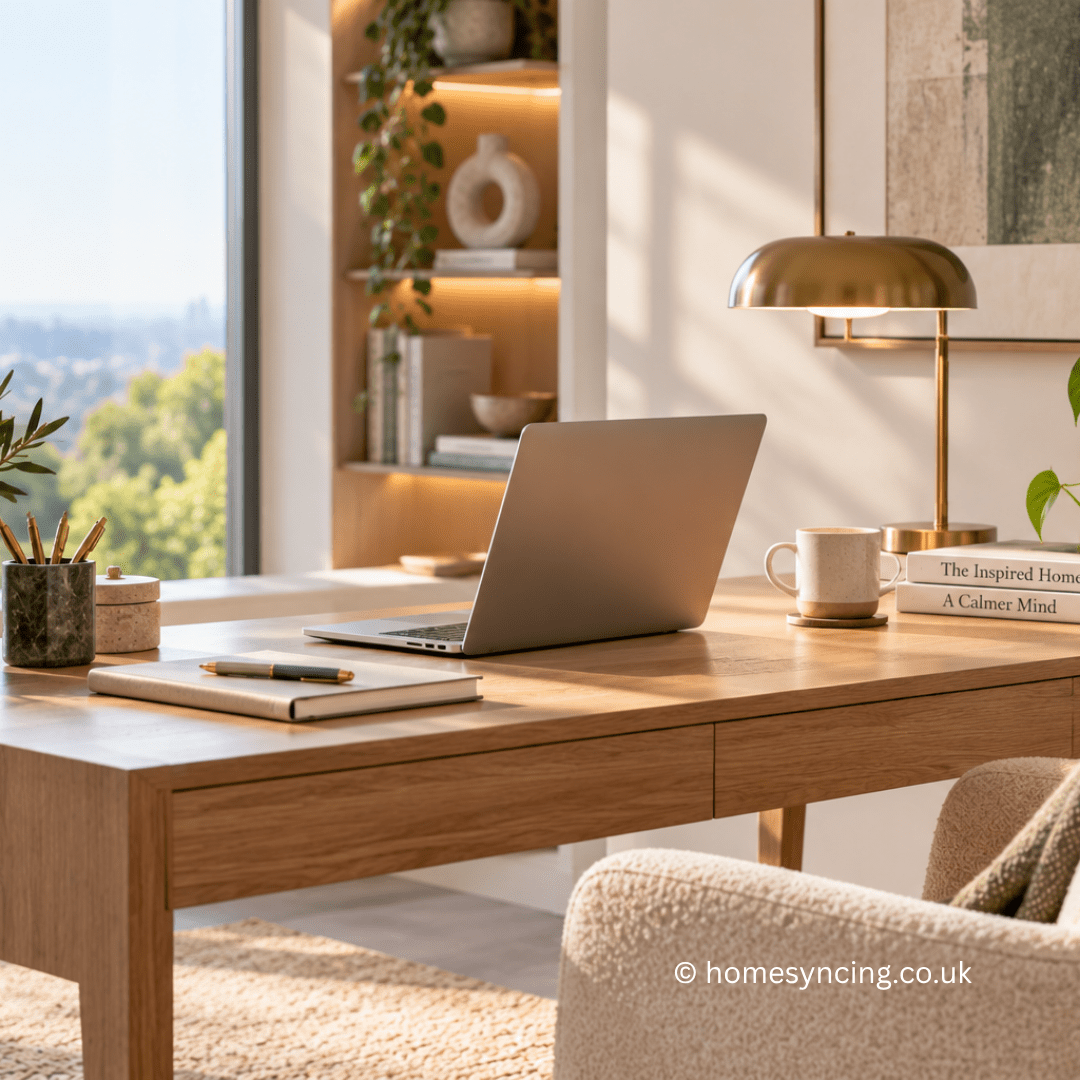
Did You Know About Study Office Desk Envy?

There is something particularly satisfying about a beautifully organised desk. Perhaps it is the promise of a productive day ahead, or simply the pleasure of sitting down in a space where everything has its place. Whatever the reason, a well-considered workspace can make working from home feel altogether more enjoyable.

Creating one needn’t mean filling your desk with accessories. In fact, quite the opposite. The most successful home offices tend to combine practical pieces with a handful of objects that are genuinely useful, pleasing to look at and made to last.

If your desk is beginning to inspire a little envy, you may well be getting it right.

Start with the desk itself

Before thinking about accessories, consider how you actually use your workspace.

A good desk should provide enough room for the essentials without encouraging clutter. Your computer or laptop needs to sit comfortably in front of your chair, with space for a notebook, a drink and anything else you regularly reach for.

The position of the desk matters too. Natural daylight can transform a home office, although placing a screen directly opposite a bright window can cause glare. If possible, position your desk so that daylight comes from the side, giving you the benefit of a bright room without making your screen difficult to see.

Once the foundations are right, you can begin adding the details.

Choose fewer, better desk accessories

The temptation with home office desk accessories is to buy a solution for everything. Pen pots, trays, organisers, stands and storage boxes can quickly turn a calm desk into a crowded one.

Instead, start with what you genuinely use.

A well-designed pen holder, a shallow tray for small items and a notebook may be all you need. Materials such as timber, leather, stone, ceramic and brushed metal bring texture to a workspace and tend to sit comfortably alongside furniture elsewhere in the home.

This is particularly important if your office occupies part of a bedroom, sitting room or landing. Choosing accessories that feel more like considered homeware than corporate office supplies helps the workspace belong to the room around it.

Good lighting changes everything

A desk lamp is one accessory worth choosing carefully.

Even in a room with plenty of natural light, task lighting is invaluable on darker mornings and late afternoons. Look for a lamp that directs light towards your working area without shining directly onto your screen.

The lamp itself can also provide an opportunity to introduce character. A sculptural brass lamp, a simple ceramic base or a contemporary metal design can give an otherwise understated desk a focal point.

For a comfortable home office, combine task lighting with softer ambient light elsewhere in the room. The result is far more inviting than relying on a single overhead light.

Give paperwork somewhere to go

Even the most streamlined home office has to accommodate the less glamorous realities of working life.

Post, notebooks, receipts and documents have a remarkable ability to accumulate. Giving them a designated home makes keeping the desk clear considerably easier.

A document tray or slim file holder can deal with papers that need immediate attention, while less frequently used items are better stored in a drawer or cupboard. The aim isn’t to create a perfectly empty desk, but one that can be returned to order quickly at the end of the day.

A useful rule is simple: if something doesn’t need to be within arm’s reach, it probably doesn’t need to live permanently on the desktop.

Make technology part of the design

Technology is essential to most home offices, but tangled cables and a collection of chargers can quickly undermine an otherwise considered space.

Simple cable management can make a surprisingly large difference. Keep charging cables together, secure loose wires beneath or behind the desk and remove technology that you rarely use.

A laptop stand or monitor riser can also help create a more comfortable working position, particularly when paired with a separate keyboard and mouse.

Rather than trying to disguise technology completely, allow it to sit naturally within the scheme. A streamlined monitor or laptop surrounded by warm timber, ceramics and tactile materials creates a pleasing balance between practical and homely.

Add something simply because you like it

Not everything on a desk has to improve productivity.

A favourite photograph, a small piece of art, a beautifully made object or a vase with a few seasonal stems can give a workspace personality without overwhelming it.

Plants work particularly well in a home office. A small pot of greenery introduces colour and softness, while larger plants can help define a dedicated working area within an open-plan room.

The key is restraint. One or two personal objects will usually have more impact than a collection competing for attention.

Think beyond the desktop

Some of the best home office ideas have very little to do with the desk itself.

A comfortable chair is essential if you spend several hours working from home. Nearby shelving can provide useful storage while allowing books and a few decorative objects to be displayed. A rug can soften acoustics and visually define the working area, while artwork makes even the smallest office feel considered.

Colour can play a part too. Warm neutrals, earthy greens and natural timber create a restful backdrop, while richer colours can be introduced through upholstery, artwork or accessories.

Your home office doesn’t have to look like an office. It should feel like another well-designed room in your home.

Create a workspace you want to return to

Ultimately, desk envy isn’t really about having the latest organiser or the most expensive lamp. It comes from creating a workspace that feels effortless: useful things close at hand, clutter kept under control and enough personality to make the room distinctly yours.

Choose pieces slowly and consider how each one earns its place. Invest in good lighting, keep storage simple and leave enough empty space for the desk to function properly.

The result should be somewhere that helps you concentrate when there is work to be done, but still feels comfortable and attractive when the laptop is closed.

And that may be the best home office accessory of all: a workspace that makes sitting down to begin the day feel like a pleasure rather than a chore.

We have some great quality ideas for your desk, office or study setting.

Further Reading: Affordable Decorating Ideas That Will Transform Your Home, Sustainable Chic: A Beginner’s Guide to Circular Design

Daily Inspiration: Follow Us on Instagram, BlueSky, Threads , Pinterest, Twitter, TikTok
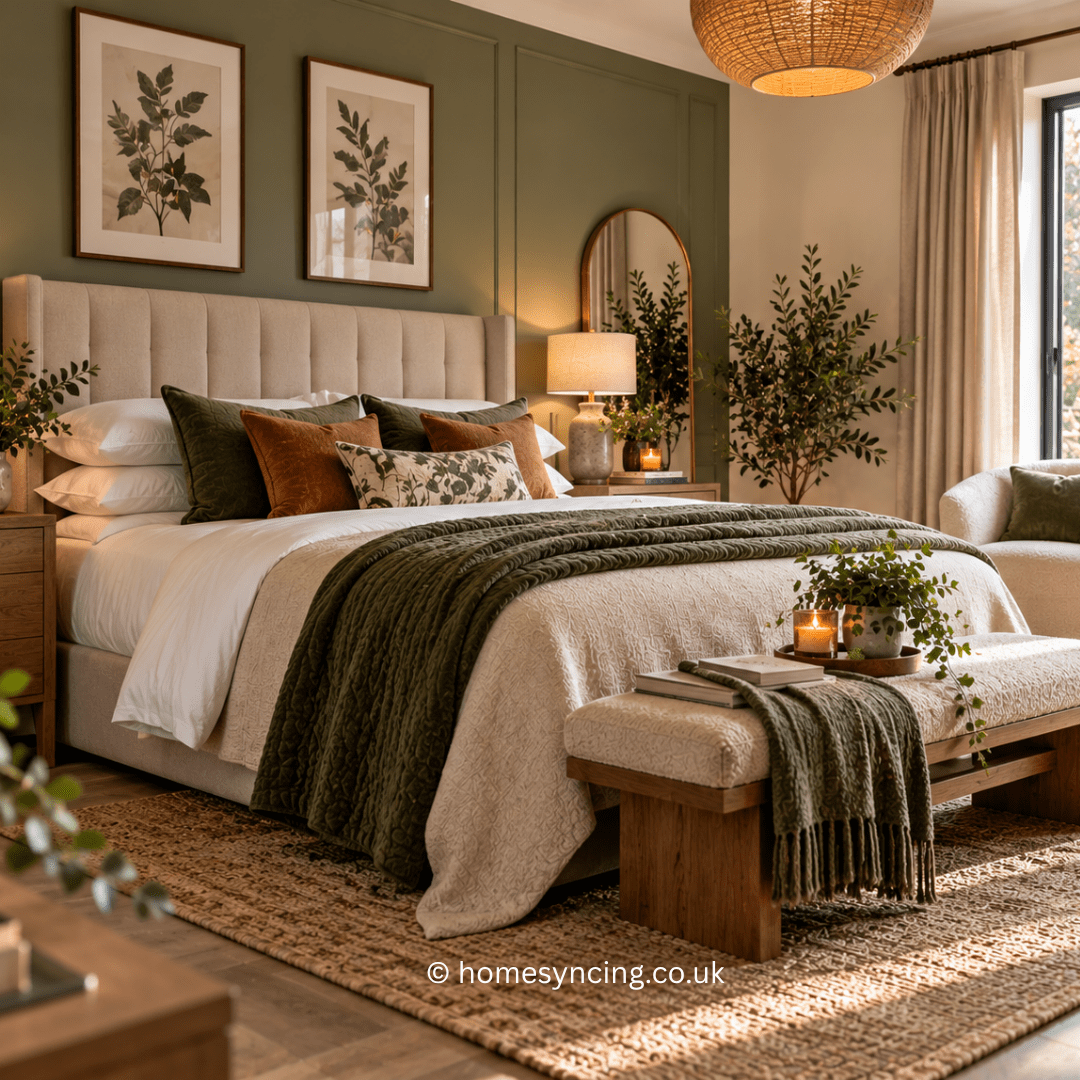
Sleep in Style – How to Create the Perfect Bedroom

Creating a Bedroom That Feels Like a True Retreat

Your bedroom should be a place of quiet restoration – somewhere you can withdraw from the day, slow your pace and feel at ease. Creating a space that supports rest and relaxation does take thought, but it need not feel daunting. With careful choices and a measured approach, your bedroom can become a calm, welcoming retreat that is both comfortable and characterful.


Begin with the Bed

The bed is the heart of the bedroom and deserves careful attention. A well-made bed sets the tone for the entire space, both visually and practically. Invest in a good-quality mattress and pillows that offer proper support, and choose bed linen that feels soft and breathable against the skin.

Neutral shades such as warm white, soft stone or gentle beige create a sense of calm and timelessness. Layering is key: a light duvet, a textured throw and a small selection of cushions add comfort without excess, giving the bed an inviting, considered feel.


Make Space for Storage

A restful bedroom is one free from unnecessary clutter. Thoughtful storage allows the room to feel ordered and unhurried. Choose pieces that suit the scale of the space, whether that is a wardrobe, chest of drawers or a discreet bedside cabinet.

Well-made storage furniture can add quiet character as well as function. Natural materials, simple lines and gentle finishes help the room feel settled and balanced, ensuring practical needs are met without disrupting the calm.


Use Lighting to Shape the Mood

Lighting plays a vital role in how a bedroom feels throughout the day. Rather than relying on a single source, aim for a layered approach. Soft overhead lighting provides general illumination, while bedside lamps or wall lights offer gentle pools of light for reading and winding down.

Daylight is equally important. Where possible, allow natural light to enter freely by keeping window dressings light and unfussy. As evening falls, warmer lighting will help the room feel cosy and reassuring.


Create a Sense of Comfort

Comfort lies at the centre of a successful bedroom. Introduce softness through textiles: a rug underfoot, layered bedding and perhaps an upholstered chair or bench. These elements bring warmth and help the room feel lived-in rather than styled.

Choose a colour palette that soothes you personally. Muted tones, natural hues and gentle contrasts tend to work well, creating an atmosphere that encourages rest. Personal touches – a favourite picture, a cherished photograph or a well-loved book – help the room feel truly your own.


Finish with Thoughtful Details

Accessories should be chosen with care and restraint. A mirror to catch the light, a simple vase, or a softly scented candle can add interest without overwhelming the space. Each item should earn its place, contributing either beauty or usefulness.

Too many decorative objects can disrupt the sense of calm, so allow the room space to breathe. Often, less truly is more.


A Room Made for Rest

A well-considered bedroom reflects both your needs and your character. It is not created overnight, but gradually, through thoughtful decisions and an appreciation for comfort, quality and simplicity. With time and care, your bedroom can become a place of quiet refuge – a space that restores and reassures, night after night.

See our range of bedroom furniture here.

Further Reading: Affordable Decorating Ideas That Will Transform Your Home, Sustainable Chic: A Beginner’s Guide to Circular Design

Daily Inspiration: Follow Us on Instagram, BlueSky, Threads , Pinterest, Twitter, TikTok
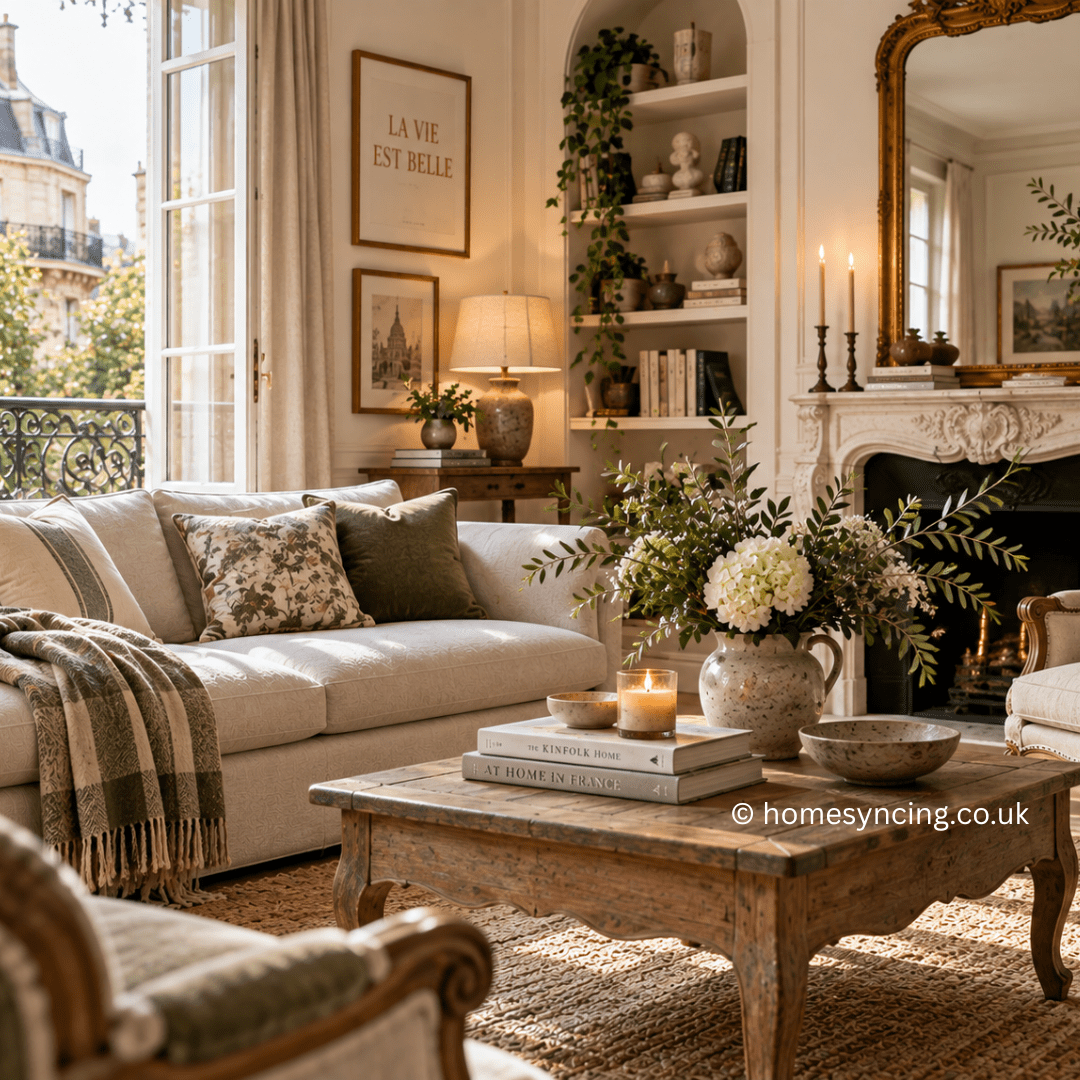
How to Create a French Themed Inspired Interior Design

Creating a French-Inspired Interior with Timeless Charm

If you are drawn to interiors that feel elegant yet lived-in, a French-inspired design offers a graceful way to bring warmth and character into your home. Rooted in tradition and shaped by centuries of craftsmanship, this style blends ornate historic details with relaxed, everyday comfort. The result is an interior that feels both refined and welcoming, where beauty is found in balance rather than excess.

French-inspired interiors often take cues from townhouses, country homes and rural farmhouses, combining decorative plasterwork, time-worn floors and carefully chosen furnishings. Whether you are restoring a generous room or gently refreshing a familiar space, the French approach rewards thoughtful layering and an appreciation for detail.


Choose Furniture with History and Soft Elegance

French interiors are defined by their easeful mix of old and new. Antique or antique-style furniture sits comfortably alongside simpler, contemporary pieces, creating a sense of continuity rather than formality. Look for furniture with graceful curves and delicate detailing: cabriole legs, carved frames and gently worn finishes all contribute to the style’s enduring appeal.

Upholstery should feel natural and tactile. Linen, cotton and soft silks work well in muted shades, allowing the form of the furniture to stand out. Rather than bold statements, colour is often introduced subtly through cushions, throws or a faded fabric that feels settled and familiar.


Build a Calm Palette with Thoughtful Accents

Colour plays a quiet but important role in a French-inspired interior. Soft neutrals such as warm whites, pale greys and gentle stone tones form the foundation, creating a sense of light and calm. These shades reflect natural light beautifully and allow architectural details to shine.

Accents of stronger colour can then be added with restraint. Deep blues, muted reds or soft greens work well when used sparingly, perhaps in a rug, artwork or a set of cushions. Patterned wallpaper, particularly floral or toile designs, can also be used to introduce interest, ideally as a feature rather than across an entire space.


Introduce Decorative Details with Care

Decoration in French interiors is deliberate rather than lavish. A small number of carefully chosen pieces will have far greater impact than an abundance of ornament. Mirrors with decorative frames, gently aged metalwork, glassware or a single statement clock can all bring a sense of quiet grandeur.

Larger items, such as an armoire or display cabinet, provide both function and presence, anchoring the room visually. In smaller spaces, a painted side table, a delicate dressing table or a well-placed decorative object can evoke the same charm without overwhelming the room.


Celebrate Natural Materials and Texture

Texture is central to creating a French-inspired interior that feels warm and authentic. Traditional homes favour natural materials, particularly wood and stone, which age beautifully over time. Wooden floors, whether left bare or softened with rugs, add warmth and a sense of continuity.

Layering textiles is another way to enrich the space. Woollen throws, velvet cushions, embroidered fabrics and woven baskets all add depth and softness. These tactile elements prevent the room from feeling formal, instead encouraging comfort and ease.


Use Lighting to Create Atmosphere

Lighting should enhance the gentle elegance of the interior rather than dominate it. Chandeliers, wall sconces and table lamps with curved forms and traditional detailing are particularly well suited to a French-inspired scheme. Warm metal finishes, such as bronze or aged gold, lend a soft glow and echo the warmth of natural materials.

Rather than relying on a single light source, aim for layered lighting that can be adjusted throughout the day. Lamps with fabric or lightly coloured shades help to create a welcoming, intimate atmosphere, especially in the evening.


A Style That Invites You In

A French-inspired interior is not about perfection, but about harmony. It brings together furniture, materials and decoration in a way that feels unforced and quietly confident. When done well, it creates rooms that are elegant yet comfortable, refined yet deeply human.

By taking time to choose pieces with care, embracing natural materials and allowing your space to evolve gradually, you can create an interior that feels timeless rather than styled. More than a decorative scheme, a French-inspired home offers a sense of retreat – a place that invites you to slow down and enjoy the everyday beauty of your surroundings.

Click here for a selection of French Themed Inspired Furniture

Further Reading: Affordable Decorating Ideas That Will Transform Your Home, Sustainable Chic: A Beginner’s Guide to Circular Design

Daily Inspiration: Follow Us on Instagram, BlueSky, Threads , Pinterest, Twitter, TikTok
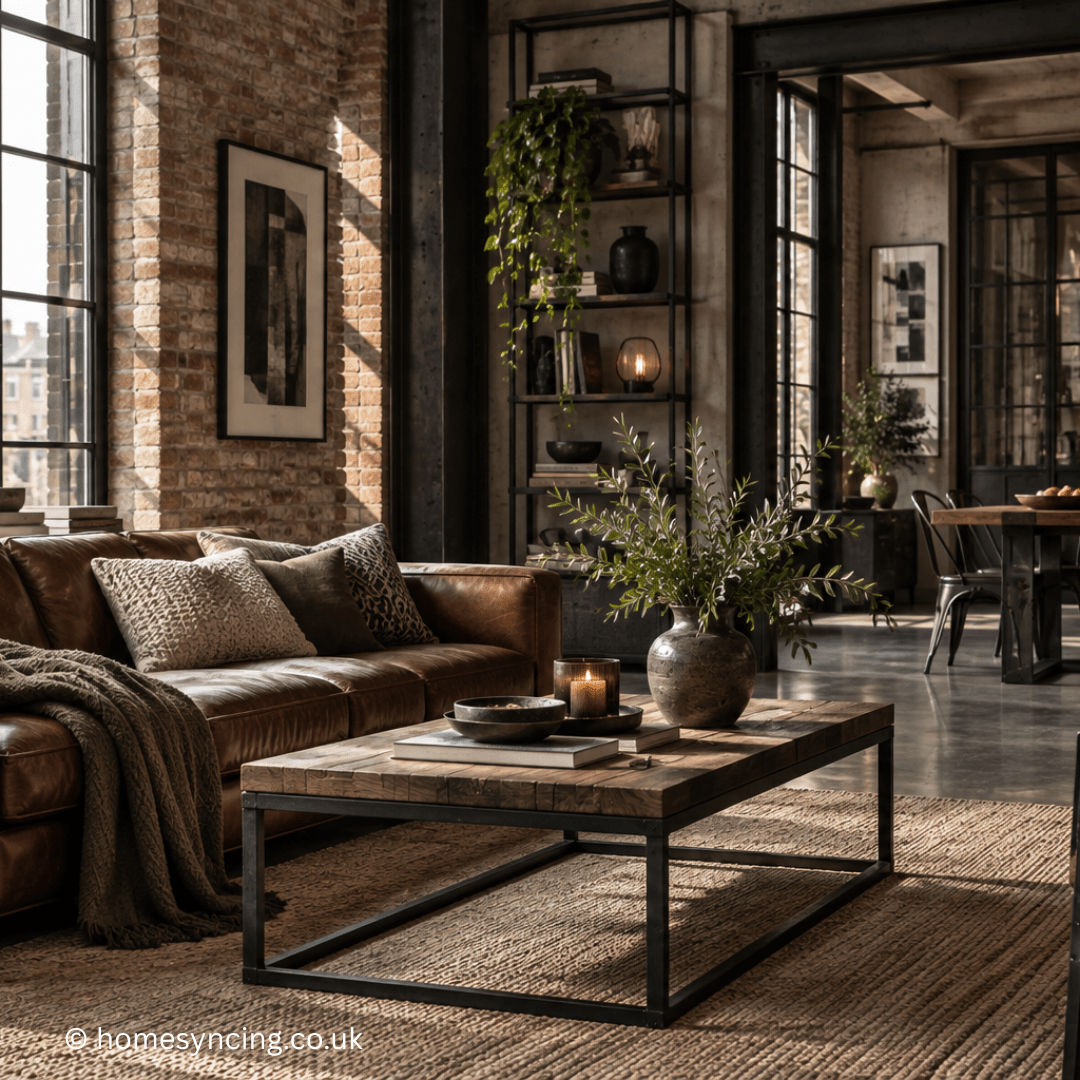
How to Get the Industrial Look: A Guide to Industrial Furniture and Interiors

There is a particular beauty to buildings that reveal how they were made.

Brick walls bearing the marks of age, great timber beams, iron-framed windows and floorboards worn smooth by generations of footsteps all tell us something about a building’s past. Rather than disguising these features, industrial interior design puts them at the heart of a room.

The style has its origins in places built for work rather than decoration: factories, mills, warehouses and workshops. As former industrial buildings found new uses, many of their practical features were retained. Exposed brickwork, steel columns, visible pipes and large windows became part of the character of these converted spaces rather than something to be concealed.

Today, you certainly don’t need to live in a Victorian warehouse to enjoy the industrial look.

Used thoughtfully, industrial furniture, reclaimed timber, aged metal and utilitarian lighting can bring character to houses of almost any period. The secret is not to recreate a factory in your sitting room, but to borrow the qualities that make these old working buildings so appealing: honest materials, useful objects, good craftsmanship and a pleasing lack of fuss.

Begin with the Building

Before choosing furniture, look at the room itself.

One of the central ideas behind industrial interiors is to celebrate the fabric of a building rather than cover every surface with decoration. Original brick, old floorboards, beams, stonework and metal-framed windows can all provide a natural starting point.

If your home has such features, resist the temptation to make them too perfect. Old brickwork gains much of its character from variations in colour and texture, while timber is often more interesting for its knots, marks and uneven grain.

That doesn’t mean manufacturing history where none exists.

Stripping perfectly good plaster from a wall simply to create the appearance of an old warehouse can easily feel contrived. In a newer property, it is often better to introduce the industrial look through furniture, lighting and materials while allowing the architecture to remain true to the building.

The most convincing interiors tend to feel as though they have evolved naturally.

Choose a Warm Industrial Colour Palette

Mention industrial décor and it is easy to imagine a world composed entirely of grey, black and brown. In practice, the most successful schemes are considerably more nuanced.

Begin with colours taken from natural and hardworking materials: warm plaster, limestone, aged brick, weathered timber, charcoal and iron. These create a quiet backdrop without making a room feel cold.

Then introduce deeper tones where they will have the greatest effect. Black steel shelving, for example, can provide definition against a soft off-white wall, while a dark charcoal cabinet can anchor a room filled with lighter timber.

Earthy colours work particularly well alongside industrial furniture. Olive and moss green, tobacco, rust, ochre and deep burgundy all sit comfortably with brick, leather and aged metal.

The aim is warmth rather than starkness.

Let Reclaimed Wood Bring Character

Few materials suit an industrial-style interior quite as naturally as old timber.

In former workshops and factories, wood was chosen because it was strong, useful and repairable. Those same qualities make reclaimed wood furniture particularly appealing today.

A substantial dining table made from salvaged timber can become the centre of a room. Look for visible grain, knots and small variations in colour rather than a surface that has been made artificially uniform.

The same principle works for coffee tables, benches, shelving and sideboards.

Reclaimed timber also performs another useful role: it softens metal. A black steel frame can feel rather severe on its own, but combine it with an aged oak top and the effect becomes warmer and more tactile.

When choosing reclaimed wood furniture, look for genuine construction and good craftsmanship rather than excessive artificial distressing. Natural wear tends to be irregular and subtle. Furniture covered in identical dents, scratches and manufactured ‘aged’ marks rarely has the same appeal.

Use Metal with Restraint

Metal is one of the defining materials of industrial furniture, but a little goes a surprisingly long way.

Blackened steel and iron work beautifully for table legs, shelving frames, cabinets and lighting. Bronze, aged brass and patinated copper can introduce warmer notes, particularly in rooms where black metal might otherwise feel too dominant.

There is no need for every metal finish to match.

Indeed, old working buildings rarely contained perfectly coordinated fittings. Iron window frames, brass handles and copper pipes might happily have existed within the same space because each was chosen for a practical reason.

That relaxed approach can work just as well at home.

A steel-framed coffee table might sit beside an aged brass lamp, while iron shelving provides a backdrop for ceramics, books and wooden objects. Repetition of one or two finishes will give the room coherence without making it appear overly coordinated.

Find the Right Industrial Furniture

Good industrial-style furniture tends to have a straightforward quality.

Look for pieces where the construction is easy to understand: timber resting on a steel frame, a cabinet with visible handles, an open shelving unit or a workbench-style table with sturdy legs.

Some of the best pieces were never intended to be fashionable at all.

Old factory stools, workshop cabinets, machinists’ drawers, school cupboards and haberdashery units can all make characterful additions to a home. Their appeal comes partly from their usefulness and partly from the marks left by their former lives.

Vintage pieces can be particularly effective when mixed with contemporary furniture.

An old metal cabinet beside a comfortable modern sofa feels far more natural than a room in which every item has been bought from the same industrial furniture collection.

Think collected, rather than themed.

Choose Softer Pieces for Balance

An industrial living room should still be somewhere you want to spend an evening.

This is where softness becomes important.

Leather works particularly well, especially in warm tan, chestnut or tobacco tones that develop character as they age. But it isn’t the only option. Linen, wool, cotton and textured upholstery can all provide a welcome counterpoint to steel, concrete and brick.

An industrial-style living room might combine a generous linen or velvet sofa with a reclaimed timber coffee table, an old leather chair and a black metal shelving unit.

Then introduce rugs, cushions and throws.

A large wool or jute rug will soften hard flooring and absorb sound, while cushions in olive, rust and natural linen prevent the palette from becoming too austere.

Plants are useful here too. Green foliage looks particularly striking against brick and dark metal and brings an organic quality to a scheme dominated by harder materials.

Make Industrial Lighting Work Hard

Lighting is one of the easiest ways to introduce industrial character without changing an entire room.

The original lighting in factories and workshops was designed first and foremost to illuminate a task. That functional quality remains part of its appeal.

Look for generous metal pendant lights over dining tables and kitchen islands, adjustable wall lights beside a reading chair or bed, and articulated lamps inspired by traditional workshop designs.

Enamel shades, aged brass, ribbed or reeded glass and dark metal all sit naturally within the style.

Be slightly wary of exposed bulbs everywhere. While they have become closely associated with industrial décor, a bare bulb can produce harsh light and may feel more like a themed restaurant than a comfortable home when overused.

Instead, think in layers.

Combine pendants with table lamps, wall lights and floor lamps, using warm bulbs to create smaller pools of illumination. The fittings may have an industrial character, but the resulting atmosphere should still feel welcoming.

Don’t Forget the Floor

Industrial buildings were made to withstand hard use, and their floors reflected that.

Concrete, brick, stone and timber are therefore natural choices for an industrial-inspired home.

If you already have old floorboards, celebrate them. Small marks and variations often add to their appeal. Stone or brick floors can be equally effective, particularly in kitchens, hallways and extensions.

Polished concrete works well in more contemporary spaces, but needs warmth elsewhere in the scheme to prevent the room from feeling stark.

Rugs are invaluable.

Rather than choosing something overly decorative, look for natural fibres, faded patterns or richly textured wool. A generous rug can help define a seating area while providing softness beneath furniture made from timber and metal.

Display Useful and Beautiful Things

Open shelving is a familiar feature of industrial interiors, and for good reason.

In workshops, objects were kept where they could be seen and reached easily. At home, the same idea provides an opportunity to display useful possessions alongside things collected simply because they are beautiful.

Books, ceramics, old bottles, baskets, wooden bowls and framed artwork can all soften industrial shelving.

The important thing is not to fill every available space.

Allow some shelves to breathe and vary the height and scale of what you display. A large ceramic vessel beside a short stack of books will usually look more natural than a row of small decorative objects evenly spaced along a shelf.

Objects with a history are especially effective. An old wooden box, vintage clock or piece of workshop equipment can introduce a small glimpse of the past without turning the room into a museum.

Avoid Making the Look Too Perfect

There is a curious contradiction at the heart of industrial interiors.

The style is admired for its imperfection, yet it is surprisingly easy to make it look over-designed.

A room filled with matching black metal furniture, reproduction factory lights and deliberately distressed wood may contain all the recognised ingredients of industrial décor while lacking the character that made the style appealing in the first place.

Mix periods and materials instead.

Place an old table beside contemporary chairs. Hang modern artwork against aged brick. Pair a traditional armchair with a steel and timber side table.

Allow some surfaces to show their age while keeping others clean and simple.

This contrast between old and new is often what gives an industrial interior its depth.

Bringing the Industrial Look Home

The best industrial interiors aren’t really about creating a ‘look’ at all. They are about appreciating materials and objects for what they are.

Timber is allowed to look like timber. Brick remains brick. Metal doesn’t need to pretend to be something softer or more decorative. Furniture reveals something of the way it has been constructed, and older pieces are valued for the evidence of lives and uses that came before.

Start with the character of your own home rather than trying to disguise it. Introduce reclaimed wood furniture, metal-framed pieces and purposeful lighting gradually, balancing them with textiles, comfortable seating, greenery and objects that mean something to you.

And don’t feel that everything needs to be finished.

An old workshop, mill or warehouse acquired its character over decades of use. A home deserves the same opportunity.

Perhaps that is the enduring appeal of industrial interior design: it doesn’t ask everything to be pristine. Instead, it finds beauty in craftsmanship, usefulness, age and the occasional imperfection – qualities that tend to become more interesting, rather than less, as the years pass.

We have some great pieces that will create a fantastic industrial look.  Click here to see a selection.

Further Reading: Affordable Decorating Ideas That Will Transform Your Home, Sustainable Chic: A Beginner’s Guide to Circular Design

Daily Inspiration: Follow Us on Instagram, BlueSky, Threads , Pinterest, Twitter, TikTok
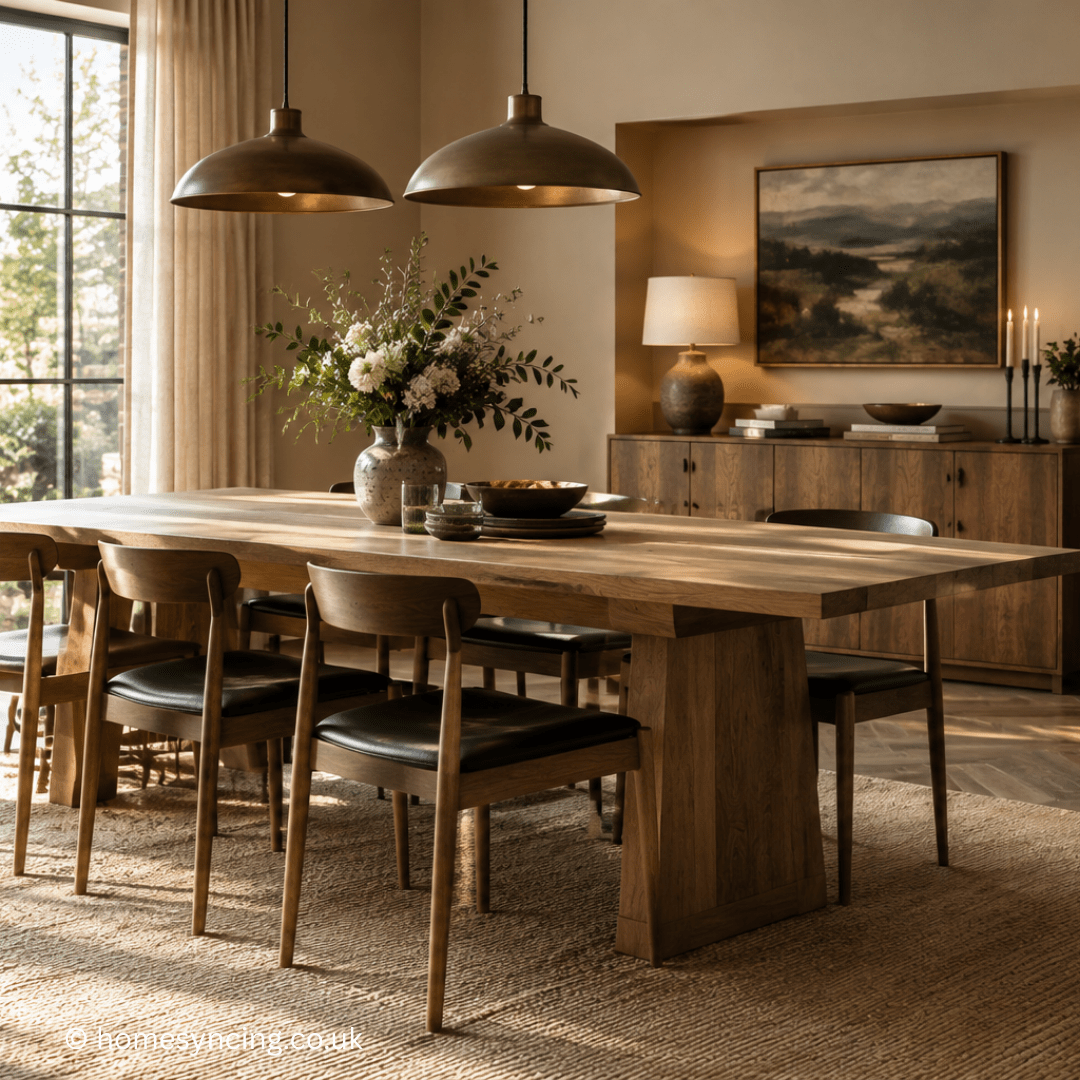
How to Choose and Measure for a Dining Table

Some pieces of furniture simply occupy a room. A good dining table becomes part of the life lived within it.

It might host a hurried breakfast on Monday morning and a leisurely Sunday lunch a few days later. Homework, newspapers and half-finished cups of tea find their way onto it. At Christmas, chairs are borrowed from other rooms and squeezed around its edges; on quieter evenings, it may be occupied by just one or two people.

Perhaps this is why choosing a dining table deserves more thought than simply finding one that fits.

Size matters, of course, but so do proportion, shape and the way people move around the room. A beautiful table that leaves no room to pull out a chair will soon become frustrating, while one that is too small can feel rather lost in a generous dining room.

From taking the first measurements to deciding between round, rectangular and extendable designs, here’s how to choose the right dining table for your space and the way you live.

Measure the Room Before the Table

When measuring for a dining table, begin with the room rather than the furniture.

Measure the length and width of the area in which the table will stand, taking note of anything that reduces the usable space. Radiators, fireplaces, alcoves, doorways and substantial pieces of furniture such as sideboards all need to be considered.

In older houses especially, don’t assume the room is perfectly square. Walls have a habit of wandering slightly over the centuries, so take measurements at several points if space is tight.

Then consider how people will move through the room.

A dining table doesn’t merely have to fit between four walls. Chairs must be pulled out, people need to sit down comfortably and someone should ideally be able to walk behind a seated guest without requiring the entire table to shuffle sideways.

As a useful guide, aim to leave around 90cm between the edge of the dining table and a wall or other furniture. Where the space behind the chairs is also an important walkway, 100–120cm is more comfortable.

There is no need to regard these figures as absolute rules. Every room and household is different, but they provide a useful starting point when working out which dining table size will actually function in the space.

Mark Out the Dining Table Before You Buy

Measurements written on a piece of paper can be surprisingly difficult to visualise.

One simple trick is to mark the dimensions of your prospective table directly onto the floor using masking tape. You could also lay out sheets of newspaper or an old bedsheet folded to the approximate size.

Then place the dining chairs around the outline, if you already have them.

Walk around it. Open nearby doors and cupboards. Pull a chair backwards as though you were sitting down. Imagine carrying a serving dish from the kitchen or walking behind someone already seated.

This little experiment often reveals far more than a floor plan.

A table that appeared perfectly sensible from its measurements may suddenly feel enormous, while a larger design than you had originally considered might prove to fit surprisingly well.

How Much Space Does Each Person Need?

The next consideration is how many people the dining table needs to accommodate.

As a general rule, allowing around 60cm of table width for each person provides comfortable everyday seating. A little more room feels generous, particularly if you use broad dining chairs or tend to serve food in dishes placed on the table.

Remember that the number of chairs shown around a table in a photograph doesn’t necessarily indicate how many people will sit there comfortably.

Look at the position of the table legs too.

Chunky legs positioned close to the corners can restrict where chairs are placed, while pedestal and trestle designs may provide considerably greater flexibility.

Think about your household on an ordinary Tuesday rather than only imagining Christmas lunch. A table should work comfortably for the people who use it every day; occasional guests can be accommodated through an extension leaf or an extra chair when necessary.

Choosing the Right Dining Table Shape

The shape of a dining table can alter both the appearance of a room and the way people gather within it.

Rectangular Dining Tables

A rectangular dining table is perhaps the most familiar choice and works particularly well in longer dining rooms and open-plan spaces.

Its proportions can help anchor a large room, while the long surface provides plenty of space for serving dishes, flowers and candles.

Rectangular tables are also well suited to larger households. Designs seating six, eight or more people are widely available, and many can be extended when required.

If you have a long, narrow room, however, be careful not to choose a table so broad that circulation becomes difficult.

Round Dining Tables

There is something inherently sociable about a round dining table.

Without a head or foot, everyone sits on relatively equal terms, and conversation can travel easily around the table. This makes round tables particularly appealing for informal dining.

They can also work beautifully in square rooms, kitchen corners and smaller dining areas.

A pedestal base is especially useful because there are no corner legs to dictate where chairs must sit. An extra guest can often be accommodated simply by moving the chairs slightly closer together.

Bear in mind that very large round tables become less practical. Once the diameter grows substantially, reaching the centre becomes difficult and conversation across the table less intimate.

Oval Dining Tables

An oval table offers something of a compromise between round and rectangular designs.

It provides much of the surface area of a rectangular table but without hard corners, helping it sit more gently within a room. This can be particularly useful where people regularly walk past the ends of the table.

Oval tables also have a certain elegance that works particularly well in traditional dining rooms and period properties.

Square Dining Tables

Square tables can be wonderfully intimate for four people and often make good use of a square dining room.

Larger versions require more thought. As a square table grows, so does the distance across its centre, which can make conversation and serving food rather less convenient.

For compact households, however, a modest square table can be an excellent choice.

Consider an Extendable Dining Table

Few dining rooms are used in exactly the same way throughout the year.

This is where an extendable dining table earns its keep.

For most of the week, it can remain compact enough to suit everyday life. When friends arrive for supper or the family descends for Christmas, an additional leaf creates the extra places needed.

Before buying, check the measurements of the table both closed and fully extended.

It is easy to establish that an unextended table fits beautifully, only to discover that opening it blocks a doorway or leaves guests pinned against the sideboard.

Look at the extension mechanism too. If you expect to use it frequently, it should be straightforward enough for one or two people to operate without an elaborate rearrangement of the room.

It is also worth deciding where separate extension leaves will be stored. A beautifully made leaf is considerably less useful if it has nowhere practical to live for eleven months of the year.

Think About the Dining Chairs at the Same Time

The table and chairs need to work as a pair.

Dining tables vary in height, as do chairs, so check that there is sufficient space between the chair seat and the underside of the tabletop for people to sit comfortably.

Armchairs require particular attention. The arms may prevent the chair from sliding beneath the table, increasing the amount of floor space needed when it isn’t in use.

The width of the chairs matters too. Six slender dining chairs may fit easily where six generous upholstered ones will not.

If you already own chairs you love, measure them before choosing the table. If you’re buying everything together, consider the overall proportions rather than viewing each piece in isolation.

A substantial farmhouse table, for example, can comfortably hold visually stronger chairs, whereas a fine-legged table may be overwhelmed by something too heavy.

Choose Materials That Improve with Age

A dining table is expected to tolerate rather more than many pieces of furniture.

Hot plates appear. Wine is spilt. Children draw, craft and occasionally miss the paper altogether. Keys are dropped and serving dishes dragged from one end to the other.

Materials that can accommodate ordinary life are therefore worth seeking out.

Solid wood dining tables remain enduringly popular for good reason. Oak, ash and other hardwoods offer strength and natural character, while their grain and colour tend to become richer with age.

Reclaimed timber brings another layer of interest. Existing knots, marks and variations mean that a new scratch rarely feels disastrous; it simply becomes part of an already characterful surface.

Other woods, including mango and sheesham, can offer distinctive grain and warmer tones, although it is worth asking about responsible sourcing and certification when buying any timber furniture.

Stone can make a striking dining surface but tends to be exceptionally heavy and requires appropriate care. Glass can give a room a lighter visual appearance and is useful where you don’t want a substantial table to dominate, though fingerprints and marks inevitably become part of daily maintenance.

Whatever material you choose, look beyond the surface finish. Examine the joints, legs and supporting structure. A table designed to last should feel stable and reassuringly well made.

Let the Architecture Have a Say

The right dining table should feel connected to its surroundings without necessarily matching them.

In a cottage or country house, an oak or painted timber table may sit naturally alongside old floorboards, stone and plaster. In a converted industrial building, reclaimed timber and metal can respond to the architecture without turning the room into a pastiche.

Period houses don’t always require period-style furniture, either.

A restrained contemporary table can look wonderful against old panelling or beneath decorative plasterwork precisely because of the contrast. Equally, an antique farmhouse table can introduce warmth and history to a modern kitchen extension.

Rather than asking whether a table is fashionable, consider whether its materials, proportions and construction feel at ease with the room.

Think About Everything Else the Table Does

For many households, the dining table stopped being reserved solely for dining a long time ago.

It may become a desk during the day, a place for children’s homework after school and somewhere to wrap presents, arrange flowers, tackle a jigsaw or spread out the Sunday papers.

Those activities should influence your choice.

If the table doubles as a workspace, you may appreciate a generous surface and comfortable chairs. Families with young children might prefer a forgiving timber finish to something that requires constant protection. Keen hosts may value an extendable design, while someone who rarely entertains could devote more of the room to other purposes.

Choose for the life you actually lead rather than the life depicted in an interiors photograph.

Before You Buy: Measure Once More

Once you think you’ve found the right dining table, return to your measurements.

Check the table’s:

  • length and width
  • height
  • dimensions when fully extended
  • position and width of the legs or pedestal
  • number of people it can seat comfortably
  • clearance around the table with chairs in place.

There is one further measurement that is easily forgotten: the route into the room.

Measure doorways, hallways, staircases and any tight turns between the entrance to your home and the dining room. Check whether the tabletop separates from its base for delivery.

There are few things more frustrating than discovering that the perfectly proportioned table for your dining room cannot actually reach it.

A Table to Live Around

Perhaps the best dining tables aren’t the ones we remain precious about.

Over time, a well-used table acquires its own history: a faint mark from a hot serving dish, the occasional scratch, perhaps a small dent whose origins nobody quite remembers. Meals are eaten, birthdays celebrated and ordinary conversations unfold around it.

So while choosing and measuring for a dining table begins with centimetres, the final decision is really about something less precise.

Measure the room carefully. Allow space for chairs and movement. Choose a shape that suits the proportions of the space and a material capable of living alongside you. Think about everyday breakfasts as well as occasional celebrations.

Then choose a table you won’t mind using.

After all, the real measure of a good dining table isn’t how immaculate it remains, but how often people want to gather around it.

Click here to see our great range of dining tables.

Further Reading: Affordable Decorating Ideas That Will Transform Your Home, Sustainable Chic: A Beginner’s Guide to Circular Design

Daily Inspiration: Follow Us on Instagram, BlueSky, Threads , Pinterest, Twitter, TikTok

Translate »