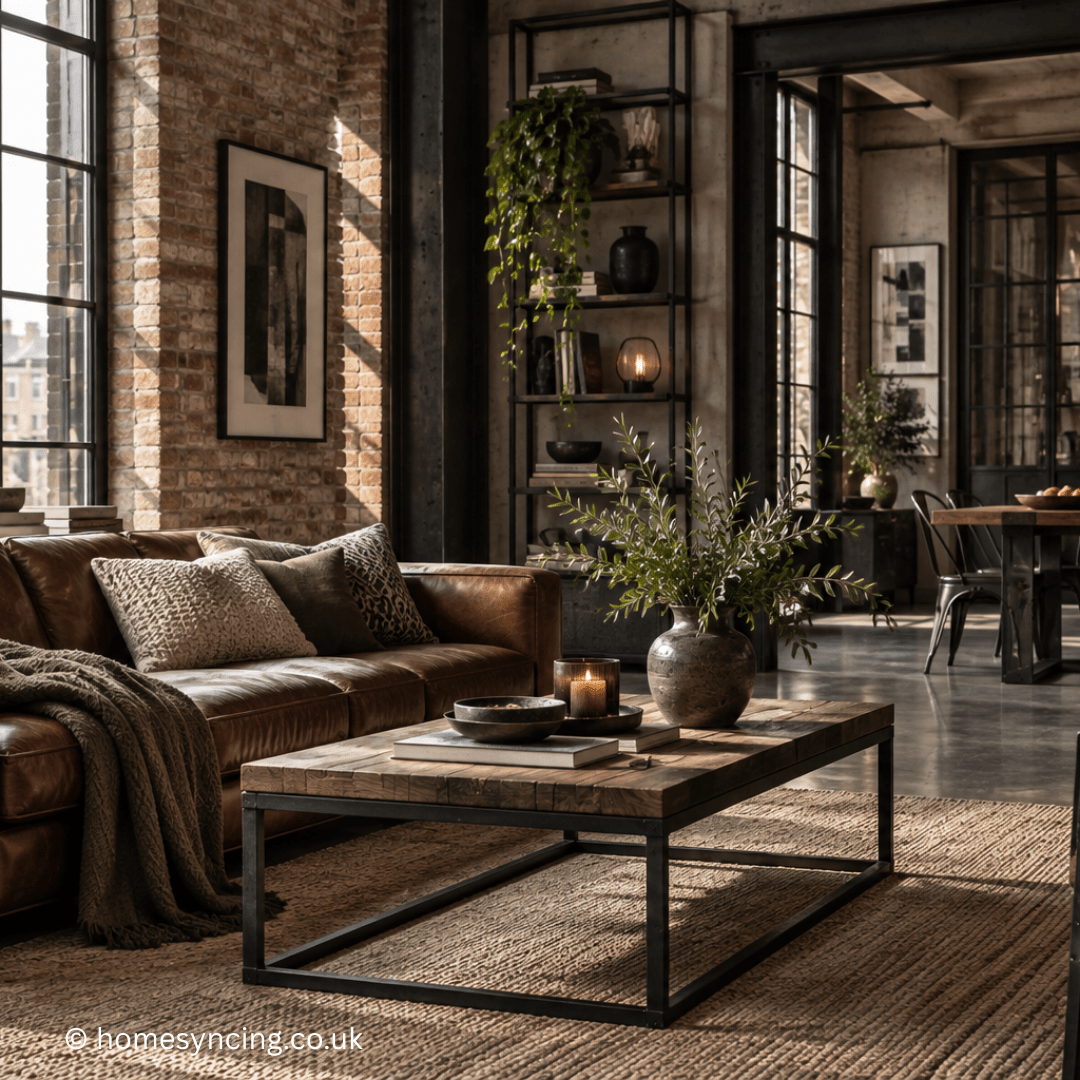
There is a particular beauty to buildings that reveal how they were made.
Brick walls bearing the marks of age, great timber beams, iron-framed windows and floorboards worn smooth by generations of footsteps all tell us something about a building’s past. Rather than disguising these features, industrial interior design puts them at the heart of a room.
The style has its origins in places built for work rather than decoration: factories, mills, warehouses and workshops. As former industrial buildings found new uses, many of their practical features were retained. Exposed brickwork, steel columns, visible pipes and large windows became part of the character of these converted spaces rather than something to be concealed.
Today, you certainly don’t need to live in a Victorian warehouse to enjoy the industrial look.
Used thoughtfully, industrial furniture, reclaimed timber, aged metal and utilitarian lighting can bring character to houses of almost any period. The secret is not to recreate a factory in your sitting room, but to borrow the qualities that make these old working buildings so appealing: honest materials, useful objects, good craftsmanship and a pleasing lack of fuss.
Begin with the Building
Before choosing furniture, look at the room itself.
One of the central ideas behind industrial interiors is to celebrate the fabric of a building rather than cover every surface with decoration. Original brick, old floorboards, beams, stonework and metal-framed windows can all provide a natural starting point.
If your home has such features, resist the temptation to make them too perfect. Old brickwork gains much of its character from variations in colour and texture, while timber is often more interesting for its knots, marks and uneven grain.
That doesn’t mean manufacturing history where none exists.
Stripping perfectly good plaster from a wall simply to create the appearance of an old warehouse can easily feel contrived. In a newer property, it is often better to introduce the industrial look through furniture, lighting and materials while allowing the architecture to remain true to the building.
The most convincing interiors tend to feel as though they have evolved naturally.
Choose a Warm Industrial Colour Palette
Mention industrial décor and it is easy to imagine a world composed entirely of grey, black and brown. In practice, the most successful schemes are considerably more nuanced.
Begin with colours taken from natural and hardworking materials: warm plaster, limestone, aged brick, weathered timber, charcoal and iron. These create a quiet backdrop without making a room feel cold.
Then introduce deeper tones where they will have the greatest effect. Black steel shelving, for example, can provide definition against a soft off-white wall, while a dark charcoal cabinet can anchor a room filled with lighter timber.
Earthy colours work particularly well alongside industrial furniture. Olive and moss green, tobacco, rust, ochre and deep burgundy all sit comfortably with brick, leather and aged metal.
The aim is warmth rather than starkness.
Let Reclaimed Wood Bring Character
Few materials suit an industrial-style interior quite as naturally as old timber.
In former workshops and factories, wood was chosen because it was strong, useful and repairable. Those same qualities make reclaimed wood furniture particularly appealing today.
A substantial dining table made from salvaged timber can become the centre of a room. Look for visible grain, knots and small variations in colour rather than a surface that has been made artificially uniform.
The same principle works for coffee tables, benches, shelving and sideboards.
Reclaimed timber also performs another useful role: it softens metal. A black steel frame can feel rather severe on its own, but combine it with an aged oak top and the effect becomes warmer and more tactile.
When choosing reclaimed wood furniture, look for genuine construction and good craftsmanship rather than excessive artificial distressing. Natural wear tends to be irregular and subtle. Furniture covered in identical dents, scratches and manufactured ‘aged’ marks rarely has the same appeal.
Use Metal with Restraint
Metal is one of the defining materials of industrial furniture, but a little goes a surprisingly long way.
Blackened steel and iron work beautifully for table legs, shelving frames, cabinets and lighting. Bronze, aged brass and patinated copper can introduce warmer notes, particularly in rooms where black metal might otherwise feel too dominant.
There is no need for every metal finish to match.
Indeed, old working buildings rarely contained perfectly coordinated fittings. Iron window frames, brass handles and copper pipes might happily have existed within the same space because each was chosen for a practical reason.
That relaxed approach can work just as well at home.
A steel-framed coffee table might sit beside an aged brass lamp, while iron shelving provides a backdrop for ceramics, books and wooden objects. Repetition of one or two finishes will give the room coherence without making it appear overly coordinated.
Find the Right Industrial Furniture
Good industrial-style furniture tends to have a straightforward quality.
Look for pieces where the construction is easy to understand: timber resting on a steel frame, a cabinet with visible handles, an open shelving unit or a workbench-style table with sturdy legs.
Some of the best pieces were never intended to be fashionable at all.
Old factory stools, workshop cabinets, machinists’ drawers, school cupboards and haberdashery units can all make characterful additions to a home. Their appeal comes partly from their usefulness and partly from the marks left by their former lives.
Vintage pieces can be particularly effective when mixed with contemporary furniture.
An old metal cabinet beside a comfortable modern sofa feels far more natural than a room in which every item has been bought from the same industrial furniture collection.
Think collected, rather than themed.
Choose Softer Pieces for Balance
An industrial living room should still be somewhere you want to spend an evening.
This is where softness becomes important.
Leather works particularly well, especially in warm tan, chestnut or tobacco tones that develop character as they age. But it isn’t the only option. Linen, wool, cotton and textured upholstery can all provide a welcome counterpoint to steel, concrete and brick.
An industrial-style living room might combine a generous linen or velvet sofa with a reclaimed timber coffee table, an old leather chair and a black metal shelving unit.
Then introduce rugs, cushions and throws.
A large wool or jute rug will soften hard flooring and absorb sound, while cushions in olive, rust and natural linen prevent the palette from becoming too austere.
Plants are useful here too. Green foliage looks particularly striking against brick and dark metal and brings an organic quality to a scheme dominated by harder materials.
Make Industrial Lighting Work Hard
Lighting is one of the easiest ways to introduce industrial character without changing an entire room.
The original lighting in factories and workshops was designed first and foremost to illuminate a task. That functional quality remains part of its appeal.
Look for generous metal pendant lights over dining tables and kitchen islands, adjustable wall lights beside a reading chair or bed, and articulated lamps inspired by traditional workshop designs.
Enamel shades, aged brass, ribbed or reeded glass and dark metal all sit naturally within the style.
Be slightly wary of exposed bulbs everywhere. While they have become closely associated with industrial décor, a bare bulb can produce harsh light and may feel more like a themed restaurant than a comfortable home when overused.
Instead, think in layers.
Combine pendants with table lamps, wall lights and floor lamps, using warm bulbs to create smaller pools of illumination. The fittings may have an industrial character, but the resulting atmosphere should still feel welcoming.
Don’t Forget the Floor
Industrial buildings were made to withstand hard use, and their floors reflected that.
Concrete, brick, stone and timber are therefore natural choices for an industrial-inspired home.
If you already have old floorboards, celebrate them. Small marks and variations often add to their appeal. Stone or brick floors can be equally effective, particularly in kitchens, hallways and extensions.
Polished concrete works well in more contemporary spaces, but needs warmth elsewhere in the scheme to prevent the room from feeling stark.
Rugs are invaluable.
Rather than choosing something overly decorative, look for natural fibres, faded patterns or richly textured wool. A generous rug can help define a seating area while providing softness beneath furniture made from timber and metal.
Display Useful and Beautiful Things
Open shelving is a familiar feature of industrial interiors, and for good reason.
In workshops, objects were kept where they could be seen and reached easily. At home, the same idea provides an opportunity to display useful possessions alongside things collected simply because they are beautiful.
Books, ceramics, old bottles, baskets, wooden bowls and framed artwork can all soften industrial shelving.
The important thing is not to fill every available space.
Allow some shelves to breathe and vary the height and scale of what you display. A large ceramic vessel beside a short stack of books will usually look more natural than a row of small decorative objects evenly spaced along a shelf.
Objects with a history are especially effective. An old wooden box, vintage clock or piece of workshop equipment can introduce a small glimpse of the past without turning the room into a museum.
Avoid Making the Look Too Perfect
There is a curious contradiction at the heart of industrial interiors.
The style is admired for its imperfection, yet it is surprisingly easy to make it look over-designed.
A room filled with matching black metal furniture, reproduction factory lights and deliberately distressed wood may contain all the recognised ingredients of industrial décor while lacking the character that made the style appealing in the first place.
Mix periods and materials instead.
Place an old table beside contemporary chairs. Hang modern artwork against aged brick. Pair a traditional armchair with a steel and timber side table.
Allow some surfaces to show their age while keeping others clean and simple.
This contrast between old and new is often what gives an industrial interior its depth.
Bringing the Industrial Look Home
The best industrial interiors aren’t really about creating a ‘look’ at all. They are about appreciating materials and objects for what they are.
Timber is allowed to look like timber. Brick remains brick. Metal doesn’t need to pretend to be something softer or more decorative. Furniture reveals something of the way it has been constructed, and older pieces are valued for the evidence of lives and uses that came before.
Start with the character of your own home rather than trying to disguise it. Introduce reclaimed wood furniture, metal-framed pieces and purposeful lighting gradually, balancing them with textiles, comfortable seating, greenery and objects that mean something to you.
And don’t feel that everything needs to be finished.
An old workshop, mill or warehouse acquired its character over decades of use. A home deserves the same opportunity.
Perhaps that is the enduring appeal of industrial interior design: it doesn’t ask everything to be pristine. Instead, it finds beauty in craftsmanship, usefulness, age and the occasional imperfection – qualities that tend to become more interesting, rather than less, as the years pass.
We have some great pieces that will create a fantastic industrial look. Click here to see a selection.
Further Reading: Affordable Decorating Ideas That Will Transform Your Home, Sustainable Chic: A Beginner’s Guide to Circular Design
Daily Inspiration: Follow Us on Instagram, BlueSky, Threads , Pinterest, Twitter, TikTok