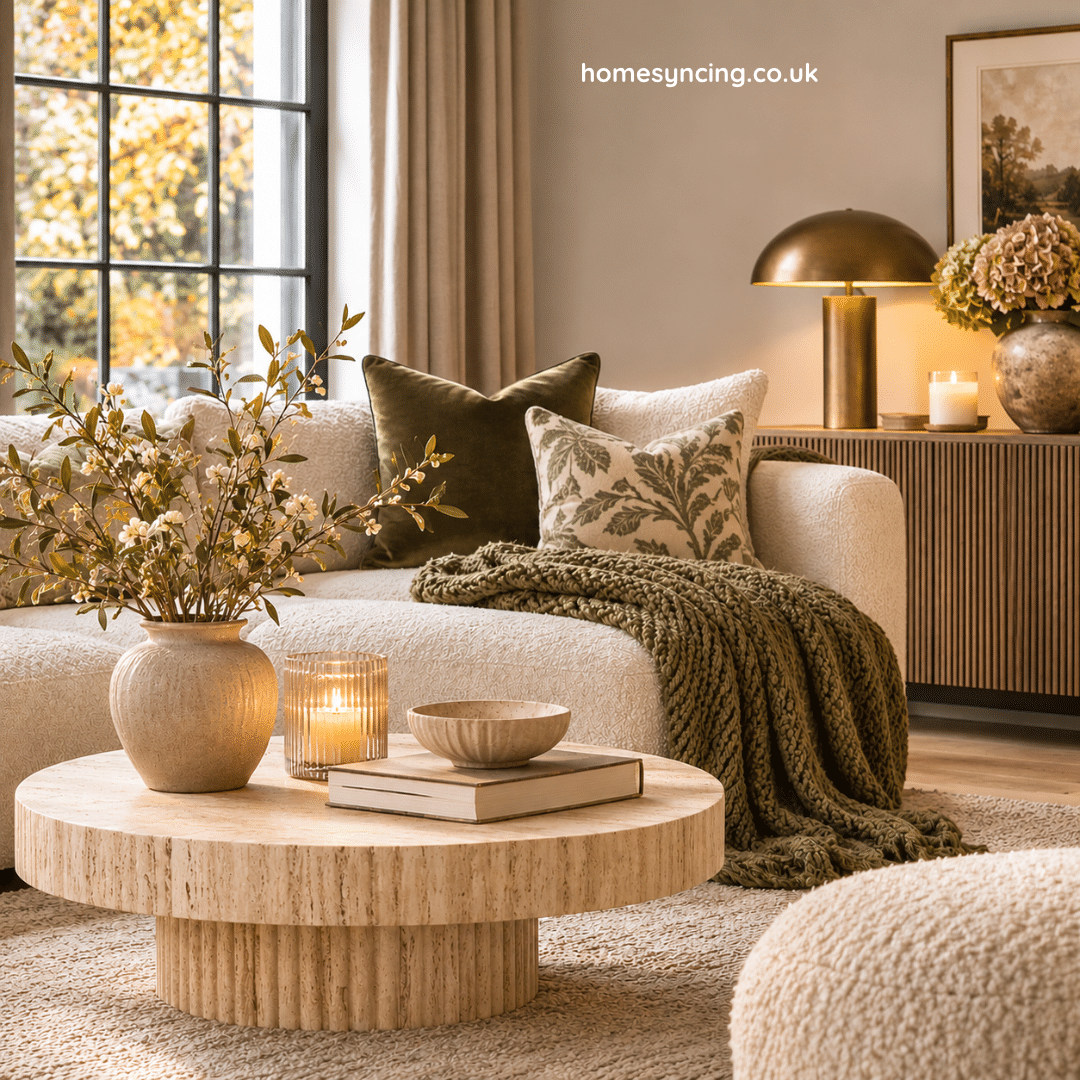
Creating a warm, welcoming home isn’t about filling every corner. Sometimes, the most inviting rooms are those where everything has room to breathe.
There is something rather lovely about coming home on a cold November afternoon. The light is beginning to fade, the air has that unmistakable winter chill, and all you really want is to close the door on the outside world and settle somewhere comfortable.
It is at this time of year that we begin to notice our surroundings a little more. The living room that felt wonderfully light and airy throughout summer might now seem rather bare. A favourite chair could do with a soft throw, while the corner beside the window might benefit from the gentle glow of a lamp.
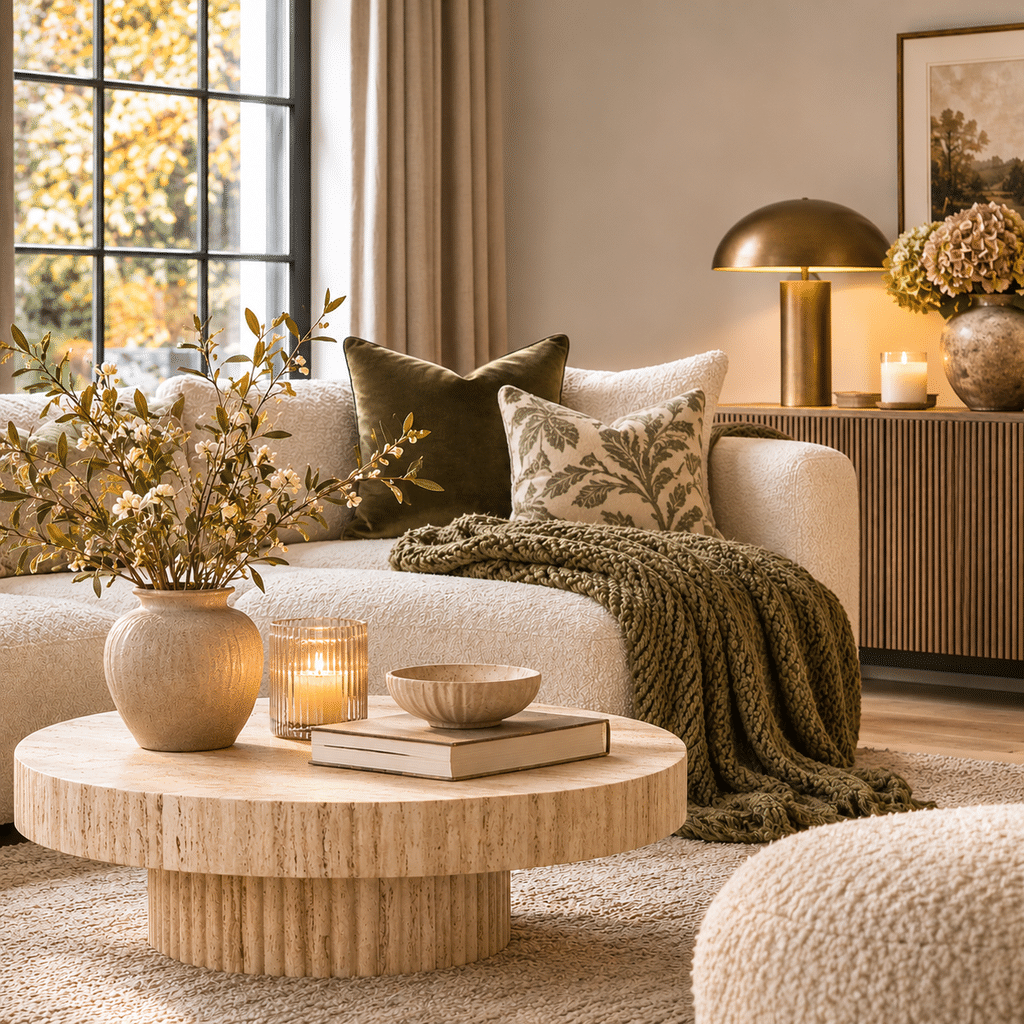
Our instinct is often to add more. More cushions, more candles, more ornaments and perhaps another piece of furniture to fill that empty space.
Yet making a home feel cosy without adding clutter is less about how much we bring into a room and more about how we use what is already there.
A welcoming home doesn’t need to be crowded with possessions. It needs warmth, character, comfort and, perhaps most importantly, a little breathing space.
Cosiness Is a Feeling, Not a Collection of Things
Think of the homes you have visited where you immediately felt comfortable.
Perhaps there was an old wooden table, polished by years of use, a comfortable armchair beside a window or a lamp casting a pool of warm light across a favourite book.
You probably remember how the room made you feel rather than the number of things it contained.
That is the real secret of a cosy home.
It isn’t necessarily about following the latest interior trends or surrounding ourselves with decorative objects. It is about creating somewhere that feels lived in, welcoming and entirely our own.
A room can be beautifully furnished and still feel rather cold. Equally, a modest space with carefully chosen furniture, soft textures and thoughtful lighting can feel wonderfully inviting.
The difference often lies in the details.
Begin with What You Already Have
Before buying anything new, spend a little time looking at the rooms you use most.
We become so accustomed to our surroundings that it is easy to stop noticing them. Furniture remains where it was first placed, decorative objects gradually accumulate, and shelves become home to things we no longer particularly enjoy.
Sometimes, a small rearrangement is all that is needed.
Moving an armchair closer to a window can create a lovely reading corner. Bringing a side table within easy reach of the sofa makes a room more comfortable to use. Removing a few ornaments might allow a favourite piece of pottery or an interesting lamp to become a focal point.
Consider how each room works throughout the day.
Where do you naturally sit with a cup of tea? Is there somewhere comfortable to read? Does the lighting feel welcoming when darkness falls?
The aim isn’t to create an immaculate room that nobody dares disturb. It is to make everyday living more enjoyable.
A little clear space can make the furnishings we love feel more special, rather than leaving them competing for attention.
Layer Textures Rather Than Possessions
One of the simplest ways to make a room feel warmer is through texture.
During the colder months, we naturally gravitate towards materials that feel comforting. Wool, cotton, linen, velvet and natural timber all introduce different qualities to a room, adding depth without necessarily adding visual clutter.
A soft throw draped over the arm of a sofa can change the feeling of a living room almost immediately. A couple of well-chosen cushions might introduce a little colour or pattern, while a rug can help define a seating area and make it feel more settled.
The important thing is to resist the temptation to keep adding.
A sofa doesn’t need to disappear beneath a mountain of cushions to feel comfortable. Often, two or three in complementary fabrics are more effective than an assortment of competing colours and patterns.
Look for materials that work together without being identical.
A woven cushion beside a smooth linen one, a chunky throw against a simple upholstered chair or the natural grain of a wooden coffee table can introduce plenty of interest.
Texture is particularly useful in neutral interiors, where different surfaces prevent a room from feeling flat or uninteresting.
And because textiles are relatively easy to change, they offer a practical way to refresh a room with the seasons without replacing larger pieces of furniture.
Let Lighting Do Some of the Work
Few things change the atmosphere of a room quite as effectively as lighting.
On a bright summer morning, natural daylight does much of the work for us. By November, however, we are relying on artificial lighting for a much greater part of the day.
A single overhead light may illuminate a room perfectly well, but it doesn’t always create the most comfortable atmosphere.
Instead, think about introducing light at different heights.
A table lamp beside a sofa provides useful illumination for reading, while a lamp on a console table can bring warmth to a hallway that might otherwise feel rather unwelcoming after dark.
A floor lamp can soften an empty corner, and carefully positioned accent lighting can draw attention to an interesting piece of furniture or artwork.
The colour of the light matters, too.
Warm-white bulbs, generally around 2,700K, produce a softer, more traditional glow than cooler white lighting. They are often particularly suitable for living rooms and bedrooms, where relaxation is more important than bright task lighting.
Where practical, dimmable lighting offers even greater flexibility.
You can enjoy brighter illumination when reading or carrying out everyday tasks, then lower the light when the evening calls for something more restful.
Good lighting makes a room feel inviting without taking up much additional space.
It also allows us to appreciate the furniture, colours and textures already present, rather than relying on more decorative accessories to create atmosphere.
Give Natural Materials a Place in Your Home
There is a quiet beauty in natural materials that never seems to go out of fashion.
Timber, stone, rattan, wicker, linen and ceramics bring their own textures and subtle variations into a room. Unlike perfectly uniform manufactured finishes, they often have small irregularities that make them interesting to look at and pleasant to live with.
A wooden side table might reveal the grain of the timber. A hand-finished ceramic bowl may have slight variations in its glaze. A woven basket introduces texture while providing somewhere useful to keep everyday belongings.
These materials work particularly well when combined with simpler furnishings.
An interesting wooden cabinet can bring character to a contemporary room, while a rattan light fitting can soften a space dominated by straight lines and smooth surfaces.
There is no need to fill a room with natural materials to enjoy their effect.
One or two carefully chosen pieces can be enough.
And where furniture is made well and cared for properly, it can remain part of a home for many years, developing its own character along the way.
Choose Furniture That Earns Its Place
A cosy room should be comfortable to use, not simply pleasant to look at.
This is where thoughtful furniture choices become particularly important.
A beautiful coffee table is of little use if there is nowhere to put down a cup. A striking chair may look wonderful, but if nobody enjoys sitting in it, it is unlikely to become a favourite.
When choosing furniture, consider how it will contribute to everyday life.
A sideboard can provide valuable storage while offering a surface for a lamp or a few treasured objects. A chest of drawers might bring warmth and character into a bedroom while keeping smaller belongings neatly organised.
In more compact homes, furniture that serves more than one purpose can be especially helpful.
A storage bench, for example, offers somewhere to sit while keeping shoes or other everyday items out of sight. A carefully chosen shelving unit can accommodate books and useful belongings without requiring several smaller pieces of furniture.
Scale matters as much as style.
Large furniture can overwhelm a small room, while too many little pieces can make the same space feel busy and fragmented.
Sometimes, one well-proportioned cabinet is a better choice than several smaller storage units.
The aim is to find a comfortable balance between the furniture a room needs and the space required to move around it easily.
Create Small Corners of Comfort
Not every part of a home needs to serve a grand purpose.
Sometimes, the most enjoyable spaces are the smallest.
A comfortable chair beside a window, a little table for a cup of tea and a lamp for the darker evenings can create a reading corner without requiring an entire room.
A quiet corner of the bedroom might become somewhere to sit for a few minutes before the day begins. A small console table in the hallway can provide a welcoming place for a lamp, a bowl for keys and perhaps a favourite photograph.
These little spaces work best when they are kept simple.
Rather than adding decorative objects simply to fill the area, consider what would genuinely make it more useful or enjoyable.
A reading corner needs somewhere comfortable to sit, enough light to read by and perhaps a small surface for a book or drink.
Anything else is optional.
There is a particular pleasure in creating a space that has been thoughtfully arranged around something you enjoy doing.
It makes a home feel personal in a way that even the most carefully coordinated interiors sometimes fail to achieve.
Display the Things That Mean Something
A home without personal belongings can feel rather impersonal, but displaying everything we own can leave even a generously sized room feeling cluttered.
Finding a balance between the two is part of making a home feel comfortable.
Books, photographs, collected pottery, inherited furniture and objects brought home from memorable places all have their place.
They tell the story of the people who live there.
The trick is to give them enough room to be appreciated.
Rather than filling every shelf, try grouping a few objects together and leaving some clear space around them.
A favourite ceramic vase might look lovely beside a small collection of books. An interesting sculpture can become a focal point on a sideboard without needing several other ornaments for company.
Different heights, shapes and textures can make a small arrangement more interesting, while repeating a few colours or materials helps everything feel connected.
There is no need to follow rigid decorating rules.
If something makes you smile when you see it, that is often reason enough to keep it on display.
And if you have more treasured objects than space to show them, consider changing a few with the seasons.
Putting some away doesn’t make them any less special. It simply gives you the pleasure of rediscovering them later.
Use Colour to Create Warmth
Colour has a considerable influence on how a room feels.
Warm neutrals, earthy greens, soft browns, muted reds and gentle ochres can create a sense of comfort, particularly when combined with natural materials and sympathetic lighting.
But a cosy home doesn’t have to be decorated in dark colours.
Pale walls can feel wonderfully welcoming when paired with warm timber, textured fabrics and soft lighting.
Equally, deeper colours can make a larger room feel more intimate, particularly in spaces used mainly during the evening.
Rather than redecorating whenever the seasons change, consider introducing colour through smaller details.
A cushion, throw, rug or decorative bowl can bring a seasonal note into a room without requiring a complete transformation.
Try to work with the colours already present.
If your furniture features warm wood tones, for example, earthy greens and natural linens may complement it beautifully. Cooler interiors might benefit from a little warmth introduced through textured fabrics, brass finishes or timber accessories.
There is no single colour scheme that makes a home cosy.
What matters is finding combinations that feel comfortable to you and allowing them to work together naturally.
Make Space for Everyday Living
One of the easiest ways for clutter to accumulate is when everyday belongings have nowhere convenient to go.
Shoes gather by the front door, magazines collect beside the sofa, and dining tables gradually become temporary storage for everything that doesn’t have a proper home.
Before introducing more decorative pieces, it is worth considering whether a room has enough practical storage.
Baskets can be useful for throws or magazines. Drawers help keep smaller items organised, while cabinets provide somewhere to store belongings that don’t need to remain on display.
The most effective storage is usually close to where things are used.
A basket for blankets beside the sofa is far more practical than keeping them in an upstairs cupboard. A small tray or bowl near the entrance can prevent keys and other everyday essentials from spreading across the hallway.
It is also worth remembering that not every surface needs to be decorated.
A clear dining table is ready for an impromptu meal. An uncluttered bedside table offers room for a book and a cup of tea.
Leaving space for life to happen is just as important as choosing beautiful furnishings.
A Cosy Home Should Still Feel Like Your Home
Interior inspiration is everywhere, and it can be tempting to imagine that a beautiful home must follow a particular style.
Yet the rooms we enjoy most are rarely those that have been arranged solely to look good in photographs.
They are the rooms where the furniture is comfortable, the lighting suits the occasion and the things around us have meaning.
A much-loved armchair might have seen better days, but that doesn’t necessarily make it any less welcome. An inherited table may not match the other furniture perfectly, yet it might be the very thing that gives a room its character.
Homes develop gradually.
They change as families grow, interests evolve and the seasons come and go.
Allowing that process to happen naturally often creates interiors with far more personality than attempting to complete every room at once.
Choose things because you enjoy them, not simply because they happen to be fashionable.
And remember that a room doesn’t have to be finished to be enjoyed.
The Pleasure of a Home That Has Room to Breathe
As November settles in and the evenings grow longer, it is natural to want our homes to feel a little warmer and more welcoming.
But creating that feeling doesn’t require a shopping list of new possessions.
Sometimes, it begins with moving a chair, changing a lampshade or bringing a favourite throw out of the cupboard.
Perhaps it means finding a better home for the things that have accumulated over the summer, or finally giving a treasured piece of furniture the space it deserves.
A comfortable home is one where there is room for the things we love, but also room to enjoy them.
And when the curtains are drawn, the lamps are lit and the evening stretches quietly ahead, it is often those simple, thoughtful details that make us happiest to be home.
At Homesyncing, we believe a welcoming home is created through thoughtful choices and pieces that bring both beauty and purpose to everyday living. Explore our collections of furniture, lighting and home accessories to find something that feels just right for your space.
Further Reading: Affordable Decorating Ideas That Will Transform Your Home, Sustainable Chic: A Beginner’s Guide to Circular Design, The Psychology of Colour in the Home, How to Choose and Measure for a Dining Table
Daily Inspiration: Follow Us on Instagram, BlueSky, Threads , Pinterest, Twitter, TikTok