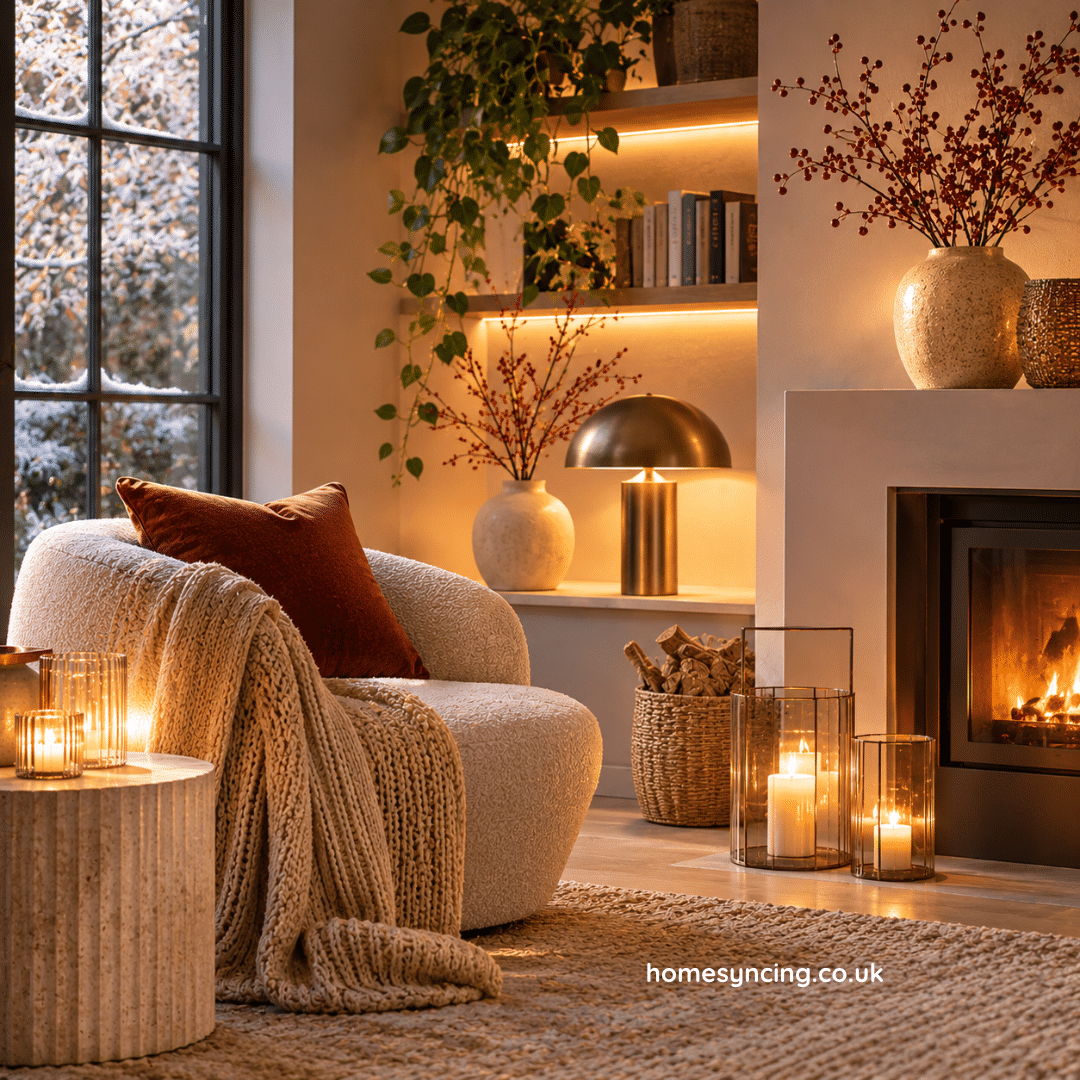
As daylight fades and the evenings grow longer, the way we light our homes becomes more important than ever. From the gentle glow of a table lamp to the warmth of a softly illuminated corner, thoughtful lighting can transform how a room looks, feels and functions throughout winter.
There is a particular moment on a November afternoon when the light begins to change.
The sun sits low in the sky, shadows stretch across the floor, and the brightness that filled the house only a few hours earlier gradually disappears. Before long, we find ourselves drawing the curtains and reaching for the light switch.
It is a familiar part of winter, yet one that changes the way we experience our homes.
Rooms that felt bright and welcoming during summer can suddenly seem rather gloomy. A favourite reading chair becomes less appealing without a nearby lamp, while a dining room that was filled with natural light now depends on artificial lighting for much of the evening.
But winter lighting is about far more than simply being able to see.
The right lighting can bring warmth to a room, highlight beautiful furnishings, make everyday activities more comfortable and create that wonderful feeling of coming home on a cold evening.
And perhaps the loveliest thing is that improving the lighting in your home doesn’t necessarily require expensive alterations or a complete redesign.
Often, it is simply a matter of looking at familiar spaces in a different light.
Why Lighting Changes the Way We Feel About a Room
Think of a room illuminated by a single bright ceiling light.
Everything is clearly visible, but the atmosphere can feel rather flat. Corners appear stark, surfaces reflect the same intensity of light, and there is little variation to draw the eye.
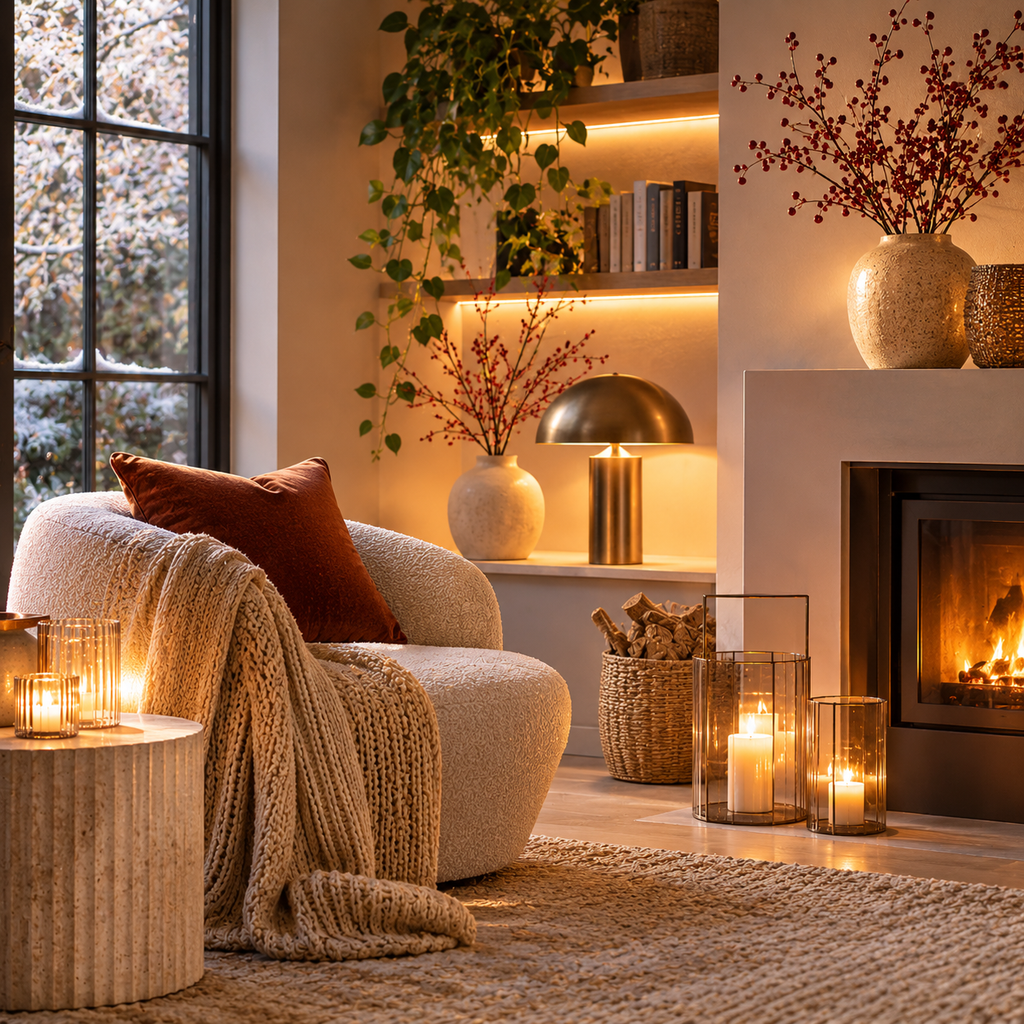
Now imagine the same room with a table lamp beside the sofa, a floor lamp near an armchair and a gentle wash of light across a favourite piece of furniture.
The room itself hasn’t changed, yet the atmosphere feels entirely different.
This is because lighting influences how we perceive colour, texture, space and proportion.
Soft light can bring out the warmth of natural timber, reveal the texture of upholstery and create a sense of depth. Carefully positioned lighting can make a large room feel more intimate or help a smaller space feel balanced and welcoming.
It also plays a practical role in our daily lives.
We need brighter, well-directed light for reading, cooking and other detailed tasks, while softer illumination is often more comfortable when relaxing in the evening.
The key is understanding that different activities require different kinds of light.
A thoughtfully lit home provides a little of each.
The Secret to a Welcoming Home: Layered Lighting
One of the most useful principles in interior design is layered lighting.
Rather than relying on one central light fitting, layered lighting combines several sources to create a room that is both practical and comfortable.
Designers generally consider three main types of lighting: ambient, task and accent lighting.
Ambient Lighting: The Foundation of a Room
Ambient lighting provides the general illumination needed to move around a room safely and comfortably.
It might come from ceiling pendants, recessed lights, wall fittings or a combination of lamps.
During winter, ambient lighting becomes particularly important because natural daylight is available for fewer hours.
However, general lighting doesn’t need to be excessively bright.
In living rooms and bedrooms, a softer overall level of illumination can be more comfortable, particularly when supported by additional lights where needed.
Dimmers can be useful, allowing the brightness to be adjusted throughout the day.
Task Lighting: Light Where You Need It
Task lighting is designed for specific activities.
A reading lamp beside an armchair, a desk lamp in a home office or under-cabinet lighting above a kitchen worktop are all examples.
Good task lighting helps us see what we are doing without unnecessarily illuminating the entire room.
Position is important.
A reading lamp should direct light towards the book without shining uncomfortably into the eyes. In the kitchen, lighting should illuminate the work surface rather than leaving it in the shadow of the person preparing food.
As winter brings longer evenings indoors, these practical details become increasingly valuable.
Accent Lighting: Bringing Character to a Room
Accent lighting draws attention to particular features.
It might illuminate a painting, highlight the texture of a wall or bring a gentle glow to a decorative object.
A small lamp on a console table can make an entrance hall feel more welcoming, while a carefully positioned light can emphasise the natural grain of a wooden cabinet.
Accent lighting isn’t essential in every room, but it can add depth and personality.
And when these three layers work together, a room becomes far more flexible, allowing its atmosphere to change according to the occasion.
Why Warm Light Feels So Inviting in Winter
Not all white light looks the same.
Some bulbs produce a cool, bluish-white appearance, while others give off a warmer, more golden light.
This difference is described by colour temperature, measured in Kelvin.
For most living rooms and bedrooms, warm-white bulbs of around 2,700K are a popular choice because they create a softer, more traditional appearance.
Bulbs around 3,000K offer a slightly crisper warm-white light, which can work well in kitchens, hallways and other spaces where a balance between warmth and clarity is desirable.
Cooler white lighting may be useful in certain task-focused areas, but it can feel less restful when used throughout a living room in the evening.
Colour temperature is only part of the picture, however.
Brightness, the direction of the light, the shade surrounding the bulb and the colours of the room all influence the finished effect.
A fabric lampshade can diffuse light gently, while an opaque metal shade may direct most of its illumination downwards.
Both can be beautiful, but they serve different purposes.
When choosing lighting, think about the effect you want to create rather than simply selecting the brightest bulb available.
Make the Living Room Feel Warm and Welcoming
During winter, the living room often becomes the centre of the home.
It is where we settle after supper, enjoy a favourite programme, read or spend time with family and friends.
Yet it is also a room that may need to accommodate several different activities.
A single ceiling light rarely provides the flexibility required.
Instead, consider creating smaller areas of illumination.
A table lamp on a side table can provide a gentle glow beside the sofa. A floor lamp near a comfortable chair offers useful reading light, while a lamp on a sideboard can soften a darker corner.
If you have a particularly attractive piece of furniture, consider how lighting might bring out its character.
Natural timber often looks especially beautiful under warm illumination, which can reveal the variations in its grain and finish.
The same applies to ceramics, textured fabrics and decorative objects.
A well-positioned lamp can make these familiar details feel more noticeable without introducing anything new into the room.
Try switching off the main ceiling light one evening and using only your table and floor lamps.
You may be surprised by how different the room feels.
A Little Light Can Transform a Hallway
Hallways are often overlooked when planning home lighting.
During summer, natural light may be sufficient for much of the day, particularly if the entrance has glazed doors or nearby windows.
In winter, however, the hallway is frequently one of the first spaces we enter after dark.
A welcoming entrance can make coming home feel that little bit more pleasant.
Where space allows, a console table with a small lamp can introduce warmth and character.
Wall lights are particularly useful in narrow hallways because they provide illumination without taking up valuable floor space.
A mirror positioned to reflect a light source can help distribute light around the room, although care should be taken to avoid uncomfortable glare.
Practicality matters, too.
Entrances and stairways need sufficient illumination for people to move around safely, particularly where there are changes in floor level.
The aim is to combine good visibility with an atmosphere that feels welcoming rather than harsh.
Bring a Softer Glow into the Bedroom
Bedrooms benefit from a different approach to lighting.
While bright illumination may be useful when dressing, cleaning or organising wardrobes, softer lighting is often preferable when preparing for sleep.
Bedside lamps are particularly valuable because they allow us to read or move around the room without relying entirely on the main ceiling light.
A lamp on each side of a double bed can provide independent lighting, although the fittings don’t necessarily need to match.
Wall-mounted reading lights can be a practical alternative where bedside tables are small.
If possible, choose lighting that can be adjusted or dimmed.
Lower levels of warm light during the evening can support a more restful atmosphere, while avoiding unnecessarily bright light close to bedtime may help protect normal sleep patterns.
Blackout curtains or blinds can also be useful where outside street lighting enters the room.
A bedroom should feel comfortable and practical, with enough light when it is needed and the opportunity for darkness when it is time to rest.
Don’t Overlook the Dining Room
There is something rather special about a dining table illuminated on a dark winter evening.
Perhaps it is the contrast between the darkness beyond the windows and the warmth within, or simply the pleasure of gathering around a table when the day is drawing to a close.
Whatever the reason, dining room lighting has a considerable influence on the atmosphere.
A pendant light positioned above the table can provide a natural focal point.
The height of the fitting matters, as it should illuminate the table without obstructing conversation or creating glare.
For many dining arrangements, the bottom of a pendant is positioned approximately 75–90cm above the tabletop, although the ideal height depends on the fitting, ceiling and proportions of the room.
A dimmer can be particularly useful, allowing brighter light for everyday activities and softer illumination during meals.
Additional lamps on a sideboard or nearby cabinet can provide gentle background lighting.
This prevents the table from appearing as a brightly illuminated island surrounded by darkness.
And while candles can bring a lovely atmosphere, they should always be placed in stable holders, away from curtains, dried foliage and other flammable materials.
LED candles offer an alternative where a naked flame would be unsuitable.
The Kitchen Needs More Than a Ceiling Light
The kitchen is one of the busiest rooms in the home, particularly during winter.
With darker mornings and earlier evenings, preparing meals often takes place entirely under artificial lighting.
Good kitchen lighting therefore needs to be practical as well as attractive.
Ceiling fittings provide general illumination, but they don’t always reach the places where light is most needed.
Under-cabinet lighting can make a considerable difference by illuminating worktops directly.
Pendant lights above an island or breakfast bar can provide both task lighting and a decorative feature, provided they are positioned appropriately.
If the kitchen also serves as a dining or social space, consider how the lighting can adapt once cooking is finished.
Separate lighting circuits or dimmable fittings can help create a gentler atmosphere without compromising the brighter illumination required for food preparation.
The most successful kitchens combine clear, practical task lighting with enough flexibility to feel comfortable throughout the evening.
Choosing the Right Lampshade
A lampshade is often treated as a finishing touch, yet it has a significant influence on how a lamp performs.
The material, shape, colour and size of the shade all affect the way light is distributed.
A pale fabric shade generally allows more light to pass through its surface, creating a softer glow around the lamp.
Darker or opaque shades tend to direct more light upwards or downwards, depending on their design.
Glass shades can produce very different effects according to whether they are clear, frosted, ribbed or coloured.
Proportion is important, too.
A shade that is too small may make a substantial lamp base appear unbalanced, while an oversized shade can overwhelm a delicate fitting.
Consider where the lamp will be placed and what it needs to do.
A decorative lamp on a sideboard may be chosen primarily for its appearance and gentle illumination, while a lamp used for reading needs to provide sufficient light in the right direction.
Always check the manufacturer’s guidance on suitable bulb types and maximum wattage, particularly when using enclosed shades.
Make the Most of Natural Daylight
Although artificial lighting becomes more important during winter, natural daylight still deserves our attention.
In the UK, the sun sits lower in the sky during the colder months, and the hours of daylight are considerably shorter.
Making the most of the available light can help rooms feel brighter during the day.
Begin with the windows.
Clean glass allows daylight to enter more effectively, while heavy curtains that remain partly closed can unnecessarily restrict the light reaching a room.
Where practical, arrange furniture so that taller pieces don’t obstruct windows.
Mirrors can help reflect daylight into darker areas, particularly when positioned thoughtfully.
Pale walls and reflective surfaces may also make a room feel brighter, although the effect depends on the amount and direction of incoming light.
It is worth considering how each room is used.
A breakfast table placed near a window may make winter mornings more pleasant, while a desk positioned to benefit from daylight can reduce the need for artificial lighting during brighter hours.
Small adjustments can help us enjoy what daylight there is before the lamps take over in the evening.
Choose Lighting That Is Beautiful and Efficient
With lights being used for longer periods during winter, energy efficiency becomes an important consideration.
LED bulbs are generally much more energy-efficient than traditional incandescent bulbs and typically last considerably longer.
They are available in a wide range of brightness levels, colour temperatures and decorative styles, making them suitable for many household fittings.
When choosing a bulb, look at its lumen rating rather than relying on wattage alone.
Lumens describe the amount of light produced, while watts measure the electrical power consumed.
A higher lumen rating means a brighter bulb, although the way the light is distributed will also affect how bright a room feels.
For existing fittings, check the correct cap type, dimensions and any manufacturer restrictions before replacing bulbs.
If using a dimmer switch, make sure the LED bulb is specifically marked as dimmable and that the switch is compatible.
Timers and suitable smart lighting controls can also help prevent lights being left on unnecessarily.
And, of course, the simplest energy-saving habit remains switching off lights when they are no longer needed.
Good lighting design isn’t about using more electricity. It is about placing the right amount of light where it will be most useful.
Choose Lighting That Will Last Beyond Winter
While winter often encourages us to reconsider our lighting, the best choices should serve our homes throughout the year.
A beautiful table lamp can remain a favourite feature in summer, even when it is used less frequently.
A well-positioned floor lamp continues to provide reading light regardless of the season, while thoughtfully chosen pendant lighting can become part of a room’s character for many years.
Rather than choosing fittings purely because they are fashionable, consider their proportions, materials and usefulness.
Natural finishes, simple shapes and good-quality construction often work comfortably alongside changing furniture and colour schemes.
Sculptural lamps can introduce interest to contemporary interiors, while glass, ceramic, timber and metal fittings each bring their own distinctive character.
The important thing is to choose pieces that suit your home and the way you live.
Lighting should complement a room rather than compete with everything around it.
A Warmer Welcome as Winter Settles In
There is a quiet pleasure in returning home on a cold evening and seeing a familiar lamp glowing through the window.
It is such a small detail, yet it can make the house feel welcoming before we have even stepped through the door.
As winter settles in, lighting becomes part of the rhythm of everyday life.
We switch on a lamp as the afternoon fades, gather around a softly illuminated dining table and settle into the evening with just enough light to feel comfortable.
These moments don’t require elaborate interiors or expensive changes.
Sometimes, all that is needed is a better-positioned lamp, a warmer bulb or a little thought about how light moves through a room.
The beauty of good winter lighting is that it allows us to enjoy our homes in a different way.
It brings attention to the things we love, makes familiar spaces more comfortable and creates a sense of warmth when the world outside feels cold and dark.
And when the curtains are drawn and the evening stretches ahead, there is something wonderfully reassuring about a home that is beautifully, thoughtfully lit.
At Homesyncing, we believe lighting should do more than illuminate a room. It should bring warmth, character and a sense of comfort to everyday living. Explore our collections of lighting, furniture and home accessories to find thoughtful finishing touches for your home, whatever the season.
Further Reading: How to Create a Bedroom Retreat, Affordable Decorating Ideas That Will Transform Your Home, Sustainable Chic: A Beginner’s Guide to Circular Design, Small Room, Big Impact
Daily Inspiration: Follow Us on Instagram, BlueSky, Threads , Pinterest, Twitter, TikTok