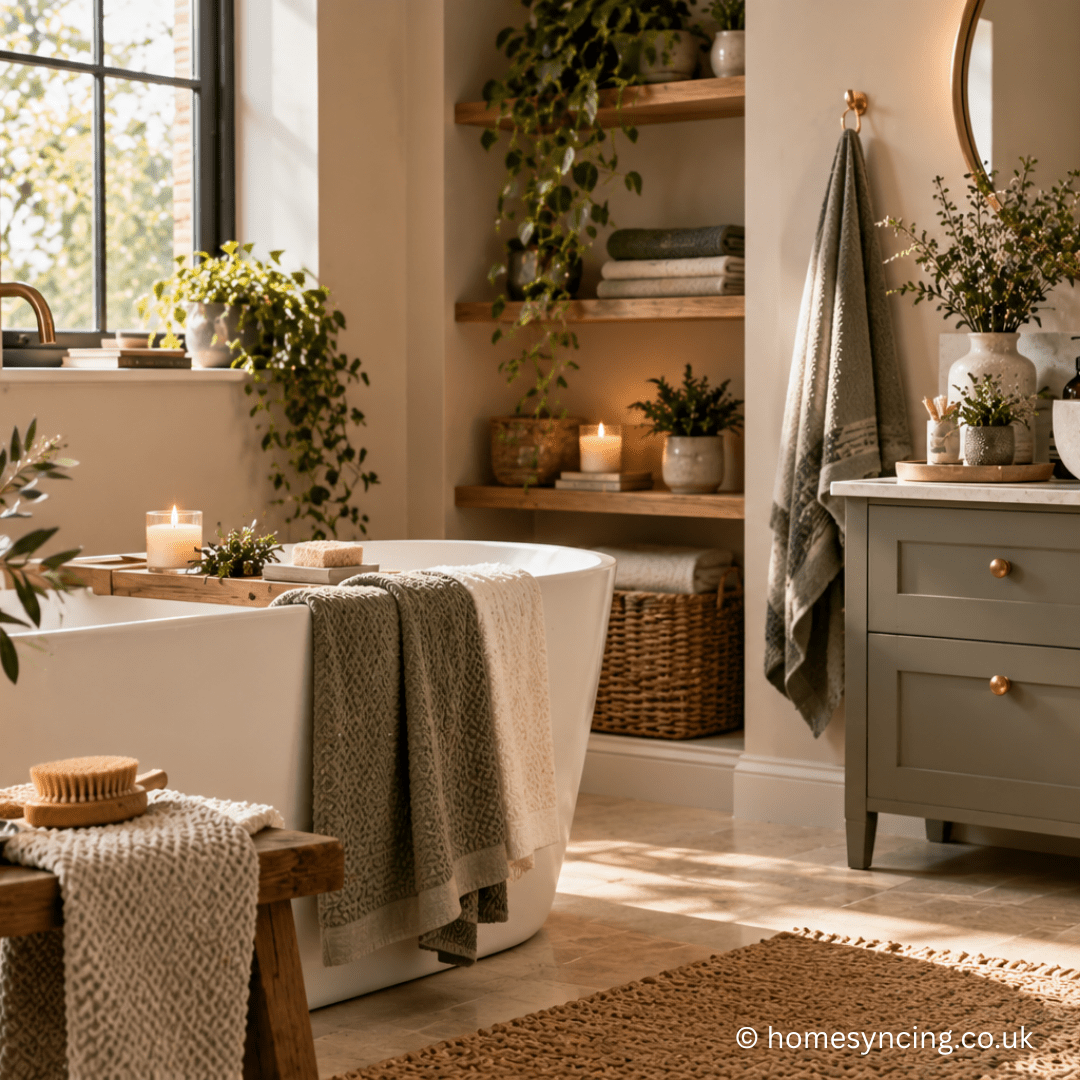
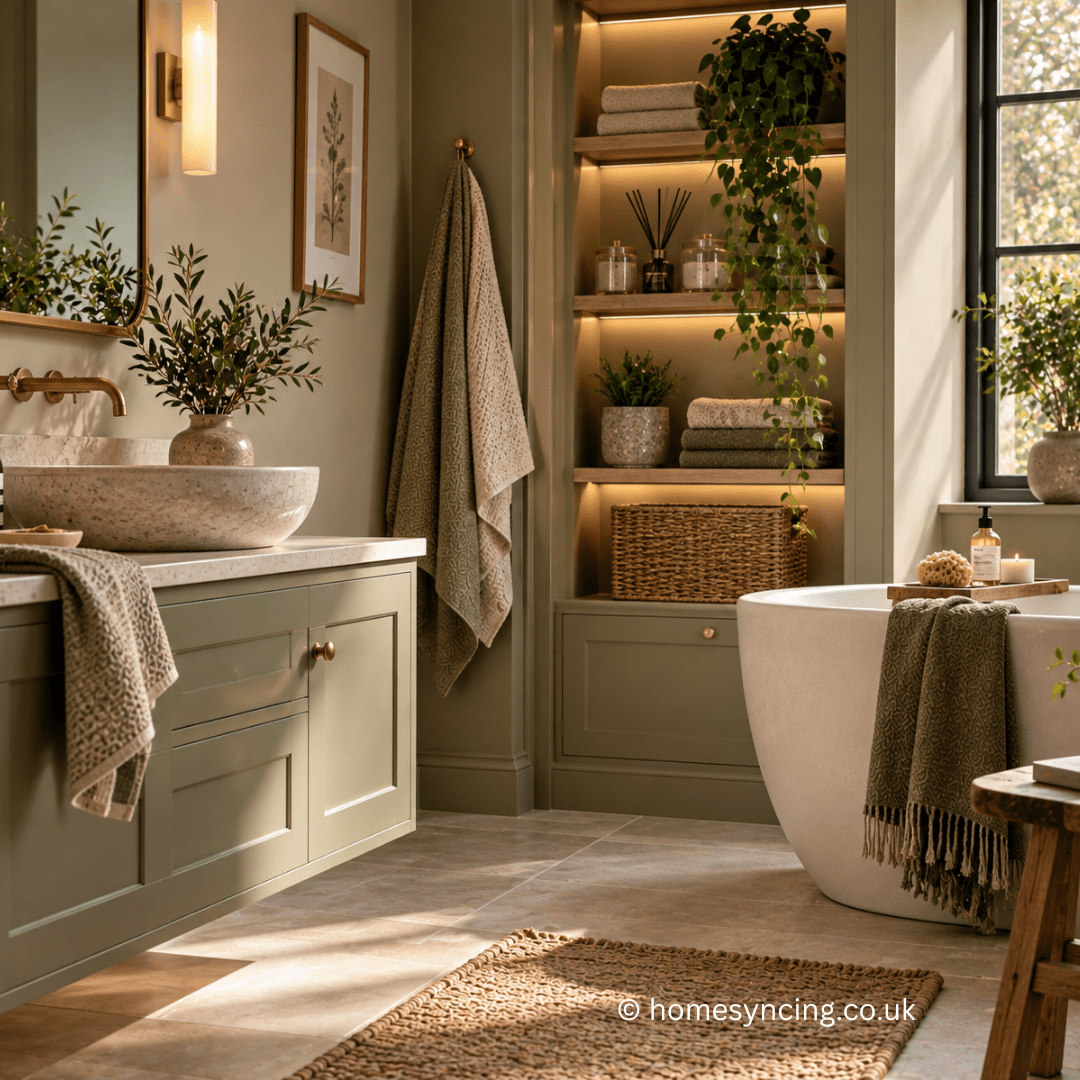
Bathrooms are curious rooms.
They are among the most practical spaces in a house, yet they are also where many of us begin and end the day. A bathroom needs to withstand water, steam and hurried mornings, while somehow retaining the calm that makes a long bath or quiet evening feel restorative.
It is often the smallest details that bring these two sides together.
A well-positioned towel rail, a mirror that catches the morning light, a wooden bath tray or a beautifully made soap dish might seem insignificant beside a new bath or vanity unit. Yet these are the things we touch and use every day.
Choosing the right bathroom accessories is therefore about much more than finding matching pieces.
The best accessories make a bathroom easier to use, complement its materials and architecture and, over time, become such a natural part of the room that you barely notice how hard they are working.
Begin with How You Use Your Bathroom
Before choosing anything, consider how the room is actually used.
A family bathroom has different requirements from a small cloakroom or an en-suite used by one or two people.
If several people use the bathroom each morning, generous towel storage and an uncluttered basin area may matter most. A guest bathroom might need little more than somewhere obvious for a towel, soap and a few essentials.
If you enjoy long baths, a bath tray can be genuinely useful for holding a book, candle or drink. If showers are more important, accessible hooks, shelves and somewhere sensible for toiletries deserve greater attention.
Make a list before you buy.
It is surprisingly easy to become distracted by attractive bathroom accessories and forget the practical problem you originally intended them to solve.
Think About Position Before Appearance
A beautifully designed towel rail is of little use if it sits on the opposite side of the room from the shower.
Before choosing accessories, walk through the movements you make in the bathroom.
Where do you reach for a towel after stepping out of the bath? Where does soap naturally need to sit? Where do you put clothes or a dressing gown? Is there somewhere convenient for a hand towel beside the basin?
Small decisions about position can have a disproportionate effect on how comfortable the room is to use.
This is particularly important when planning a new bathroom, because accessories are often considered only after tiles and sanitaryware have been installed.
Think about them earlier and you can plan suitable positions, fixings and electrical points as part of the overall design.
Choose Bathroom Accessories That Suit the Room
Accessories should relate to the character of the bathroom rather than being treated as decoration added at the end.
In a traditional bathroom, aged brass, timber, marble, ceramic and woven materials can bring warmth and character.
A more contemporary room might suit simpler shapes, restrained finishes and fewer visible accessories.
But there is no need to follow one style too rigidly.
An old wooden stool beside a contemporary freestanding bath can soften a very polished scheme. Equally, a simple modern mirror can bring clarity to a bathroom with traditional panelling or patterned tiles.
The most interesting rooms often contain this gentle conversation between old and new.
Don’t Feel Everything Has to Match
There was a time when bathroom accessories were commonly bought as a matching set: soap dispenser, tumbler, toothbrush holder and soap dish, all identical.
There is nothing wrong with coordination, but a bathroom can feel more individual when materials are related rather than perfectly matched.
A brass tap might be echoed by the frame of a mirror or the detail on a wall light without every hook and handle being exactly the same finish.
Likewise, natural timber can sit beautifully alongside stone, ceramic and woven baskets.
Think in terms of a small family of materials.
Repeating two or three finishes around the room usually creates enough continuity without making everything appear to have arrived in the same box.
Pay Attention to Metal Finishes
Metal finishes have a considerable influence on the character of a bathroom.
Chrome has a crisp, familiar appearance and works comfortably in both traditional and contemporary schemes. Brushed nickel and softer metallic finishes can feel quieter, while brass and bronze introduce warmth.
If you’re combining different metal finishes, do it deliberately.
Repeating each finish in more than one place can help the combination feel considered rather than accidental.
Also remember that appearance isn’t the only consideration.
Bathrooms are demanding environments. Water, condensation and cleaning products can all affect finishes, so check the manufacturer’s care instructions and suitability for bathroom use before buying.
A beautiful finish that requires constant polishing may not be the wisest choice in a busy family bathroom.
Choose Materials That Improve the Room
Bathrooms naturally contain many hard surfaces: porcelain, glass, stone, tiles and metal.
Accessories provide an opportunity to introduce materials that make the room feel softer and more comfortable.
A timber stool beside the bath brings warmth. Woven baskets add texture. Linen or cotton towels soften tiled walls, while ceramics introduce the slight irregularity that prevents a room from feeling overly clinical.
Stone can be particularly effective for soap dishes, trays and containers, although natural materials need to be appropriate for their intended use and cared for correctly.
You don’t need many different materials.
A handful repeated thoughtfully is usually enough.
Give Towels Proper Attention
Few bathroom accessories work harder than the humble towel rail.
Its size and position should reflect how many people use the room and the types of towels it needs to hold.
A single ring may be perfectly adequate beside a cloakroom basin. A family bathroom is likely to require considerably more.
Hooks can be particularly useful for dressing gowns and children’s towels, while rails allow towels to hang more openly.
Heated towel rails offer warmth as well as storage, but their size, heat output and electrical or plumbing requirements need to be considered as part of the wider bathroom design.
Whatever you choose, allow enough room for towels to hang without being permanently bunched together.
Keep the Basin Area Calm
The basin is one of the busiest surfaces in a bathroom and one of the easiest to clutter.
Toothbrushes, toothpaste, soap, skincare and other everyday items quickly accumulate.
Start by deciding what genuinely needs to remain visible.
A soap dispenser or dish, toothbrush holder and perhaps a small tray may be all that is necessary. Everything else can often be kept in a drawer, mirrored cabinet or vanity unit.
A small tray can be especially useful for visually gathering several objects together.
Rather than five unrelated bottles scattered across a worktop, they become a single, more orderly arrangement.
It is a small change, but an effective one.
Choose the Right Bathroom Mirror
A mirror is technically an accessory, but visually it can be one of the most important features in the room.
Begin with proportion.
A tiny mirror above a broad vanity unit can look lost, while an excessively large one may overwhelm a small basin.
Consider the architecture too.
An arched mirror can introduce softness to a bathroom dominated by straight lines. A simple rectangular design may echo wall panelling or cabinetry, while a timber or brass frame can introduce another material into the scheme.
Then think about light.
A mirror positioned to reflect a window can make wonderful use of natural daylight. Integrated or adjacent lighting is useful for practical tasks, but it should be planned carefully for safe bathroom use.
For electrical fittings in bathrooms, appropriate products and installation requirements are essential. Where there is any uncertainty, seek advice from a suitably qualified electrician.
Make Storage Part of the Design
Bathroom storage works best when it is considered before clutter appears.
A vanity unit provides convenient concealed storage immediately beneath the basin. Mirrored cabinets can make good use of wall space, particularly in smaller bathrooms.
Open shelves are useful too, but they need restraint.
Rolled towels, a small basket and a few attractive bottles can look lovely. A year’s supply of toiletries is less appealing.
Combine open and closed storage where possible.
Keep the things you enjoy seeing on display and give everything else somewhere quieter to live.
Use Baskets to Soften the Room
Woven baskets are particularly at home in bathrooms because they bring texture to otherwise hard surroundings.
Larger baskets can hold spare towels or laundry, while smaller versions work well for toilet rolls and toiletries.
Choose materials appropriate to the conditions and avoid leaving natural fibres permanently wet.
As elsewhere in the home, baskets are most useful when they have a clear purpose.
A basket for clean towels makes sense. A basket filled with an ever-growing assortment of half-used bottles simply disguises clutter rather than solving it.
Make the Bath Feel Inviting
If you have a freestanding or built-in bath, the area around it deserves the same consideration as the basin.
A bath caddy or tray provides somewhere for soap, a sponge, book or drink and can introduce natural timber or another warm material.
A small stool beside the bath is another wonderfully simple addition. It can hold a towel, candle or toiletries and is easily moved when necessary.
Resist the temptation to cover every ledge with bottles.
A bath is naturally a strong visual feature. Giving it a little empty space often makes the whole bathroom feel calmer.
Choose a Bathroom Bin That Can Be Cleaned Easily
Not every accessory is glamorous.
A bathroom bin is nevertheless one of the most practical things in the room.
Choose one of an appropriate capacity and consider how easily it can be emptied and cleaned. A removable inner bucket can make everyday maintenance simpler.
The same principle applies to toilet brushes, soap dispensers and toothbrush holders.
Before buying, ask yourself how easily you can clean around, beneath and inside the object.
Bathrooms demand regular cleaning, and elaborate accessories with numerous grooves and awkward edges can quickly become tiresome.
Good design should make housekeeping easier, not harder.
Introduce Plants Carefully
Greenery can transform a bathroom.
Leaves look particularly fresh against stone, timber, warm white walls and muted greens, strengthening the connection between the room and the natural world.
But choose plants according to the actual conditions.
A bright bathroom with good natural light offers very different possibilities from a windowless en-suite.
Humidity can benefit some plants, but it doesn’t compensate for inadequate light.
If the conditions aren’t suitable, don’t force the idea. A vase containing a few fresh or dried branches can provide a similar natural note without turning the bathroom into a reluctant greenhouse.
Add Warmth with Textiles
Towels and bath mats are among the easiest bathroom accessories to change, yet they can have a significant effect on the room.
White towels create a clean, classic appearance, but colour can be wonderfully effective.
Olive, rust, tobacco, ochre and muted blue can bring depth to neutral bathrooms, while patterned textiles add interest without the commitment of patterned tiles.
Quality matters here.
Towels are used constantly, so choose them for feel, absorbency, laundering requirements and durability rather than appearance alone.
A beautiful bathroom should still work on a wet Tuesday morning.
Use Lighting to Create Atmosphere
Bathroom lighting has to perform several roles.
Bright, well-positioned light is important around a mirror, while softer illumination can make bathing in the evening considerably more relaxing.
Where the room allows, layered lighting is usually more successful than relying upon a single bright ceiling fitting.
Wall lights, illuminated mirrors and discreet architectural lighting can all contribute.
Warm light can also bring out the richness of timber, stone and brass particularly well.
Bathroom lighting must, however, be appropriate for its location and comply with the relevant electrical requirements, so decorative ambition should always be accompanied by proper installation.
Don’t Forget Scent
Scent is invisible, but it changes our perception of a room almost immediately.
Soap, bath oils and a subtle diffuser can make a bathroom feel welcoming without requiring additional decoration.
Keep fragrance restrained.
A bathroom filled with several competing scents rarely feels restful.
Natural notes inspired by herbs, woods and citrus can sit particularly comfortably in bathrooms, especially when the interior itself uses natural materials.
If using candles, place them on stable, heat-resistant surfaces, keep them away from towels and other combustible materials and never leave them unattended.
Spend Where It Matters
Bathroom accessories range from inexpensive everyday objects to beautifully crafted pieces intended to last for decades.
Price alone isn’t a reliable measure of quality.
Consider how frequently something will be touched and used.
A well-made towel rail, mirror or cabinet may justify a greater investment because it becomes a permanent part of the room. A toothbrush holder can be replaced rather more easily.
Look at materials, construction, guarantees and the availability of replacement components where relevant.
Buying fewer accessories of better quality can also make a bathroom feel calmer.
There is little value in filling a room with decorative objects simply because the shelves appear empty.
Avoid Following Bathroom Trends Too Closely
Bathrooms are expensive rooms to renovate, which makes short-lived trends particularly risky.
Accessories provide a useful way to introduce contemporary colour and character without committing to them permanently.
A towel, bath mat, soap dispenser or small stool can be changed far more easily than tiles or sanitaryware.
For the more permanent elements, natural materials and well-proportioned forms tend to have greater longevity.
Warm timber, stone, ceramic, brushed metals and colours borrowed from the landscape have an ease about them that works across different styles of home.
Let smaller details provide the fashion.
Allow the room itself to have a longer life.
Let the Bathroom Breathe
Perhaps the most important bathroom accessory is the one you decide not to buy.
Bathrooms can quickly become crowded with dispensers, trays, jars, baskets, plants, candles and decorative objects, each perfectly attractive on its own.
Together, they can overwhelm a relatively small room.
Leave some surfaces empty.
Allow the shape of the basin to be seen. Give the bath space around it. Let natural light fall across stone, timber or painted cabinetry without feeling obliged to fill every corner.
Calm often comes from absence as much as addition.
A Bathroom Designed for Everyday Rituals
When choosing bathroom accessories, it is easy to concentrate on finishes, colours and the latest designs.
But the details that prove most valuable are usually those that quietly improve an everyday ritual.
A towel waiting within reach of the bath. A mirror that catches good morning light. A drawer that keeps the basin clear. A wooden stool holding a book beside the bath.
These aren’t dramatic changes.
They are simply thoughtful ones.
Choose bathroom accessories according to how you live, favour materials that can withstand the demands of the room and resist filling every available surface.
Over time, the best bathrooms become more than practical spaces.
They become places in which the ordinary routines of morning and evening feel just a little more considered.
Further Reading: Affordable Decorating Ideas That Will Transform Your Home, Sustainable Chic: A Beginner’s Guide to Circular Design, Small Room, Big Impact
Daily Inspiration: Follow Us on Instagram, BlueSky, Threads , Pinterest, Twitter, TikTok