Home should be the place where the day softens around the edges.
After the noise of work, errands, appointments and everything else competing for our attention, there is something wonderfully reassuring about closing the front door and feeling able to switch off. A home that feels calm, comfortable and distinctly yours can offer more than somewhere to live; it can become a place to rest, restore and simply be.
Creating that sense of sanctuary does not require a complete redesign, nor does it mean filling every room with pale colours and candles. Often, it is the quieter details that make the greatest difference: a comfortable chair beside a window, a lamp casting a warm pool of light, natural materials beneath your fingertips, or a favourite view left beautifully uncluttered.
The aim is not perfection. It is to create a home that feels good to return to.
Begin with Colours That Make You Feel at Ease
Colour has a remarkable ability to change the atmosphere of a room. Before thinking about trends, consider how you would like your home to feel.
Soft neutrals, chalky whites, muted greens, gentle blues and warm earthy shades can all create a restful backdrop. Colours borrowed from the landscape often work particularly well because they feel familiar and easy to live with: think moss, clay, stone, sand and weathered timber.
That does not mean every room needs to be quiet or neutral. Deeper shades can feel wonderfully cocooning, particularly in a snug, bedroom or reading room. A rich olive green, warm terracotta or deep blue can bring intimacy and character without disturbing the sense of calm.
The most successful palette is simply one you enjoy living amongst.
Bring in Natural Materials and Tactile Layers
A sanctuary should appeal to more than the eye. Texture plays an important part in making a room feel comfortable and welcoming.
Natural materials such as timber, linen, wool, rattan, stone and woven fibres bring warmth and subtle variation. Unlike highly polished surfaces, they often become more characterful with age, helping a home feel settled rather than overly styled.
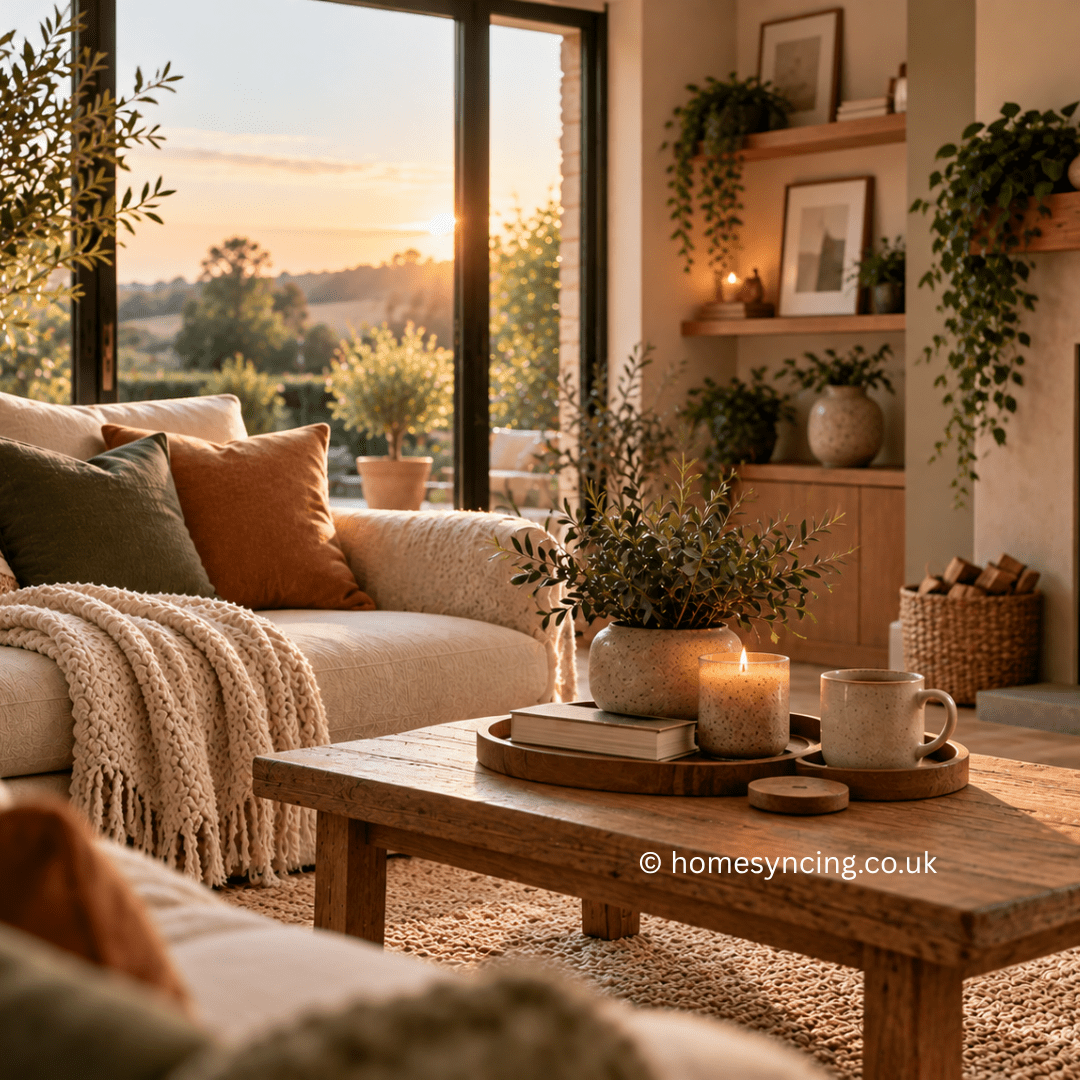
Layer these materials gradually. A linen curtain softening the light, a woollen throw folded over an armchair, a woven basket beside the fireplace or a thick rug beneath your feet can transform the way a room feels without overwhelming it.
There is no need for everything to match. In fact, a thoughtful mixture of old and new, smooth and textured, refined and rustic often gives a room far more personality.
Make Space for Calm
It is difficult for a room to feel restful when every surface is competing for attention.
This does not mean stripping your home of everything you love. A sanctuary should still tell your story. Instead, give favourite possessions a little breathing room and find practical homes for the things that do not need to be on display.
Closed cupboards, baskets, drawers and well-planned shelving can quietly take care of everyday clutter. Even something as simple as clearing a bedside table or organising an entrance hall can make a space feel noticeably calmer.
The idea is not to create a minimalist home. It is to make room for the things that matter.
Let the Lighting Change with the Day
Natural daylight is one of the simplest pleasures a home can offer, so make the most of it where you can.
Keep windows relatively uncluttered and position furniture to enjoy the light and views beyond. Mirrors can help carry daylight into darker corners, while lighter fabrics and softly reflective surfaces can make a room feel brighter without becoming stark.
As evening arrives, the atmosphere should be able to change.
Rather than relying solely on a central ceiling light, create smaller pools of illumination with table lamps, floor lamps and wall lights. Warm, dimmable lighting can make even a practical room feel softer at the end of the day.
Candles bring another layer of warmth, particularly during the darker months, while the glow of a fire or wood-burning stove naturally draws people together.
Bring a Little of the Outdoors In
There is something inherently restorative about being close to nature, and even the smallest connection can change the character of a room.
Houseplants are an obvious place to begin, but greenery is only part of the story. A vase filled with branches gathered from the garden, a bowl of seasonal fruit, natural stone, dried seed heads or simply an uninterrupted view through a window can all strengthen the connection between indoors and out.
Consider the seasons, too. Your home does not need to look exactly the same throughout the year.
In spring and summer, lighter fabrics, fresh flowers and open windows can make rooms feel airy and relaxed. As autumn arrives, warmer colours, woollen blankets and softer lighting naturally make the house feel more comforting.
Allowing your home to change gently with the seasons can make it feel more connected to the world beyond its walls.
Create a Corner That Is Just for You
Not every sanctuary needs to be an entire room.
Sometimes all that is needed is one particularly comfortable corner: an armchair beside a window, a small table for a cup of tea, a good reading lamp and somewhere to put your feet.
Perhaps yours is a window seat overlooking the garden. It might be a favourite chair beside the fire, a quiet corner of the bedroom or even a sheltered spot outdoors.
What matters is giving yourself somewhere that encourages you to stop for a while.
Keep a favourite book nearby. Add a blanket for colder evenings. Put your phone somewhere else.
Small rituals such as reading, enjoying a morning coffee or simply sitting quietly can help a particular corner become associated with rest.
Consider Scent and Sound
Some of the most comforting qualities of home cannot be seen at all.
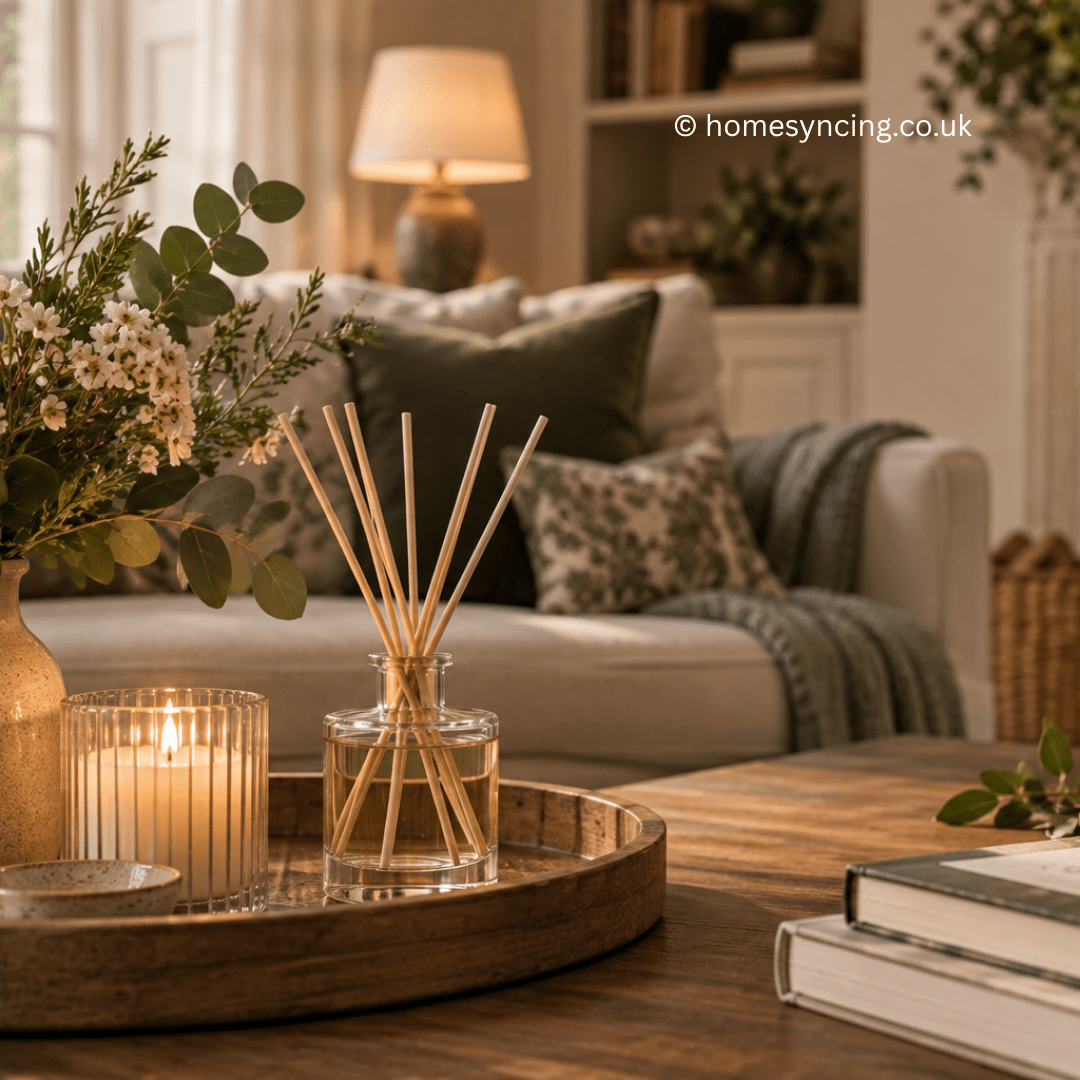
Scent can immediately change the mood of a room. Lavender, cedarwood, sandalwood and other natural fragrances can create a gentle background aroma, whether introduced through candles, diffusers or fresh foliage.
There is no need to fragrance every room. Subtlety is often more inviting.
Sound deserves consideration too. For some, sanctuary means complete quiet. For others, it might be gentle music, the crackle of a fire, birdsong through an open window or the familiar sounds of family elsewhere in the house.
Think about what makes you instinctively relax and allow your home to support it.
Surround Yourself with Things That Mean Something
Beautiful homes are not necessarily those filled with the newest things. Often, the rooms we remember are those that reveal something about the people who live there.
Display photographs you genuinely love. Keep books within reach rather than arranging them purely for decoration. Make room for inherited furniture, objects brought home from travels, children’s drawings or pieces discovered in antique shops and markets.
These are the details that prevent a carefully decorated room from feeling like a showroom.
Your home should feel collected rather than simply completed.
Make the Bedroom a Place to Retreat
If there is one room where comfort deserves particular attention, it is the bedroom.
Begin with the bed itself. Natural, breathable bedding, comfortable pillows and layers that can be adjusted with the seasons make an immediate difference. A soft rug beneath your feet and curtains that filter or block the light can add to the feeling of retreat.
Keep lighting gentle and, where possible, reduce visual clutter around the bed.
A bedroom does not need very much to feel luxurious. Often, freshly laundered bedding, a good bedside lamp, a favourite book and somewhere to place a morning cup of tea are luxuries enough.
Remember That Sanctuary Looks Different for Everyone
There is no single formula for a peaceful home.
For one person, it might be an uncluttered room in soft neutral shades. For another, it could be a richly coloured sitting room filled with books, paintings and treasured objects. Some of us relax surrounded by plants; others feel happiest beside a roaring fire with the curtains drawn.
That individuality is important.
Creating a sanctuary is less about following a particular interior style and more about noticing how your surroundings make you feel. Keep what brings comfort. Change what creates unnecessary noise or inconvenience. Introduce colours, textures and objects that make you want to linger.
Most importantly, give your home time to evolve.
The most welcoming spaces are rarely created in a weekend. They develop gradually, shaped by the people who live there and the lives unfolding within them.
A sanctuary does not have to be immaculate. It simply needs to be somewhere that, when you walk through the door, feels unmistakably like home.
Further Reading: Creating Garden Slow Life Areas, How to Make your Home Smell Fabulous