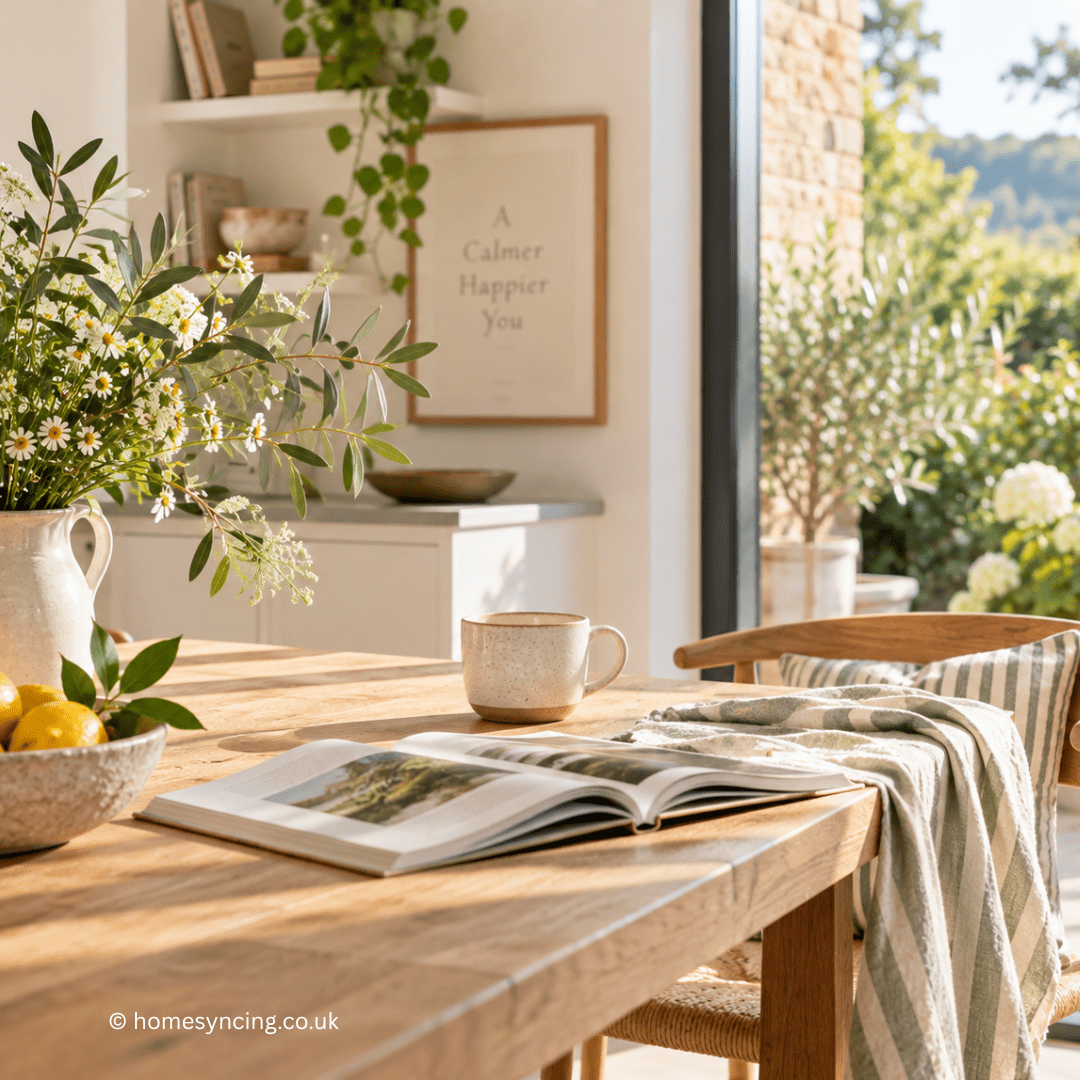
There is a certain kind of comfort found in ordinary moments at home.
A chair pulled close to the window on a rainy afternoon. The first cup of coffee before the rest of the house wakes. A blanket folded over the arm of the sofa, ready for colder evenings. Lamps glowing softly while darkness gathers outside. These small rituals often bring more peace than grand gestures ever could.
Modern life moves quickly. Notifications arrive constantly. Days become crowded with errands, screens and endless background noise. Home, increasingly, has become somewhere people long to feel restored rather than simply occupied.
And perhaps that is why so many are drawn towards a gentler way of living indoors.
Not necessarily slower in the literal sense, but more intentional. More comforting. More connected to everyday rituals that allow space to breathe.
Historically, homes naturally encouraged this rhythm. Before constant entertainment and digital distraction, evenings unfolded differently. People gathered around fires, wrote letters beneath lamplight, read quietly in corners softened by candlelight and listened to weather moving beyond the windows. Rooms were designed around warmth, conversation and rest.
Many of those comforting traditions still hold enormous appeal today.
Creating a calmer atmosphere at home rarely depends upon expensive interiors or dramatic redesigns. Instead, it is often the quieter details that change how a space feels emotionally.
A reading corner, for instance, can transform an overlooked corner of a room into somewhere restorative. A comfortable chair beside a lamp. A small table stacked with books. A throw folded nearby for colder evenings. The space itself may be simple, yet it gently encourages stillness in a world that rarely pauses.
Importantly, these spaces work because they invite use rather than perfection.
The most comforting homes are rarely immaculate. They carry signs of life within them — books left open, mugs cooling beside armchairs, blankets softened through use. Rooms feel welcoming when they support real rituals rather than existing purely for display.
Soft lighting shapes this atmosphere profoundly.
Harsh overhead lights often keep rooms feeling functional and alert long into the evening, while warmer layered lighting helps signal rest. Table lamps glowing in darker corners. Candles flickering quietly on shelves. Wall lights softening hallways and bedrooms. The transition from daylight into evening becomes gentler and calmer when lighting is approached thoughtfully.
Historic homes understood this instinctively. Interiors were shaped around fireside warmth and pools of candlelight rather than bright uniform illumination. Even today, homes feel more peaceful when light arrives softly rather than all at once.
Texture also contributes enormously to comfort.
Natural fabrics invite people to settle in properly. Linen cushions, wool throws, cotton bedding and woven rugs all create warmth both visually and physically. Texture softens hard surfaces and prevents rooms from feeling cold or impersonal.
Cosiness, after all, is not about clutter.
It is about softness.
Coffee and tea rituals have quietly become part of this slower approach to home too. Simple coffee stations arranged with favourite mugs, jars of beans, loose-leaf teas and well-used cafetières turn ordinary mornings into something more grounding. The process itself becomes part of the comfort — boiling the kettle, grinding coffee, waiting for tea to steep while early light settles across the kitchen.
These small pauses create rhythm within the day.
Bedrooms increasingly reflect this desire for calm as well. Soft bedding layered gently rather than perfectly arranged. Books beside the bed instead of glowing screens. Curtains filtering morning light slowly rather than abruptly. Bedrooms are becoming less about decoration alone and more about genuine restoration.
Even scent influences how restful a home feels.
Lavender on freshly washed linen. Eucalyptus in the bathroom. Bread baking slowly in the kitchen. Cedarwood candles glowing during darker evenings. Familiar scents create reassurance and emotional warmth often before we consciously notice them.
There is also something deeply comforting about creating spaces that encourage hobbies and slower pleasures.
A table for puzzles or painting. Shelves lined with gardening books. A basket beside the sofa filled with knitting or sketchbooks. These details remind us that home should support creativity and rest as much as productivity.
And perhaps that is the heart of slow living at home.
Not withdrawing entirely from modern life, but creating moments within the day that feel quieter, softer and more intentional.
Moments that allow people to reconnect with themselves, with family and with the spaces they inhabit.
Because often, the homes we remember most are not the grandest.
They are the homes where lamps glowed warmly on winter evenings. Where rain tapped against windows while tea brewed nearby. Where blankets gathered people together and conversation stretched long into the night.
Homes that offered comfort not through perfection, but through atmosphere.
Places where life felt gentler for a little while.
Further Reading: Affordable Decorating Ideas That Will Transform Your Home, Sustainable Chic: A Beginner’s Guide to Circular Design, Small Room, Big Impact
Daily Inspiration: Follow Us on Instagram, BlueSky, Threads , Pinterest, Twitter, TikTok