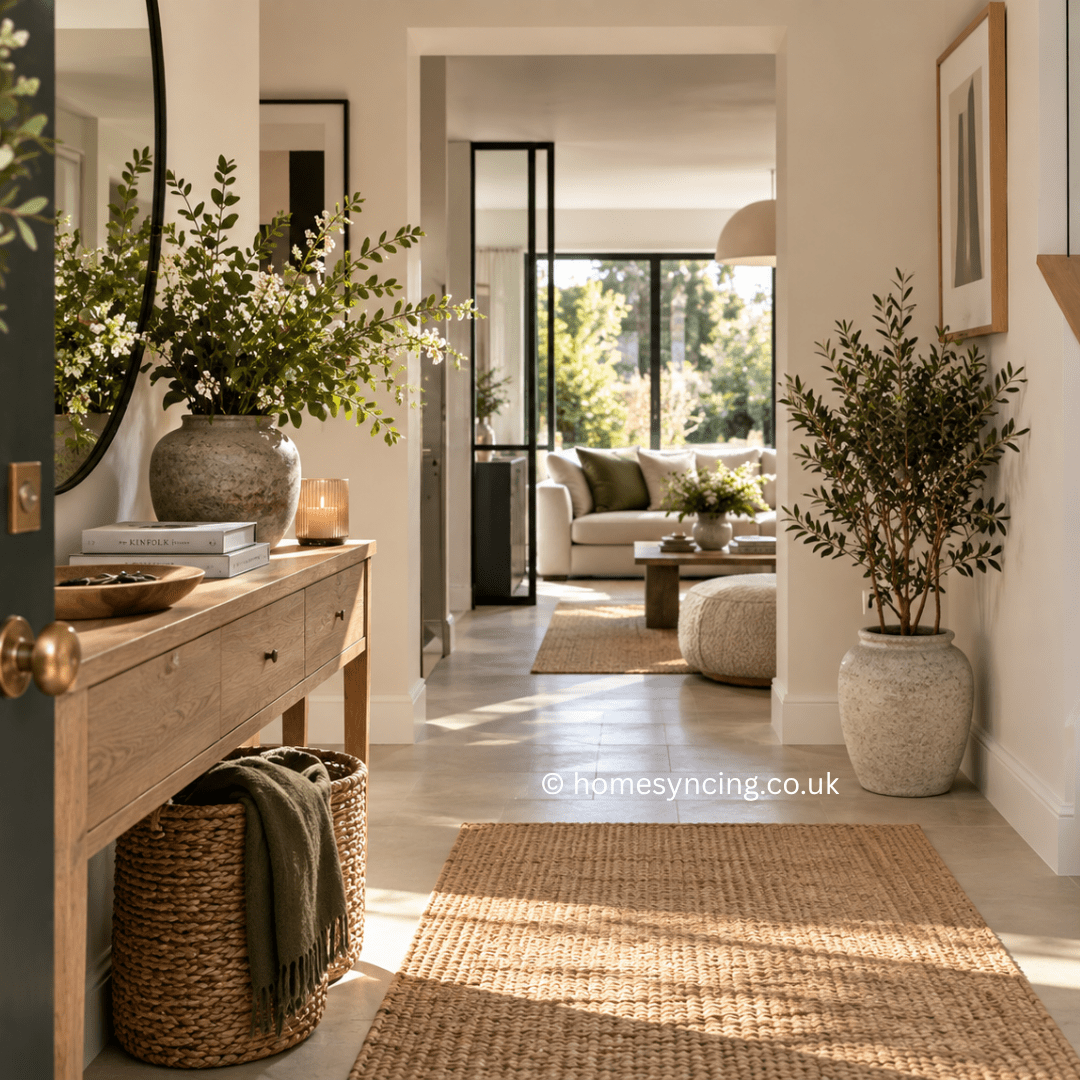
There is a certain feeling some homes carry the moment you step through the door.
It is not perfection. Nor is it necessarily size, expense or the latest interior trend. Instead, it is something quieter. A softness in the lighting. The familiar creak of floorboards beneath your feet. A chair angled towards the fire as though someone has only just risen from it. The faint scent of lavender drifting through the hallway. A sense that life is unfolding gently here.
The most welcoming homes are rarely the most polished. They are the homes that feel lived in, layered over time with comfort, meaning and care.
Across old country houses, cottages and historic homes throughout Britain, there is a recurring thread that makes interiors memorable. Rooms are designed not simply to impress, but to nurture. Furniture is chosen for use as much as beauty. Fabrics soften hard edges. Lamps glow warmly against dark evenings. Shelves gather books, photographs and objects collected over years rather than hurriedly bought to fill empty space.
A welcoming home tells a story long before anyone speaks.
In many ways, modern life has shifted our understanding of home. Our houses are no longer simply somewhere to sleep at the end of the day. They have become offices, sanctuaries, gathering places and retreats from an increasingly noisy world. The desire to create calm interiors has grown alongside the pace of modern living itself.
And perhaps that is why people are once again drawn towards slower, more thoughtful interiors. Natural wood. Linen curtains moving gently in an open window. Handmade ceramics stacked beside the kettle. A comfortable armchair that invites you to sit for a while rather than scroll endlessly on a screen.
Furniture plays a remarkable role in shaping this atmosphere.
A well-made dining table, for instance, becomes far more than furniture. It is where homework is finished, birthday candles are blown out, conversations drift long into the evening and cups of tea are shared on difficult days. Sofas soften with use and familiarity. Hall benches gather muddy boots after long countryside walks. Bookshelves quietly reveal the personality of the people who live there.
The most welcoming interiors are rarely overfilled. Instead, they allow space for breathing room. Rooms feel calmer when furniture is arranged thoughtfully, with movement and comfort in mind rather than simply symmetry. A chair beside a lamp creates an invitation to read. A bench beneath a window encourages quiet moments of pause. Even in smaller homes, carefully chosen pieces create ease rather than clutter.
Lighting matters just as deeply.
Harsh overhead lights can flatten a room entirely, while softer pools of layered light create warmth and intimacy. Table lamps, wall lights, candles and low evening lighting gently alter the atmosphere of a home as daylight fades.
There is a reason historic homes often feel comforting even on grey days. Light is allowed to glow softly against painted walls, wood panelling and textured fabrics. Shadows are embraced rather than erased. Cosiness is created not through brightness, but through balance.
In many homes, scent quietly completes the experience.
The smell of bread baking in the kitchen. Beeswax polish on old furniture. Eucalyptus hanging in the bathroom. Fresh herbs on a windowsill. These small sensory details linger in memory long after visual impressions fade.
Natural scents often create the strongest feeling of comfort because they connect us instinctively to seasons and places. Citrus in summer. Woodsmoke in winter. Lavender in freshly washed linen. Rosemary brushed accidentally in the garden before guests arrive.
Texture, too, changes how a home feels emotionally.
Smooth stone beside soft wool throws. Worn wooden tables beneath cool ceramics. Linen bedding crumpled slightly by use. Texture prevents interiors from feeling flat or impersonal. It brings warmth, depth and humanity into a room.
Some of the most beautiful interiors are built quietly through layering rather than decorating all at once. A vintage chest found at a market. A woven basket carried home from holiday. A lamp inherited from family. Homes gain soul through gradual collection.
And perhaps that is the true art of a welcoming home.
Not chasing perfection, but creating spaces that allow people to exhale.
A welcoming home does not ask visitors to admire it from a distance. It invites them in. To sit down. To stay longer than planned. To feel comforted by familiar rituals and softened surroundings.
Because in the end, the homes we remember most are rarely the immaculate ones.
They are the homes where lamps glowed warmly against rainy evenings. Where kitchens smelled of something cooking slowly. Where blankets were draped carelessly across chairs and conversation filled the rooms.
Homes that felt deeply, reassuringly lived in.
Further Reading: Affordable Decorating Ideas That Will Transform Your Home, Sustainable Chic: A Beginner’s Guide to Circular Design, Small Room, Big Impact
Daily Inspiration: Follow Us on Instagram, BlueSky, Threads , Pinterest, Twitter, TikTok