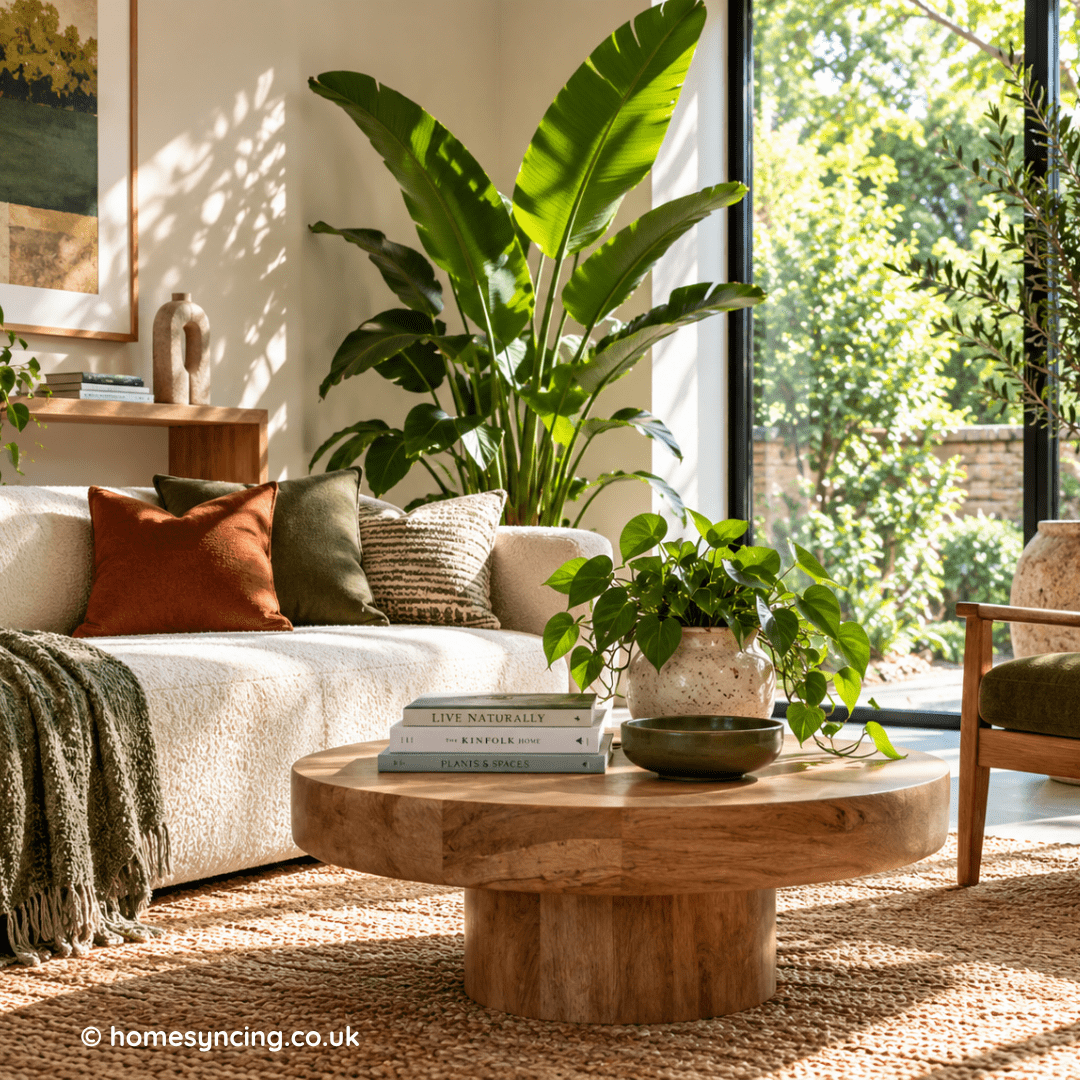
Biophilic Design: Beyond the Potted Plant

There are rooms that seem to make us feel better almost as soon as we enter them.

Perhaps sunlight is moving slowly across a timber floor. A window frames the branches of an old tree outside. There is linen at the window, wool beneath our feet and the reassuring grain of wood beneath a hand. The room feels peaceful without being empty; natural without being rustic.

We may not immediately understand why.

This is the idea at the heart of biophilic design: creating homes that strengthen our connection with the natural world.

And despite what countless photographs of enormous houseplants might suggest, it is about much more than greenery.

A truly nature-connected home considers daylight and views, natural materials and texture, fresh air, colour, shape and even the way we move from one part of a room to another.

The potted plant can stay. It simply doesn’t have to do all the work.

What Is Biophilic Design?

The word biophilia describes our affinity with the natural world. In interior design, that idea has developed into an approach that brings aspects of nature into the places where we spend our time.

The most obvious interpretation is literal nature: plants, flowers, water and views of the garden.

But biophilic interior design goes considerably further.

Timber whose grain is still visible, stone that feels cool beneath the fingertips, daylight that changes from morning to evening and fabrics made from linen or wool can all contribute.

So can curved forms, irregular patterns and rooms arranged to provide both open views and quieter, more sheltered places.

It is less about decorating with nature than allowing a home to behave a little more like the natural world.

Begin With the View Outside

Before bringing nature into the room, look through the window.

What can you already see?

It might be a mature tree, the changing colour of a hedge, rooftops beneath an enormous sky or simply a small patch of garden. Even an ordinary view changes with the weather and the seasons, and that movement is something no wallpaper or artwork can quite reproduce.

Try arranging furniture so that a good view becomes part of the room.

An armchair turned slightly towards the garden can make a surprisingly large difference. Keeping a windowsill relatively uncluttered allows the eye to travel beyond it. A dining table positioned where you can see outside makes the changing landscape part of everyday meals.

And where there is a particularly lovely view, resist the temptation to compete with it.

Sometimes the window is the artwork.

Make More of Natural Light

Daylight is one of the most powerful elements in any interior — and one of the few that changes constantly without us doing anything at all.

Morning light is quite different from the low glow of late afternoon. Winter light enters a room differently from summer sunshine. Clouds pass, shadows move and colours subtly alter as the day progresses.

Biophilic design embraces those changes rather than attempting to make a room look identical at every hour.

Keep windows as open to daylight as privacy allows. Linen curtains and other light-filtering fabrics can soften strong sunshine without shutting it out completely.

Mirrors can also be particularly useful. Place one where it catches light from a window and it can reflect natural light into a darker part of the room, as well as repeating an attractive outdoor view.

The effect can be wonderful: a glimpse of leaves or sky appearing unexpectedly on another wall, almost as though the room has acquired another window.

After dark, use several softer sources of light rather than relying entirely on a bright central fitting. Table lamps, floor lamps and wall lights create pools of illumination and a gentler transition into evening.

Let Sunlight Create Its Own Decoration

Not every visual effect in a room needs to come from an object.

Light itself can decorate.

Sun passing through woven blinds, shutters or foliage outside can create shifting patterns across walls and floors. These changing shadows bring movement to an interior in much the same way that sunlight filters through branches outdoors.

It is fleeting, which is precisely what makes it beautiful.

Rather than trying to illuminate every corner evenly, allow a little contrast. Bright areas make shaded ones feel more restful, while shadows give depth to natural textures.

A home need not be uniformly bright to feel filled with light.

Choose Materials That Feel Good to Touch

Nature is wonderfully inconsistent.

Wood has knots. Stone has veins. Linen creases. Wool has texture. Clay carries subtle variations from one piece to another.

These imperfections are part of their appeal.

Introducing natural materials into your home can therefore be as much about touch as appearance. A solid timber table has a different presence from a perfectly smooth synthetic surface. A wool rug changes the way a room sounds as well as how it feels beneath your feet.

There is no need to turn the house into a catalogue of natural finishes. A few well-chosen materials are often enough.

Timber furniture, a linen curtain, a woven rug, a stone-topped table or handmade pottery can introduce warmth and variation without making a room feel overly styled.

Better still, many natural materials become more interesting with age.

The marks of everyday life gradually become part of them.

Look Beyond Green

Biophilic interiors are often presented as a sea of green, but nature’s palette is far richer.

Think of chalk cliffs and winter skies, moss and lichen, wet pebbles, russet leaves, pale sand, heather, bark and the deep blue-green of the sea.

These colours can create a connection with nature without requiring a single botanical print.

Muted olive and soft sage remain particularly easy to live with, but they work beautifully alongside warm clay, ochre, chalky neutrals, earthy reds and deeper browns.

Blue deserves a place too. Used thoughtfully, it can bring the sense of openness we associate with water and sky.

The aim is not to reproduce a landscape literally. Instead, borrow the relationships between colours that occur naturally and allow them to inform the room.

Follow Nature’s Curves

Our houses inevitably contain plenty of straight lines. Walls meet at corners, doors are rectangular and cupboards tend to arrive in orderly grids.

Furniture and accessories provide an opportunity to soften all that geometry.

A round coffee table, curved sofa, oval mirror or gently arched doorway introduces a more organic rhythm. Even the irregular outline of a handmade bowl can provide contrast against a very ordered room.

You do not need everything to undulate.

In fact, curves are often more effective when surrounded by straighter architectural lines. It is the contrast that allows them to be noticed.

Bring in Plants — But Give Them a Purpose

Houseplants certainly belong in biophilic design. They simply shouldn’t be treated as compulsory decoration for every available surface.

One well-positioned plant can have considerably more presence than a dozen little pots scattered around a room.

Choose plants according to the conditions you actually have. A dark corner is not going to become hospitable simply because a photograph suggests that a large tropical plant would look good there.

Think about scale, too.

A substantial plant can soften the junction between a window and a wall or bring life to an otherwise awkward corner. Smaller plants work well where their shape can be appreciated up close.

And if keeping houseplants alive is not your particular gift, don’t worry. A vase containing a few seasonal branches, flowers from the garden or even a beautifully shaped bare twig can provide that connection with the outdoors.

Biophilic design is not a test of horticultural ability.

Create Places of Prospect and Refuge

Some of the most interesting ideas in biophilic design have little to do with materials or colour.

They are about how a space makes us feel.

In nature, we often enjoy places where we can see what is around us while still feeling protected: sitting beneath a tree looking across a landscape, for example, or standing at the edge of woodland looking towards an open field.

Interior designers sometimes describe these qualities as prospect and refuge.

We can create something similar at home.

A window seat gives us a view while providing a sense of enclosure. An armchair tucked beside a bookcase can feel more comforting than one floating in the middle of a large room. A dining nook can provide intimacy within an open-plan space.

This is one reason why rooms containing both open areas and smaller, sheltered corners often feel particularly comfortable.

We like somewhere to look out from.

Remember Sound and Air

A nature-connected home isn’t experienced only through the eyes.

Open a window and the room changes.

There may be birdsong, rain, distant leaves moving in the wind or simply the sensation of fresh air passing through the house.

Where it is practical, natural ventilation can help a room feel less sealed off from the world beyond it.

Materials affect sound too. Timber, cork, wool, curtains and upholstered furniture soften the hard echoes that can make very sparsely furnished rooms feel less comfortable.

These are subtle things, but biophilic design is largely made from subtle things.

It is the accumulation of small sensory experiences that creates the overall atmosphere.

Allow the Seasons Indoors

One of the loveliest ways to connect a home with nature costs very little.

Allow it to change.

In spring, that might mean a few flowering branches on the table. Summer brings open windows and lighter fabrics. Autumn offers seed heads, richly coloured leaves and warmer textures, while winter can be celebrated with bare branches, evergreens and pools of soft lamplight.

You don’t need to redecorate four times a year.

Simply allowing a few elements of the home to respond to what is happening outside prevents an interior from feeling frozen in time.

It also gives us reason to notice the seasons rather than merely passing through them.

A More Natural Way to Live at Home

The most successful biophilic homes do not necessarily look overtly botanical.

They simply feel connected.

There is daylight where daylight can reach. Materials invite touch. Windows make something of the view. Furniture provides places both to gather and retreat. Colours have a relationship with the landscape, and the home changes gently as morning becomes evening and one season gives way to another.

That is why biophilic design is much more enduring than a decorating trend.

You can begin without buying anything at all.

Open the curtains fully tomorrow morning. Move a favourite chair towards the window. Clear something unnecessary from the windowsill and notice what lies beyond it. Watch where the afternoon sunlight falls.

Then consider what your home might need next.

Perhaps it is a timber table that will improve with age, a wool rug beneath your feet, linen at the windows or a mirror positioned to send daylight further into the room.

Or perhaps it simply needs fewer distractions between you and the world outside.

Because bringing nature into our homes isn’t always about adding more.

Sometimes, it is about noticing what was there all along.

Further Reading: Affordable Decorating Ideas That Will Transform Your Home, Sustainable Chic: A Beginner’s Guide to Circular Design

Daily Inspiration: Follow Us on Instagram, BlueSky, Threads , Pinterest, Twitter, TikTok
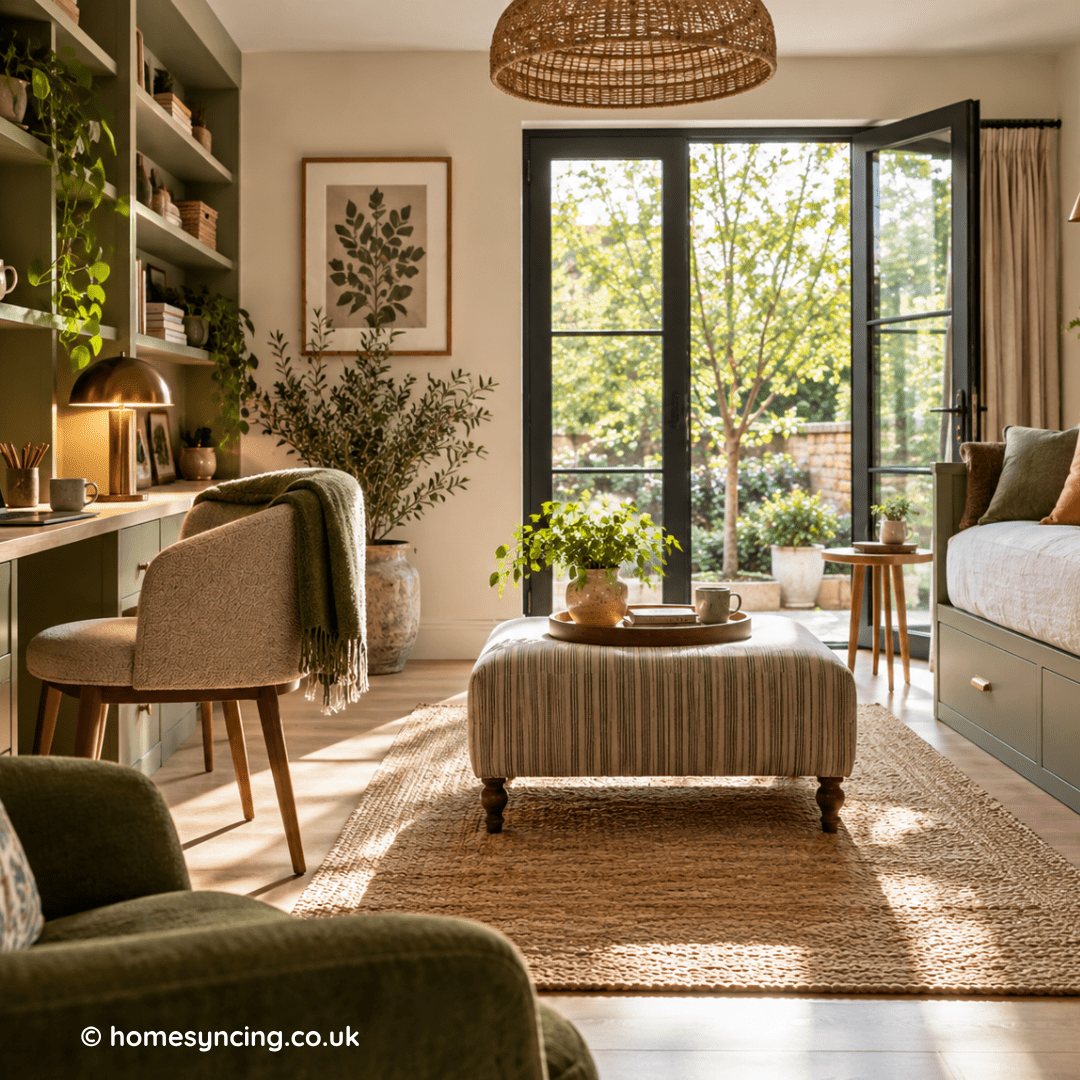
Multifunctional Spaces: How to Make Your Home Work Harder

There is a corner in many homes that has quietly acquired another life.

Perhaps the dining table becomes a desk each morning. A spare bedroom doubles as a study, the landing has gained a reading chair, or an overlooked alcove now contains a small workspace. Come the evening, laptops disappear, lamps are switched on and the same rooms return to family life.

Our homes have always evolved with us, but the way we use them is changing particularly quickly. Working from home, entertaining, hobbies, exercise and family life increasingly happen beneath the same roof. The traditional idea of giving every room a single purpose no longer suits the way many of us live.

The answer is not necessarily a larger house.

Thoughtful multifunctional interior design can help an existing home do considerably more — without making every room feel as though it is trying to do everything at once.

The best multifunctional spaces are clever but unobtrusive. A desk disappears at the end of the working day. A window seat conceals useful storage. A guest room earns its keep for the other 360 days of the year.

It is less about squeezing more into a room and more about making better use of what is already there.

What Is a Multifunctional Space?

A multifunctional space is simply a room or part of a room designed to accommodate more than one activity.

But there is an important distinction between a room that has several uses and one that merely contains lots of things.

Putting a desk beside the sofa does not automatically create a successful living room and home office. Nor does adding a sofa bed necessarily make a comfortable guest room.

The different uses need to coexist.

A good multifunctional room changes character with surprisingly little effort. During the day, one corner might be a calm place to work. In the evening, the desk is cleared and that same area becomes part of the living room again.

This sense of transformation is what makes flexible interiors so useful.

The room should know when the working day has ended, even if technically you have not gone anywhere.

Begin With How You Actually Live

Before moving furniture or buying clever storage, consider what really happens in the room.

Not what you imagine might happen. What actually happens.

Where does the post accumulate? Where do children naturally sit to do homework? Which chair receives the clothes that haven’t quite made it back to the wardrobe? Where do you instinctively take your laptop when you need to concentrate?

These everyday habits often reveal far more about the right layout than a floor plan.

Then consider which activities need permanent space and which need only temporary space.

If you work from home five days a week, a proper desk and supportive chair deserve more consideration than an occasional craft table. If guests stay twice a year, the room does not need to spend the remaining months arranged entirely around them.

Good flexible design follows real life rather than asking real life to fit around the furniture.

Create Rooms Within Rooms

One of the most effective ways to make a room multifunctional is to give each activity a recognisable place.

Interior designers often call this zoning.

No walls are required.

A rug can establish the boundaries of a sitting area. A pendant light above a dining table creates a natural focal point. An armchair and floor lamp can transform an empty corner into somewhere to read.

Colour can be equally effective. Painting an alcove or the back of built-in shelving in a deeper shade subtly separates it from the rest of the room.

Even the direction of furniture matters.

A sofa positioned with its back towards a dining area can create a gentle boundary between the two, while an open bookcase can divide a larger room without blocking the light.

The aim is to create definition without making the space feel fragmented.

Turn an Overlooked Corner Into a Home Office

The home office does not always need a room of its own.

An alcove beside a chimney breast, a generous landing, the space beneath the stairs or one end of a guest bedroom can all become useful small home office spaces.

The key is to make the workspace feel intentional.

A properly proportioned desk, a comfortable chair and good task lighting immediately make a small study area feel more permanent than a laptop balanced on the dining table.

Built-in cabinetry can be particularly useful. A desktop incorporated into shelving gives books, paperwork and equipment somewhere to live, while cupboards below can hide the less attractive necessities of working from home.

And think about the view from the desk.

Where possible, position it near natural light rather than facing a blank wall. A glimpse through a window can make even a compact workspace considerably more pleasant.

Just as importantly, think about what happens at five o’clock.

Design Work Out of Sight

One of the difficulties of working from home is that work has a habit of remaining visible.

The laptop sits waiting. Papers stay on the desk. A charging cable trails towards the plug. Even when the working day is over, the room can continue to feel like an office.

This is where concealed storage becomes invaluable.

A desk inside a cupboard — sometimes called a concealed office or cloffice — can be closed away completely. A fold-down desk takes up little space once the working day is finished. Even a conventional desk feels calmer when stationery and paperwork can disappear into drawers.

If hiding the desk itself isn’t possible, develop the simple habit of clearing it at the end of the day.

Close the laptop. Put papers away. Switch off the task light and turn on the softer lamps elsewhere in the room.

Small rituals help a multifunctional room move from one purpose to another.

Choose Furniture That Earns Its Place

In a flexible home, furniture works hardest when it does more than one job.

An ottoman can provide somewhere to put your feet, occasional seating and useful hidden storage. A window seat can conceal drawers beneath it. A console table might provide an occasional workspace before returning to its usual role.

Extendable dining tables are particularly useful. Kept compact for everyday life, they can expand when friends and family arrive without requiring a permanently oversized table.

The same principle applies to guest accommodation.

A well-designed sofa bed or daybed allows a study, snug or hobby room to become a bedroom when needed. In a child’s room, a bed with drawers beneath can reduce the need for another bulky piece of furniture.

But multifunctional furniture does not have to perform a spectacular transformation.

Sometimes a beautifully made chest that provides storage, a surface and occasional seating is more useful than an elaborate piece of furniture with half a dozen mechanisms.

Versatility should make life simpler, not give you another instruction manual.

Look Up for More Storage

When floor space is limited, walls become particularly valuable.

Vertical storage allows a room to accommodate more without becoming crowded at eye level.

Floor-to-ceiling shelving can hold books, storage boxes and decorative objects while using relatively little floor space. Built-in cupboards above a desk can provide office storage without requiring a separate filing cabinet.

Use the most accessible shelves for things needed regularly and allow higher levels to hold less frequently used possessions.

Closed storage is worth including too.

Open shelves are wonderful for books, ceramics and objects you enjoy looking at. They are less successful for printer paper, cables, board games and all the miscellaneous things that make a home function.

A combination of open and closed storage usually creates the happiest balance.

Let Lighting Change the Mood

Lighting is one of the easiest ways to signal that a room has changed purpose.

A desk needs clear, focused task lighting. A sitting room wants something gentler.

Rather than relying on a single ceiling light, build several layers.

A desk lamp can define the working area during the day. A floor lamp beside an armchair creates somewhere inviting to read. Table lamps provide softer pools of light in the evening, while dimmable wall or ceiling lights allow the overall atmosphere to change.

This is especially important in open-plan multifunctional spaces, where different members of the household may be doing different things at the same time.

Lighting allows each zone to develop its own atmosphere without needing a physical barrier.

Make a Guest Room Useful Every Day

A dedicated guest bedroom is a luxury, but it is also a room that can spend much of the year waiting for someone to arrive.

There is no reason it cannot have another purpose in the meantime.

A guest room can become a home office, reading room, sewing room or quiet retreat. A daybed dressed with cushions feels more like a sofa when nobody is staying, while a desk can double as a dressing table.

The trick is to make the transformation easy.

Guests should not require you to dismantle an office before they can put down a suitcase. Equally, you shouldn’t have to store an entire room’s contents elsewhere whenever somebody stays.

Provide cupboards or drawers that allow everyday equipment to be put away quickly, leaving some storage free for visitors.

The room can then genuinely belong to both purposes.

Divide a Space Without Losing the Light

Sometimes a visual boundary is not quite enough.

If two activities are likely to disturb one another, introducing a physical division can make a larger room much easier to live in.

Open shelving is particularly effective because it creates separation while allowing daylight to pass through. Slatted timber screens can achieve something similar.

Curtains provide a softer alternative and have the advantage of disappearing almost completely when open. They can conceal a workspace, divide a sleeping area in a studio flat or simply make one part of a large room feel more intimate.

Folding screens are useful where the division needs to move.

Whichever approach you choose, avoid making a flexible room feel permanently chopped into small sections. The great advantage of multifunctional living is that boundaries can change when you need them to.

Don’t Forget Sound

A room may look beautifully zoned and still fail if everybody can hear everything.

Hard floors, large windows and bare walls allow sound to travel surprisingly easily through open spaces.

Soft furnishings help.

Curtains, upholstered furniture, rugs and cushions all absorb some sound and reduce echo. A large rug beneath a dining table can soften the noise of chairs moving across the floor, while curtains make a home office feel more comfortable acoustically as well as visually.

Bookcases are useful too. Filled shelves create an irregular surface that can help break up sound while also providing storage.

If several people regularly work or study at home, consider acoustics alongside the furniture plan from the beginning rather than discovering the problem during somebody else’s video call.

Allow for a Little Privacy

Multifunctional living works beautifully until everyone needs the same space for a different purpose at precisely the same moment.

A teenager doing homework, someone working from home and another person trying to relax may have rather different ideas about what the room should be doing.

Where possible, create at least one quieter retreat elsewhere in the home.

It does not need to be large.

An armchair on a landing, a window seat, a small desk in a bedroom or even a particularly comfortable corner can provide somewhere to withdraw when the main living space is busy.

A flexible home should offer togetherness without demanding it constantly.

Make Tidying Away Effortless

The success of a multifunctional room often comes down to one surprisingly mundane question:

How quickly can you put everything away?

If converting your dining table from office to dinner requires twenty minutes and three trips upstairs, you will quickly tire of doing it.

Storage should therefore be close to where things are used.

Office supplies belong in drawers beside the workspace. Children’s toys need baskets or cupboards within the living area. Exercise equipment should have somewhere nearby to disappear.

The easier the reset, the more successfully a room can move between different parts of the day.

This is one occasion when convenience should triumph over elaborate organisation.

A Home That Changes With You

Perhaps the greatest advantage of designing multifunctional spaces is not simply that they save room.

They allow a home to evolve.

The desk used for working from home today might become somewhere for homework in a few years. A playroom can gradually turn into a snug. A nursery may eventually become a study, while a guest room can take on a new life between visits.

Furniture moves. Families change. Habits change.

A home designed with flexibility in mind has space for those changes to happen without requiring everything to be started again.

So begin by looking at the rooms you already have.

Notice the corners that are rarely used, the furniture that takes up more space than it earns and the activities that have never quite found a home of their own.

Perhaps an alcove could become a study. A window could gain a seat beneath it. A spare room might finally become somewhere you enjoy spending time even when there are no guests.

The best multifunctional homes don’t necessarily look clever.

They simply feel easy to live in — changing quietly from work to rest, from solitude to company, and from one chapter of life to the next.

Further Reading: Affordable Decorating Ideas That Will Transform Your Home, Sustainable Chic: A Beginner’s Guide to Circular Design

Daily Inspiration: Follow Us on Instagram, BlueSky, Threads , Pinterest, Twitter, TikTok

Sustainable Chic: A Beginner’s Guide to Circular Design

Have you ever looked at a wardrobe bursting with clothes yet felt you had nothing to wear? You are not alone. For decades, the fashion industry has operated on a straight line: we take resources, make a garment, wear it for a short while, and then throw it away. This ‘take-make-waste’ model has left us with overflowing landfills and a planet under pressure. But a refreshing change is sweeping through the design world, and it promises to transform how we dress and live.

Enter circular design. It is a philosophy that looks to nature for inspiration. In the natural world, waste does not exist; one organism’s waste becomes another’s food. A fallen leaf nourishes the soil, which feeds the tree, which grows a new leaf. Circular design aims to replicate this regenerative cycle in our closets and homes. It invites us to rethink our relationship with the things we own, moving away from disposable culture toward a system where materials are kept in use for as long as possible.

Embracing this approach doesn’t mean sacrificing style. In fact, it opens the door to higher quality, innovation, and creativity. It is about curating a lifestyle that looks good and does good. Whether you are a budding designer or a conscious consumer, understanding circularity is the first step toward a more sustainable, stylish future. Let’s explore what this concept means and how it is reshaping the world of design.

What is circular design?

To understand circular design, we must first look at the system we are trying to replace. The traditional ‘linear’ economy is a one-way street. Raw materials are extracted, turned into products, used briefly, and discarded. It is a model with a distinct beginning and a definitive, often messy, end.

Circular design bends that line into a loop. It is a strategy where products are created with their entire lifecycle in mind. The goal is to design out waste and pollution, keep products and materials in use, and regenerate natural systems. In a circular model, a product is never just ‘finished’. When a garment is worn out, it is not trash; it is a resource bank for the next generation of products.

Think of it as a continuous journey. A cotton shirt is designed to be durable. When it can no longer be worn, it is repaired. When it can no longer be repaired, it is broken down into fibres to be spun into new yarn. If it cannot be recycled, it is composted to return nutrients to the earth. This approach requires designers to think ahead, anticipating how an item will be used, reused, and eventually unmade.

How to achieve circularity

Achieving a truly circular system requires a shift in mindset and methods. It is not just about recycling; it is about rewriting the rules of creation. Here are the core principles that designers and brands use to bring circularity to life.

Design for durability

The most sustainable product is the one you already own. Therefore, the first step in circular design is creating items that last. This means using robust, high-quality materials and construction techniques that withstand wear and tear. It pushes back against the trend of planned obsolescence, where items are designed to break or go out of style quickly. For the consumer, this translates to investing in timeless pieces—classic trench coats, solid wood furniture, or leather boots—that age beautifully and stay functional for years.

Material selection

The ingredients matter. Circular design prioritises renewable, non-toxic resources that are safe for both people and the planet. Designers are increasingly turning to mono-materials (products made from a single type of material) because they are much easier to recycle. For example, a 100% cotton t-shirt is far simpler to process than a poly-cotton blend. Innovative materials are also taking centre stage, from leather alternatives made from pineapple leaves to fabrics creating from ocean plastics.

Design for disassembly

Have you ever tried to separate the components of an old gadget or a pair of trainers? It is often impossible because of strong glues and permanent fixtures. Circular design champions ‘design for disassembly’. This means creating products that can be easily taken apart. Ideally, buttons can be unscrewed, zippers removed, and soles separated from uppers. This modular approach allows for easy repairs—replacing a broken part rather than the whole item—and ensures that materials can be efficiently sorted for recycling at the end of their life.

New business models

Achieving circularity also involves changing how we access products. We are seeing a rise in rental platforms, subscription services, and resale markets. Instead of owning a dress for a one-off event, you might rent it. Brands are launching ‘take-back’ schemes, encouraging customers to return old items for store credit so the brand can responsibly recycle or resell them. This shifts the focus from ownership to access and stewardship.

The benefits of going circular

Transitioning to a circular model offers profound rewards that extend far beyond the environment. It creates a ripple effect of positive change.

Environmental restoration

The most obvious benefit is a drastic reduction in waste. By keeping materials in the loop, we reduce the need for landfills and incineration. It also lessens our dependence on virgin resources. If we recycle existing cotton, we don’t need to grow as much new cotton, saving vast amounts of water and pesticides. Furthermore, circular systems generally have a lower carbon footprint, helping to combat climate change.

Economic opportunities

Circular design drives innovation. It challenges businesses to invent new materials and technologies, sparking creativity and growth. It creates new jobs in repair, refurbishment, and recycling sectors. For companies, it offers supply chain security; by reclaiming materials, they are less vulnerable to fluctuating raw material prices.

Consumer satisfaction

For you, the shopper, circular design means better products. It signals a return to quality and craftsmanship. You get items that fit better, last longer, and hold their value. There is also a distinct emotional benefit—the peace of mind that comes from knowing your choices are contributing to a healthy planet. It invites a deeper connection with your belongings, encouraging you to cherish, care for, and mend them.

The challenges and disadvantages

While the vision of a circular economy is inspiring, the path to get there is not without obstacles. It is important to acknowledge the hurdles we face in making this the industry standard.

Higher initial costs

Currently, producing circular goods can be more expensive. Sourcing ethical materials, ensuring fair labour practices, and implementing take-back schemes require significant investment. Consequently, the price tag on sustainable items is often higher than fast fashion alternatives. While this cost pays off over time through durability, it can be a barrier for budget-conscious shoppers.

Complexity in recycling

Technologically, we are still catching up. Recycling certain materials is difficult. As mentioned, blended fabrics are notoriously hard to separate. While chemical recycling technologies are improving, they are not yet available at a scale that can handle the sheer volume of global textile waste. We need better infrastructure to collect, sort, and process these materials efficiently.

A shift in consumer behaviour

Circular design demands a change in habits. We have been conditioned to crave the ‘new’ constantly. Embracing circularity means slowing down. It requires us to repair a tear rather than buying a replacement, or to choose a second-hand item over a brand new one. Changing cultural norms and valuing longevity over novelty takes time and education.

Create your own circular wardrobe

The journey toward a circular future is exciting, and you have a vital role to play. You don’t need to be a designer to champion this movement. Start by looking at what you already own with fresh eyes. Can you repair that button? Could you dye that faded shirt a new colour?

When you do shop, ask questions. Look for natural fibres, check for durability, and see if the brand offers a take-back scheme. Explore rental options for special occasions and discover the treasure trove of pre-loved fashion. Every small choice sends a signal that you value a world where nothing goes to waste.

Embrace the beauty of longevity. Care for your clothes, share them, and keep the cycle spinning.

Further Reading: Affordable Decorating Ideas That Will Transform Your Home Sustainable Chic: A Beginner’s Guide to Circular Design, Biophilic Design v2: Beyond the Potted Plant, Make Every Square Metre Count: Multifunctional Spaces

Daily Inspiration: Follow Us on Instagram, BlueSky, Threads , Pinterest, Twitter, TikTok

Tweed in Interior Design: Timeless Texture Meets Modern Style

When you think of tweed, perhaps images of countryside estates, tailored blazers or vintage hunting jackets come to mind. But this distinctive fabric has found a new life beyond the wardrobe. Tweed is making a powerful statement in interior design, bringing warmth, texture, and heritage into contemporary homes. Whether adorning an armchair, cushioning a sofa or adding character to wall panels, tweed offers a unique blend of rustic charm and refined elegance that few materials can match.

This guide explores the rich history of tweed, its defining characteristics, and how you can incorporate this classic textile into your home. From subtle accents to bold upholstery choices, tweed proves itself as versatile as it is enduring.

What is Tweed?

Tweed is a rough-textured woollen fabric, traditionally woven with a plain or twill weave and characterised by its soft, open texture. The fabric often features flecked patterns created by weaving together yarns of different colours, which gives tweed its signature depth and visual interest. Typically made from wool, tweed is known for its durability, warmth, and resistance to wind and water—qualities that made it indispensable in its country of origin.

The term “tweed” is believed to have originated from a misreading of the Scottish word “tweel” (the Scots word for twill). Another theory suggests the name derives from the River Tweed, which flows through the Scottish Borders where much of the fabric was historically produced. Regardless of its etymological roots, tweed has become synonymous with Scotland and the British Isles.

A Brief History of Tweed

Tweed’s story begins in the rural communities of Scotland and Ireland during the 18th and 19th centuries. Woven by hand on traditional looms, it was originally created as practical clothing for farmers, shepherds, and estate workers who needed protection from harsh weather. The fabric’s robust nature and insulating properties made it ideal for outdoor work.

By the Victorian era, tweed had transcended its utilitarian beginnings. Scottish landowners and the British aristocracy adopted it for country pursuits such as hunting, shooting, and fishing. Queen Victoria’s fondness for all things Scottish during her reign further elevated tweed’s status. Her purchase of Balmoral Castle in 1852 sparked a fashion for Highland dress and Scottish textiles, cementing tweed’s place in fashionable society.

Different regions developed their own distinctive tweeds. Harris Tweed, handwoven by islanders in the Outer Hebrides, became particularly renowned and is now protected by an Act of Parliament. Donegal tweed from Ireland features colourful flecks and slubs, while Cheviot tweed takes its name from the sheep breed native to the border hills between England and Scotland.

Throughout the 20th century, tweed remained a staple of country attire and academic dress. Fashion designers like Coco Chanel famously reimagined tweed for women’s wear in the 1920s, creating elegant suits that became iconic. More recently, tweed has experienced a renaissance in both fashion and interiors, appreciated for its texture, heritage, and sustainable qualities.

How to Use Tweed in Interior Design

Tweed brings a tactile richness to interiors that few other fabrics can replicate. Its textured surface catches light beautifully, creating depth and visual interest. The natural fibres lend warmth and authenticity, whilst the traditional patterns provide a connection to craft and history. Here’s how to harness tweed’s potential in your home.

Creating Atmosphere with Texture

Tweed excels at adding layers of texture to a room. Its woven surface introduces a tactile element that invites touch and creates visual complexity. When paired with smooth surfaces like polished wood, glass, or metal, tweed provides contrast that makes spaces feel more balanced and considered.

Consider the overall mood you wish to create. Tweed in earthy tones—browns, greys, mossy greens—evokes countryside retreats and cosy libraries. These colours work particularly well in studies, living rooms, and bedrooms where a sense of refuge is desired. Lighter tweeds in cream, oatmeal, or soft grey can brighten spaces whilst maintaining texture and warmth, making them suitable for both traditional and contemporary settings.

For those seeking drama, tweed in deeper hues such as charcoal, navy, or forest green can anchor a room and provide a sophisticated backdrop. These darker shades work especially well in larger pieces like sofas or curtains, where they create impact without overwhelming the space.

Balancing Traditional and Modern

One of tweed’s greatest strengths is its ability to bridge different design eras. In traditional interiors, tweed feels entirely at home alongside dark woods, leather, and brass fixtures. It reinforces the heritage aesthetic without appearing costume-like or contrived.

In modern and contemporary spaces, tweed introduces an unexpected element that adds warmth and prevents interiors from feeling stark or impersonal. A tweed-upholstered chair in a minimalist room becomes a statement piece, its texture and pattern providing focal interest. Similarly, tweed cushions on a sleek modern sofa can soften the lines whilst adding personality.

Mixing tweed with other natural materials creates harmony. Pair it with linen, leather, wood, stone, or wool for a cohesive look that celebrates natural textures. Avoid overwhelming a room with too many competing patterns—if you’re using a heavily flecked tweed, balance it with solid colours or subtle textures elsewhere.

Interior Design Ideas Using Tweed

Ready to introduce tweed into your home? Here are some inspiring ways to incorporate this classic fabric across different rooms and applications.

Upholstered Furniture

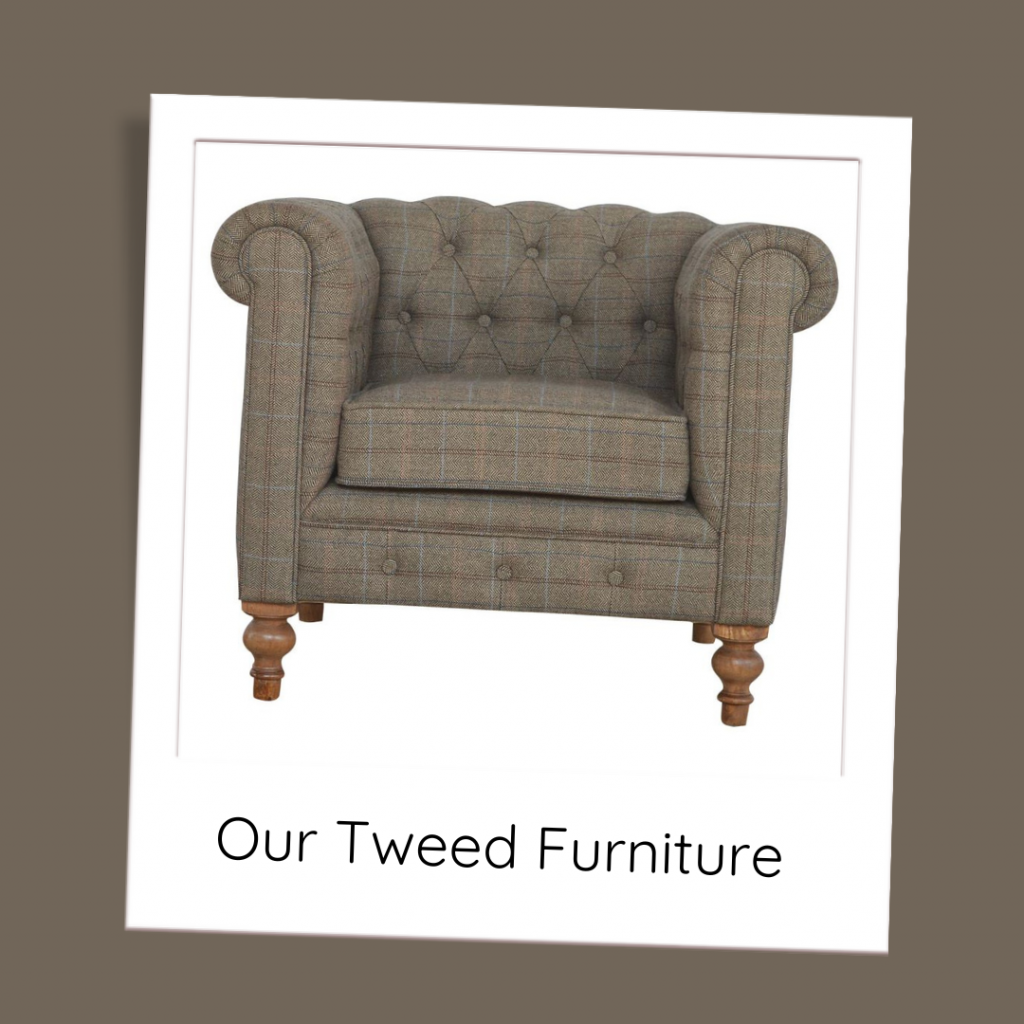
Tweed-covered furniture makes a lasting impression. A statement armchair upholstered in Harris Tweed becomes an heirloom piece, combining comfort with craftsmanship. The fabric’s durability means it can withstand daily use whilst developing character over time.

Sofas upholstered in tweed anchor living rooms beautifully. Choose a classic herringbone pattern in neutral tones for versatility, or select a more vibrant Donegal tweed if you want your sofa to become the room’s focal point. Tweed’s texture hides minor wear better than smooth fabrics, making it practical for family homes.

For a more subtle approach, consider an ottoman or footstool in tweed. These smaller pieces allow you to experiment with the fabric without committing to a large upholstery project. They’re also easier to reposition, letting you move colour and texture around your space as your mood or dĂ©cor changes.

Soft Furnishings and Accessories

If reupholstering furniture feels too permanent, soft furnishings offer an accessible entry point. Tweed cushions scattered across a sofa or bed instantly add depth and interest. Mix different tweed patterns and colours for an eclectic, layered look, or stick to a single shade for understated elegance.

Throws and blankets in tweed provide both visual appeal and practical warmth. Draped over the arm of a chair or folded at the foot of a bed, they invite use whilst contributing to the room’s aesthetic. Tweed curtains or Roman blinds introduce pattern and texture to windows, softening hard architectural elements whilst providing privacy and insulation.

Even smaller accessories can make an impact. Tweed lampshades diffuse light beautifully, creating a warm glow. Covered storage boxes or book covers in tweed add coordinated texture to shelves and surfaces.

Wall Treatments and Panels

For those seeking something truly distinctive, tweed wall panels create a striking effect. Upholstered wall panels in a study or library add acoustic softening whilst enveloping the room in texture. The fabric’s natural insulation properties also provide subtle warmth.

Alternatively, use tweed as a headboard covering. Stretching tweed across a simple frame creates an upholstered headboard that adds softness and luxury to a bedroom. Choose a herringbone or check pattern for visual interest, or opt for a heathered solid if you prefer subtlety.

Tweed can even be framed as textile art. A beautiful piece of Harris Tweed or vintage Donegal tweed mounted in a simple frame becomes a sculptural wall hanging, celebrating the fabric’s pattern and weave.

Green Tweed Upholstered Deep Button Chesterfield Armchair.

Dining Spaces

Tweed brings unexpected warmth to dining areas. Chair seats upholstered in tweed transform ordinary dining chairs into characterful seating. The fabric’s durability makes it practical for this high-use application, whilst its texture adds visual richness.

For a more temporary update, consider tweed chair pads or seat cushions tied to chair backs. These can be changed seasonally or when you fancy a refresh. Table runners in tweed (or tweed-look fabrics) can also introduce texture to tablescapes, particularly effective for autumn and winter entertaining.

Tweed-Finished Furniture and Styling Your Home

Pre-finished tweed furniture offers convenience for those who want the look without undertaking upholstery projects. Many furniture makers and retailers now offer pieces featuring tweed or tweed-inspired fabrics, making it easier than ever to incorporate this textile into your home.

Choosing Ready-Made Tweed Pieces

When selecting tweed furniture, examine the quality of both the fabric and the construction. Authentic Harris Tweed bears a certification label guaranteeing it was handwoven in the Outer Hebrides from pure virgin wool. This marks a piece of genuine heritage and ensures durability.

For other tweeds, check the composition. Pure wool provides the best wearing qualities, though wool blends with a small percentage of synthetic fibres can offer easier care. Feel the fabric—it should be substantial without being stiff, with a pleasant texture against the hand.

Consider the furniture’s frame and construction as well. A beautifully upholstered chair deserves a sturdy foundation. Look for hardwood frames, proper springing, and quality foam or traditional stuffing. Well-made tweed furniture should last for decades, developing a pleasing patina rather than showing shabby wear.

Styling Tweed in Your Home

Once you’ve acquired tweed pieces, thoughtful styling brings out their best qualities. In a living room, position a tweed armchair near a window where natural light can highlight the fabric’s texture and colour variations. Pair it with a reading lamp and a small side table to create an inviting reading nook.

Layer your tweed furniture with complementary textiles. A sheepskin throw draped over a tweed chair adds luxury and warmth. Velvet or linen cushions provide textural contrast whilst picking up colours from the tweed’s flecked pattern.

Surrounding materials matter too. Tweed looks particularly handsome against exposed wood—whether polished floorboards, rustic ceiling beams, or wooden furniture. The natural affinity between wood and wool creates harmonious compositions. Stone and brick also complement tweed beautifully, reinforcing the fabric’s connection to natural materials and rural landscapes.

Don’t shy away from mixing tweed with more refined elements. A tweed chair can hold its own in a room featuring crystal chandeliers, gilt mirrors, or silk curtains. This juxtaposition of rustic and refined creates depth and prevents interiors from feeling one-dimensional.

Caring for Tweed

Proper care ensures your tweed furnishings remain beautiful for years. Regular vacuuming with an upholstery attachment prevents dust from settling into the weave. For spills, blot immediately with a clean, absorbent cloth—avoid rubbing, which can damage the fibres or spread the stain.

Most tweeds are dry-clean only, so consult a professional for deep cleaning or stain removal. Between cleanings, refresh upholstered pieces by taking cushions outdoors on a dry day and giving them a gentle beating to release dust. The fresh air will also help dissipate any lingering odours.

Rotate cushions regularly to ensure even wear. If your tweed piece receives direct sunlight, consider using window treatments to prevent fading. Though tweed is remarkably durable, these simple practices will extend its life and maintain its appearance.

Embracing Heritage in Modern Homes

Tweed’s journey from Highland hillsides to contemporary interiors reflects our enduring appreciation for materials that combine beauty with purpose. Its texture tells stories of craft traditions, rural landscapes, and the skilled hands that worked the looms. When you choose tweed for your home, you’re not simply selecting a fabric—you’re bringing in a piece of cultural heritage that adds depth and meaning to your surroundings.

Whether you opt for a single statement chair or layer tweed throughout your rooms, this distinctive textile rewards those willing to embrace its character. Its natural warmth, visual interest, and remarkable durability make it a wise choice for homes that value substance alongside style.

As you consider your next interior update, look beyond fleeting trends to materials with proven longevity. Tweed has weathered centuries of changing fashions because it offers something timeless: honest beauty rooted in craft and landscape. Your home deserves furnishings that will grow more beloved with age. Tweed delivers exactly that.

Further Reading: Affordable Decorating Ideas That Will Transform Your Home

Daily Inspiration: Follow Us on Instagram, BlueSky, Threads , Pinterest, Twitter, TikTok
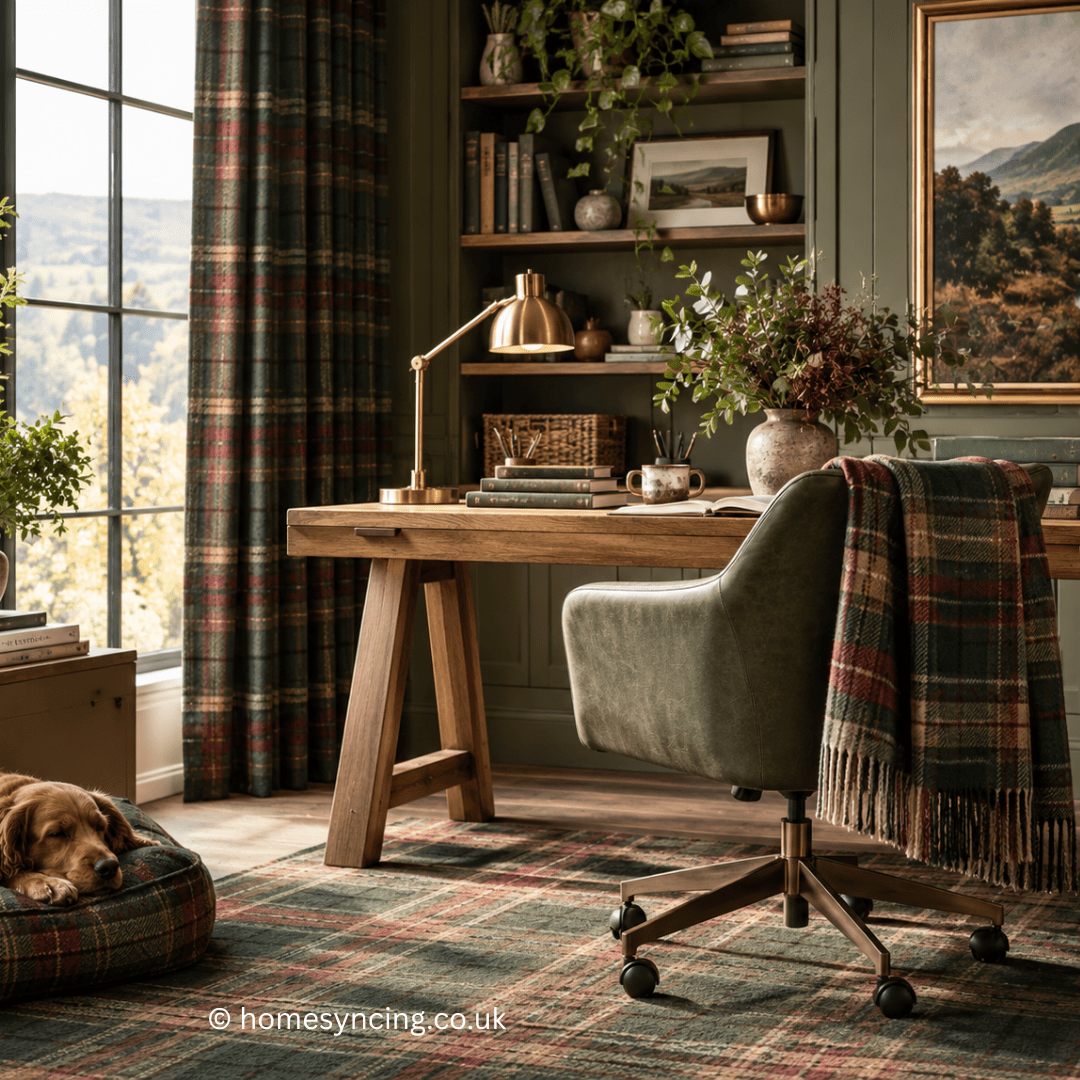
The Tartan Edit: A Timeless Design Style for Your Home

Tartan has long been synonymous with Scottish heritage, evoking images of Highland landscapes, clan gatherings and centuries-old traditions. But this iconic pattern has transcended its origins to become a beloved design element in contemporary interiors. The Tartan Edit celebrates this enduring motif, pairing its rich history with modern sensibilities to create spaces that feel both classic and fresh.

Whether you’re drawn to tartan’s bold intersecting lines or its softer, muted iterations, incorporating this pattern into your home offers a unique opportunity to blend tradition with personal style. This article explores the essence of the Tartan Edit design style, practical considerations for adopting it and tips to help you achieve a cohesive, inviting aesthetic.

What is the Tartan Edit Design Style?

The Tartan Edit is a design approach that embraces tartan patterns as a central or complementary element within a space. Rather than overwhelming a room with wall-to-wall plaid, this style thoughtfully integrates tartan through textiles, upholstery, and accessories, often balanced with neutral tones and natural materials.

At its core, the Tartan Edit draws inspiration from country estates, historic lodges, and the rugged beauty of the Scottish Highlands. Yet it’s far from stuffy or overly traditional. Contemporary interpretations might feature tartan cushions against crisp white linen sofas, tartan throws draped over mid-century armchairs, or even tartan wallpaper used as a feature wall in an otherwise minimalist room.

The beauty of this style lies in its versatility. Tartan can evoke warmth and cosiness in a living room, add a dash of heritage to a bedroom, or bring unexpected character to a hallway or study. The key is finding the right balance between pattern and simplicity, allowing tartan to shine without dominating the space.

Understanding the Vibe: Heritage Meets Modern Living

Tartan carries with it centuries of history. Each pattern, or “sett,” traditionally represented a specific Scottish clan, woven with colours derived from natural dyes found in the local landscape. Over time, tartan evolved beyond its clan associations to become a symbol of Scottish identity and, eventually, a global design icon.

The Tartan Edit taps into this heritage while embracing modern living. It’s about honouring the past without being bound by it. You might choose a classic Black Watch tartan for its deep greens and blues, or opt for a contemporary interpretation in unexpected hues like blush pink and grey. The pattern itself remains timeless, but how you use it can be entirely your own.

This design style also speaks to a broader desire for authenticity and craftsmanship. Tartan textiles are often woven using traditional methods, and incorporating them into your home is a way of supporting age-old skills and celebrating enduring quality. There’s something deeply satisfying about owning a tartan blanket or cushion that’s been crafted with care, knowing it will only grow more beautiful with age.

Key Considerations Before Adopting the Tartan Edit

While tartan offers undeniable charm, there are a few considerations to keep in mind before committing to this design style.

Scale and Proportion

Tartan is a bold pattern, and its impact depends largely on scale. A large-scale tartan can make a dramatic statement, ideal for feature walls or oversized cushions. Smaller-scale tartans, on the other hand, offer subtlety and can be layered more easily with other patterns and textures.

Consider the size of your room and the effect you want to achieve. In a small space, a large-scale tartan might feel overwhelming, whereas a smaller sett can add interest without crowding the room. Conversely, in a spacious living area, a bold tartan can anchor the design and create a sense of warmth.

Colour Palette

Tartan comes in a vast array of colour combinations, from traditional reds, greens, and blues to more modern interpretations in pastels or monochrome. Your choice of tartan should complement your existing colour scheme.

If your home leans towards neutral tones, a classic tartan in earthy hues can add depth and character. For more colourful interiors, consider a tartan that picks up on accent colours already present in the room. This creates cohesion and ensures the pattern feels like a natural extension of your design, rather than an afterthought.

Mixing Patterns

One of the joys of the Tartan Edit is its ability to coexist with other patterns. Tartan pairs beautifully with stripes, florals, and even geometric prints, provided you maintain a consistent colour palette and vary the scale of each pattern.

For example, you might combine a tartan cushion with a striped throw and a floral rug, all in complementary shades. The key is to avoid using multiple large-scale patterns in close proximity, as this can create visual chaos. Instead, let one pattern take centre stage while others play supporting roles.

Benefits of the Tartan Edit

Adopting the Tartan Edit offers several compelling advantages:

Timeless Appeal: Tartan has endured for centuries and shows no signs of falling out of favour. Unlike trend-driven patterns, tartan offers longevity, meaning your investment in tartan textiles or furnishings will remain stylish for years to come.

Warmth and Cosiness: There’s an inherent warmth to tartan, making it particularly well-suited to autumn and winter interiors. A tartan throw or cushion can instantly make a room feel more inviting and comfortable.

Versatility: Tartan works across a range of design styles, from traditional country homes to modern urban apartments. It can be dressed up or down, formal or casual, depending on how you use it.

Cultural Richness: Incorporating tartan into your home is a way of celebrating Scottish heritage and craftsmanship. It adds a layer of narrative and meaning to your interiors, connecting you to a rich cultural tradition.

Potential Disadvantages

Of course, the Tartan Edit isn’t without its challenges:

Risk of Overuse: Tartan is a strong pattern, and it’s easy to go overboard. Too much tartan can make a space feel busy or cluttered. The solution is to use it sparingly and balance it with solid colours and neutral tones.

Polarising Pattern: Not everyone loves tartan. Its bold lines and traditional associations might not appeal to those who prefer minimalist or ultra-modern aesthetics. If you’re unsure, start small with a tartan cushion or throw before committing to larger pieces.

Maintenance: Depending on the fabric, tartan textiles may require careful maintenance to preserve their colours and texture. Wool tartans, for example, often need dry cleaning, while cotton blends may be more forgiving.

Tips and Hints for Mastering the Tartan Edit

Ready to embrace the Tartan Edit in your home? Here are some practical tips to help you achieve a polished, cohesive look:

Start Small: If you’re new to tartan, begin with accessories like cushions, throws, or a table runner. These are easy to swap out if you change your mind, and they allow you to experiment with different patterns and colours.

Balance with Neutrals: Pair tartan with neutral tones like white, cream, grey, or natural wood finishes. This provides breathing space and prevents the pattern from overwhelming the room.

Layer Textures: Combine tartan with other textures such as chunky knits, linen, leather, or sheepskin. This adds depth and interest while softening the formality of the pattern.

Use Tartan as an Accent: Rather than covering entire sofas or walls in tartan, use it as an accent. A single tartan armchair, a set of tartan curtains, or a tartan ottoman can make a striking statement without dominating the space.

Mix Old and New: Blend vintage tartan pieces with modern furnishings to create a look that feels curated rather than themed. An antique tartan blanket draped over a contemporary sofa, for instance, bridges past and present beautifully.

Consider Seasonal Swaps: Tartan’s warmth makes it ideal for autumn and winter, but you might prefer to swap it out for lighter fabrics in spring and summer. This keeps your interiors feeling fresh and seasonally appropriate.

Bringing Heritage Home

The Tartan Edit offers a wonderful way to infuse your home with history, warmth, and character. By thoughtfully incorporating this timeless pattern, you can create spaces that feel both grounded in tradition and perfectly suited to modern life. Whether you choose a bold statement piece or subtle accents, tartan has the power to transform a room, making it feel more inviting, layered, and uniquely yours.

As you explore the possibilities of the Tartan Edit, remember that the best interiors are those that reflect your personality and tell your story. Let tartan be a chapter in that narrative—a celebration of craftsmanship, heritage, and enduring style.

Further Reading: Affordable Decorating Ideas That Will Transform Your Home

Daily Inspiration: Follow Us on Instagram, BlueSky, Threads , Pinterest, Twitter, TikTok
Translate »