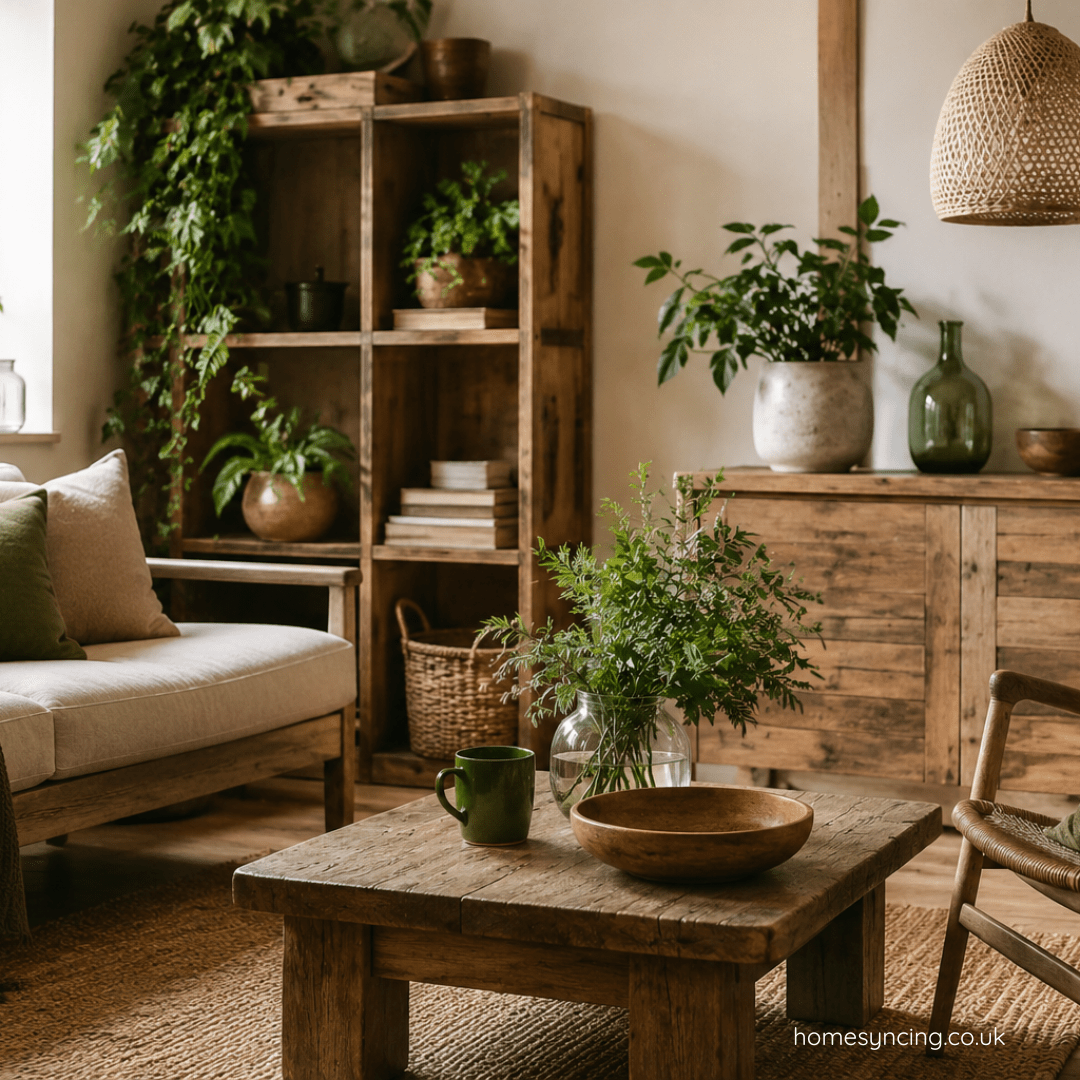
There is something quietly comforting about a home that feels connected to the world around it.
Perhaps it is the oak table that has gathered family and friends for years, its surface marked with the stories of countless shared meals. Maybe it is the favourite armchair by the window, where mornings begin with a cup of tea and evenings end with a good book. It could simply be the soft linen curtains that move gently in an open window or the basket that has faithfully carried vegetables in from the garden every summer.
These are the things that give a house its character. They remind us that the best homes are shaped gradually, through everyday life, rather than created overnight.
Creating a more sustainable home is much the same. It is not about chasing perfection or replacing everything you own with the latest eco-friendly alternative. Instead, it is about making thoughtful choices that help your home serve you well while placing less demand on the world’s resources.
Long before sustainability became a familiar word, many households naturally lived this way. Furniture was repaired instead of discarded. Clothes were mended. Gardens provided food, herbs and flowers throughout the seasons, while household possessions were looked after because they represented time, skill and craftsmanship.
Although our lives have changed in many ways, those principles remain just as valuable today. Choosing quality over quantity, caring for what we already have and buying only what we truly need can make our homes both more sustainable and more enjoyable to live in.
The journey begins with small decisions. Each one may seem insignificant on its own, yet together they create a home that is comfortable, welcoming and built to last.
What Does a Sustainable Home Really Mean?
The phrase sustainable home often brings to mind solar panels, electric cars or cutting-edge technology. While these all have their place, sustainability begins with something much simpler.
At its heart, a sustainable home is one where everyday choices are made with care. Rather than asking, What can I buy next?, we begin to ask, How can I make the most of what I already have?
Sometimes that means choosing furniture that will still be useful twenty years from now instead of replacing it every few seasons. At other times it may involve repairing a favourite lamp, reducing household waste or selecting natural materials that age gracefully. Even simple habits, such as switching off unused lights or drying washing outdoors on a warm day, become part of a more thoughtful way of living.
Importantly, sustainability does not demand a particular style. A period cottage, a modern apartment or a busy family home can all embrace the same principles. What matters is not how your home looks but how it functions, how long the things within it are likely to last and how carefully they are used.
Perhaps that is why some of the most welcoming homes never feel cluttered or over-designed. Every piece has earned its place. There is room to breathe, treasured belongings sit comfortably alongside practical everyday items and each object contributes something useful or meaningful.
A sustainable home, therefore, is not defined by how much it contains. More often, it is defined by how thoughtfully it has been put together.
Choose Furniture That Will Stand the Test of Time
Furniture is one of the biggest investments we make for our homes, so it makes sense to choose pieces that will continue to serve us well for many years.
Trends inevitably come and go. Colours change, styles evolve and what feels fashionable today may seem dated surprisingly quickly. Yet well-made furniture has a remarkable ability to outlast changing tastes. A beautifully crafted dining table, a solid oak sideboard or a comfortable upholstered chair can remain part of family life for decades, quietly adapting as rooms change around them.
Rather than asking whether a piece suits today’s fashions, it is worth considering how it will fit into your life in years to come.
Will it still be practical if you move house? Can it be used in another room as your needs change? Is it made from materials that can be repaired, restored or refinished if necessary?
The answers often reveal far more than the initial price tag.
Solid timber develops character as it ages, acquiring the gentle marks that tell the story of everyday life. Natural stone becomes richer with use, while quality upholstery can often be recovered rather than replaced altogether. These are qualities that encourage us to care for our furniture instead of viewing it as something temporary.
There is also something deeply reassuring about living alongside familiar pieces. The console table that once stood in a hallway may later find a place in a dining room. A bookcase can become a display cabinet, while an old chest of drawers may move from a bedroom into a home office without losing its usefulness.
When furniture is chosen with longevity in mind, it becomes more than a practical purchase. Over time, it becomes part of the story of the home itself.
Further Reading: Home Cleaning and Your CO2 Footprint, Improve Your Home’s CO2 Footprint, Illuminate Your World: How to Maximise Natural Light in Your Home, Transform Your Home into an Eco-Friendly Haven
Daily Inspiration: Follow Us on Instagram, BlueSky, Threads , Pinterest, Twitter, TikTok