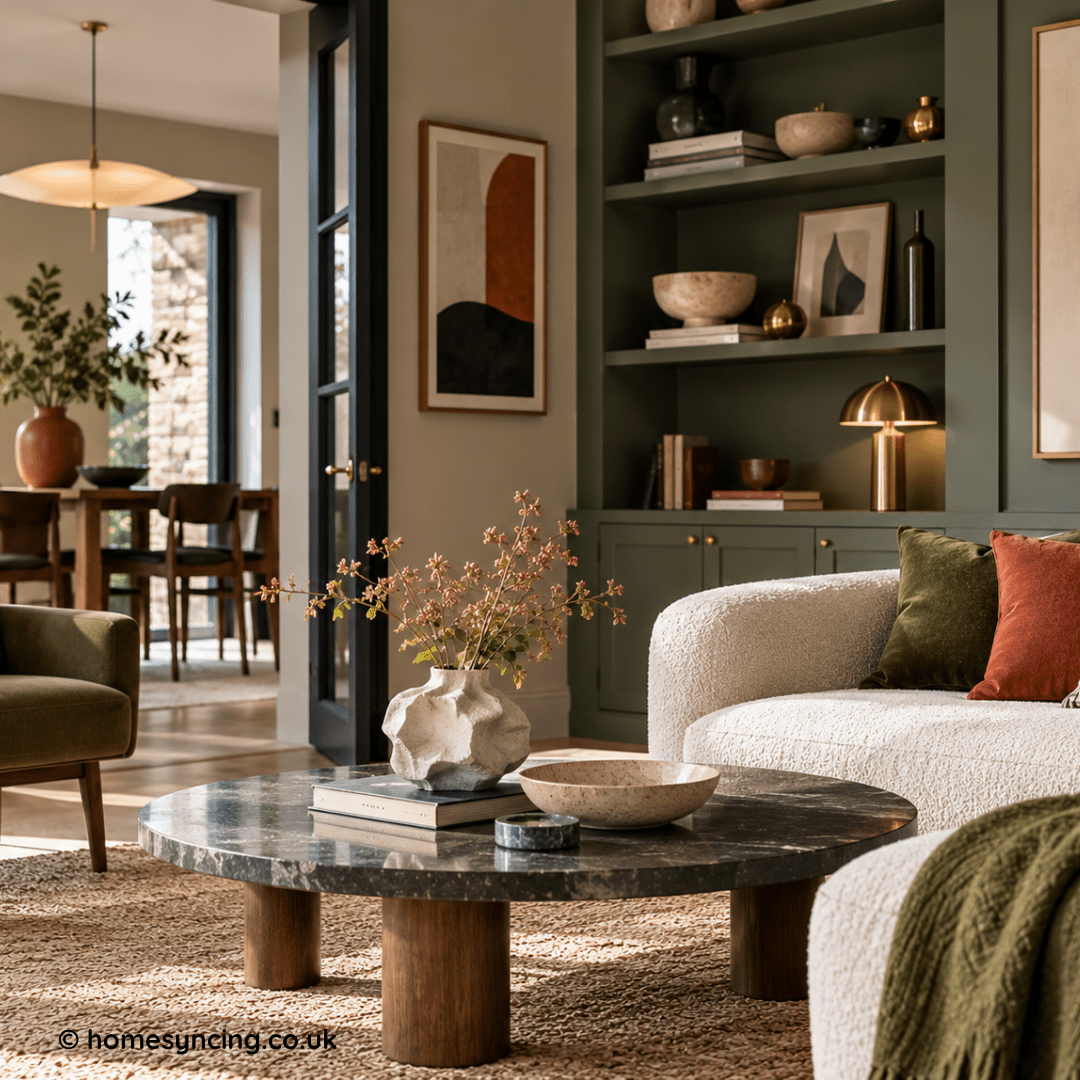
There is a particular pleasure in walking into a room that simply feels right.
It may not be the grandest room, nor the most fashionable. The furniture might have been gathered over many years rather than bought as a matching set. There may be an old chair beside a contemporary lamp, books that have escaped their shelves and a much-loved table bearing the marks of everyday life.
Yet somehow, it all belongs.
This is one of the quieter skills of good interior design. A beautifully styled home is rarely about filling a room with expensive things. It is about understanding colour, proportion, texture, light and the way a room is actually lived in.
And that means you do not necessarily need to redecorate your home from top to bottom to transform it. Sometimes the most successful changes begin with what you already have.
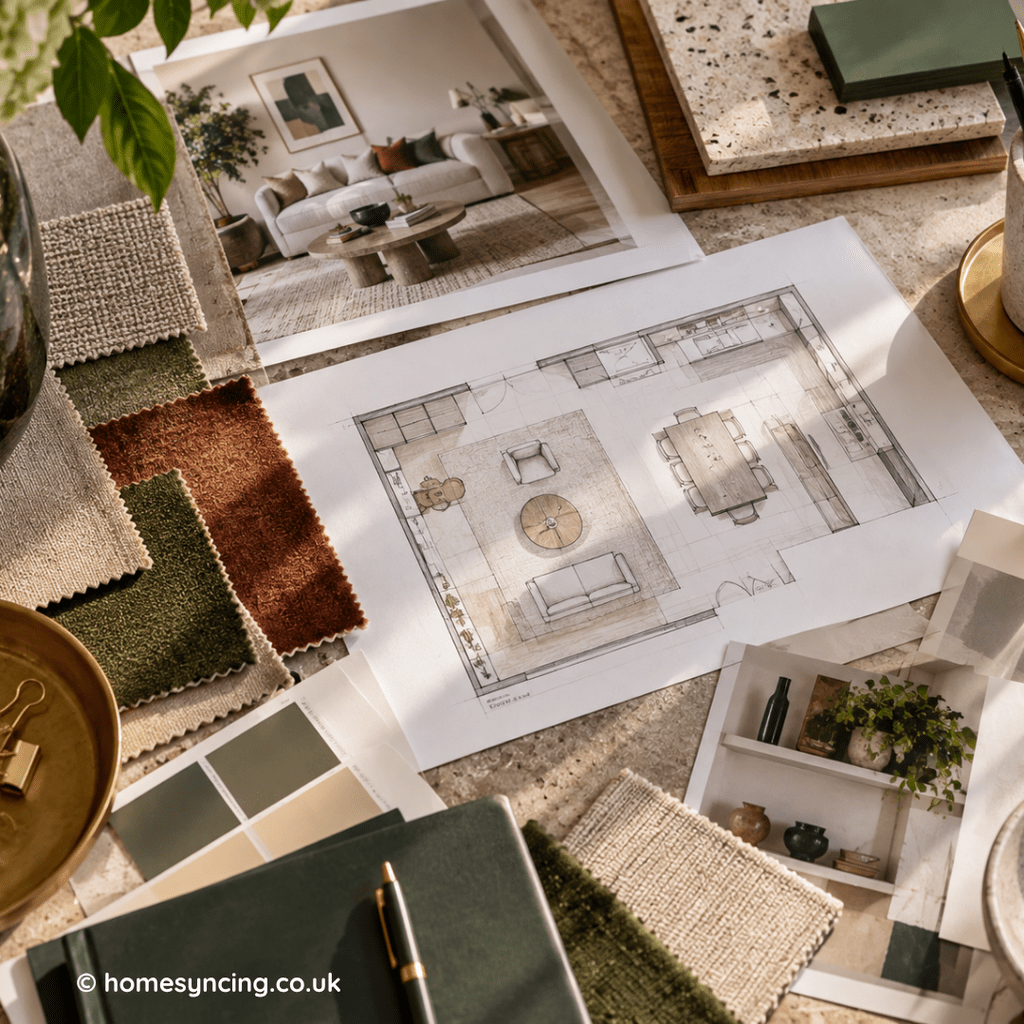
Begin by looking, not shopping
Before choosing paint colours or searching for a new sofa, spend a little time in the room you want to restyle.
Look at it at different times of day. Notice where the morning light falls and which corners become gloomy by late afternoon. Think about where you naturally sit, where people walk and which pieces of furniture you use without thinking.
Then consider what feels wrong.
Perhaps the room is technically well furnished but somehow lacks warmth. Perhaps everything is pushed against the walls. A large piece of furniture may be dominating the space, while something beautiful is tucked away where nobody notices it.
Interior designers spend a great deal of time considering these relationships. How a room works comes before how it is decorated.
Try removing a few things before adding anything new. Move an armchair. Turn a rug. Bring a side table out from a corner. Take several ornaments from a crowded surface and leave only the ones you particularly enjoy.
It is surprising how often a room begins to reveal itself when it has a little more space to breathe.
Decide how you want the room to feel
A mood board can be useful, but it need not become an elaborate design exercise.
Collect a handful of interiors that genuinely appeal to you and then look for what they have in common.
It might be generous use of colour, dark timber, softly patterned fabrics or rooms filled with old paintings. You may repeatedly save interiors with simple furniture and beautifully made ceramics, or rooms where contemporary pieces sit happily alongside antiques.
Look beyond individual products and consider the atmosphere.
Do you want your room to feel calm and restorative? Warm and enveloping? Bright and sociable? Characterful and collected?
Having that idea in mind makes every decision that follows rather easier.
Work with your home, rather than against it
One of the best interior design ideas is also one of the simplest: pay attention to the building.
Every home gives you clues.
In an older house, that might mean fireplaces, timber floors, deep skirting boards, alcoves or slightly imperfect walls. In a newer home, it could be generous windows, open-plan spaces and clean architectural lines.
You do not have to decorate slavishly according to the age of your property. In fact, some of the most interesting interiors come from introducing contrast. A contemporary table can look wonderful in an old room; an antique chest can bring warmth and individuality to a modern one.
The important thing is not to erase character unnecessarily.
A home usually becomes more interesting when its history — however modest — is allowed to remain part of the story.
Find your colour thread
Colour has enormous influence over how a room feels, but a successful interior colour scheme does not necessarily mean choosing three colours from a chart and repeating them precisely.
Think instead about a family of colours.
Begin with the elements that are unlikely to change: flooring, large pieces of furniture, stone, timber and perhaps curtains. Then introduce colours that sit comfortably alongside them.
A warm neutral might be accompanied by olive, tobacco and soft red. Deep blue can work beautifully with chalky whites, natural timber and ochre. Greens can move from muted sage to richer forest tones without everything having to match.
And do not judge paint from a tiny card.
Paint a generous sample and watch it throughout the day. British light can be wonderfully changeable, and a colour that appears warm in bright afternoon sunshine can look entirely different on a grey November morning.
Let furniture create the shape of the room
Furniture should not simply occupy a room; it should help to shape it.
A common mistake when restyling a living room is to place every substantial piece of furniture against a wall, leaving an uncertain patch of empty floor in the middle.
Where space permits, bring furniture slightly inwards.
An armchair turned towards a sofa immediately creates conversation. A console behind a sofa can subtly divide an open-plan room. A rug large enough for furniture to sit partly upon it can draw several separate pieces into one coherent arrangement.
Consider height as well as width. A room in which everything sits at roughly the same level can feel strangely flat. Floor lamps, artwork, mirrors and taller pieces of furniture encourage the eye to travel around the whole space.
Good rooms have rhythm.
Layer old and new
Homes tend to feel most convincing when they appear to have developed over time.
This is difficult to achieve if everything comes from one collection, in one finish, bought at once.
Instead, allow different periods and materials to meet.
A clean-lined sofa might sit beside an old wooden table. A contemporary lamp can give new life to a traditional chest. A rather formal piece of furniture can become more relaxed when surrounded by books, pottery and everyday objects.
There is no need to manufacture age or character. One genuinely interesting older piece often contributes more to a room than several objects designed merely to look old.
Equally, contemporary furniture can prevent a traditional interior from becoming overly nostalgic.
The contrast is often where the personality lies.
Use texture to make a room feel lived in
Colour catches the eye first, but texture is often what makes us want to stay.
Timber, wool, linen, velvet, stone, glass, metal, basketry and ceramics all respond differently to light. Combining them creates depth without requiring an abundance of pattern or decoration.
This is particularly valuable in a neutral room.
A linen curtain beside a wool rug, a timber table and a piece of glazed pottery can create far more interest than introducing another colour simply for the sake of it.
When choosing fabrics and soft furnishings, consider how they feel as well as how they photograph. Homes are touched, sat upon, walked through and lived in. Materials that become more appealing through use will generally serve a room better than those that need to remain immaculate.
Treat lighting as part of the decoration
Few things alter the atmosphere of a room as quickly as lighting.
A single bright ceiling light may illuminate everything, but it rarely makes everything look its best.
Instead, create several pools of light.
A table lamp beside an armchair makes a natural place to read. A lamp on a console draws attention to artwork above it. Wall lights can soften a dining area, while a floor lamp brings height and warmth to an otherwise forgotten corner.
Think about the lamps themselves, too. Even when switched off, they are part of the composition of the room.
Good interior lighting should work practically, but it should also make an ordinary evening at home feel rather lovely.
Give the eye somewhere to rest
Not every wall needs a picture. Not every table needs an arrangement.
Empty space is an important part of decorating.
If a room contains several strong elements — patterned curtains, artwork, colourful furniture or a striking rug — quieter areas give them room to be appreciated.
The same principle applies when styling shelves, sideboards and coffee tables. Rather than distributing small objects evenly across every surface, create a few deliberate groupings and leave space around them.
A stack of books, a favourite piece of pottery and a lamp may be all a sideboard needs.
Objects gain importance when they are not competing with twenty others.
Display things that mean something
This is perhaps where a well-designed home becomes a personal one.
Books you return to, paintings found on holiday, inherited furniture, old photographs, ceramics made by a local potter, shells picked up on a beach — these things introduce a layer that cannot simply be purchased as a coordinated collection.
They need not be valuable.
Their importance comes from belonging to you.
Try moving treasured objects into more prominent positions. Frame something that has been sitting in a drawer. Place an inherited bowl on the table rather than keeping it safely in a cupboard. Hang artwork where you will actually notice it.
The most memorable homes tell you something about the people who live there.
Know when to stop
Perhaps the most useful interior design lesson is also the hardest: a room does not have to be finished.
Homes change.
Books accumulate. Furniture moves from one room to another. Paint fades, fabrics soften and new objects arrive while others quietly disappear.
Allowing for that evolution can make an interior feel much more natural.
Once the essential pieces are in place, live with the room for a while before filling every corner. You may discover that the empty wall does not need anything after all, or that the table you thought you needed would simply get in the way.
A little restraint leaves room for life.
Creating a home that feels like yours
Restyling your home like an interior designer is not really about making it look professionally styled.
It is about learning to notice.
Notice the light. The proportions. The view from one room into another. The colours already present in timber and stone. The objects you use every day and those you have kept simply because you love them.
Then edit, rearrange and add with purpose.
Some rooms may need new furniture. Others might be transformed by moving what is already there, changing the lighting, introducing a generous rug or finally hanging the picture that has been leaning against the wall for six months.
Take your time.
The best interiors rarely feel as though they arrived fully formed. They have layers, quirks and signs of life. They evolve alongside the people who inhabit them.
And that, rather more than following any particular decorating rule, is what makes a house feel wonderfully at home.
Further Reading: Your Home Should Be Your Sanctuary, Illuminate Your Space with Statement Lighting, Grounding Colours in Interior Design: Transform Your Space with Calm and Balance,