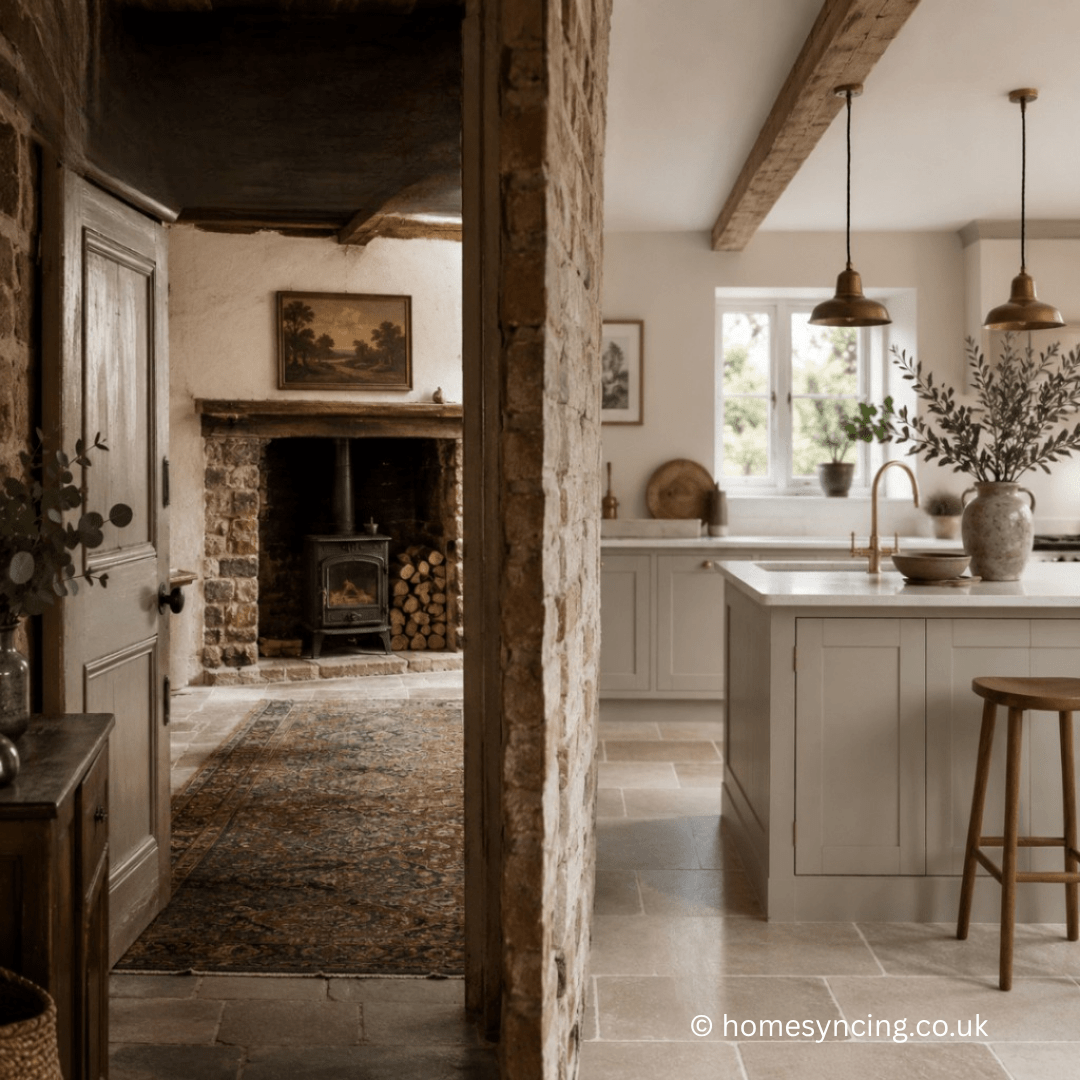
There is something unmistakably special about an older home.
Perhaps it is the uneven floorboards worn smooth by generations of footsteps, or the way afternoon light settles across original stone walls. Perhaps it is the quiet creak of a staircase, the depth of old window frames or fireplaces that once gathered entire households around their warmth. Period homes, cottages and traditional properties carry stories within them. They feel rooted, layered and deeply human in a way newer spaces sometimes struggle to replicate.
And yet, living in an older property often requires compromise too.
Modern life asks different things of our homes than it once did. We expect warmth, storage, efficient kitchens, practical bathrooms and spaces that support busy daily routines. Renovation becomes necessary not simply for aesthetics, but for comfort and functionality.
The challenge, of course, lies in improving a home without stripping away the very qualities that made it beautiful to begin with.
Because character, once removed, is remarkably difficult to restore.
Across Britain, many historic homes have survived because generations understood how to adapt them gradually rather than erase them entirely. Farmhouses gained extensions over centuries. Kitchens evolved as technology changed. Rooms shifted purpose alongside family life. Yet often, the original spirit of the building remained intact because alterations respected the rhythm and materials of the house itself.
Successful renovation still follows this principle today.
The most sympathetic renovations begin not with trends, but with observation. Older homes reveal what they need if given time. Thick walls shape light differently. Small windows create intimacy rather than expansiveness. Low ceilings encourage warmth and comfort. Original features often exist for practical reasons as much as aesthetic ones.
There can be a temptation during renovation to force period properties into modern expectations entirely — to open every room, smooth every surface and replace every imperfect detail. Yet homes lose depth when their individuality disappears beneath uniformity.
Crooked beams, worn brickwork and slightly uneven floors are not flaws to correct. They are often what make a property memorable.
Original materials play a remarkable role in preserving this atmosphere.
Natural stone, timber, lime plaster and aged brick all carry texture and warmth that modern synthetic finishes struggle to imitate convincingly. Where possible, restoring rather than replacing these materials often helps retain the soul of a home. Sanding back original floorboards, repairing sash windows or uncovering fireplaces can completely transform a property without removing its history.
Even signs of age can become beautiful when embraced thoughtfully. Wood darkened over time. Iron latches softened by use. Stone steps hollowed gently through centuries of footsteps. These details connect a home to its past in ways newer materials rarely can.
At the same time, renovation should never mean preserving discomfort for the sake of authenticity alone.
Older homes need to function for contemporary life. Kitchens must work practically. Bathrooms require warmth and efficiency. Insulation, lighting and heating improvements often make an enormous difference to how a property feels day to day.
The key lies in balance.
Modern additions tend to work best when they complement rather than compete with original architecture. Shaker kitchens sit naturally within cottages because their simplicity echoes traditional craftsmanship. Brass fittings age gracefully alongside older materials. Neutral paint colours allow original beams, stonework and fireplaces to remain central features within a room.
Lighting deserves particular attention within period properties.
Older homes were designed around natural daylight, firelight and softer evening illumination rather than bright overhead fixtures. Harsh modern lighting can quickly strip warmth from historic interiors. Layered lighting — wall lights, lamps and warm-toned bulbs — helps maintain atmosphere while improving practicality.
Storage also requires careful thought.
Traditional homes were not built around modern levels of possessions, and clever storage can dramatically improve comfort without compromising character. Built-in cupboards painted into alcoves, benches with hidden storage and shelving designed around existing architectural details all help preserve flow and openness within smaller spaces.
Colour choices matter enormously too.
Soft, earthy palettes tend to sit beautifully within older properties because they respond gently to natural materials and changing light. Warm whites, muted greens, clay tones and weathered blues create continuity with surrounding landscapes and architectural features. Strong trend-led colours can sometimes feel disconnected from the building itself, while more timeless tones allow the home’s original character to breathe.
Importantly, renovation is rarely only about aesthetics.
It is often about stewardship.
Owning a period home carries a quiet responsibility to protect what makes it distinctive while ensuring it continues to be lived in and loved for generations to come. The best renovations rarely feel entirely new. Instead, they feel as though the house has simply evolved naturally over time.
And perhaps that is why thoughtfully renovated homes feel so comforting.
They carry both history and life together within their walls.
Old beams above modern family kitchens. Antique fireplaces beside comfortable sofas. Traditional architecture softened by contemporary living. Rooms that respect the past without becoming trapped within it.
Because ultimately, character is not created through perfection.
It lives within texture, craftsmanship, age and atmosphere.
And when renovation honours those things carefully, older homes do not lose their soul.
They simply continue their story.
Further Reading: Affordable Decorating Ideas That Will Transform Your Home, Sustainable Chic: A Beginner’s Guide to Circular Design, Small Room, Big Impact
Daily Inspiration: Follow Us on Instagram, BlueSky, Threads , Pinterest, Twitter, TikTok