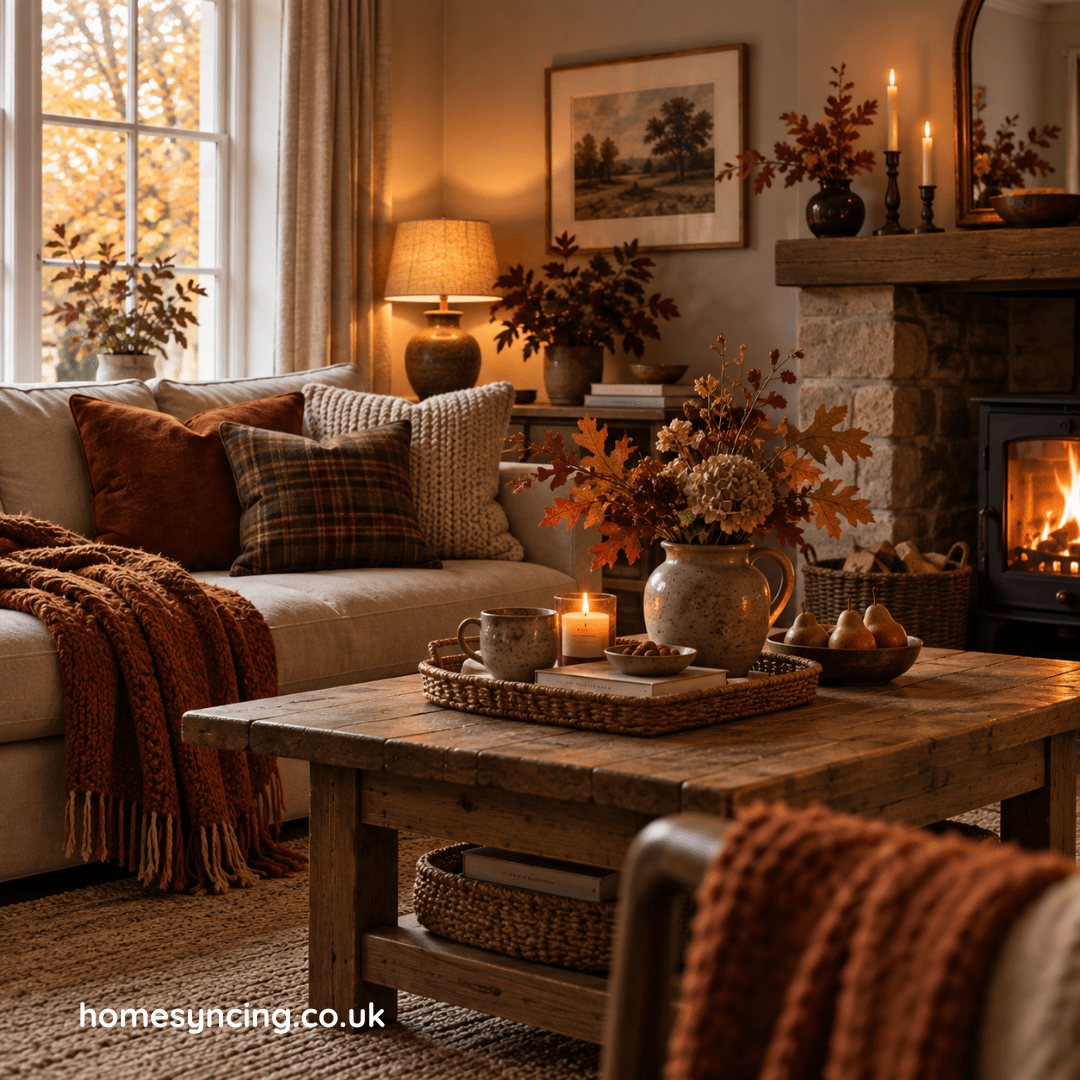
How to Make Your Home Feel Cosy for Autumn

There is a point each year when home begins to call us back indoors.

It might be the first cool evening that has you reaching for a jumper, the sound of rain against the windows, or simply noticing that the light has changed. The long, bright evenings of summer begin to soften, shadows lengthen and suddenly the thought of drawing the curtains and settling into a favourite chair feels rather appealing.

Autumn has arrived.

And with it comes one of the loveliest opportunities of the year to rediscover our homes.

Creating a cosy home for autumn needn’t mean redecorating every room or filling it with pumpkins and russet-coloured accessories. Often, the most welcoming autumn interiors are much simpler than that. They are homes that feel warm, layered and comfortable; places where natural materials, softer light and familiar objects quietly come together.

Here are a few ways to make your home feel cosy for autumn, while keeping it unmistakably yours.

Begin with the changing light

Perhaps the greatest change autumn brings indoors isn’t temperature, but light.

As the days shorten, rooms that seemed bright throughout summer can begin to feel quite different. Corners fall into shadow earlier and the strong daylight of June and July gives way to something softer and more golden.

Rather than fighting this change, make something of it.

A table lamp on a sideboard, a reading lamp beside an armchair or a pair of lamps at either end of a room can create pools of gentle light. These are often far more inviting than relying on one bright ceiling light.

Think particularly about the places where you naturally spend an autumn evening: beside the sofa, in a reading corner, at the dining table or perhaps at a desk tucked into an alcove.

Lighting these smaller areas gives a room depth and creates that wonderfully cocooning feeling we associate with autumn.

Candles can add another layer. Placed on a mantelpiece, console table or dining table, their flickering light brings movement and warmth after dusk. Even unlit, a collection of candlesticks can give a room a sense of occasion.

Bring in layers of texture

When we think of a cosy room, we often imagine how it feels before we consider how it looks.

A woollen throw folded over the back of a chair. A thick rug beneath bare feet. Linen curtains, a velvet cushion or the grain of an old wooden table beneath your hand.

Texture has a remarkable ability to make a room feel warmer.

In autumn, introduce layers gradually. A throw over a sofa may be all that’s needed at first. As the weather turns colder, add cushions in wool, velvet, linen or woven fabrics and bring rugs back into rooms where they may have been rolled away for summer.

There is no need for everything to match.

In fact, a mixture of textures usually creates a more relaxed and established interior. Smooth ceramics beside weathered wood, soft wool against leather, or a simple linen shade on a characterful lamp can be far more interesting than a room in which every surface feels the same.

The aim isn’t perfection. It is comfort.

Take your colours from outdoors

You only have to look beyond the window for an autumn colour palette.

Ochre leaves, mossy greens, dark berries, chestnut browns and the faded gold of grasses all sit naturally together. These colours have long found their way into British interiors because they are easy to live with and particularly suited to the softer light of the colder months.

You don’t need to repaint a room to introduce them.

A deep green cushion, amber glass vase, patterned lampshade or warm-toned rug may be enough to shift the mood. Even a bowl filled with apples or a vase of late-season foliage can bring autumn colour indoors.

If your home is predominantly neutral, earthy colours can stop it feeling stark as daylight fades. If you already have plenty of colour, autumn is an opportunity to bring forward the deeper shades that might have felt too heavy during summer.

And don’t overlook brown. For years it was rather unfairly dismissed in interiors, yet timber, leather, rattan and earthenware all bring wonderfully rich variations of it into a room.

Let wood do some of the work

Few materials make a home feel as grounded as wood.

There is something reassuring about furniture that reveals its grain, knots and natural variation. Whether it is a substantial dining table, an old chest, a simple wooden stool or a well-used sideboard, timber brings warmth without needing to announce itself.

Autumn is a particularly good time to allow wooden furniture to become part of the decoration.

Rather than covering every surface, leave some of the material visible. A console table might need little more than a lamp, a favourite bowl and a small arrangement of branches. A sideboard can provide a calm backdrop for pottery, books or collected objects.

Rooms become interesting over time, and pieces that show a little age often help create this feeling. New furniture doesn’t necessarily have to look new, either. Pieces inspired by traditional forms, aged finishes and natural materials can sit happily alongside things you have owned for years.

A cosy home rarely feels as though everything arrived on the same day.

Make something of the mantelpiece

If you’re fortunate enough to have a fireplace, autumn is its season.

Even when there is no fire burning, the hearth naturally becomes a focal point. A basket of logs, a few candles or a simple arrangement on the mantel can quietly signal the changing season.

Try gathering foliage from the garden or bringing home a few fallen branches from a walk where collecting is permitted. Hawthorn berries, rosehips, dried hydrangeas and seed heads can be every bit as beautiful as bought flowers.

Keep arrangements loose rather than overly styled. Autumn outdoors is gloriously imperfect, and bringing a little of that informality inside tends to feel much more natural.

No fireplace? A console table or sideboard can perform much the same role, providing somewhere to create a small seasonal display.

Rediscover the pleasure of a reading corner

Autumn encourages us to slow down.

A chair that received little attention during summer can suddenly become one of the best places in the house. Move it nearer a window if you can make the most of the afternoon light, then add a small table, a lamp and somewhere to put a cup of tea.

That is often all a reading corner needs.

The secret is to make it genuinely useful rather than merely decorative. The lamp should provide enough light to read by. The table should be within reach. The chair should be somewhere you actually want to sit.

Add a throw and a small pile of books and you have created somewhere that invites you to stop for half an hour.

Sometimes cosiness is less about what we put into a room and more about giving ourselves a reason to spend time there.

Bring a little of the season indoors

One of the simplest ways to mark autumn at home is to bring in what is happening outside.

A handful of branches in a large vase can transform a hallway. Dried grasses bring height and movement to a quiet corner. Apples and pears piled into an old bowl make a kitchen table feel abundant without trying too hard.

Look in the garden before buying anything.

Hydrangea heads can dry beautifully. Herbs can be tied into small bunches. Seed heads, twigs and autumn leaves can make wonderfully informal displays.

There is something satisfying about decorations that aren’t expected to last forever. As the leaves curl and colours fade, they remind us that the season itself is changing.

Don’t forget the hallway

Cosiness shouldn’t begin in the sitting room.

The entrance to your home sets the mood for everything beyond it, and in autumn it becomes particularly important. This is the place where wet coats are shrugged off, boots are left by the door and scarves begin appearing again.

A hallway needs to work hard, but practical doesn’t have to mean unwelcoming.

A console table with a softly glowing lamp can completely change the atmosphere when you come home after dark. A mirror will catch and reflect that light, while a basket provides somewhere for gloves and scarves as the weather cools.

If there is room, a bench or chair makes taking off muddy boots rather easier too.

The loveliest hallways feel as though the house is pleased to see you.

Create small autumn rituals

Some of what makes a home feel cosy can’t be bought at all.

It is the first pot of tea made after coming in from a wet walk. Lighting a candle as evening falls. Closing the curtains a little earlier. Cooking something slowly while the kitchen windows mist at the edges.

These small rituals change how we experience our homes.

Perhaps there is a blanket that only appears when the weather turns cold, a favourite mug brought to the front of the cupboard or a chair that becomes your place to sit with a book on Sunday afternoons.

Allowing the seasons to alter the way we live at home gives the year a rhythm.

And autumn, perhaps more than any other season, invites us to enjoy the ordinary comforts we can easily overlook.

Make room for a little imperfection

The cosiest homes are rarely the most immaculate.

There might be books stacked on a table, a blanket left rumpled on the sofa or muddy boots waiting beside the back door. These are signs of a home being lived in.

Try not to style away all of its character.

A room filled entirely with pristine objects can be beautiful, but it may not necessarily make you want to settle down for the evening. Mixing useful things with treasured things — old and new, polished and weathered, practical and decorative — gives a home depth.

It is often the slightly imperfect pieces that become favourites: the chair everyone chooses first, the scratched table around which countless meals have been eaten, or the old cupboard that has somehow followed you from house to house.

Autumn is a good season for appreciating them.

A home ready for autumn

Making your home cosy for autumn isn’t really about following a particular interiors trend.

It is about noticing.

Noticing where you want more light as dusk arrives. Where a rug would make a cold floor more comfortable. Which chair deserves moving closer to the fire. Which summer things can be put away and which familiar autumn favourites you are pleased to see again.

Add warmth where it is needed. Bring in texture, natural materials and the colours of the landscape. Light the lamps earlier. Find room for the books, blankets and objects that make home feel personal.

Then, when the rain begins tapping against the windows and the evening draws in, there may be nowhere else you would rather be.

Further Reading: Ways to Prepare your Home for Autumn, Create a Cosy Autumn Home, Your Home Should Be Your Sanctuary, October’s Golden Harvest, Winter Comfort Food – Casseroles and Stews, Autumn Foraging: Nature’s Harvest

Daily Inspiration: Follow Us on Instagram, BlueSky, Threads , Pinterest, Twitter, TikTok
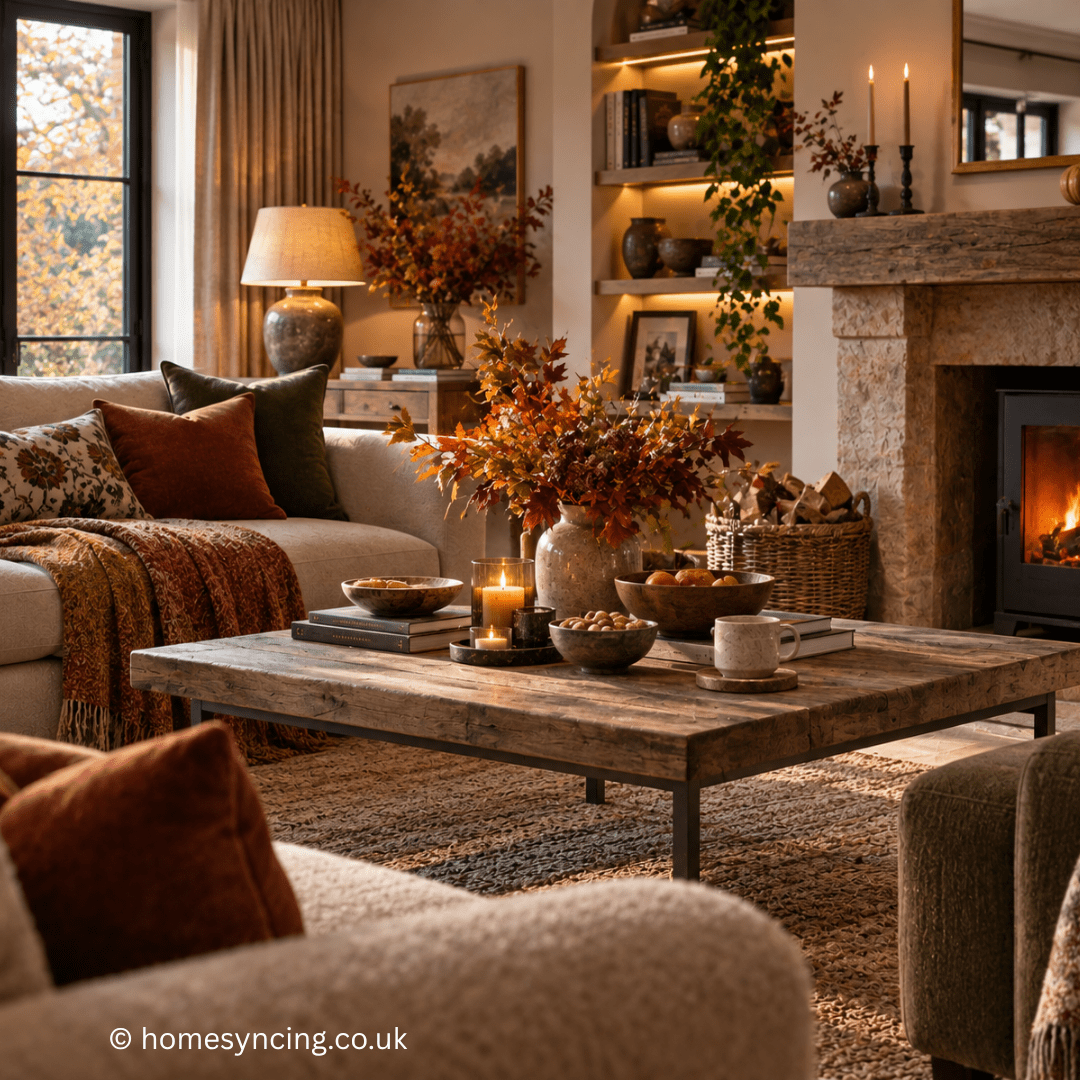
How to Create a Cosy Autumn Home

There is a particular moment each autumn when home begins to feel different.

The light fades a little earlier, mornings acquire a chill and doors that stood open throughout summer are quietly closed. Outside, gardens begin their slow change from green to russet, ochre and brown; indoors, we find ourselves reaching instinctively for lamps, blankets and the first fire of the season.

Creating a cosy autumn home needn’t involve redecorating or filling every surface with seasonal ornaments. Often, the most effective changes are small ones: a woollen throw returned to the arm of a sofa, a lamp switched on before dusk, branches brought in from the garden or a rug laid over a cool floor.

Autumn decorating is at its best when it follows the season rather than caricaturing it.

Instead of trying to make a home look ‘autumnal’, think about making it feel warmer, softer and more inviting – somewhere you genuinely want to retreat to when the weather turns.

Begin with the Changing Light

Perhaps the greatest transformation autumn brings is not colour but light.

As the days shorten, rooms that felt bright throughout summer can suddenly become shadowy by late afternoon. Rather than fighting this with one powerful ceiling light, use several smaller sources of illumination.

Table lamps are invaluable.

Place them beside sofas, on consoles and in darker corners where their light can fall gently across walls and furniture. A floor lamp beside a favourite chair can create a natural reading spot, while small lamps on shelves or side tables give a room greater depth after dark.

For a warm domestic glow, bulbs around 2700K are a useful starting point. They produce a warmer appearance than cooler white lighting and generally sit comfortably alongside timber, warm paint colours and natural fabrics.

But don’t feel every corner needs illuminating.

A little shadow is part of what makes an autumn room atmospheric.

Layer the Textures You Want to Touch

Autumn is a tactile season.

As temperatures fall, smooth summer linens and lightweight fabrics can be joined by wool, velvet, corduroy and heavier woven textiles.

A throw is one of the simplest additions.

Fold one loosely over the back of an armchair, place another within reach of the sofa or keep several in a basket beside the fireplace.

Natural wool has a particularly pleasing weight and texture, although cotton and other woven materials can work equally well depending on the household and how easily things need to be washed.

Cushions offer another opportunity to introduce texture without replacing the furniture itself.

Try combining rather than matching: velvet beside linen, a small-scale pattern against a plain weave, or something richly coloured alongside a quieter neutral.

The aim isn’t to cover every available surface.

A few well-chosen layers usually feel more inviting than a sofa so carefully arranged with cushions that there is nowhere left to sit.

Look to the Autumn Landscape for Colour

There is no need to limit an autumn colour scheme to orange and brown.

Look outside and the palette is far more interesting.

There are the deep greens of evergreens, faded pinks of late flowers, burgundy leaves, ochre grasses, grey skies, dark earth and the extraordinary reds of trees at their seasonal peak.

These colours translate beautifully indoors.

Try olive and forest green, rust, tobacco, berry red, plum, ochre and warm cream. Introduce them through cushions, blankets, ceramics, artwork or flowers rather than changing an entire room for one season.

If your home already contains strong colour, autumn may simply be a matter of deepening it.

A pale green room can take a dark olive cushion. Blue can be warmed by tobacco and rust. Pink can sit surprisingly well beside burgundy and deep green.

The most convincing autumn interiors rarely look as though every object was bought together.

Bring the Garden Indoors

By autumn, the garden offers a different sort of beauty.

Flowers may be fewer, but branches, berries, seed heads, grasses and turning leaves bring shape and texture that summer blooms cannot.

The original article suggests bringing natural seasonal finds indoors, and it is an idea worth keeping at the heart of autumn decorating.

A single branch of coloured leaves in a large ceramic vessel can make a wonderful centrepiece. Dried hydrangea heads, rose hips and ornamental grasses need little arranging.

Allow them to remain slightly unruly.

Part of their charm lies in looking as though they really have come from the garden rather than a decorating scheme.

When collecting wild material away from your own land, however, be mindful of where and what you gather. Leave fungi, berries and plants where collection is prohibited or where they form an important part of the habitat.

Sometimes the best seasonal decoration is simply something noticed rather than taken home.

Use Pumpkins with Restraint

Pumpkins and gourds aren’t only for Halloween.

Their muted greens, creams and earthy oranges can look beautiful in an autumn interior, particularly when grouped with timber, stone and pottery.

But a few are usually enough.

A small group on a kitchen table, a single unusual squash on a dresser or a bowl containing miniature gourds can acknowledge the season without making the room feel themed.

Edible varieties have the additional advantage of eventually becoming supper.

Seasonal decorating is particularly satisfying when nothing is wasted.

Make More of the Fireplace

For centuries, the hearth was quite literally the warm centre of the home.

Central heating has changed its practical importance, but a fireplace still has a remarkable ability to draw people towards it.

If yours is in working order and safe to use, autumn is the time to arrange the room around it again.

Move an armchair a little closer. Keep a basket for logs nearby where appropriate. Place a lamp within reach so the area remains useful for reading once daylight disappears.

Even a fireplace that is no longer used can become a seasonal focal point.

Rather than filling it with an elaborate display, consider a simple basket, an arrangement of logs or another understated feature suited to the room.

And if you use a working chimney or solid-fuel appliance, make sure it is properly maintained and follow the relevant safety guidance before lighting the first fire of the season.

Cosiness should never come at the expense of safety.

Introduce Candlelight Carefully

There is a quality to candlelight that electric lighting struggles to reproduce.

Its movement makes polished timber, glass and metal seem more alive, while even an ordinary supper can feel different once candles are lit.

Use them where they will actually be enjoyed: on a dining table, a mantel or a coffee table during the evening.

Varying the heights can create a more natural arrangement, but keep flames well clear of dried foliage, curtains, books and other combustible materials.

Never leave burning candles unattended.

Scented candles can add another layer, although restraint is worthwhile. One fragrance drifting gently through a room is far more pleasant than several competing for attention.

Let Autumn Have a Scent

We remember seasons through scent as much as sight.

Autumn brings damp leaves, wood smoke, apples, spices and the smell of the garden after rain.

Indoors, fragrance can help create atmosphere, but it needn’t come entirely from candles and diffusers.

Bake something.

Put apples in a bowl on the kitchen table. Bring aromatic herbs indoors. Allow the smell of supper to travel through the house.

The original article suggests gently simmering ingredients such as citrus peel and spices to scent a room. If doing so, keep the pan attended and make sure it doesn’t boil dry.

Natural seasonal scents tend to be most appealing when they remain subtle.

A home should still smell like a home.

Create Somewhere to Read

Autumn makes a persuasive case for the reading chair.

Look for a corner with natural daylight, then make sure it remains useful after dark with a well-positioned lamp. Add a small table large enough for a book and a cup, and perhaps a basket for magazines or current reads.

The original article proposes creating smaller seating areas away from the main sofa, which can make a room considerably more interesting.

A chair beside a window, two seats angled towards a fireplace or even a bench in a wide hallway can create places to stop rather than simply pass through.

Older houses are particularly good at offering these incidental corners.

Sometimes all that is missing is a reason to use them.

Warm Up Hard Floors

Timber, stone and tiled floors can be beautiful, but their character changes when the temperature falls.

Rugs introduce both physical and visual warmth.

A generous rug beneath the main seating area can help bring a room together and soften sound, while smaller rugs beside beds or favourite chairs provide warmth exactly where it is most appreciated.

Wool is an obvious autumn choice, bringing warmth and texture, while flatwoven rugs can provide pattern without feeling overly heavy.

When layering rugs, let the arrangement respond to the furniture rather than simply placing one rug neatly in the centre of another.

As elsewhere in the room, a little irregularity often feels more natural.

Dress the Dining Table for the Season

Autumn is a generous season for the table.

Apples and pears, garden foliage, late dahlias and richly coloured napkins can make an everyday supper feel quietly special.

There is no need to create an elaborate centrepiece.

Try a low bowl of seasonal fruit, several small vessels containing garden flowers or a few candles running down the centre of a timber table.

Keep arrangements low enough for people to see one another.

A table should encourage conversation rather than obstruct it.

And don’t save cloth napkins, favourite serving dishes and attractive glasses solely for guests. Using beautiful things on ordinary evenings is one of the simplest ways to make home feel more considered.

Rearrange the Room for Gathering

Rooms sometimes remain arranged according to the way they were first furnished rather than the way people actually use them.

Autumn is a good opportunity to reconsider.

The source article suggests pulling seating closer together and arranging furniture to encourage conversation. It is a small change that can make a surprising difference.

Angle an armchair towards the sofa rather than the television. Bring a small table within reach. Make sure every seat has somewhere nearby for a drink.

If the fireplace becomes the natural focus in winter, allow the furniture to acknowledge it.

Homes needn’t remain static throughout the year.

For generations, households changed with the seasons – curtains were drawn earlier, fires lit, textiles brought out and rooms used differently as temperatures fell.

There is something sensible about continuing that tradition.

Style Surfaces Without Filling Them

Mantels, coffee tables and sideboards offer obvious opportunities for seasonal decoration, but they don’t all need decorating at once.

Choose a few places to concentrate your attention.

A mantel might hold a pair of candlesticks, one piece of pottery and a branch gathered from the garden. A coffee table could have a bowl, two favourite books and a candle.

Vary height and texture, and leave empty space around the arrangement.

The original article recommends creating displays that feel collected rather than contrived, which is a useful principle well beyond autumn.

Objects acquire greater presence when they have room around them.

Don’t Hide Away the Signs of Everyday Life

There is a curious contradiction in the idea of a cosy home.

We sometimes try so hard to make rooms look inviting that we remove all evidence that anyone actually lives there.

Yet a book left beside a chair, a blanket slightly rumpled on the sofa and a pair of muddy boots near the back door can contribute more to a sense of home than immaculate styling.

Autumn interiors benefit particularly from this informality.

Keep blankets where they are used. Leave a basket of logs by the hearth. Put books where people read them.

Comfort rarely looks perfectly arranged.

Make the Entrance Feel Welcoming

Autumn often arrives indoors through the hallway first.

Wet coats, scarves, boots and umbrellas suddenly reappear, so make room for them before they begin accumulating on every available chair.

A sturdy doormat, useful hooks and a basket for hats and gloves can make an entrance considerably easier to live with.

Then add something beautiful.

A lamp on a console table provides a welcoming pool of light when returning home after dark. A branch of autumn foliage brings the season indoors without requiring much space.

The hallway sets the tone for the rooms beyond it.

On a dark October evening, a little warmth here goes a long way.

Choose Things That Will Last Beyond October

Good seasonal decorating shouldn’t require buying an entirely new collection of accessories every few months.

Look around the house first.

A blanket normally kept in a bedroom might move downstairs. A ceramic jug can become a vase. Books can be rearranged and candlesticks brought out of a cupboard.

If you do buy something, choose an object you would happily use beyond autumn.

A woollen throw, well-made lamp, ceramic vase or good rug has no expiry date.

Even strongly autumnal colours such as rust, olive and ochre can remain beautiful throughout the year when they are part of a broader, layered interior.

The objective is not to create a temporary stage set.

It is to make the home more comfortable as the season changes.

A Home That Changes with the Seasons

Creating a cosy autumn home is ultimately less about decoration than attention.

Notice where the evening light disappears first. Bring a lamp to that corner. Notice where you instinctively curl up with a book and put a blanket within reach. Bring in a branch from the garden because its leaves are extraordinary, not because an autumn checklist says that you should.

As the source article rightly suggests, genuine cosiness comes from comfort rather than perfection and from the small rituals that accompany the season.

Homes have always changed as the year turns.

Autumn simply asks us to draw things a little closer: curtains, chairs, blankets and people.

Perhaps that is why a cosy room feels particularly welcome at this time of year. While the world outside becomes darker and cooler, home becomes somewhere to gather, settle in and stay awhile.

Further Reading: English Pudding Season, Bursting with September Sunshine – Celebrate the Blackberry, September’s Symphony of Change, How To Make Your Home Smell Fabulous   , Cosy Bedroom Décor Ideas to Transform Your Space  

Translate »