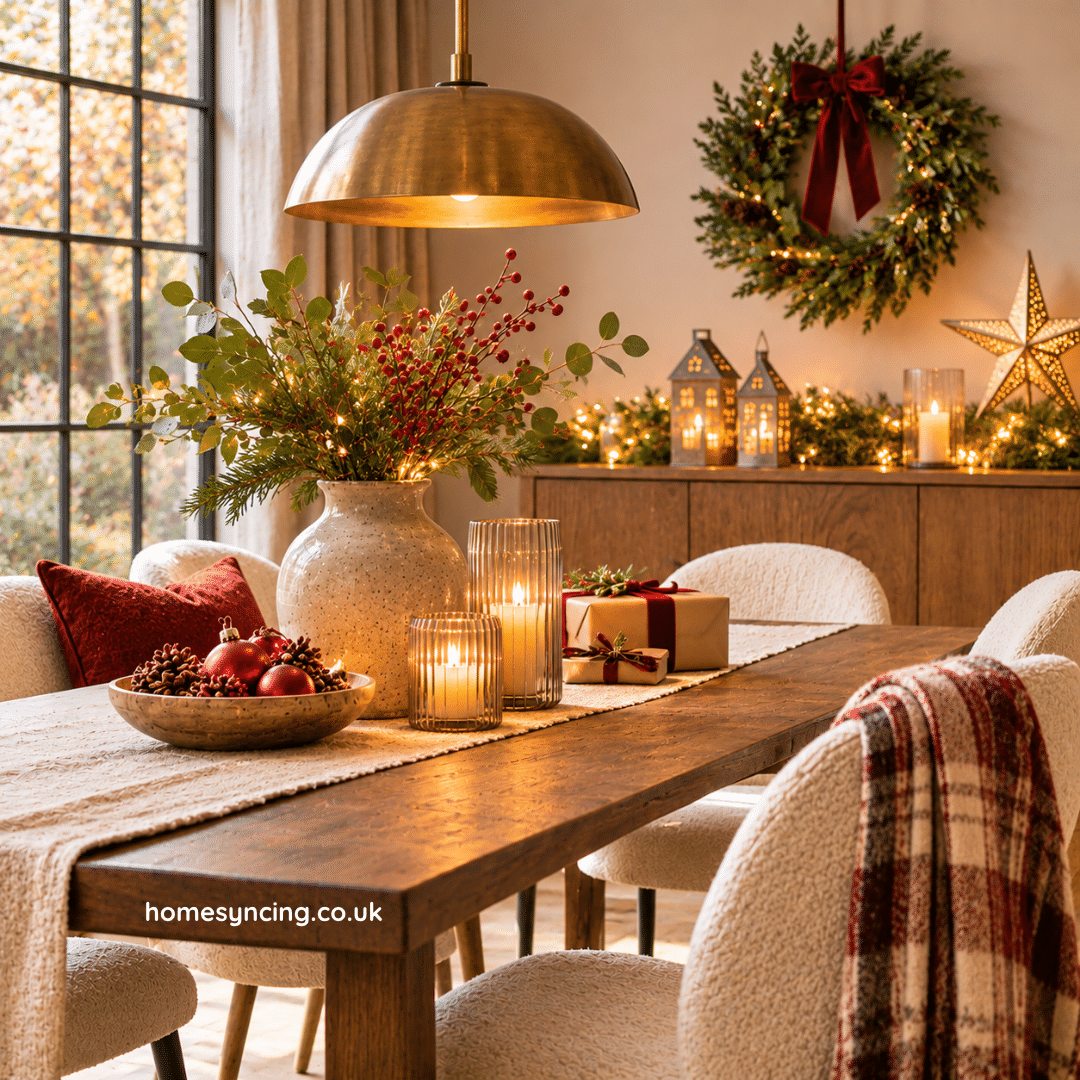
Before the tree comes out of storage and the first decorations find their place, there is something rather satisfying about getting the house ready for Christmas. From making room for guests to giving familiar spaces a little attention, thoughtful preparation can make the festive season feel more welcoming, comfortable and enjoyable.
There is a lovely moment in November when thoughts begin to turn towards Christmas.
The days have grown noticeably shorter, the evenings are drawing in, and there is a growing sense of anticipation. Shop windows begin to sparkle, familiar festive songs return, and somewhere at the back of a cupboard, boxes of decorations are waiting to be rediscovered.
It is tempting to bring everything out at once.
Yet before the tree is assembled, the lights untangled and the decorations arranged, there is something to be said for giving the house a little attention.
Not a complete transformation. Certainly not an exhausting programme of cleaning, decorating and replacing furniture. Simply an opportunity to look at our surroundings and consider how we want our homes to feel over the coming weeks.
Preparing your home for Christmas is about creating space for the things that matter. A comfortable place for family to gather, a welcoming room for overnight visitors, a dining table ready to be shared and enough breathing space to enjoy the decorations when they finally appear.
After all, Christmas has a habit of filling our homes with rather more than we anticipated.
A little preparation now can make the weeks ahead feel considerably more relaxed.
Begin by Making Room for Christmas
Every home has its familiar places where things gradually accumulate.
A hallway console becomes a resting place for post, keys and shopping bags. The dining table gathers paperwork, while shelves slowly fill with objects that have never quite found a permanent home.
We often stop noticing these little collections until we need the space for something else.
Christmas has a wonderful way of bringing them to our attention.
Before introducing decorations, spend a little time looking around the rooms you use most.
Are there things that could be put away? Have decorative objects gathered in places where they no longer seem particularly special? Is there furniture that could be moved to make the room more comfortable?
The aim isn’t to strip the house of its personality.
Quite the opposite.
By removing a little of the everyday clutter, we create space for the familiar decorations that make Christmas feel special.
A mantelpiece doesn’t need its usual collection of ornaments alongside a garland, candles and festive greenery. A sideboard can look particularly beautiful with one thoughtfully arranged seasonal display rather than several competing decorations.
Sometimes, putting a few favourite objects away for December allows us to appreciate them all over again when they return in January.
Find the Right Place for the Christmas Tree
The Christmas tree is often the centrepiece of festive decorating, yet finding the right position isn’t always straightforward.
A tree that looks perfectly proportioned in a shop or garden centre can seem surprisingly large once it arrives in the living room.
Before choosing one, consider the space available.
Measure the height of the room, allowing enough clearance for the tree topper and any stand. Think about the width, too, particularly if the tree will stand beside a sofa or near a doorway.
A tree should feel part of the room rather than something everyone has to manoeuvre around.
You may find that moving an occasional chair or side table creates the ideal position without making the room feel crowded.
For a real Christmas tree, choose somewhere away from radiators, fireplaces and other direct sources of heat. Keep the stand supplied with water, as a well-watered tree is less likely to dry out quickly.
Artificial trees also need sufficient space and should be positioned away from heat sources.
If using electric Christmas lights, check that they are suitable for the intended location, inspect them for damage and follow the manufacturer’s instructions.
And remember that a beautifully decorated tree doesn’t need to occupy the largest possible space.
A smaller tree, thoughtfully positioned and decorated with care, can be every bit as lovely.
Give the Living Room a Little Breathing Space
During Christmas, the living room often becomes the busiest room in the house.
It is where presents are exchanged, visitors gather, films are watched and conversations continue long after everyone intended to go to bed.
A little thought about the furniture arrangement can make a considerable difference.
Begin with the seating.
Is there enough room for everyone to sit comfortably? Can people move around the room without squeezing between furniture? Are there convenient surfaces for drinks, books and the occasional plate of mince pies?
Sometimes, simply moving a coffee table or repositioning an armchair can improve the way a room works.
If additional seating is needed, consider how it might be introduced without overcrowding the space.
An occasional chair can be useful throughout the year, while a well-chosen footstool may provide flexibility when visitors arrive.
Lighting deserves attention, too.
As the evenings grow darker, a combination of table lamps, floor lamps and softer background lighting can make the living room feel warm and welcoming.
Christmas lights add another layer of atmosphere, but they shouldn’t be expected to provide the practical illumination needed for everyday activities.
A comfortable room is one where people can relax, move around easily and enjoy being together.
That matters far more than having every corner perfectly decorated.
Prepare the Hallway for a Warm Welcome
The hallway is the first part of the house visitors see, yet it is often the last place we think about when preparing for Christmas.
During winter, it has plenty to contend with.
Heavy coats, scarves, umbrellas, damp shoes and shopping bags all need somewhere to go.
Add a few Christmas visitors and even a generously sized entrance can begin to feel rather crowded.
Start by making space for extra coats and footwear.
Clear away anything that doesn’t need to remain in the hallway and check that storage is practical for the number of people likely to visit.
A basket for gloves and scarves can be useful, while a bench or small chair provides somewhere to sit when changing shoes.
Where space allows, a console table offers a welcoming place for a lamp, a small arrangement of seasonal greenery or a simple decorative bowl.
A mirror can help reflect light around a darker hallway, particularly during the short winter afternoons.
And a good entrance mat is worth its place during wet weather.
There is something especially lovely about arriving at a house where the entrance feels warm, organised and welcoming.
It sets the tone before anyone has even taken off their coat.
Make the Dining Room Ready for Gathering
Christmas often brings the dining table into sharper focus.
Even in homes where meals are usually enjoyed in the kitchen, the dining room may become the setting for festive lunches, family gatherings and long evenings spent talking over food.
Before thinking about decorations, consider how the room will function.
Is there enough seating? Can chairs be moved comfortably? Is there room to serve food without the table becoming overcrowded?
If you have an extending dining table, now is a good time to check that the mechanism works smoothly and that any additional leaves are easy to access.
It is also worth checking the condition of dining chairs, particularly those that spend most of the year in storage.
Sideboards and cabinets can be especially useful during Christmas entertaining.
They provide somewhere to store table linen, serving dishes and glassware, while offering additional surfaces for food or drinks.
Once the practical arrangements are in place, decorating becomes much easier.
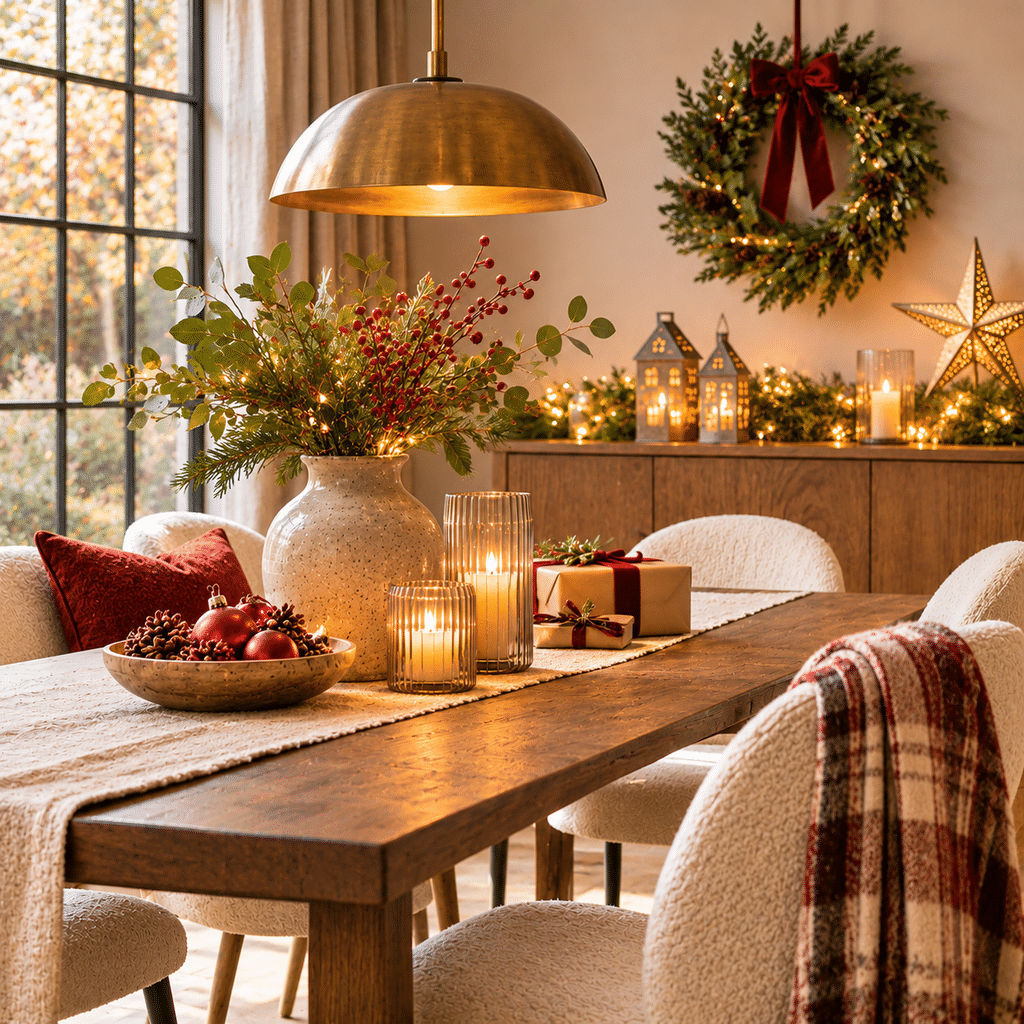
A simple table runner, a few seasonal branches or a carefully chosen centrepiece may be all that is needed.
The most successful Christmas tables are those that look beautiful while leaving enough room for people to enjoy their meal.
A Guest Bedroom That Feels Like a Welcome
If family or friends are staying over Christmas, preparing the guest bedroom in advance can make their visit more comfortable.
It is easy to overlook the small details when we are accustomed to our own homes.
A bedside lamp, somewhere to put a suitcase, an accessible plug socket and a little space in a wardrobe can make a surprising difference to a visitor.
Begin with the bed.
Fresh bedding, comfortable pillows and an extra blanket or throw are particularly welcome during winter.
If the room is used infrequently, check that it is properly aired and that the heating works as expected.
A bedside table should have enough space for a book, glasses and a drink, while a small lamp allows guests to read without relying on the main ceiling light.
If possible, provide a mirror and somewhere to hang clothes.
There is no need for elaborate decorations.
A small seasonal arrangement, a favourite book or a simple vase can make the room feel cared for without overwhelming it.
And if the guest bedroom doubles as a home office or storage room, a little advance organisation can help it feel like a proper place to stay rather than somewhere a bed has been temporarily squeezed in.
Thoughtfulness is often remembered long after the decorations have been packed away.
Give the Kitchen Some Attention Before the Festivities Begin
Christmas places rather different demands on the kitchen.
There may be more cooking, more visitors, extra food to store and an assortment of serving dishes that rarely see daylight during the rest of the year.
A little preparation in November can make the busiest days much easier.
Begin by looking at the storage.
Clear out expired food from cupboards, check what is already in the freezer and make space for ingredients that will be needed closer to Christmas.
It is also worth finding the roasting tins, serving platters and other equipment that may have been put away since last year.
Check that the oven and hob are working properly and that frequently used utensils are easy to reach.
If the kitchen includes a breakfast bar or dining area, consider whether it will be comfortable for guests to gather without getting in the way of food preparation.
Good lighting is especially important during winter, when cooking often takes place after dark.
Under-cabinet lights can illuminate worktops, while softer pendant or table lighting can make a kitchen-dining area feel welcoming once the cooking is finished.
And remember that the kitchen doesn’t need to become a Christmas display in its own right.
A little greenery, a seasonal tea towel or a simple bowl of winter fruit may provide all the decoration it needs.
Think About Storage Before Bringing Everything Out
One of the less glamorous parts of Christmas decorating is deciding where everything will go.
Boxes emerge from cupboards, wrapping paper gathers in corners, and everyday belongings are displaced to make room for seasonal decorations.
Without a little organisation, the house can begin to feel cluttered before December has properly started.
Consider where decorations will be stored while they are being unpacked and where their boxes can remain until January.
If you are bringing out a large collection, it may be worth decorating one room at a time rather than emptying everything into the living room.
Look at your existing storage furniture, too.
A sideboard with generous cupboards can keep everyday items out of sight, while a chest of drawers or shelving unit may provide useful space for smaller belongings.
Baskets are helpful for keeping throws, magazines and children’s toys organised when additional visitors arrive.
The aim isn’t to hide every sign of everyday life.
It is simply to prevent the practical business of Christmas from overwhelming the rooms we want to enjoy.
Choose a Christmas Style That Works with Your Home
Every year brings new decorating ideas, colour combinations and festive trends.
It can be tempting to start again, particularly when surrounded by beautifully styled interiors and elaborate Christmas displays.
Yet some of the most welcoming Christmas homes are those where the decorations feel naturally connected to the rooms around them.
Rather than choosing an entirely new theme, begin with the colours and materials already present.
A room with natural timber, linen and warm neutral furnishings might look lovely with evergreen foliage, soft metallic details and traditional decorations.
Contemporary interiors can accommodate sculptural ornaments, simple greenery and carefully placed lights without losing their clean, uncluttered character.
Homes with richer colours and more traditional furnishings may lend themselves to deeper greens, burgundy, antique gold and treasured decorations collected over the years.
There is no need for everything to match.
In fact, some of the most interesting Christmas decorations are those that have been gathered gradually.
A handmade ornament, a decoration bought on holiday or something inherited from a family member may not fit a particular colour scheme, but it often brings far more meaning to the tree.
A home should still feel like itself at Christmas.
Only a little more festive.
Let Natural Materials Bring the Season Indoors
Long before Christmas decorations became widely available, homes were dressed with greenery gathered from the surrounding countryside.
Holly, ivy and evergreen branches brought colour into the house during the darkest months of the year.
Natural materials remain a beautiful way to decorate today.
A simple arrangement of evergreen foliage can bring seasonal interest to a hallway, while a few branches in a large ceramic vase can create a striking display.
Pine cones, dried seedheads and natural wooden decorations also introduce texture without requiring bright colours or elaborate arrangements.
If gathering greenery, use material from your own garden or somewhere you have permission to collect it.
Avoid taking protected plants or damaging trees and shrubs.
Remember that some traditional Christmas plants, including holly and ivy, can be harmful if eaten. Keep potentially toxic foliage and berries away from young children and pets.
Fresh greenery should also be positioned away from candles, fireplaces and other heat sources.
Used thoughtfully, natural decorations can bring a lovely connection between the house and the winter landscape beyond its windows.
Don’t Feel You Have to Decorate Every Room
There is a tendency for Christmas decorating to expand.
What begins with a tree in the living room can gradually become garlands in the hallway, decorations in the kitchen, lights in the bedroom and festive arrangements on almost every available surface.
There is nothing wrong with enjoying an abundance of decorations.
But neither is there any requirement to fill the entire house.
Sometimes, choosing a few key areas creates a more considered effect.
A beautifully decorated tree, a welcoming entrance and a thoughtfully arranged dining table may be enough.
Other rooms can remain largely unchanged, offering a quieter contrast to the festive spaces.
This can be particularly helpful in smaller homes, where too many decorations may make rooms feel crowded.
It also makes the eventual task of taking everything down rather less daunting.
Christmas should be enjoyed, not measured by the number of ornaments on display.
Make a Few Practical Checks Before December
Alongside the more enjoyable preparations, November is a sensible time to attend to a few household essentials.
Check that smoke alarms are working and that escape routes remain clear.
Inspect Christmas lights before putting them up, replacing damaged sets rather than attempting unsafe repairs.
Avoid overloading electrical sockets and make sure extension leads are used within their rated capacity.
If you have a real Christmas tree, plan where it will stand safely, away from sources of heat and without obstructing doors or walkways.
Where candles are used, keep them well away from decorations and never leave them burning unattended.
It is also worth checking that the heating is working properly before the busiest part of winter arrives.
These aren’t particularly festive jobs, but completing them early allows more time for the enjoyable preparations that follow.
Make Time for the Traditions You Actually Enjoy
Perhaps the most important part of preparing for Christmas has very little to do with furniture or decorations.
It is deciding what makes the season special to you.
For some, it is a house filled with visitors, a beautifully laid table and the sound of conversation drifting from room to room.
For others, it is a quieter celebration, a few favourite decorations and the pleasure of an evening spent beside the Christmas tree.
There is no single way a home should look or feel at Christmas.
Nor does everything need to be completed by the beginning of December.
Decorating can be something to enjoy gradually.
Perhaps the first weekend is spent putting up the tree, another afternoon arranging greenery, and a quiet evening bringing out the decorations that hold the most memories.
The preparations themselves can become part of the pleasure.
And when we stop trying to make everything perfect, there is often far more room to enjoy them.
A Home Ready for Christmas
As November draws on, the anticipation of Christmas begins to settle gently into our homes.
There are decorations waiting to be unpacked, familiar traditions to look forward to and perhaps a few visitors whose arrival will make the house feel particularly lively.
But before any of that begins, there is something rather satisfying about preparing the spaces where it will all happen.
Making room around the tree. Finding an extra chair for the dining table. Freshening the guest bedroom. Bringing a little warmth into the hallway.
None of these things needs to be expensive or elaborate.
They are simply small acts of care that make everyday living more comfortable and Christmas gatherings more enjoyable.
And when the decorations finally come out, the lights are switched on and the house begins to take on its festive character, all that preparation quietly falls into place.
Because preparing your home for Christmas isn’t really about creating a perfect festive interior.
It is about making room for the people, traditions and moments that make the season worth celebrating.
At Homesyncing, we believe a beautiful home is one that feels welcoming throughout the year. From thoughtfully chosen furniture and lighting to those finishing touches that bring a room together, explore our collections for inspiration as you prepare your home for Christmas and the season ahead.
Further Reading: Affordable Decorating Ideas That Will Transform Your Home, Sustainable Chic: A Beginner’s Guide to Circular Design, The Psychology of Colour in the Home, How to Choose and Measure for a Dining Table
Daily Inspiration: Follow Us on Instagram, BlueSky, Threads , Pinterest, Twitter, TikTok