There is something wonderfully reassuring about dark furniture. The rich tones of walnut, the deep warmth of mahogany and the character of aged oak have a presence that lighter pieces sometimes struggle to achieve. They bring a sense of history, craftsmanship and permanence to a room, often becoming the furniture we treasure for years.
Yet dark furniture can be approached with a little hesitation. There is a common belief that it makes rooms appear smaller, absorbs too much light or creates an atmosphere that feels rather formal. While there is some truth in the way darker colours influence our perception of space, the effect depends far more on how a room is arranged than on the furniture itself.
In fact, dark furniture can bring remarkable warmth and depth to an interior. The secret lies in creating a balance between light and shade, allowing the natural beauty of the materials to be appreciated without overwhelming the space around them.
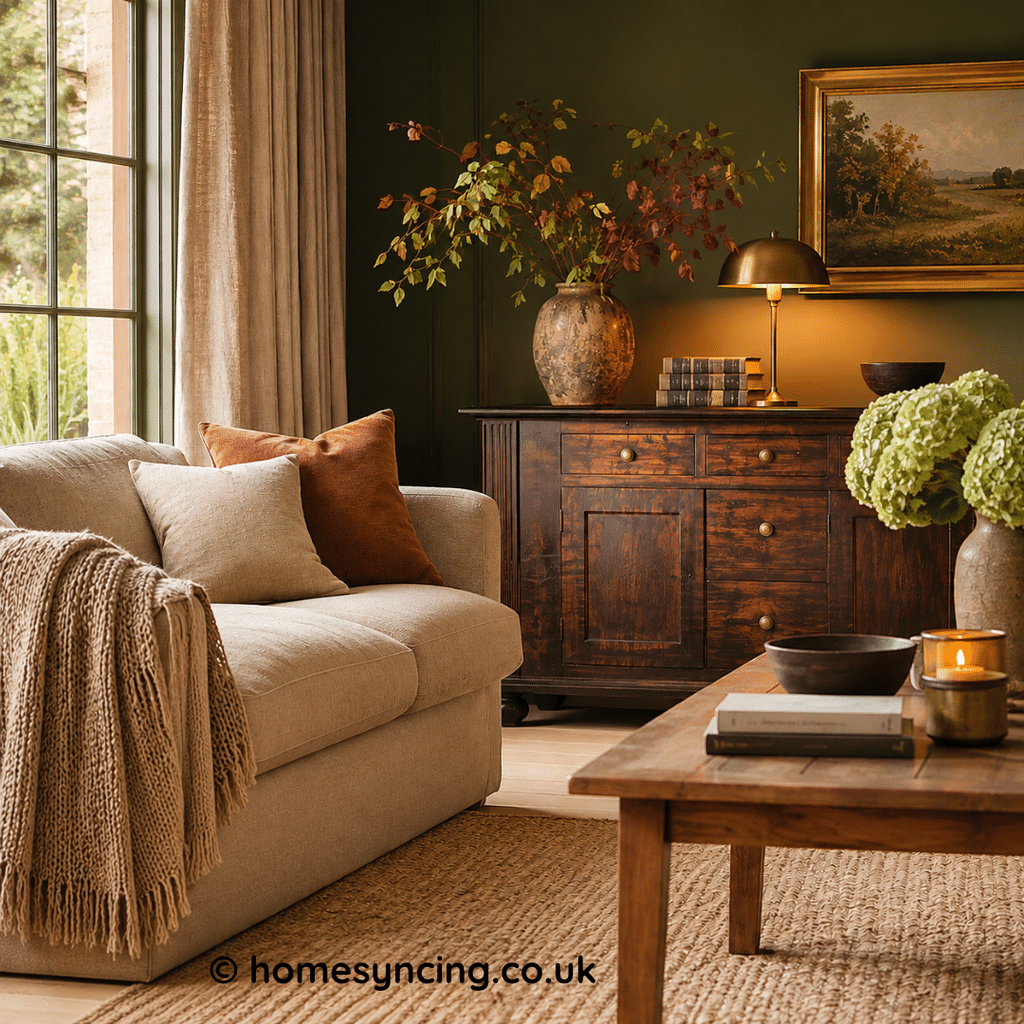
The Enduring Appeal of Dark Wood
Dark wooden furniture has been part of British homes for centuries. From the richly polished mahogany of Georgian drawing rooms to the substantial oak cupboards and tables found in country houses, darker timbers have long been valued for their beauty, durability and distinctive grain.
In historic interiors, these pieces were often accompanied by patterned textiles, decorative plasterwork, paintings and carefully considered lighting. The furniture was never intended to stand entirely alone; it formed part of a richly layered room.
There is much to learn from this approach, even in a contemporary home.
A dark wooden cabinet, dining table or chest of drawers can provide a welcome sense of solidity, particularly in a room furnished with softer materials and lighter colours. Rather than making the space feel old-fashioned, the contrast can give it character and individuality.
Dark furniture also has the advantage of sitting comfortably alongside pieces from different periods. An antique-style sideboard can look just as appealing in a modern dining room as it does in a traditional setting, provided there is a thoughtful relationship between the furniture and its surroundings.
Let the Light Work with the Furniture
One of the most important considerations when decorating with dark furniture is the way natural light moves through the room.
A dark wooden table positioned near a window can reveal beautiful variations in the grain as daylight falls across its surface. A cabinet placed against a softly coloured wall may appear warm and inviting in the morning, taking on a deeper, more atmospheric quality as evening approaches.
Before deciding where to place a substantial piece, it is worth observing how the room changes throughout the day.
In a naturally bright room, darker furniture can provide a pleasing contrast, preventing the interior from feeling too pale or insubstantial. Where daylight is limited, it may be better to choose one or two darker pieces rather than furnishing the entire room in similar tones.
Artificial lighting is equally important. Table lamps, wall lights and carefully positioned floor lamps create smaller pools of light that soften the appearance of dark furniture and bring warmth to the surrounding space.
A lamp placed on a dark wooden sideboard, for example, can illuminate the objects displayed upon it while drawing attention to the richness of the timber beneath.
The aim is not to make every part of the room equally bright, but to create a comfortable balance between illuminated areas and gentler shadows.
Choosing Wall Colours That Complement Dark Furniture
It is tempting to assume that dark furniture must always be placed against white walls. Although this can be effective, there are many other colours that provide a more subtle and interesting backdrop.
Warm off-whites, soft stone, oatmeal and gentle cream tones work particularly well with dark wood. They provide contrast without creating the stark division that can sometimes occur between very dark furniture and brilliant white walls.
Muted greens are another beautiful choice. Sage, olive and grey-green shades have a natural affinity with timber, recalling the colours of woodland and countryside. They can make a dark oak cabinet or walnut table feel wonderfully at home.
Soft blues and warm greys can also be successful, particularly where the furniture has reddish or golden undertones.
For those who enjoy richer interiors, there is no reason to avoid deeper wall colours altogether. A dark wooden chest against a dusky green or muted blue wall can create a restful, enveloping atmosphere, especially when balanced with lighter upholstery, curtains or flooring.
The important thing is to consider the undertones of the wood. Some dark timbers have a reddish warmth, while others lean towards cooler brown or almost black. Choosing colours that sit comfortably alongside these natural variations helps the whole room feel more harmonious.
Creating Balance with Lighter Materials
One of the simplest ways to prevent dark furniture from dominating a room is to introduce lighter materials around it.
A substantial wooden dining table, for example, can be softened with upholstered chairs in natural linen or a pale woven fabric. A dark bedside cabinet may feel more balanced beside crisp cotton bedding and a softly coloured headboard.
In a sitting room, a dark coffee table can provide an attractive contrast to a pale sofa, while a light rug beneath it helps define the seating area without making it feel crowded.
Natural materials are particularly effective because they introduce texture as well as colour.
Linen, wool, cotton, rattan and pale ceramics all have a softness that complements the more solid appearance of dark wood. Their different surfaces catch the light in subtle ways, creating interest without relying on strong patterns or bright colours.
This contrast between substantial furniture and gentler materials is often what gives a room its sense of comfort.
It is also worth remembering that lighter does not necessarily mean white. Warm neutrals, faded colours and natural fibres can provide all the contrast needed while maintaining a relaxed, welcoming atmosphere.
Give Dark Furniture Room to Breathe
The size and arrangement of furniture can have as much influence on a room as its colour.
A large dark cabinet placed in a narrow space may feel imposing, particularly if other substantial pieces are positioned close beside it. The same cabinet, given a little space and a suitable backdrop, can become an elegant focal point.
Where possible, avoid crowding dark furniture with too many other pieces of similar height and weight.
A tall bookcase might be balanced by a low armchair or a slender side table. A substantial sideboard can look particularly attractive with a mirror or painting above it, drawing the eye upwards and giving the arrangement a sense of proportion.
The spaces around furniture are just as important as the furniture itself. They allow individual pieces to be appreciated and help a room feel comfortable rather than overfilled.
In smaller rooms, consider furniture with visible legs or an open base. Being able to see a little more of the floor beneath a table or cabinet can make the arrangement appear lighter.
A carefully chosen dark piece will often have far more impact than several competing for attention.
Mixing Dark and Light Woods
There was once a tendency to furnish rooms with matching suites, ensuring that every table, cupboard and chair shared the same timber and finish.
While matching furniture can create a formal sense of order, a more varied approach often feels natural and inviting.
Dark walnut can sit beautifully alongside pale oak, while an aged mahogany cabinet may look particularly attractive near a lighter wooden table. The contrast introduces depth and prevents the room from feeling too uniform.
The key is to look for a connection between the pieces.
Furniture with similar undertones can often be combined successfully, even when the woods differ considerably in colour. Repeating a particular finish elsewhere in the room can also help create a sense of continuity.
For example, a dark wooden dining table might be complemented by a picture frame, lamp base or small occasional table in a related tone.
There is no need for every piece to match precisely. Indeed, a room furnished gradually, with objects chosen for their individual appeal, often has a character that is difficult to achieve with a complete matching set.
The Beauty of Contrast and Texture
Dark furniture is particularly effective when it is surrounded by a variety of textures.
Consider the difference between a polished wooden cabinet and a roughly woven basket, or the smooth surface of a dark table beside the gentle irregularity of handmade pottery.
These contrasts make an interior more interesting because they encourage the eye to notice the qualities of each material.
Metal can also provide a pleasing counterpoint to dark wood. Brass and bronze bring warmth, while blackened iron offers a more understated, traditional appearance.
Glass is another useful addition, particularly in smaller rooms. A glass vase, decorative vessel or mirror can reflect light and introduce a sense of openness without distracting from the furniture.
Even the simplest arrangement can benefit from this approach. A dark console table topped with a ceramic lamp, a small collection of books and a vase of seasonal foliage can become a beautiful feature.
Rather than filling the surface with ornaments, allow a few carefully chosen pieces to create interest through their contrasting shapes and finishes.
Decorating with Dark Furniture in Smaller Rooms
Small rooms need not be furnished exclusively in pale colours.
In fact, a single piece of dark furniture can help establish a focal point, giving the room a sense of structure and purpose.
A compact dark wooden chest of drawers may provide useful storage while adding character to a bedroom. A narrow console table can bring warmth to a hallway, while a small round dining table in a rich timber finish can look wonderfully inviting in a modest kitchen or dining area.
The most important consideration is proportion.
Furniture that is too large for the space will feel intrusive regardless of its colour. Choosing pieces that fit comfortably and serve a useful purpose will do far more to create a sense of openness than avoiding dark wood altogether.
Mirrors can be particularly helpful where natural light is limited. Positioned thoughtfully, they reflect daylight and offer a visual contrast to the solid surfaces of furniture.
Keeping window treatments relatively simple can also help. Heavy curtains may be entirely appropriate in a large period room, but lighter fabrics can be more suitable where space and daylight are restricted.
Above all, resist the temptation to fill every available corner. A little breathing room allows dark furniture to become an attractive feature rather than an obstacle.
Allowing the Furniture’s Character to Shine
One of the great pleasures of dark wooden furniture is the character it develops over time.
The grain of the timber, the gentle variations in colour and the marks left by years of use can all contribute to its appeal.
An old oak chest may have a slightly uneven finish, while a mahogany table might reveal subtle changes in tone where the light has fallen upon it over many years. These details are part of the story of the piece.
Rather than trying to disguise every imperfection, it is often worth appreciating the qualities that make the furniture individual.
This does not mean neglecting its care. Regular dusting with a soft cloth, protecting surfaces from excessive moisture and avoiding prolonged exposure to strong sunlight will help preserve wooden furniture. Any cleaning or polishing products should be suitable for the particular finish.
Thoughtful care allows the natural beauty of the material to remain the focus.
And when a piece has been chosen with care, there is something deeply satisfying about knowing it may continue to be enjoyed for generations.
A Home with Depth and Warmth
Dark furniture has a quiet confidence. It does not need to dominate a room to make its presence felt, nor does it require an entirely traditional setting to look at home.
A rich wooden table can bring warmth to a light-filled kitchen. A dark cabinet can give a contemporary sitting room a sense of history. An old chest, placed beside a softly upholstered chair, can create a corner that feels both comfortable and full of character.
The most successful interiors are rarely those in which everything is perfectly matched. They are the rooms where different materials, colours and periods have been brought together thoughtfully, creating a space that feels natural and lived in.
Decorating with dark furniture is ultimately about appreciating contrast. Light becomes more noticeable beside shade, soft fabrics feel more inviting against solid timber, and carefully chosen objects stand out all the more when given a rich backdrop.
With the right balance, dark furniture does not make a room feel heavy.
Instead, it gives it depth, warmth and a lasting sense of belonging.
Take a look at our Chestnut Finish Furniture Items here!
Further Reading: Affordable Decorating Ideas That Will Transform Your Home, Sustainable Chic: A Beginner’s Guide to Circular Design, The Psychology of Colour in the Home, How to Choose and Measure for a Dining Table
Daily Inspiration: Follow Us on Instagram, BlueSky, Threads , Pinterest, Twitter, TikTok