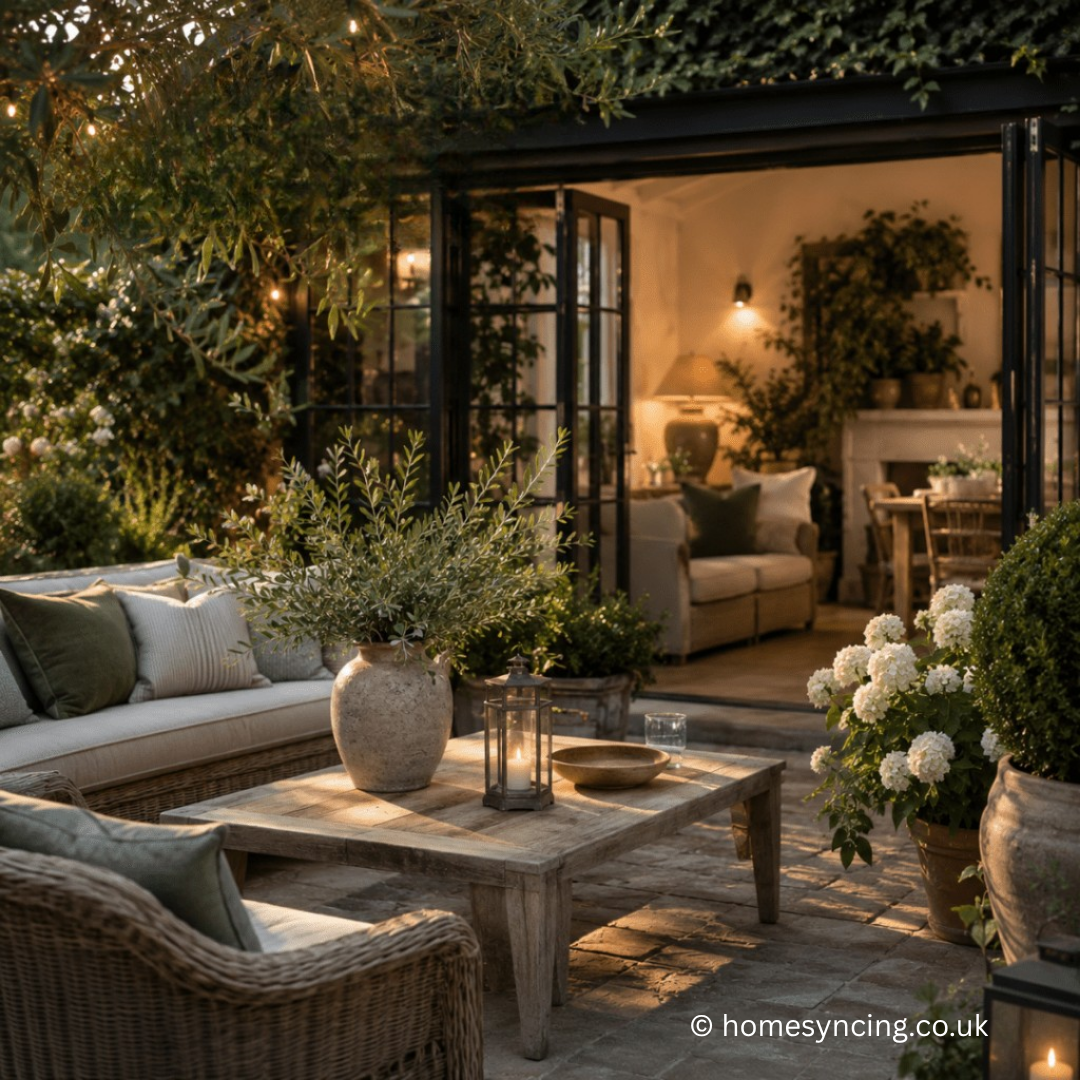
There is a particular kind of magic that happens outdoors in the warmer months.
A table set beneath soft evening light. The scent of lavender drifting across a patio. Cushions warmed by the afternoon sun. The distant hum of bees moving through flower borders while conversation stretches gently into dusk. Outdoor spaces have a way of slowing life down, inviting people to linger longer than they intended.
And increasingly, gardens, balconies and patios are becoming far more than seasonal afterthoughts. They are evolving into true extensions of the home — outdoor rooms designed not simply for occasional use, but for living well.
Perhaps this shift reflects a growing desire to reconnect with nature and simpler rhythms. In a world dominated by screens and schedules, outdoor living offers something restorative. Fresh air through open doors. Morning coffee beneath climbing roses. Evenings gathered around lanterns while the light fades slowly overhead.
Historically, gardens have always been deeply connected to daily life. Cottage gardens provided food and medicine. Courtyards became spaces for work and gathering. Victorian terraces often centred around carefully tended outdoor retreats, however modest their size. The boundary between indoors and outdoors was softer than modern life sometimes allows.
Now, many people are rediscovering that connection once again.
The most welcoming outdoor spaces rarely depend upon size. A small balcony can feel every bit as atmospheric as a large country garden when designed thoughtfully. What matters most is creating comfort, warmth and a sense of invitation.
Furniture shapes this feeling immediately.
Outdoor seating has evolved far beyond practical plastic chairs hurriedly arranged for summer. Today’s garden furniture is designed with the same consideration as interior spaces — comfortable, textured and intended to encourage people to settle in properly.
Natural materials continue to hold timeless appeal outdoors. Wooden tables weather beautifully over time, softening into silvery tones beneath rain and sunlight. Rattan and woven furniture bring warmth and texture, helping patios and terraces feel relaxed rather than rigidly styled. Metal furniture, particularly in aged or heritage finishes, adds structure while still feeling elegant and enduring.
Comfort matters enormously in creating an outdoor room that genuinely gets used. Cushions layered across benches, throws draped over chairs for cooler evenings and generous seating arrangements all help blur the line between house and garden.
The goal is not perfection.
It is creating somewhere people naturally wish to gather.
Lighting transforms outdoor spaces perhaps more dramatically than anything else.
As daylight fades, carefully placed lighting changes the atmosphere entirely. Lanterns glowing beside pathways. String lights threaded through pergolas and fences. Candles flickering gently across dining tables. Warm lighting creates intimacy outdoors in much the same way it does indoors, softening edges and encouraging people to remain outside long after sunset.
Some of the most memorable gardens are experienced at dusk rather than in full daylight. Shadows deepen beneath trees. Pots and planting become silhouettes. The air cools and stillness settles gradually over the space. Good lighting allows gardens to remain part of the home well into the evening.
Plants themselves become part of the design far beyond decoration alone.
Climbing jasmine around seating areas introduces scent into summer evenings. Tall grasses soften patios with movement. Olive trees, herbs and lavender in terracotta pots create atmosphere even in compact courtyards and balconies. Layered planting helps outdoor spaces feel immersive and enclosed, particularly in urban settings where privacy may be limited.
And importantly, outdoor living works beautifully throughout the seasons, not solely during heatwaves.
Blankets stored within easy reach. Fire pits glowing on autumn evenings. Evergreen planting providing structure through winter. Covered pergolas sheltering outdoor tables from rain showers. The most successful outdoor rooms are those designed to evolve alongside changing weather rather than disappear once summer ends.
Accessories help complete the sense of continuity between indoors and outdoors.
Outdoor rugs soften stone patios beneath bare feet. Ceramic pots echo interior textures and colours. Side tables hold books, drinks and candles exactly as they would indoors. Thoughtful details prevent outdoor spaces from feeling temporary or disconnected from the rest of the home.
There is also a growing appreciation for slower outdoor rituals.
Breakfast outdoors before the day properly begins. Reading beneath an umbrella while rain clouds gather in the distance. Children playing barefoot across lawns while supper cooks nearby. These moments often become the memories people treasure most about home itself.
And perhaps that is why outdoor living spaces have become so important again.
Not because gardens need to look perfect for photographs, but because people increasingly value spaces that help them feel calmer, more connected and more present.
A garden room, whether large or small, offers something rare in modern life.
The opportunity simply to pause.
To sit beneath open skies. To listen to birdsong drifting through evening air. To gather with family and friends around tables softened by candlelight and conversation.
To feel, however briefly, part of the seasons once more.
Further Reading: Affordable Decorating Ideas That Will Transform Your Home, Sustainable Chic: A Beginner’s Guide to Circular Design, Small Room, Big Impact, The Return of the Dining Room
Daily Inspiration: Follow Us on Instagram, BlueSky, Threads , Pinterest, Twitter, TikTok