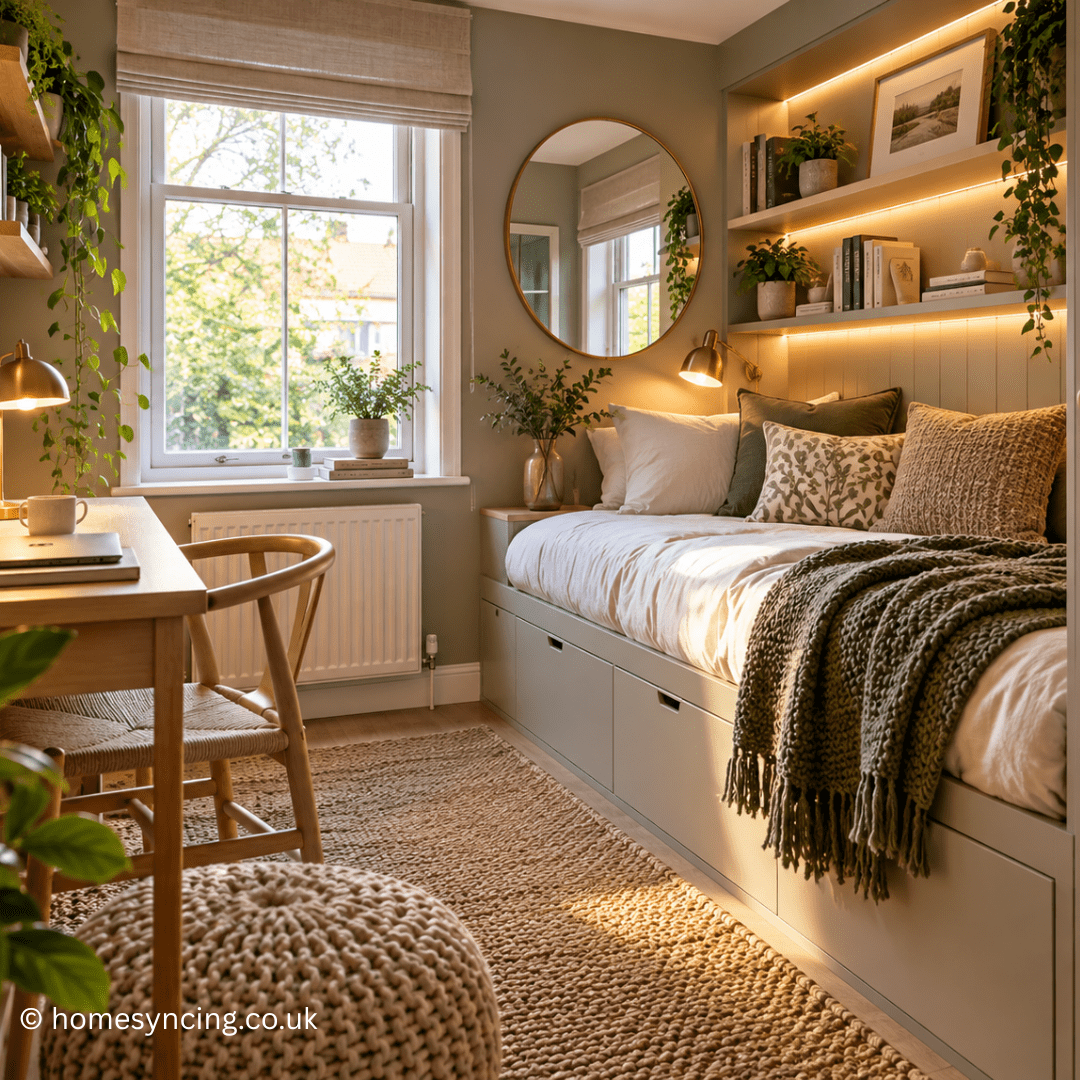
There is something rather charming about a smaller home.
Perhaps it is the way light settles more softly in compact rooms, or how every corner feels purposeful and personal. Small homes encourage a certain kind of living — thoughtful rather than excessive, careful rather than cluttered. They ask us to consider not simply what we own, but how we wish to feel within the spaces we inhabit.
Across Britain, some of the most memorable interiors are found not in sprawling houses, but in cottages, terraces, converted lofts and modest rooms shaped by ingenuity and warmth. Historic homes have long understood the quiet art of making compact spaces feel generous. Window seats were built into alcoves. Furniture worked harder. Walls reflected light. Every inch carried meaning.
And perhaps that is why smaller homes often feel so comforting. They invite closeness. They gather life around them.
Designing a compact space well is rarely about trying to make it appear grand. Instead, it is about creating balance, calm and ease. A room that functions beautifully immediately feels larger because it allows the eye — and mind — to rest.
Light plays an extraordinary role in this.
In smaller rooms, natural light becomes almost architectural in its importance. Pale walls that catch changing daylight can transform even the narrowest room into somewhere airy and calm. Soft whites, warm stone shades, muted greens and gentle earth tones help spaces feel open without becoming cold or clinical.
There is a tendency in modern interiors to chase stark brightness, yet smaller homes often benefit from warmth rather than starkness. A creamy neutral reflects light beautifully while still feeling welcoming on darker winter afternoons. Soft sage greens and weathered blues echo the natural world outside, bringing a sense of quiet spaciousness indoors.
Mirrors, too, have long been used to remarkable effect.
In old cottages and Georgian townhouses alike, mirrors were carefully positioned to draw daylight deeper into interiors. A well-placed mirror opposite a window does far more than reflect a room; it doubles the sense of atmosphere. Candlelight flickers further. Garden views stretch indoors. Small dining rooms suddenly feel layered with depth.
Yet the secret lies in subtlety. A mirror should feel part of the room rather than a trick within it. Antique finishes, aged frames and softly shaped glass often create a gentler, more timeless effect than oversized, overly polished designs.
Furniture choices shape compact living perhaps more than anything else.
A room crowded with oversized pieces can quickly feel heavy, regardless of square footage. Smaller homes benefit from furniture that allows space to breathe around it. Raised legs beneath sofas and chairs reveal more floor, helping rooms feel lighter and less enclosed. Round dining tables soften movement through tight spaces. Benches tuck neatly beneath tables when not in use.
Multifunctional furniture has become increasingly valuable in modern homes, though the concept itself is hardly new. Window seats once stored blankets beneath hinged lids. Kitchen dressers displayed crockery while concealing practical storage below. Day beds shifted effortlessly between seating and sleeping.
Today, the same thoughtful approach continues. Ottomans hide away winter throws. Console tables unfold into dining spaces when guests arrive. Shelving climbs vertically rather than spreading outwards, drawing the eye upwards and giving rooms greater visual height.
Storage, when handled well, quietly transforms a home.
The most peaceful interiors are rarely those with the fewest possessions, but those where belongings have somewhere proper to belong. Built-in shelving around doorways, baskets tucked beneath benches, hooks lining hallway walls and fitted cupboards painted to blend with surrounding walls all help reduce visual noise.
In smaller homes especially, clutter does not simply occupy physical space. It interrupts calm.
Texture becomes particularly important in compact interiors because it adds richness without overcrowding a room. Linen curtains softening a window. Wool throws folded across an armchair. Woven baskets beside the fire. Natural textures create depth gently, allowing smaller spaces to feel layered and lived in without becoming visually overwhelming.
There is also something deeply comforting about compact rooms designed around everyday rituals.
A reading chair beside a lamp and small table. A kitchen shelf lined with favourite mugs. A narrow hallway made welcoming through warm lighting and framed prints. These details may seem modest, yet they shape how a home feels emotionally.
And ultimately, that is what successful small-space design is truly about.
Not pretending a room is larger than it is, but helping it feel calm, useful and deeply welcoming.
Some of the most inviting homes are not expansive at all. They are homes where light falls softly across painted floorboards, where furniture has been chosen with care, and where every corner serves a quiet purpose.
Homes where life fits beautifully within the space available.
Because a small room, thoughtfully designed, never feels lacking.
Instead, it feels intimate, characterful and wonderfully alive.
Further Reading: Affordable Decorating Ideas That Will Transform Your Home, Sustainable Chic: A Beginner’s Guide to Circular Design
Daily Inspiration: Follow Us on Instagram, BlueSky, Threads , Pinterest, Twitter, TikTok