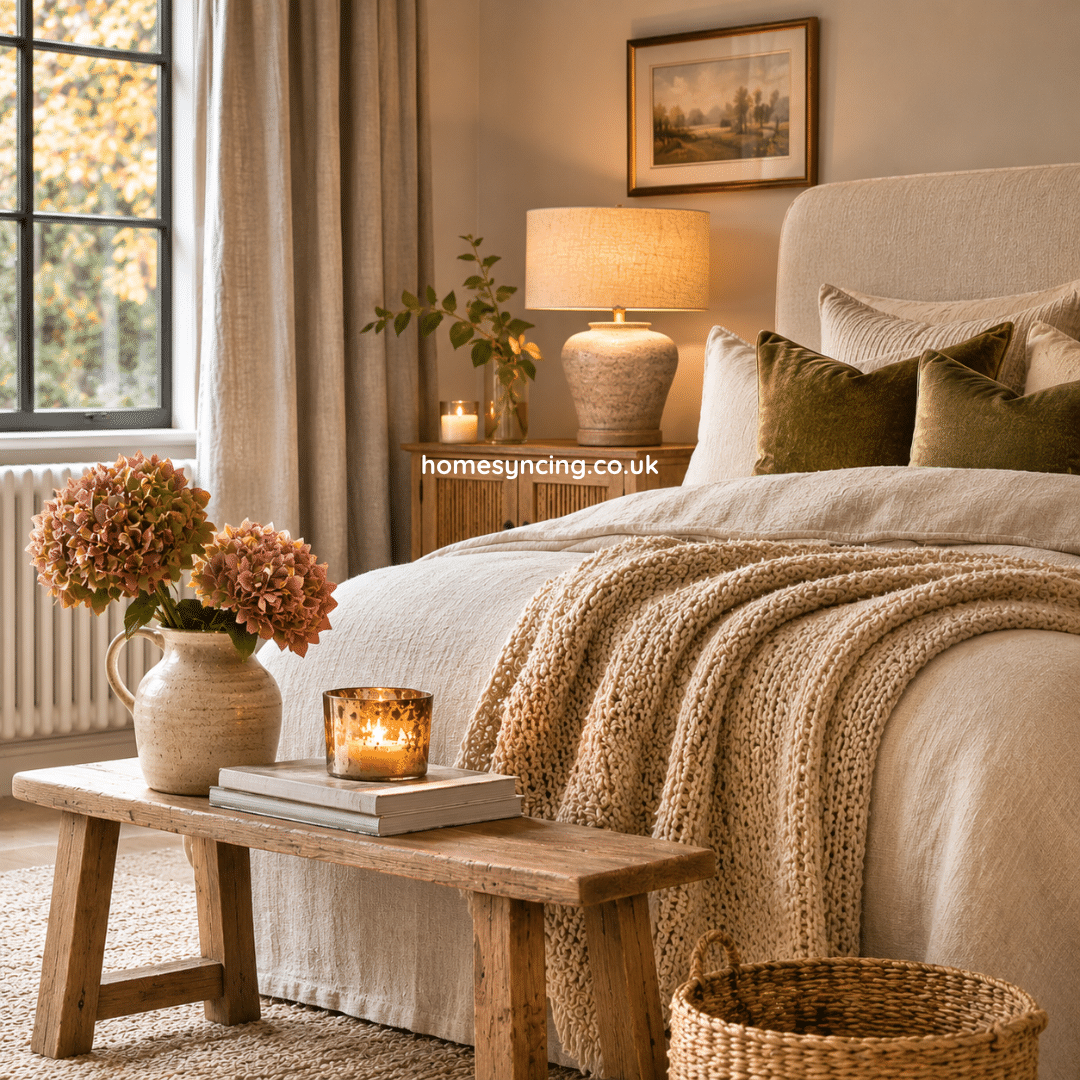
As the days grow shorter and the evenings draw in, our homes begin to take on a different role. Discover how a few thoughtful changes can bring warmth, comfort and character to your winter interiors without the need for a complete makeover.
There comes a point in autumn when the house begins to feel different.
The windows that stood open throughout summer are now firmly closed, the afternoon light disappears a little earlier each day, and the garden beyond the glass gradually settles into its winter colours.
We find ourselves reaching for a blanket, switching on a lamp before supper and spending a little longer in the rooms that feel most comfortable.
It is often at this time of year that we begin looking at our homes with fresh eyes.
Perhaps the living room feels a little bare now that the bright summer light has faded. The bedroom could do with another layer of warmth, or the hallway that seemed perfectly welcoming in July now feels rather gloomy on a November evening.
Yet creating beautiful winter interiors doesn’t have to mean redecorating, replacing furniture or filling every corner with seasonal accessories.
Often, the smallest changes make the greatest difference.
A different lampshade, a textured cushion, a well-placed mirror or simply moving a favourite piece of furniture can alter the atmosphere of a room entirely.
The pleasure lies in making our homes feel ready for the season, while keeping the character and comfort that make them our own.
Let the Light Change with the Season
One of the most noticeable changes as winter approaches is the quality of light.
The strong daylight of summer gives way to softer mornings, low afternoon sunshine and long evenings when artificial lighting becomes part of everyday life.
And while we cannot change the length of the day, we can make the most of the light available to us.
Begin by looking at how daylight moves through your rooms.
A chair positioned near a window might become a lovely place to enjoy a morning coffee. Moving a tall piece of furniture away from a window may allow more natural light into the room, while keeping curtains fully drawn back during the day can make a surprising difference.
As evening approaches, think beyond the main ceiling light.
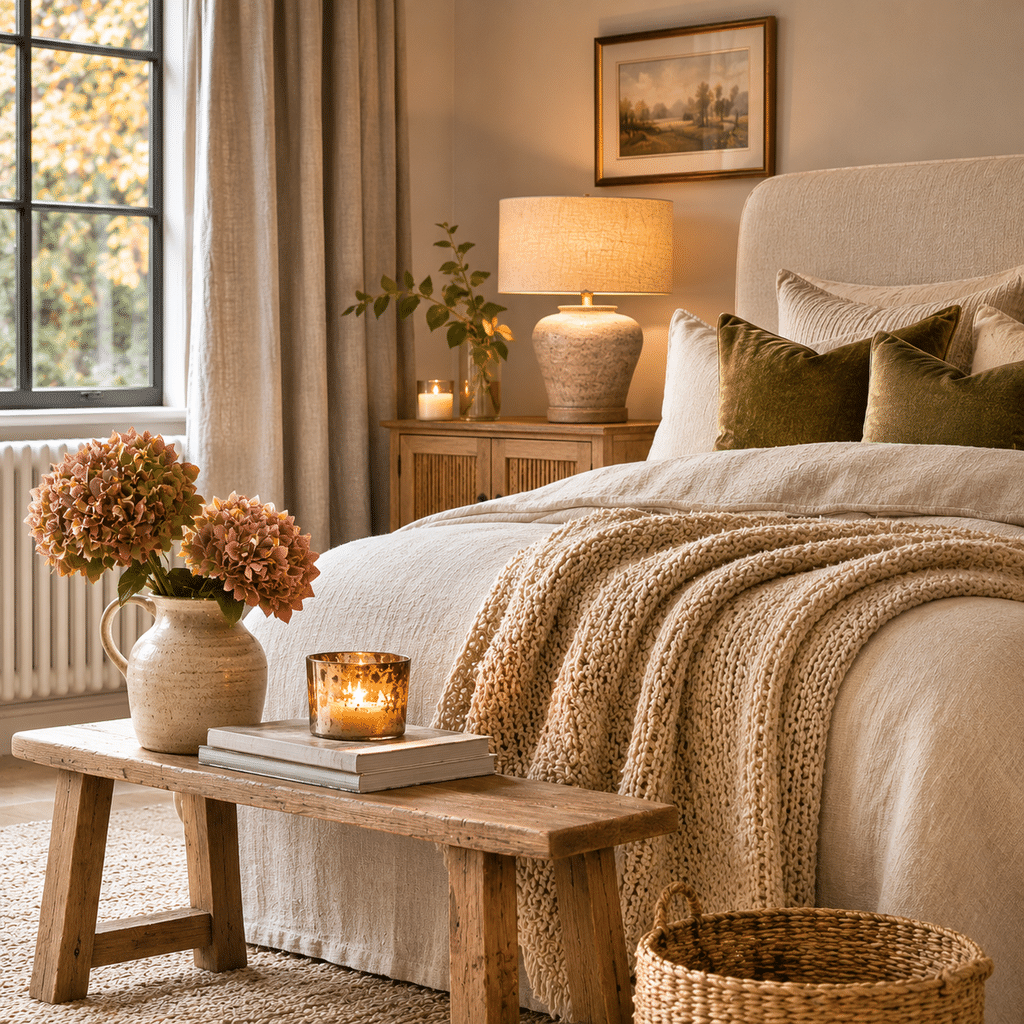
Table lamps, floor lamps and wall lights can create smaller, more comfortable pools of illumination, giving a room a gentler atmosphere.
A lamp placed on a sideboard brings warmth to a dining room. Another beside an armchair creates a pleasant place to read, while a softly lit hallway offers a welcoming first impression when returning home after dark.
For living rooms and bedrooms, warm-white bulbs of around 2,700 Kelvin generally provide a softer, more relaxing light than cooler alternatives.
Dimmable lamps can be particularly useful, allowing the brightness to change according to the time of day and the activity taking place.
The aim isn’t simply to make a room brighter. It is to make the lighting feel right for the way the room is used.
Bring Warmth Through Texture
There is something instinctively comforting about soft fabrics during the colder months.
As temperatures fall, we begin to appreciate the weight of a woollen blanket, the softness of a cushion and the feeling of a rug beneath our feet.
Introducing texture is one of the easiest ways to refresh a room for winter without making any permanent changes.
A linen sofa can take on a completely different character with the addition of a knitted throw and a couple of velvet cushions. A wooden chair becomes more inviting with a soft seat pad, while a simple bed can feel wonderfully comfortable with an extra quilt folded across the foot.
The secret is to combine materials rather than matching everything perfectly.
Wool, cotton, velvet, bouclé and linen each have their own texture and appearance. Used together thoughtfully, they bring depth and interest to a room.
Try working within a small, complementary colour palette.
A combination of oatmeal, olive green and warm brown, for example, can create a gentle, natural feeling. Cream, rust and muted terracotta introduce a little more richness, while soft greys can be warmed with timber and natural fibres.
There is no need to cover every surface.
A single beautiful throw or a pair of carefully chosen cushions can be enough to make a room feel more comfortable.
Give Your Furniture a Fresh Perspective
We often assume that changing a room means buying something new.
Yet some of the most effective improvements cost nothing at all.
Furniture tends to remain where it was first placed, even when the way we use a room has changed.
A seating arrangement designed to make the most of summer views might not be the most comfortable for winter evenings. An armchair that rarely gets used could become a favourite reading spot if moved closer to a lamp.
Take a little time to consider how your rooms work during the colder months.
Would the sofa feel more sociable if it faced another chair rather than the television? Could a small table beside an armchair provide somewhere useful for a book or cup of tea? Is there a better position for the furniture so that everyone can enjoy the warmth and light?
Even moving a coffee table or rearranging the objects on a sideboard can give a familiar room a different feeling.
When considering a new piece of furniture, look for something that serves a genuine purpose.
A well-proportioned side table, an attractive storage cabinet or a comfortable occasional chair can bring lasting value to a room, rather than simply filling an empty space.
Good furniture should work with the way we live, whatever the season.
Make More of Natural Materials
Winter interiors often feel particularly welcoming when they include natural materials.
Timber, stone, wicker, rattan and ceramics bring subtle variations in colour and texture that help soften a room.
A wooden coffee table introduces warmth through its grain, while a ceramic lamp base or decorative bowl adds interest without overwhelming the surrounding space.
Natural materials also work beautifully alongside contemporary furniture.
A simple upholstered sofa can be complemented by a characterful wooden side table. A modern dining room might benefit from woven placemats, while a sleek hallway can feel more inviting with a timber console and a softly glowing lamp.
The beauty of these materials is that they rarely belong to just one season.
A well-chosen wooden cabinet looks equally at home in the brightness of summer and the softer light of winter.
Rather than replacing furnishings as the seasons change, we can simply alter the smaller details around them.
It is a thoughtful approach to decorating that allows a home to evolve naturally.
Refresh Your Colour Palette Without Redecorating
Colour has a remarkable ability to influence the atmosphere of a room.
During summer, we often enjoy fresh whites, pale blues and light, airy fabrics. In winter, richer and warmer shades can feel particularly appealing.
But that doesn’t mean reaching for a paintbrush.
Small additions can introduce seasonal colour without changing the foundations of a room.
Cushions, throws, rugs, lampshades and decorative ceramics all offer opportunities to bring warmth into an existing scheme.
Earthy greens, warm taupes, soft browns, muted burgundy and terracotta can work beautifully in winter interiors, especially when balanced with lighter neutral shades.
If your home already has a neutral palette, introducing one deeper accent colour may be enough.
An olive green cushion on a cream sofa, for example, can bring a sense of richness without making the room feel dark.
Equally, a patterned throw can introduce several complementary colours while giving the room a little more personality.
It is worth remembering that winter decorating doesn’t have to mean dark interiors.
Light, open rooms can feel every bit as cosy when their colours, textures and lighting work together.
Give the Bedroom a Little Extra Attention
The bedroom is often overlooked when we think about seasonal decorating.
Yet few rooms benefit more from a little additional comfort during winter.
Begin with the bed itself.
A warmer duvet, breathable cotton bedding and an extra blanket or quilt can make colder nights more comfortable. Layering also provides flexibility, allowing bedding to be adjusted as temperatures change.
If you enjoy the look of a beautifully made bed, try folding a textured throw across the foot rather than adding an excessive number of decorative cushions.
Bedside lighting deserves attention, too.
A well-positioned lamp provides useful light for reading and creates a softer atmosphere than relying entirely on the main ceiling fitting.
Keep bedside tables practical, with room for the things you actually use.
A favourite book, a small lamp and perhaps a photograph or simple decorative object are often all that is needed.
If the bedroom has hard flooring, a rug beside the bed can make getting up on a cold morning rather more pleasant.
And don’t underestimate the importance of good curtains or properly fitted blinds. Suitable window coverings can help reduce heat loss through windows, particularly at night, while also making the room feel more sheltered and private.
The result should be a bedroom that feels restful, comfortable and easy to live in.
Create a More Welcoming Hallway
The hallway is one of the hardest-working spaces in a home, particularly during winter.
Coats become heavier, boots arrive damp from the garden and scarves, gloves and umbrellas all need somewhere to go.
It is also the first part of the house we encounter when returning from the cold.
A few practical changes can make it feel much more welcoming.
Start with storage.
A basket for scarves and gloves, a designated place for shoes and a few well-positioned hooks can help keep everyday belongings organised.
Where space allows, a narrow console table provides a useful surface for keys and post, while a small lamp can bring warmth to an otherwise functional area.
A mirror can help reflect available light, making a narrow or darker hallway feel more open.
And a suitable entrance mat is particularly useful during wet weather, helping prevent mud and moisture from being carried through the house.
There is no need for elaborate decoration.
A tidy entrance, thoughtful lighting and a little natural texture can make coming home feel rather lovely.
Bring a Little of the Outdoors Inside
Although the garden may be settling into its winter rest, there is still plenty of beauty to be found outdoors.
Bare branches, seedheads, evergreen foliage and dried flowers can all introduce seasonal interest into the home.
A few interesting branches arranged in a simple vase can make an attractive centrepiece, particularly when their shape is allowed to speak for itself.
Dried hydrangea heads, for example, retain much of their structure and can bring subtle colour and texture to a room.
Evergreen cuttings can also look lovely, provided they are gathered responsibly and kept away from naked flames or other sources of heat.
There is something particularly appealing about decorations that reflect the season beyond our windows.
They don’t need to be elaborate or expensive.
Sometimes, a single branch in a beautiful vase is far more effective than a collection of smaller ornaments.
And unlike overtly festive decorations, natural seasonal arrangements can remain in place throughout much of winter.
Make Your Living Room Work for Winter Evenings
The living room often becomes the heart of the home during the colder months.
It is where we gather after supper, settle down with a book, watch a favourite programme or simply enjoy a quiet evening.
Creating a comfortable winter living room begins with understanding how the space is used.
Consider whether the seating arrangement encourages conversation and relaxation.
Make sure there are convenient surfaces for drinks, books and everyday belongings. A coffee table or side table should be both attractive and practical, positioned where it can be reached comfortably.
Lighting should be flexible enough to accommodate different activities.
And while a generous throw or a soft rug can add warmth, avoid overcrowding the room with accessories.
Comfort also depends on the physical environment.
Check that radiators aren’t blocked by furniture or heavy curtains, and consider whether draughts around windows and doors are making the room feel colder than necessary.
Small practical improvements can make a considerable difference to how comfortable a room feels.
After all, the most beautiful winter interior is one that is genuinely pleasant to spend time in.
Don’t Forget the Dining Table
As winter approaches, the dining table often takes on a different role.
There may be more meals enjoyed indoors, longer conversations over supper and the gradual anticipation of Christmas gatherings.
A dining table doesn’t need an elaborate arrangement to feel special.
A simple linen runner, a ceramic bowl or a low vase of seasonal foliage can bring a little interest to the centre without interfering with everyday meals.
Soft lighting above or around the dining area can also make evening meals feel more relaxed.
If you enjoy using candles, choose stable holders and keep flames well away from foliage, fabrics and other flammable decorations.
For a similar atmosphere without a naked flame, good-quality LED candles can be a practical alternative.
The aim is to make the table feel inviting enough for an ordinary Tuesday evening, rather than saving its best appearance for special occasions.
Sometimes, it is the everyday moments that deserve the most attention.
Choose Changes That Will Last Beyond Winter
Seasonal decorating is most successful when it builds upon what we already love about our homes.
A new lamp, a well-made side table or a beautiful piece of furniture shouldn’t need to be put away when spring arrives.
Instead, look for furnishings that work throughout the year, allowing smaller accessories to change with the seasons.
A neutral sofa can be refreshed with different cushions. A timber sideboard provides useful storage in every month, while a thoughtfully chosen lamp continues to bring atmosphere long after the winter evenings have passed.
This approach is not only more practical but can also reduce unnecessary spending and waste.
It encourages us to choose pieces for their usefulness, quality and lasting appeal rather than their temporary popularity.
And perhaps most importantly, it allows a home to retain its own personality.
The Quiet Pleasure of a Winter Home
There is a particular satisfaction in making a home ready for winter.
It doesn’t arrive through one dramatic transformation, but through a series of small, thoughtful decisions.
A lamp moved to a better position. A soft throw brought out of storage. A chair turned towards the afternoon light. A few favourite objects given space to be appreciated.
None of these changes needs to be expensive, and not all require buying anything at all.
Yet together, they can make familiar rooms feel warmer, calmer and more welcoming.
As November gives way to the colder months ahead, perhaps that is the loveliest thing about winter interiors.
They remind us that a beautiful home isn’t simply somewhere to admire.
It is somewhere to return to, settle into and enjoy.
And sometimes, the smallest changes are the ones that make us feel most at home.
At Homesyncing, we believe that beautiful interiors are created through thoughtful choices, comfortable furnishings and details that make everyday living a pleasure. Explore our collections of furniture, lighting and home accessories for inspiration to carry your home comfortably through winter and beyond.
Further Reading: Affordable Decorating Ideas That Will Transform Your Home, Sustainable Chic: A Beginner’s Guide to Circular Design, The Psychology of Colour in the Home, How to Choose and Measure for a Dining Table
Daily Inspiration: Follow Us on Instagram, BlueSky, Threads , Pinterest, Twitter, TikTok