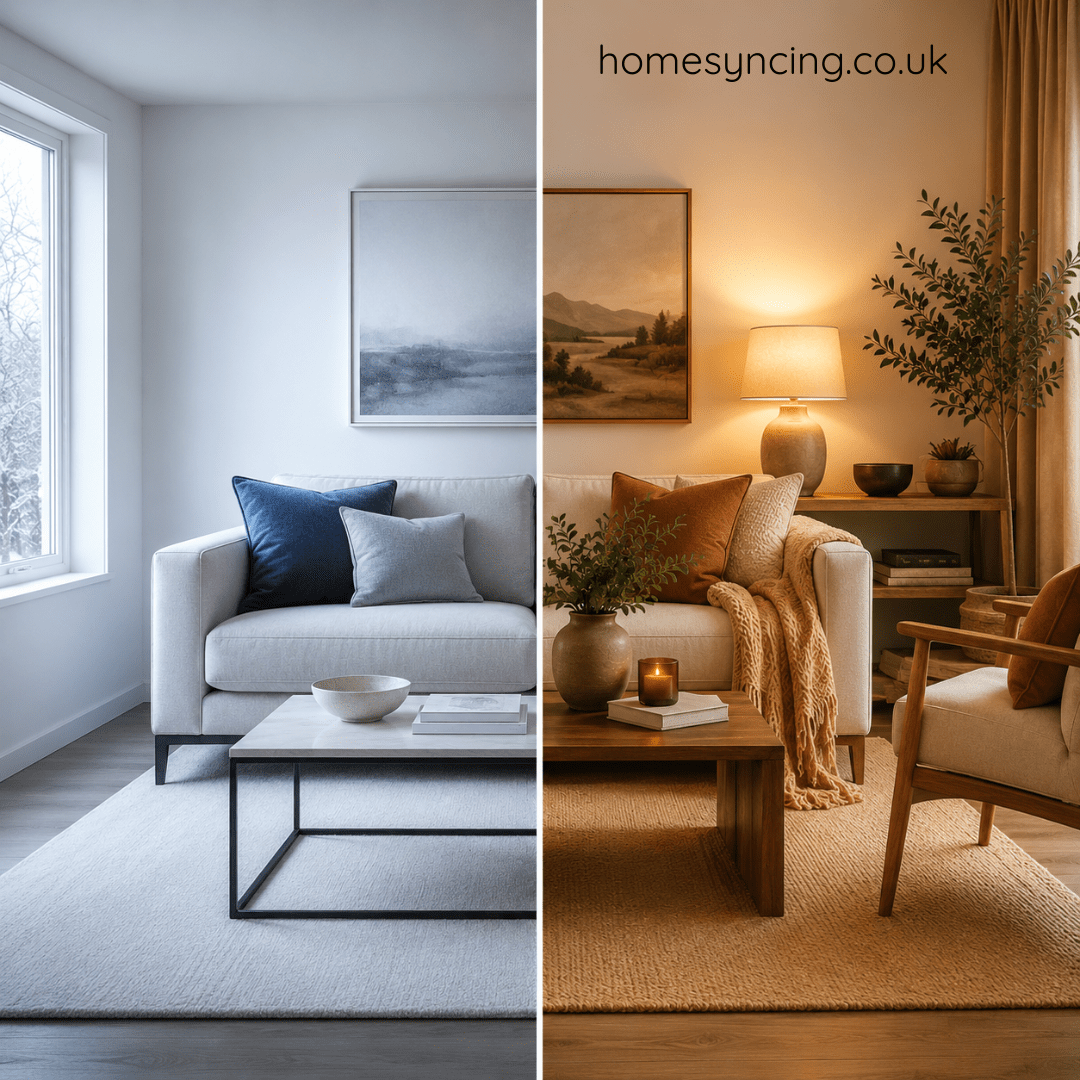
A beautiful home isn’t always a welcoming one.
You can invest in new furniture, repaint the walls and carefully arrange every cushion, yet a room can still feel cold or impersonal. Creating a warm, inviting home is rarely about spending more money. Instead, it’s about making thoughtful choices that add comfort, personality and balance.
From the colours you choose to the way you arrange your furniture, even small changes can have a lasting impact. If your home feels like it’s missing something, these practical ideas will help you create spaces that are cosy, comfortable and genuinely welcoming.
Start with Warm, Natural Colours
Colour influences how we experience a room more than we often realise.
Cool whites and pale greys remain popular, but when used throughout an entire room they can sometimes feel stark, particularly during the darker months. Introducing warmer tones creates a softer atmosphere that’s easier to relax in.
Nature provides plenty of inspiration. Shades such as warm white, oatmeal, soft beige, olive green, clay and muted terracotta work beautifully together, creating interiors that feel calm without appearing dated.
You don’t need to repaint an entire room to make a difference. New cushions, curtains or artwork can introduce warmth just as effectively.
Add Texture to Create a Cosier Home
One of the quickest ways to make a room feel more inviting is by layering different textures.
Rooms filled with smooth surfaces and polished finishes often lack depth, even when they’re beautifully decorated. Mixing natural materials creates visual interest while making a space feel more comfortable.
Think about combining:
- wool throws
- linen cushions
- woven baskets
- wooden furniture
- jute or wool rugs
- ceramic accessories
Rather than filling a room with more decorative items, focus on choosing fewer pieces with interesting textures that complement one another.
Layer Your Lighting
Lighting has a huge influence on how welcoming your home feels.
Many homes rely on a single ceiling light, which is practical but rarely flattering. Creating several softer light sources instantly changes the atmosphere.
A table lamp beside the sofa, a floor lamp in a reading corner or wall lights that wash the room with gentle light all create warmth that overhead lighting cannot achieve.
Where possible, choose warm white bulbs instead of cool daylight bulbs in living areas to create a softer evening atmosphere.
Rearrange Your Furniture
Sometimes the biggest transformation costs nothing at all.
Furniture that’s pushed against every wall can leave a room feeling disconnected. Bringing seating together creates a more intimate space that’s naturally better suited to conversation.
Position chairs so they face one another, use a rug to define the seating area and place a coffee table within easy reach. The room immediately feels more balanced and more inviting to spend time in.
Make Your Home Personal
The most memorable homes reflect the people who live there.
Family photographs, favourite books, holiday souvenirs, artwork collected over the years and treasured heirlooms all add personality that can’t be recreated with shop-bought accessories.
Rather than filling shelves with decorative objects, display pieces that have genuine meaning. They tell your story and make visitors feel they’re entering a lived-in home rather than a showroom.
Bring Nature Indoors
Natural elements soften even the most modern interiors.
Houseplants add life, colour and movement, while fresh flowers or seasonal branches create simple focal points throughout the year. Natural wood, rattan, stone and linen also introduce warmth that synthetic materials often lack.
Even a single leafy plant placed in an unused corner can make the room feel fresher and more welcoming.
Choose the Right Rug Size
It’s a small detail that makes a surprisingly big difference.
A rug that’s too small can make furniture appear disconnected, while a larger rug helps anchor the entire seating area.
Ideally, the front legs of your sofa and chairs should sit on the rug, creating one unified space rather than several separate pieces of furniture.
The same principle applies to artwork. Choosing pieces that suit the scale of the wall creates a calmer, more balanced interior.
Don’t Aim for Perfection
One of the biggest mistakes people make is trying to create a picture-perfect home.
The homes we enjoy spending time in usually show signs of everyday life. A folded throw on the sofa, a book waiting to be finished or a favourite mug on the coffee table all help create an atmosphere that’s relaxed rather than staged.
A welcoming home should feel lived in, not untouchable.
Focus on Comfort in Every Room
Every room should invite you to use it.
In the living room, this might mean soft lighting and comfortable seating. In the bedroom, it could be layered bedding and blackout curtains. Even a hallway can feel more welcoming with a console table, warm lighting and somewhere to place keys and shoes.
Thinking about how each room functions often improves comfort more than buying new furniture.
Small Changes Often Make the Biggest Difference
If your home doesn’t feel as warm or welcoming as you’d like, resist the temptation to start again.
Instead, make one or two thoughtful improvements. Add a lamp to a dark corner, introduce natural textures, display favourite photographs or rearrange your furniture to encourage conversation.
Creating a welcoming home isn’t about following trends or spending a fortune. It’s about building an environment that reflects your lifestyle and supports the way you want to live.
Over time, these small changes work together to create something that every home should offer—a place where family and friends feel comfortable, conversations last a little longer and coming through the front door always feels like coming home.
Frequently Asked Questions
How can I make my home feel warmer without decorating?
Adding textured fabrics, improving your lighting, rearranging furniture and introducing natural materials can all make a home feel warmer without repainting or renovating.
What colours make a home feel warm and welcoming?
Warm neutrals such as cream, oatmeal, taupe, soft beige, olive green and muted terracotta create a comfortable, inviting atmosphere and work well in both traditional and contemporary homes.
How do I make my living room feel cosier?
Layer lighting, add a rug, introduce soft furnishings such as cushions and throws, and arrange seating to encourage conversation rather than placing furniture around the edges of the room.
Why does my home still feel cold after decorating?
A room can feel cold if it relies on harsh lighting, lacks texture or has little personal character. Combining natural materials, warm lighting and meaningful decorative pieces often has a greater impact than changing the paint colour alone.
Further Reading: Affordable Decorating Ideas That Will Transform Your Home, Sustainable Chic: A Beginner’s Guide to Circular Design, Small Room, Big Impact, The Psychology of Colour in the Home, Renovating Without Losing Character
Daily Inspiration: Follow Us on Instagram, BlueSky, Threads , Pinterest, Twitter, TikTok