How to Choose Wall Art for your Home

The right wall art can take your home’s aesthHow to Choose Wall Art for Your Home
A blank wall can feel full of possibility.
It might be a quiet corner waiting for character, a hallway longing for interest or a living room that doesn’t quite feel complete. The right piece of wall art has the remarkable ability to transform a space, adding personality, atmosphere and a sense of belonging.
Art is often one of the most personal choices we make in our homes. Unlike furniture or paint colours, it tells a story. It reflects our interests, memories, travels and tastes. Whether it’s a dramatic landscape, a collection of botanical prints, contemporary photography or a treasured family heirloom, wall art helps turn a house into a home.
Yet choosing artwork can sometimes feel surprisingly daunting. With so many styles, sizes and colours available, where do you begin?
The good news is that selecting wall art needn’t be complicated. By considering the character of your room and the feeling you’d like to create, you can find pieces that feel both beautiful and meaningful.
Start with the Room, Not the Artwork
Before falling in love with a particular print or painting, take a moment to look carefully at the room itself.
Consider how the space is used and how you want it to feel. Is it a busy family room designed for gathering and conversation? A peaceful bedroom intended for rest and relaxation? Or perhaps a hallway that provides the first impression of your home?
The most successful interiors feel cohesive because every element works together. Artwork should enhance the atmosphere rather than compete with it.
A calm, neutral room may benefit from soft landscapes, delicate line drawings or nature-inspired prints. Meanwhile, a more vibrant space can often carry bold colours, striking abstracts or expressive contemporary pieces.
Rather than matching everything perfectly, think about how artwork can contribute to the overall mood and character of the room.
Consider What You Want the Artwork to Do
Wall art serves many purposes beyond decoration.
Sometimes it introduces colour into an otherwise neutral space. At other times it creates a focal point, draws the eye or helps define a particular area within an open-plan room.
Ask yourself:
Do I want this piece to be the centre of attention?
Am I adding warmth and personality?
Do I want to create a sense of calm?
Is this an opportunity to showcase something meaningful?
The answers will help guide your choices.
A large statement artwork above a fireplace or sofa naturally becomes a focal point. Smaller pieces grouped together can tell a more personal story and encourage closer inspection.
Size Matters More Than You Think
One of the most common decorating mistakes is choosing artwork that is too small for the wall it occupies.
A tiny picture on a large wall can feel lost, while an oversized piece in a compact room may overwhelm the space.
As a general guide, artwork should feel proportionate to the furniture and architecture around it.
When hanging art above a sofa, sideboard or bed, the artwork should typically occupy around two-thirds of the furniture’s width. This creates visual balance and helps anchor the piece within the room.
If you have a large wall to fill, consider:
Oversized statement artwork
A pair of matching prints
A gallery wall arrangement
A collection of framed photographs
Before making any holes in the wall, lay out your arrangement on the floor or use paper templates to experiment with positioning.
Let Colour Guide You
Colour has a powerful influence on how a room feels.
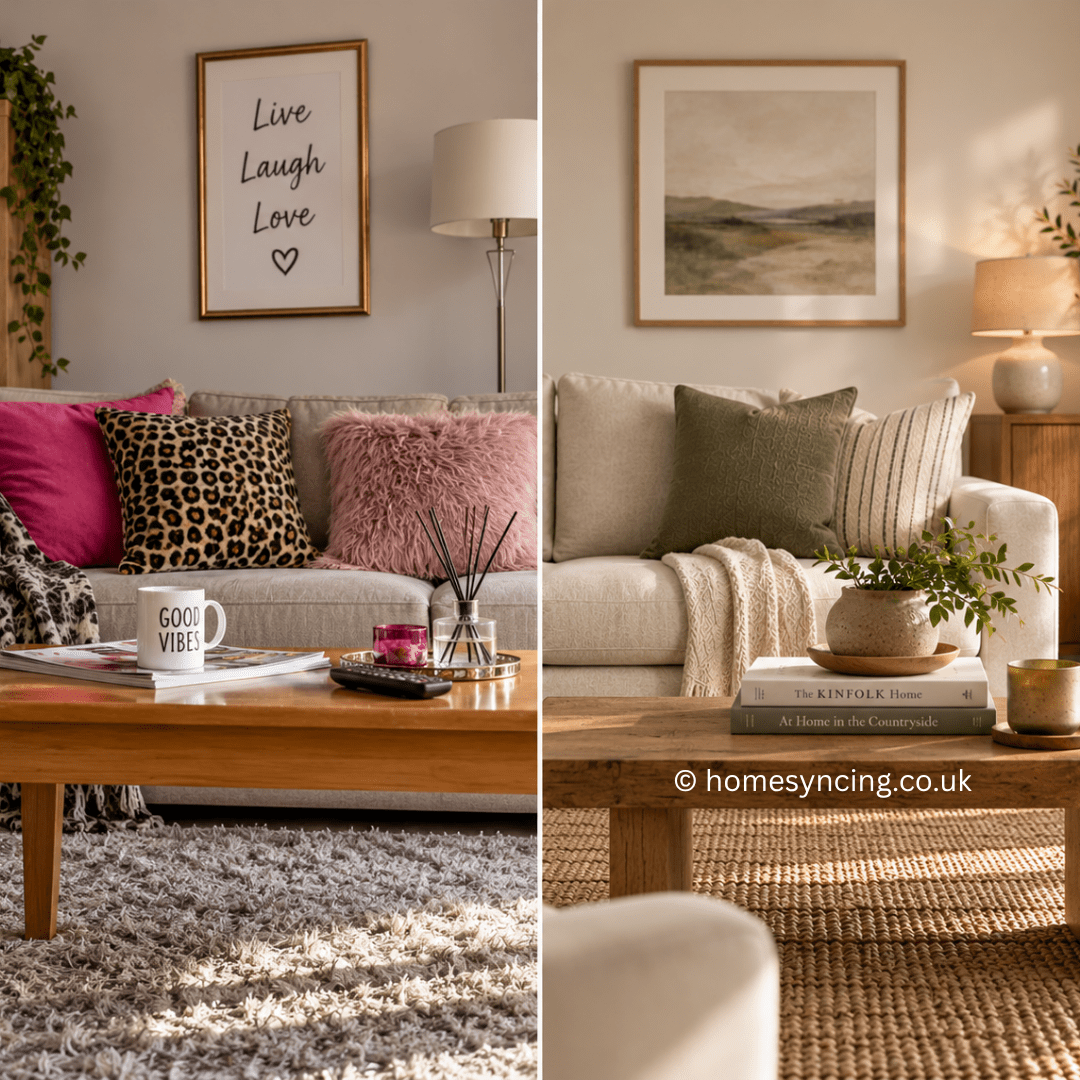
Some homeowners prefer artwork that echoes existing colours within their décor, creating a harmonious and unified scheme. Others use artwork as an opportunity to introduce contrast and energy.
Neither approach is right or wrong.
If your room already contains soft greens, earthy terracottas or warm neutrals, artwork that includes similar tones can help tie the scheme together beautifully.
Alternatively, a bold piece in contrasting colours can provide a welcome focal point and prevent the room from feeling too predictable.
The key is balance. Artwork should feel connected to the room without disappearing into it.
Create Interest Through Texture
Wall art doesn’t always have to be a framed print or painting.
Texture can bring just as much visual interest to a space.
Consider:
Woven wall hangings
Textile art
Sculptural pieces
Vintage maps
Pressed botanicals
Decorative plates
Framed fabrics
Mixing textures alongside traditional artwork can add depth and personality while creating a more layered and collected appearance.
Gallery Walls: Telling Your Story
Gallery walls remain a popular choice because they offer endless opportunities for personal expression.
Rather than relying on a single piece, they allow you to combine photographs, prints, illustrations and treasured mementoes into a carefully curated display.
The most successful gallery walls often share a common thread, whether through colour, subject matter, framing style or overall mood.
Don’t be afraid to include meaningful items alongside traditional artwork. Travel photographs, family memories and collected treasures often become the pieces that spark the most conversation.
Trust Your Instincts
Perhaps the most important advice when choosing wall art is also the simplest.
Choose pieces that resonate with you.
Trends come and go, but the artwork you live with should bring genuine enjoyment. It should evoke a memory, inspire a feeling or simply make you smile when you walk into the room.
Art has the unique ability to shape how a space feels. It can add warmth, create atmosphere and express personality in ways few other decorative elements can achieve.
If a piece speaks to you, there’s every chance it will continue to do so long after decorating trends have faded.
Bringing Your Walls to Life
The best homes feel personal, collected and lived in. Wall art plays an important role in creating that sense of individuality.
Whether you’re selecting a single statement piece or building a carefully curated gallery wall, take time to consider the character of your space and the story you’d like it to tell.
After all, the most beautiful interiors are not simply decorated; they are thoughtfully layered with objects, colours and artworks that reflect the people who live there.
And sometimes, all it takes is the right piece on the right wall to make a room feel complete.

Further Reading: Affordable Decorating Ideas That Will Transform Your HomeSustainable Chic: A Beginner’s Guide to Circular DesignSmall Room, Big Impact

Daily Inspiration: Follow Us on Instagram, BlueSkyThreads , PinterestTwitterTikTok

Take a Look at our great range of Wall Art here

Home Decor Trends for 2023

Trends come and go, but your home is the one constant place that you want to feel comfortable and in-trend. Keeping up with the latest home decor trends is an exciting task that every homeowner enjoys. As we draw closer to 2024, we can expect to see some amazing trends that can elevate the aesthetic of any space. In this blog, we’ll walk you through some of the most anticipated home decor trends that will take over the UK in the coming months.

Greenery:  Adding greenery to your home decor is a timeless trend that is set to continue in 2023 and beyond. Plants help purify the air, bring a touch of nature indoors, and have a calming effect. Despite the undeniable positive impact that plants have on your home, not everyone has green fingers. So, if you’re looking for easy to care for plants, succulents, Monstera or Snake plants are great options. Upcoming twists in this trend include incorporating plant walls, and living floors, that can turn any room into a natural oasis.

Rattan:  Rattan may remind you of your Granny’s garden furniture, but it’s coming back into fashion in a big way. Rattan adds texture and warmth to a room, making it the perfect material for accent chairs, tables or planters. Rattan furniture can suit any style- modern or traditional- and can be painted in a variety of colours to fit any decor scheme.

Statement Ceilings: Gone are the days of plain white ceilings! Now you can expect to see statement ceilings that can steal the show in any room. Statement ceilings can add character, depth and drama to any space, and can be achieved using wallpaper, murals, paint or even adding tiles, beams or lighting to a ceiling.

Pastels:  Pastels have been around for a while and it looks like they’re here to stay. Pastels add a sense of calm and serenity to a space and can provide a much-needed break from bolder colours. Pink and baby blue still remain popular but peach, lavender, powder green and even mint are set to take over the UK in 2023.

Textured Walls:  Walls covered in textured wallpaper are making a big comeback. Textured wallpaper adds dimension and depth to a wall and can create a cosy, inviting atmosphere in any room. Textured wallpaper can include anything from 3D, fabric, shimmery, coarse, or even hand-painted wallpapers.

Home decor trends are ever-evolving, so don’t be afraid to embrace new trends and mix them with existing decor to create something truly unique to your taste. Home decor trends this year will allow you to add character and personality to your home. From the greenery trend, which brings life to a room to using textured walls, everything has been designed to make your home a more comfortable space that reflects your personality. So, grab your tools and start decorating!

Further Reading: Creating an Inviting Entrance: Enhancing the First Impression of Your Home, The Allure of Velvet in Interior Design

Follow us on Instagram

The Ultimate Guide to Selecting a Globe

There is something wonderfully captivating about a globe.

Long before digital maps could fit into our pockets, globes offered a window to the wider world. They inspired dreams of adventure, helped explorers chart unknown territories and allowed curious minds to imagine distant landscapes beyond the horizon. Even today, despite living in an age of instant navigation and satellite imagery, a globe continues to hold a unique charm.

Part decorative object, part educational tool and part conversation piece, a globe can transform a room while encouraging a sense of curiosity and discovery. Whether displayed in a study, library, living room or child’s bedroom, it invites us to look beyond our immediate surroundings and appreciate the remarkable world we call home.

But with so many styles, sizes and designs available, how do you choose the right globe for your home?

Let’s begin with the story behind these fascinating objects and explore how to find one that perfectly suits your space.

A Brief History of the Globe

The desire to understand and represent the world is as old as civilisation itself.

Ancient Greek scholars were among the first to recognise that the Earth was spherical. By the second century BC, the philosopher Crates of Mallus is believed to have created one of the earliest known terrestrial globes, providing a three-dimensional representation of the known world.

As exploration expanded throughout the Renaissance, globes became increasingly important. Cartographers worked tirelessly to incorporate new discoveries into their designs, updating maps as sailors returned from distant voyages. During the Age of Exploration, globes represented the very cutting edge of geographical knowledge.

By the seventeenth and eighteenth centuries, globes had become prized possessions among scholars, aristocrats and wealthy merchants. Often displayed in libraries and studies, they symbolised education, sophistication and a fascination with the wider world.

Today, while their practical role has largely been replaced by digital technology, globes continue to capture our imagination, combining craftsmanship, history and decorative appeal in a way few objects can.

How Globes Are Made

A quality globe is the result of both artistry and precision.

Modern globes begin with a spherical core, typically made from durable plastic, acrylic, wood or metal. Detailed cartographic artwork is then carefully printed and applied to the surface in sections known as gores. These tapered segments are meticulously aligned to ensure geographical accuracy.

Depending on the style and quality, additional features may include:

  • Raised relief to highlight mountain ranges and terrain
  • Hand-finished detailing
  • Antique-style ageing techniques
  • Illuminated interiors
  • Engraved metal meridians and bases
  • Sustainable wood stands

The finest globes combine accurate cartography with beautiful craftsmanship, creating pieces that are as decorative as they are informative.

Why Globes Remain Popular Today

In an era of smartphones and digital maps, you might wonder why globes continue to hold such appeal.

The answer lies partly in their physical presence.

Unlike a flat screen, a globe allows you to appreciate the true shape of the Earth and the relationship between continents, oceans and countries. It encourages exploration in a more tactile and engaging way.

A globe also offers something technology often cannot: a sense of wonder.

Spinning a globe and placing your finger on a distant destination invites daydreams of future adventures, historical journeys and cultural discovery.

They also happen to be exceptionally stylish additions to modern interiors.

The Different Types of Globes

Not all globes are created for the same purpose. Understanding the different options available can help you choose one that best suits your needs.

Political Globes

Political globes focus on countries, borders, capitals and major cities.

These are among the most popular styles and are ideal for:

  • Home offices
  • Family rooms
  • Educational settings
  • Children’s bedrooms

Their colourful design makes countries easy to identify and compare.

Physical Globes

Physical globes emphasise natural features such as:

  • Mountain ranges
  • Rivers
  • Deserts
  • Oceans
  • Terrain elevations

They provide a deeper understanding of the Earth’s geography and are often favoured by nature enthusiasts and travellers.

Antique and Vintage-Style Globes

Inspired by historic cartography, antique-style globes bring timeless character to an interior.

Often featuring:

  • Aged parchment colours
  • Decorative illustrations
  • Traditional typography
  • Brass or wooden stands

These globes work particularly well in classic studies, libraries and heritage-inspired homes.

Illuminated Globes

Illuminated globes offer both functionality and atmosphere.

When switched on, they often reveal additional geographical information while creating a warm, ambient glow.

These are especially popular in:

  • Children’s rooms
  • Home offices
  • Reading corners
  • Studies

Celestial Globes

Instead of mapping the Earth, celestial globes chart the stars and constellations.

Historically used by astronomers and navigators, they remain fascinating decorative pieces for anyone interested in the night sky.

Decorative Designer Globes

Modern interiors have inspired a new generation of globes that prioritise style alongside geography.

These may feature:

  • Monochrome palettes
  • Metallic finishes
  • Contemporary stands
  • Minimalist designs

Ideal for modern homes, they blend seamlessly into contemporary décor while retaining their educational appeal.

Choosing the Perfect Globe for Your Home

Selecting a globe is about more than simply choosing a map. Consider how it will fit into your lifestyle and the atmosphere of your home.

Consider Its Purpose

Start by asking yourself why you want a globe.

Are you:

  • Looking for a decorative statement piece?
  • Seeking an educational resource?
  • Creating a travel-inspired interior?
  • Searching for a unique gift?

Your purpose will help narrow down the options considerably.

Think About Scale

A globe should feel proportionate to its surroundings.

A large floor-standing globe can make a dramatic statement in a spacious room, while a smaller desktop globe may suit shelves, consoles or desks more comfortably.

Before purchasing, consider:

  • Available surface space
  • Ceiling height
  • Existing furniture
  • Overall room scale

Match Your Interior Style

Like any decorative accessory, a globe should complement the room around it.

For traditional interiors:

  • Antique-style globes
  • Dark wooden bases
  • Brass detailing

For contemporary homes:

  • Minimalist designs
  • Black, white or metallic finishes
  • Sleek modern stands

For eclectic spaces:

  • Colourful political globes
  • Vintage-inspired designs
  • Unique statement pieces

Choose Quality Materials

A well-made globe will remain attractive for years to come.

Look for:

  • Solid, stable bases
  • Quality cartographic printing
  • Durable construction
  • Smooth rotation
  • Premium finishes

A globe should feel substantial and carefully crafted rather than purely decorative.

Consider Educational Value

If the globe will be used regularly by children or curious adults, choose one with clear, up-to-date cartography.

Features such as raised relief, illumination and detailed labelling can enhance learning and encourage exploration.

Styling a Globe in Your Home

Globes are surprisingly versatile decorative pieces.

They work beautifully:

  • On bookshelves amongst travel books
  • On a study desk
  • On a console table in a hallway
  • Within a library or reading room
  • As part of a curated gallery shelf
  • In children’s bedrooms to encourage learning

Pairing a globe with maps, travel photography, vintage books or natural treasures collected from journeys creates a layered and meaningful display.

More Than Just a Decorative Object

A globe is one of those rare objects that combines beauty, history and purpose.

It speaks of exploration and discovery. It reminds us that there is a vast world beyond our own doorstep, filled with remarkable places, cultures and landscapes waiting to be understood.

Whether you’re drawn to the elegance of an antique globe, the practicality of an educational model or the clean lines of a contemporary design, the right globe can become a cherished feature within your home.

After all, some decorative pieces simply fill a space. A globe inspires us to look beyond it.

See our Selection of Globes

Further Reading: Affordable Decorating Ideas That Will Transform Your HomeSustainable Chic: A Beginner’s Guide to Circular DesignSmall Room, Big Impact

Daily Inspiration: Follow Us on Instagram, BlueSkyThreads , PinterestTwitterTikTok

Selecting Fireplace Tools

Who doesn’t like the cosy and inviting ambience of fireplaces during the colder months? But, owning a fireplace comes with the responsibility of maintenance and choosing the right tools to keep your fireplace clean and functioning well. Fireplace tools are a crucial investment that helps you take care of your fireplace efficiently. With a vast range of fireplace tools and accessories available today, it can get overwhelming to choose the right set. That’s why we’ve compiled the ultimate guide to selecting fireplace tools for your home, so you can keep your fireplace looking great and running efficiently all year round.

Material:  The material of your fireplace toolset is an essential consideration. The most common materials used for fireplace tools are iron, steel, brass, and bronze. Iron toolsets are sturdy and durable, and they can last a lifetime. Brass tools bring a classic and elegant look to your fireplace but require more maintenance because they are prone to tarnishing. Steel sets offer cost-effective and lightweight options, while bronze toolsets add a touch of sophistication and elegance to your home. Choose the material that complements your decor, suits your taste and best fits your budget.

Shape and Size:  Fireplace tools vary in size and shape, so it’s essential to select the correct dimensions. Tools that are too small may not reach the back of the fireplace, while oversized tools can be challenging to use. Consider the size of your fireplace when selecting your toolset and ensure that the tools fit well in your space. The most common tools you’ll need include a shovel, poker, tongs and brush.

Style and Design:  The style and design of your fireplace toolset can add to the aesthetics of your fireplace even when they aren’t in use. Choosing visually appealing tools can enhance the look of your room and give your fireplace a touch of character. You can select your toolset based on your room’s décor or choose a more classic or modern design that will suit your taste.

Quality:  Fireplace tools are an investment in your home, so you need to choose a toolset that is of the highest standard of quality. Invest in a good quality toolset that will last you a long time and give you value for your money. Check for rust-resistant materials, durability, and ensure that the tools are sturdy enough for everyday use.

Brand: While the brand of your fireplace toolset may not matter as much, it does play a significant role in the quality and durability of the toolset. Opt for brands that have established themselves as reliable and reputable manufacturers of fireplace tools. Having a good brand may be slightly costly, but it ensures that your toolset is of a superior design and will last for many years.

We hope that our ultimate guide to selecting fireplace tools makes choosing the right toolset for your home more accessible. Always remember to prioritize quality and functionality, followed by design. A good quality and well-designed toolset will enhance the enjoyment of your fireplace and provide ease of maintenance. So, while buying fireplace tools, take your time, explore your options, and choose the perfect toolset that suits your needs, taste and budget. Happy Fireplace!


Colour changes a room long before furniture is arranged or pictures are hung.

A soft green kitchen can feel calm and grounding even on busy mornings. A deep blue bedroom seems to quiet the mind as evening falls. Warm earthy tones wrap a living room in comfort during winter afternoons, while pale neutrals allow light to drift gently across walls throughout the day. Often, people respond emotionally to colour before they fully realise why.

Perhaps that is because colour is never simply decorative.

It shapes atmosphere, influences mood and quietly alters how we experience the spaces around us. Across historic homes, cottages and interiors throughout Britain, colour has long been used not only for beauty, but for feeling. Rooms were designed to feel warm against cold weather, restful beneath candlelight or uplifting during darker months.

Today, although trends continue to evolve, the emotional power of colour remains remarkably unchanged.

The colours we surround ourselves with influence how a home feels to live in.

And increasingly, people are choosing palettes not simply because they are fashionable, but because they support the kind of atmosphere they wish to create.

In kitchens, colour often shapes energy and sociability more than any other room in the house.

Traditionally, kitchens were the heart of daily life — warm, active spaces filled with movement, conversation and food. Colours inspired by nature continue to work beautifully here because they create warmth without overwhelming the senses. Sage greens, muted creams, soft clay tones and weathered blues all feel welcoming and timeless.

Green in particular carries a calming quality closely connected to the natural world. It softens busy kitchens and creates freshness without becoming cold. Warm whites and oat shades help smaller kitchens feel airy while still retaining comfort, particularly in homes where natural light changes dramatically throughout the seasons.

Deeper colours can work beautifully too when balanced carefully. Navy cabinetry against brass fittings creates richness and depth, while charcoal tones paired with natural wood feel grounded and sophisticated.

Bedrooms respond differently to colour because they are spaces designed for rest and retreat.

Soft blues remain enduringly popular for good reason. They naturally encourage calm and stillness, echoing sky, sea and evening light. Muted greens bring a restorative quality that feels deeply connected to gardens and landscape beyond the window. Warm taupes, dusky pinks and earthy neutrals create cocooning spaces that feel gentle rather than stark.

Importantly, restful bedrooms rarely rely on harsh contrast. Colours layered tonally together create softness and ease. Linen bedding, painted walls and textured fabrics all contribute to the overall emotional atmosphere of the room.

The goal is not perfection.

It is creating somewhere that allows the mind to settle.

Living rooms often benefit from warmth above all else.

These are spaces where people gather, relax and spend long evenings together, particularly during colder months. Richer colours often work beautifully here because they encourage intimacy and comfort. Olive greens, deep ochres, warm terracottas and smoky blues all create depth without feeling oppressive.

Historically, darker colours were frequently used in drawing rooms and libraries because they responded beautifully to firelight and candlelight. Even today, deeper tones can make living rooms feel wonderfully cocooning in the evenings, especially when paired with layered lighting and natural textures.

At the same time, lighter living rooms can feel equally welcoming when warmth is maintained through texture and material. Stone shades, warm whites and soft sand tones allow natural light to become part of the design itself.

Workspaces require yet another balance entirely.

As more people work from home, the emotional effect of colour within offices and creative spaces has become increasingly important. Colours that are too stimulating can create restlessness, while overly muted rooms may feel uninspiring.

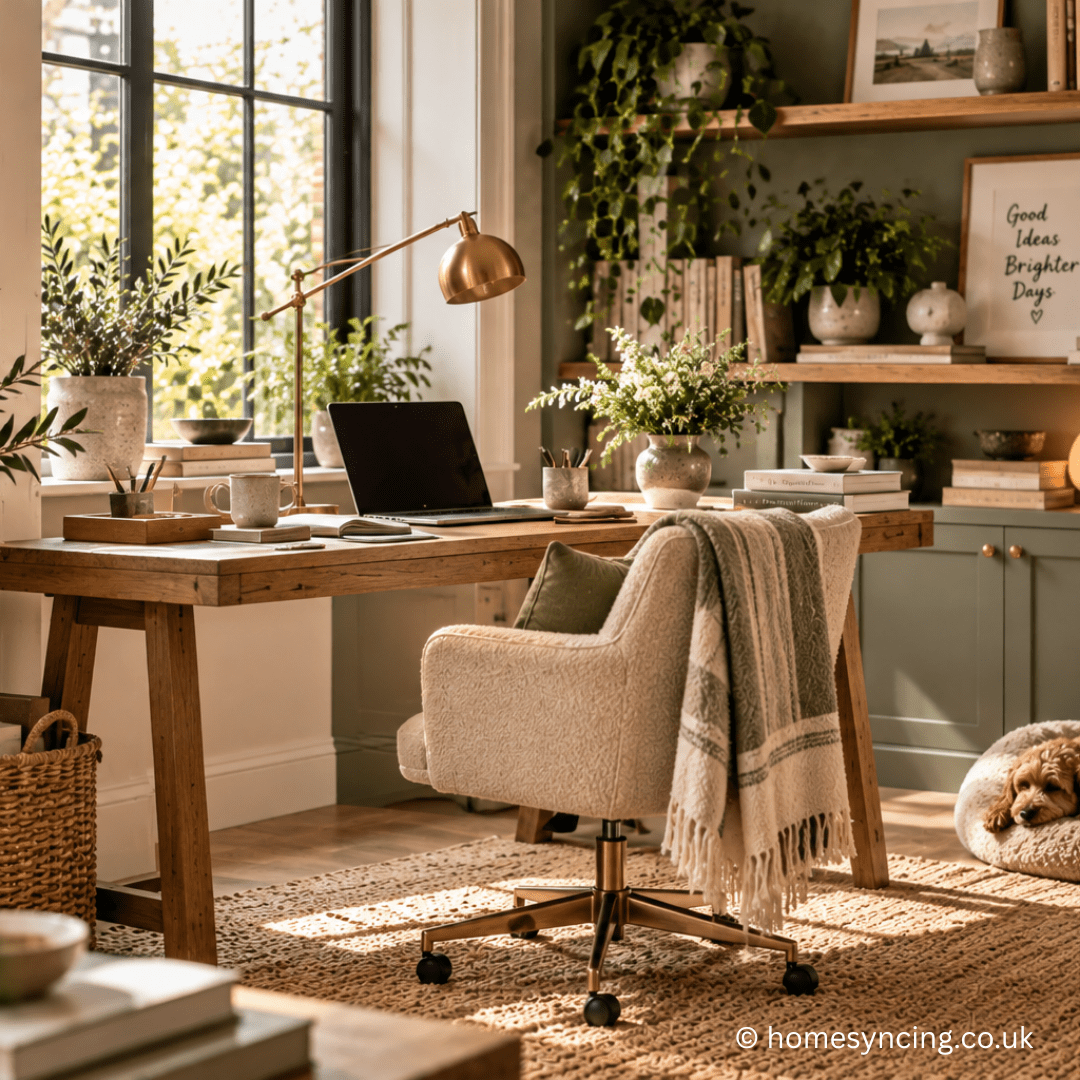
Soft greens and blues often help concentration because they feel calming without becoming sleepy. Earthy neutrals create steadiness and reduce visual distraction. Touches of ochre or terracotta can introduce warmth and creativity without overwhelming a space.

Natural light plays a significant role here too. Colours shift constantly depending upon the time of day, orientation of the room and surrounding landscape. A grey-green may feel cool and crisp in morning light yet warm and enveloping by evening.

This relationship between colour and light is one reason timeless palettes tend to endure.

They evolve beautifully throughout the day rather than appearing flat or static.

There is also growing appreciation for colours that feel rooted in nature itself. Moss greens, chalky whites, clay pinks, weathered blues and earthy browns connect interiors subtly to the outdoors, helping homes feel calmer and more grounded.

Perhaps this explains why heavily trend-led colours often date more quickly. They can feel disconnected from the rhythms of natural light and daily life, whereas nature-inspired palettes tend to sit comfortably within homes for years.

And ultimately, colour is deeply personal.

What feels calming to one person may feel cold to another. Some people crave airy simplicity, while others feel safest surrounded by rich, cocooning tones. The most successful interiors are rarely those following trends exactly, but those that reflect how people genuinely wish to feel within their homes.

Because colour is not simply something we see.

It is something we experience.

It shapes the atmosphere of rainy mornings and candlelit evenings. It softens busy kitchens, quietens bedrooms and brings warmth to gathering spaces. It influences how a room holds light, comfort and emotion throughout the changing seasons.

And often, the right colour can quietly transform not only a room, but the way life unfolds within it.

Further Reading: Affordable Decorating Ideas That Will Transform Your HomeSustainable Chic: A Beginner’s Guide to Circular DesignSmall Room, Big Impact

Daily Inspiration: Follow Us on Instagram, BlueSkyThreads , PinterestTwitterTikTok

Considerations when Choosing Bookshelves

A good bookshelf can elevate your living space and turn your home into a cosy haven. Bookshelves not only help to organise your books but also add a touch of style to your interiors. However, choosing the right bookshelf can be overwhelming with so many options available in the market. That’s why, in this guide, we will take you through some critical considerations when choosing bookshelves to help you make the right choice for your home.

Marlow Chestnut Finish Handmade Bookcase

Size and Space: The very first consideration when choosing bookshelves is size and space. You need to determine the size of the bookshelf that you need and the amount of space you have in your room. Ensure that the bookshelf’s size corresponds to the number of books that you have in your collection. If you have a vast collection, you may need a large bookshelf, while a small collection requires a compact bookshelf. It is also essential to consider the placement of the bookshelf to ensure it fits perfectly in the allocated space.

Design and Style: Bookshelves come in various designs and styles, which add to their aesthetic appeal. You need to choose a design that complements your home decor and style. For instance, if you have a modern or minimalist home decor, a sleek and simple bookshelf would be a good choice. Similarly, a bookshelf made from wooden material adds warmth and charm to your traditional interiors. We have a great range of bookshelves available in different designs and styles to choose from.

Material: Bookshelves come in a wide variety of materials ranging from wood, metal, glass, and plastic. Each material has its advantages and disadvantages, and considerations need to be made depending on your needs. Wooden shelves are timeless and durable and come in various finishes. On the other hand, metal shelves are sleek and modern, while plastic shelves are affordable and lightweight. Consider the material that best suits your needs and preferences.

Storage Capacity: The storage capacity of a bookshelf is another crucial consideration when choosing bookshelves. You need to determine the number of books that you have and the additional items that you would like to store. If you have a large collection, you may need a deep or multi-tiered bookshelf to accommodate them all. You should also consider bookshelves with additional storage options such as drawers, cabinets, or baskets.

Price: Finally, the price of a bookshelf is a consideration to make. You want to get a quality bookshelf at an affordable price. The cost of a bookshelf depends on the material used, the brand, and the size.

Choosing the right bookshelf may seem like a daunting task, but following these considerations will help make the process easier. Remember to always take the size and space, design and style, storage capacity, and price into account. Selecting the perfect bookshelf will not only bring organisation to your books but also add to your home’s aesthetic appeal.


Colour changes a room long before furniture is arranged or pictures are hung.

A soft green kitchen can feel calm and grounding even on busy mornings. A deep blue bedroom seems to quiet the mind as evening falls. Warm earthy tones wrap a living room in comfort during winter afternoons, while pale neutrals allow light to drift gently across walls throughout the day. Often, people respond emotionally to colour before they fully realise why.

Perhaps that is because colour is never simply decorative.

It shapes atmosphere, influences mood and quietly alters how we experience the spaces around us. Across historic homes, cottages and interiors throughout Britain, colour has long been used not only for beauty, but for feeling. Rooms were designed to feel warm against cold weather, restful beneath candlelight or uplifting during darker months.

Today, although trends continue to evolve, the emotional power of colour remains remarkably unchanged.

The colours we surround ourselves with influence how a home feels to live in.

And increasingly, people are choosing palettes not simply because they are fashionable, but because they support the kind of atmosphere they wish to create.

In kitchens, colour often shapes energy and sociability more than any other room in the house.

Traditionally, kitchens were the heart of daily life — warm, active spaces filled with movement, conversation and food. Colours inspired by nature continue to work beautifully here because they create warmth without overwhelming the senses. Sage greens, muted creams, soft clay tones and weathered blues all feel welcoming and timeless.

Green in particular carries a calming quality closely connected to the natural world. It softens busy kitchens and creates freshness without becoming cold. Warm whites and oat shades help smaller kitchens feel airy while still retaining comfort, particularly in homes where natural light changes dramatically throughout the seasons.

Deeper colours can work beautifully too when balanced carefully. Navy cabinetry against brass fittings creates richness and depth, while charcoal tones paired with natural wood feel grounded and sophisticated.

Bedrooms respond differently to colour because they are spaces designed for rest and retreat.

Soft blues remain enduringly popular for good reason. They naturally encourage calm and stillness, echoing sky, sea and evening light. Muted greens bring a restorative quality that feels deeply connected to gardens and landscape beyond the window. Warm taupes, dusky pinks and earthy neutrals create cocooning spaces that feel gentle rather than stark.

Importantly, restful bedrooms rarely rely on harsh contrast. Colours layered tonally together create softness and ease. Linen bedding, painted walls and textured fabrics all contribute to the overall emotional atmosphere of the room.

The goal is not perfection.

It is creating somewhere that allows the mind to settle.

Living rooms often benefit from warmth above all else.

These are spaces where people gather, relax and spend long evenings together, particularly during colder months. Richer colours often work beautifully here because they encourage intimacy and comfort. Olive greens, deep ochres, warm terracottas and smoky blues all create depth without feeling oppressive.

Historically, darker colours were frequently used in drawing rooms and libraries because they responded beautifully to firelight and candlelight. Even today, deeper tones can make living rooms feel wonderfully cocooning in the evenings, especially when paired with layered lighting and natural textures.

At the same time, lighter living rooms can feel equally welcoming when warmth is maintained through texture and material. Stone shades, warm whites and soft sand tones allow natural light to become part of the design itself.

Workspaces require yet another balance entirely.

As more people work from home, the emotional effect of colour within offices and creative spaces has become increasingly important. Colours that are too stimulating can create restlessness, while overly muted rooms may feel uninspiring.

Soft greens and blues often help concentration because they feel calming without becoming sleepy. Earthy neutrals create steadiness and reduce visual distraction. Touches of ochre or terracotta can introduce warmth and creativity without overwhelming a space.

Natural light plays a significant role here too. Colours shift constantly depending upon the time of day, orientation of the room and surrounding landscape. A grey-green may feel cool and crisp in morning light yet warm and enveloping by evening.

This relationship between colour and light is one reason timeless palettes tend to endure.

They evolve beautifully throughout the day rather than appearing flat or static.

There is also growing appreciation for colours that feel rooted in nature itself. Moss greens, chalky whites, clay pinks, weathered blues and earthy browns connect interiors subtly to the outdoors, helping homes feel calmer and more grounded.

Perhaps this explains why heavily trend-led colours often date more quickly. They can feel disconnected from the rhythms of natural light and daily life, whereas nature-inspired palettes tend to sit comfortably within homes for years.

And ultimately, colour is deeply personal.

What feels calming to one person may feel cold to another. Some people crave airy simplicity, while others feel safest surrounded by rich, cocooning tones. The most successful interiors are rarely those following trends exactly, but those that reflect how people genuinely wish to feel within their homes.

Because colour is not simply something we see.

It is something we experience.

It shapes the atmosphere of rainy mornings and candlelit evenings. It softens busy kitchens, quietens bedrooms and brings warmth to gathering spaces. It influences how a room holds light, comfort and emotion throughout the changing seasons.

And often, the right colour can quietly transform not only a room, but the way life unfolds within it.

Further Reading: Affordable Decorating Ideas That Will Transform Your HomeSustainable Chic: A Beginner’s Guide to Circular DesignSmall Room, Big Impact

Daily Inspiration: Follow Us on Instagram, BlueSkyThreads , PinterestTwitterTikTok

Translate »