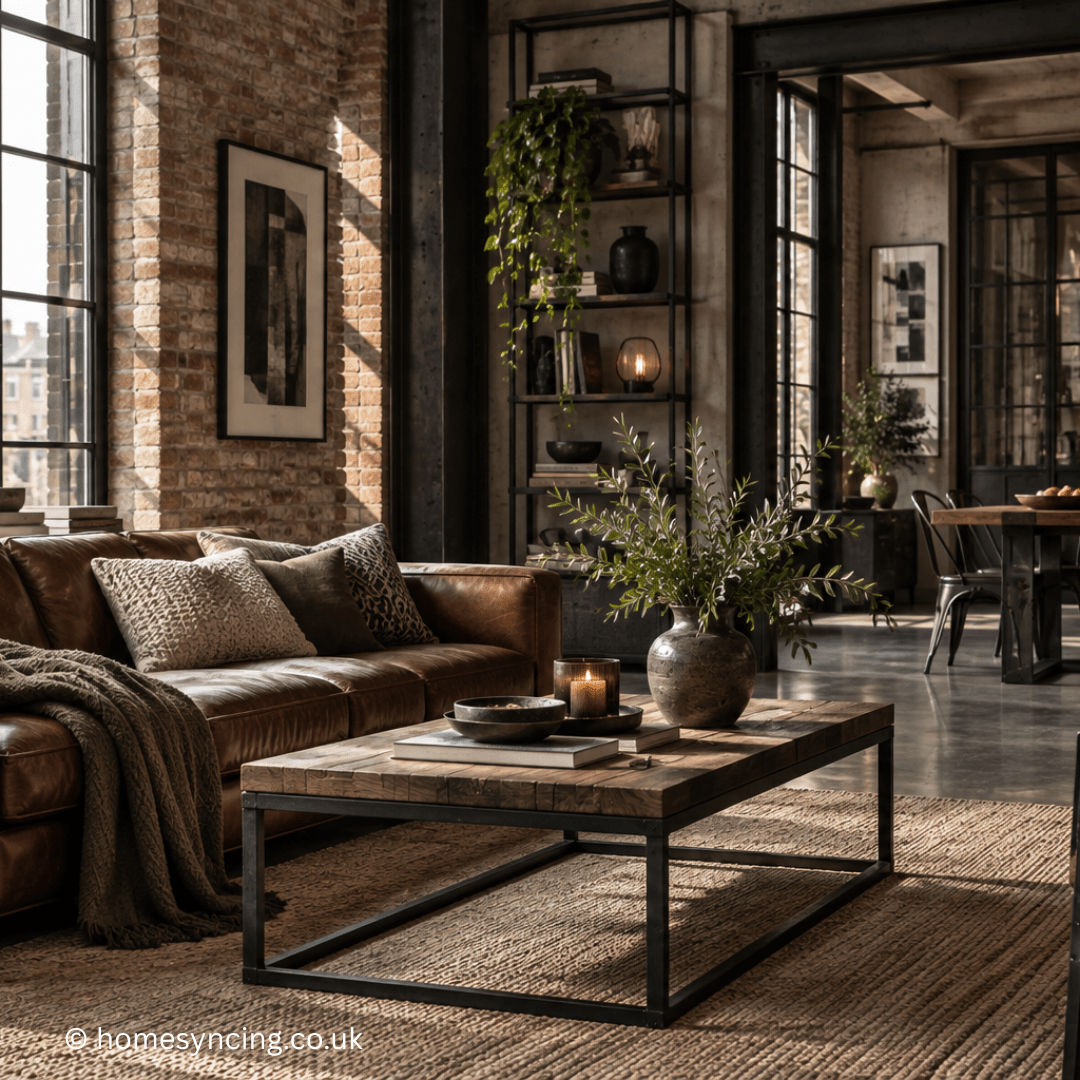
How to Get the Industrial Look: A Guide to Industrial Furniture and Interiors

There is a particular beauty to buildings that reveal how they were made.

Brick walls bearing the marks of age, great timber beams, iron-framed windows and floorboards worn smooth by generations of footsteps all tell us something about a building’s past. Rather than disguising these features, industrial interior design puts them at the heart of a room.

The style has its origins in places built for work rather than decoration: factories, mills, warehouses and workshops. As former industrial buildings found new uses, many of their practical features were retained. Exposed brickwork, steel columns, visible pipes and large windows became part of the character of these converted spaces rather than something to be concealed.

Today, you certainly don’t need to live in a Victorian warehouse to enjoy the industrial look.

Used thoughtfully, industrial furniture, reclaimed timber, aged metal and utilitarian lighting can bring character to houses of almost any period. The secret is not to recreate a factory in your sitting room, but to borrow the qualities that make these old working buildings so appealing: honest materials, useful objects, good craftsmanship and a pleasing lack of fuss.

Begin with the Building

Before choosing furniture, look at the room itself.

One of the central ideas behind industrial interiors is to celebrate the fabric of a building rather than cover every surface with decoration. Original brick, old floorboards, beams, stonework and metal-framed windows can all provide a natural starting point.

If your home has such features, resist the temptation to make them too perfect. Old brickwork gains much of its character from variations in colour and texture, while timber is often more interesting for its knots, marks and uneven grain.

That doesn’t mean manufacturing history where none exists.

Stripping perfectly good plaster from a wall simply to create the appearance of an old warehouse can easily feel contrived. In a newer property, it is often better to introduce the industrial look through furniture, lighting and materials while allowing the architecture to remain true to the building.

The most convincing interiors tend to feel as though they have evolved naturally.

Choose a Warm Industrial Colour Palette

Mention industrial décor and it is easy to imagine a world composed entirely of grey, black and brown. In practice, the most successful schemes are considerably more nuanced.

Begin with colours taken from natural and hardworking materials: warm plaster, limestone, aged brick, weathered timber, charcoal and iron. These create a quiet backdrop without making a room feel cold.

Then introduce deeper tones where they will have the greatest effect. Black steel shelving, for example, can provide definition against a soft off-white wall, while a dark charcoal cabinet can anchor a room filled with lighter timber.

Earthy colours work particularly well alongside industrial furniture. Olive and moss green, tobacco, rust, ochre and deep burgundy all sit comfortably with brick, leather and aged metal.

The aim is warmth rather than starkness.

Let Reclaimed Wood Bring Character

Few materials suit an industrial-style interior quite as naturally as old timber.

In former workshops and factories, wood was chosen because it was strong, useful and repairable. Those same qualities make reclaimed wood furniture particularly appealing today.

A substantial dining table made from salvaged timber can become the centre of a room. Look for visible grain, knots and small variations in colour rather than a surface that has been made artificially uniform.

The same principle works for coffee tables, benches, shelving and sideboards.

Reclaimed timber also performs another useful role: it softens metal. A black steel frame can feel rather severe on its own, but combine it with an aged oak top and the effect becomes warmer and more tactile.

When choosing reclaimed wood furniture, look for genuine construction and good craftsmanship rather than excessive artificial distressing. Natural wear tends to be irregular and subtle. Furniture covered in identical dents, scratches and manufactured ‘aged’ marks rarely has the same appeal.

Use Metal with Restraint

Metal is one of the defining materials of industrial furniture, but a little goes a surprisingly long way.

Blackened steel and iron work beautifully for table legs, shelving frames, cabinets and lighting. Bronze, aged brass and patinated copper can introduce warmer notes, particularly in rooms where black metal might otherwise feel too dominant.

There is no need for every metal finish to match.

Indeed, old working buildings rarely contained perfectly coordinated fittings. Iron window frames, brass handles and copper pipes might happily have existed within the same space because each was chosen for a practical reason.

That relaxed approach can work just as well at home.

A steel-framed coffee table might sit beside an aged brass lamp, while iron shelving provides a backdrop for ceramics, books and wooden objects. Repetition of one or two finishes will give the room coherence without making it appear overly coordinated.

Find the Right Industrial Furniture

Good industrial-style furniture tends to have a straightforward quality.

Look for pieces where the construction is easy to understand: timber resting on a steel frame, a cabinet with visible handles, an open shelving unit or a workbench-style table with sturdy legs.

Some of the best pieces were never intended to be fashionable at all.

Old factory stools, workshop cabinets, machinists’ drawers, school cupboards and haberdashery units can all make characterful additions to a home. Their appeal comes partly from their usefulness and partly from the marks left by their former lives.

Vintage pieces can be particularly effective when mixed with contemporary furniture.

An old metal cabinet beside a comfortable modern sofa feels far more natural than a room in which every item has been bought from the same industrial furniture collection.

Think collected, rather than themed.

Choose Softer Pieces for Balance

An industrial living room should still be somewhere you want to spend an evening.

This is where softness becomes important.

Leather works particularly well, especially in warm tan, chestnut or tobacco tones that develop character as they age. But it isn’t the only option. Linen, wool, cotton and textured upholstery can all provide a welcome counterpoint to steel, concrete and brick.

An industrial-style living room might combine a generous linen or velvet sofa with a reclaimed timber coffee table, an old leather chair and a black metal shelving unit.

Then introduce rugs, cushions and throws.

A large wool or jute rug will soften hard flooring and absorb sound, while cushions in olive, rust and natural linen prevent the palette from becoming too austere.

Plants are useful here too. Green foliage looks particularly striking against brick and dark metal and brings an organic quality to a scheme dominated by harder materials.

Make Industrial Lighting Work Hard

Lighting is one of the easiest ways to introduce industrial character without changing an entire room.

The original lighting in factories and workshops was designed first and foremost to illuminate a task. That functional quality remains part of its appeal.

Look for generous metal pendant lights over dining tables and kitchen islands, adjustable wall lights beside a reading chair or bed, and articulated lamps inspired by traditional workshop designs.

Enamel shades, aged brass, ribbed or reeded glass and dark metal all sit naturally within the style.

Be slightly wary of exposed bulbs everywhere. While they have become closely associated with industrial décor, a bare bulb can produce harsh light and may feel more like a themed restaurant than a comfortable home when overused.

Instead, think in layers.

Combine pendants with table lamps, wall lights and floor lamps, using warm bulbs to create smaller pools of illumination. The fittings may have an industrial character, but the resulting atmosphere should still feel welcoming.

Don’t Forget the Floor

Industrial buildings were made to withstand hard use, and their floors reflected that.

Concrete, brick, stone and timber are therefore natural choices for an industrial-inspired home.

If you already have old floorboards, celebrate them. Small marks and variations often add to their appeal. Stone or brick floors can be equally effective, particularly in kitchens, hallways and extensions.

Polished concrete works well in more contemporary spaces, but needs warmth elsewhere in the scheme to prevent the room from feeling stark.

Rugs are invaluable.

Rather than choosing something overly decorative, look for natural fibres, faded patterns or richly textured wool. A generous rug can help define a seating area while providing softness beneath furniture made from timber and metal.

Display Useful and Beautiful Things

Open shelving is a familiar feature of industrial interiors, and for good reason.

In workshops, objects were kept where they could be seen and reached easily. At home, the same idea provides an opportunity to display useful possessions alongside things collected simply because they are beautiful.

Books, ceramics, old bottles, baskets, wooden bowls and framed artwork can all soften industrial shelving.

The important thing is not to fill every available space.

Allow some shelves to breathe and vary the height and scale of what you display. A large ceramic vessel beside a short stack of books will usually look more natural than a row of small decorative objects evenly spaced along a shelf.

Objects with a history are especially effective. An old wooden box, vintage clock or piece of workshop equipment can introduce a small glimpse of the past without turning the room into a museum.

Avoid Making the Look Too Perfect

There is a curious contradiction at the heart of industrial interiors.

The style is admired for its imperfection, yet it is surprisingly easy to make it look over-designed.

A room filled with matching black metal furniture, reproduction factory lights and deliberately distressed wood may contain all the recognised ingredients of industrial décor while lacking the character that made the style appealing in the first place.

Mix periods and materials instead.

Place an old table beside contemporary chairs. Hang modern artwork against aged brick. Pair a traditional armchair with a steel and timber side table.

Allow some surfaces to show their age while keeping others clean and simple.

This contrast between old and new is often what gives an industrial interior its depth.

Bringing the Industrial Look Home

The best industrial interiors aren’t really about creating a ‘look’ at all. They are about appreciating materials and objects for what they are.

Timber is allowed to look like timber. Brick remains brick. Metal doesn’t need to pretend to be something softer or more decorative. Furniture reveals something of the way it has been constructed, and older pieces are valued for the evidence of lives and uses that came before.

Start with the character of your own home rather than trying to disguise it. Introduce reclaimed wood furniture, metal-framed pieces and purposeful lighting gradually, balancing them with textiles, comfortable seating, greenery and objects that mean something to you.

And don’t feel that everything needs to be finished.

An old workshop, mill or warehouse acquired its character over decades of use. A home deserves the same opportunity.

Perhaps that is the enduring appeal of industrial interior design: it doesn’t ask everything to be pristine. Instead, it finds beauty in craftsmanship, usefulness, age and the occasional imperfection – qualities that tend to become more interesting, rather than less, as the years pass.

We have some great pieces that will create a fantastic industrial look.  Click here to see a selection.

Further Reading: Affordable Decorating Ideas That Will Transform Your Home, Sustainable Chic: A Beginner’s Guide to Circular Design

Daily Inspiration: Follow Us on Instagram, BlueSky, Threads , Pinterest, Twitter, TikTok
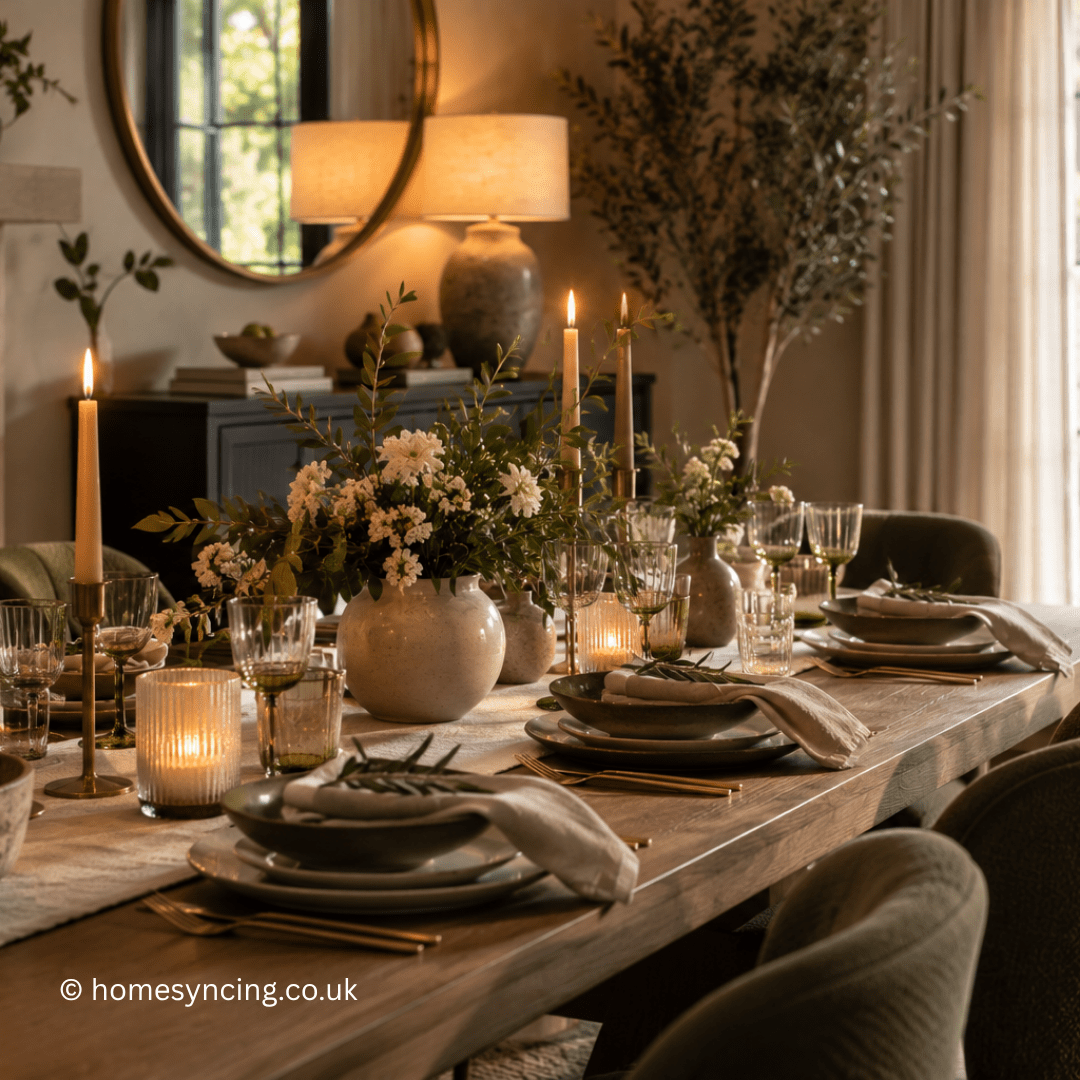
The Art of Dressing a Dining Table

There is something rather special about a table laid in anticipation of a gathering.

Long before the first dish appears, it sets the mood for what is to come. The fold of a linen napkin, a few stems gathered from the garden, the gleam of glassware in candlelight – these small details signal that time and thought have been given to the occasion.

The tradition of dressing a dining table is centuries old. In grand houses, formal dinners might once have involved elaborate arrangements of silver, porcelain, flowers and carefully ordered place settings. Around humbler tables, the details were simpler, but the intention was much the same: to welcome people, share food and mark the pleasure of being together.

Thankfully, creating a beautiful table today needn’t involve an encyclopaedic knowledge of dining etiquette.

The most inviting tables are often those that feel collected rather than constructed. A favourite tablecloth, mismatched crockery, seasonal foliage and the warm glow of candles can be quite enough.

Whether you are preparing for Sunday lunch, an informal supper with friends or a larger celebration, here is how to dress a dining table with a little creativity and a light touch.

Begin with the Table Itself

Before reaching for a tablecloth, consider whether you need one at all.

A handsome timber dining table can provide a beautiful foundation in its own right. Leaving some or all of the wood visible brings warmth and informality to a setting, particularly for relaxed lunches and family gatherings.

For occasions that call for something softer, linen is difficult to beat.

A full tablecloth immediately changes the character of a dining room, creating a sense of occasion even when everything placed upon it is comparatively simple. White and ivory have enduring appeal, but natural flax, soft sage, muted blue and warm stone can be equally versatile.

Don’t worry if linen isn’t perfectly pressed. A few gentle creases can give the table a more relaxed, lived-in quality.

A runner offers another option, particularly on a table you would rather not completely conceal. Laid along its length, it creates a natural foundation for flowers, candles and serving dishes while allowing the character of the table beneath to remain visible.

Build the Setting in Layers

Much of the appeal of a well-dressed table comes from layering.

Begin with the practical pieces: plates, bowls, cutlery, glasses and napkins. Then stand back and look at the table as a whole before adding anything decorative.

Placemats can help define individual settings and introduce another texture. Woven natural fibres suit informal occasions, while linen or fabric mats create a softer effect.

Crockery needn’t match perfectly.

Indeed, a table assembled from pieces collected over time can have considerably more character than one where everything belongs to the same set. Plain dinner plates might be paired with patterned side plates, old serving bowls with contemporary glassware, or inherited pieces with everyday china.

The trick is to find a thread that connects them. It might be a recurring colour, material or shape rather than an exact match.

The result should feel harmonious, but not overly coordinated.

Let the Seasons Lead the Way

Some of the loveliest dining table ideas can be found just beyond the back door.

In spring, bowls of bulbs, blossom and fresh green stems bring a sense of the garden indoors. Summer offers herbs, abundant flowers and bowls piled with fruit. As autumn arrives, branches, seed heads, apples and richly coloured leaves introduce warmer tones.

Winter has a beauty of its own. Evergreen foliage, bare sculptural branches, dried hydrangeas and small pots of herbs can create an atmospheric table without relying on anything particularly elaborate.

You needn’t be an accomplished flower arranger.

A handful of stems in a favourite jug can be every bit as effective as a formal arrangement. Small bud vases dotted along the centre of a long table work particularly well, allowing each flower or branch to be appreciated individually.

There is also something appealing about using what is readily available. A few branches gathered during a garden tidy or herbs snipped from a pot on the windowsill can make a table feel connected to its surroundings and to the time of year.

Keep the Centrepiece Conversational

A magnificent arrangement may look impressive in a photograph, but if your guests have to peer through it to speak to one another, it has rather missed the point.

A dining table is, above all, a social place.

Keep flowers and dining table decorations low enough for conversation to pass comfortably across the table. Alternatively, choose tall, slender arrangements where the bulk of the foliage sits above eye level.

Several smaller vessels can be easier to arrange than one substantial centrepiece. Try grouping old glass bottles, ceramic jugs, small bowls and bud vases, varying their heights without allowing any one piece to dominate.

Odd numbers often work particularly well when arranging decorative objects. Groups of three or five tend to feel more natural than rigidly symmetrical pairs.

Remember, too, that food needs somewhere to go. If serving dishes will be placed on the table, leave generous gaps in your arrangement rather than creating a display that has to be dismantled the moment dinner arrives.

Use Candlelight Generously

Few things transform a dinner table as quickly as candles.

As daylight fades, their soft pools of light make glassware sparkle and create warmth around the table. They are particularly effective in dining rooms where overhead lighting can otherwise feel rather stark.

Tall dinner candles bring height and a little formality. Smaller candles in glass holders create a softer glow, while a mixture of the two can give the table a more collected appearance.

Again, there is no need for everything to match.

Brass candlesticks can sit alongside ceramic holders or old silver. Different heights help the arrangement feel as though it has evolved over time.

Unscented candles are usually the better choice at the dining table. Strongly perfumed varieties can compete with the aromas of the meal – and, after all, the food deserves its moment too.

Make Napkins Part of the Setting

Cloth napkins are one of the simplest ways to make an everyday table feel more considered.

Linen and cotton become softer with use and needn’t be folded into anything complicated. A loose fold laid across the plate or tucked beneath the cutlery often looks more inviting than an elaborate arrangement.

For a small decorative detail, tie a napkin loosely with ribbon or natural twine and tuck in a sprig of rosemary, lavender or seasonal foliage.

Napkins are also an easy place to introduce colour. If your crockery and tablecloth are neutral, a deeper green, ochre, rust or blue can provide just enough contrast to bring the table to life.

Add Details with Meaning

The finishing touches are an opportunity to make a table feel personal.

For a larger gathering, handwritten place cards remove the uncertainty over where to sit while adding something distinctly individual to each setting. They needn’t be formal: a simple piece of card with a name written by hand is quite enough.

Small objects can tell a story too.

Perhaps you have glasses inherited from a grandparent, a serving platter brought home from a holiday or a slightly imperfect ceramic jug made by a local potter. Objects with memories attached to them lend a table a richness that cannot easily be achieved by buying everything at once.

These are often the details guests remember.

Consider the Room Around the Table

When dressing a dining table, it is easy to concentrate so closely on the tabletop that the rest of the room is forgotten.

Take a few steps back.

Consider how the colours on the table sit alongside the walls, curtains, artwork and furniture. You don’t need to match them precisely, but repeating a colour or material already present in the room can make the setting feel naturally connected to its surroundings.

Lighting matters too.

Rather than relying entirely on a central pendant, combine it with lamps, wall lights and candles where possible. Pools of softer light around the room help create a more intimate atmosphere and prevent the dining table from feeling like a brightly lit stage.

If there is a sideboard nearby, use it as part of the occasion. A vase of flowers, decanters, serving dishes or a small lamp can extend the table setting into the room.

Know When to Stop

Perhaps the most useful lesson in dressing a dining table is knowing when it has enough.

Once the plates, glasses, napkins, flowers and candles are in place, pause before adding anything else.

There should be empty space.

Guests need somewhere to put their hands, glasses need to be reached without navigating an obstacle course, and serving bowls need to travel comfortably around the table.

A little restraint allows individual pieces to be noticed. It also makes the whole setting feel more relaxed.

The aim isn’t to create a table so immaculate that nobody wishes to disturb it. Quite the opposite.

A Table Made for Gathering

The art of dressing a dining table has less to do with rules than with hospitality.

The table can be grand or modest, carefully planned or assembled from whatever happens to be in the cupboard and garden. What matters is the sense that it has been prepared with people in mind.

Start with pieces that are useful. Add natural materials, seasonal flowers or foliage and a little candlelight. Mix old things with new ones. Leave room for serving dishes, elbows and conversation.

Most importantly, allow the table to change once everyone arrives.

Napkins will unfold. Glasses will move. Serving spoons will wander. Candle wax may drip and crumbs will inevitably appear on the cloth.

That isn’t the undoing of a beautifully dressed table. It is what the table was dressed for in the first place.

See our Range of Dining Tables here

Further Reading: Affordable Decorating Ideas That Will Transform Your Home, Sustainable Chic: A Beginner’s Guide to Circular Design

Daily Inspiration: Follow Us on Instagram, BlueSky, Threads , Pinterest, Twitter, TikTok
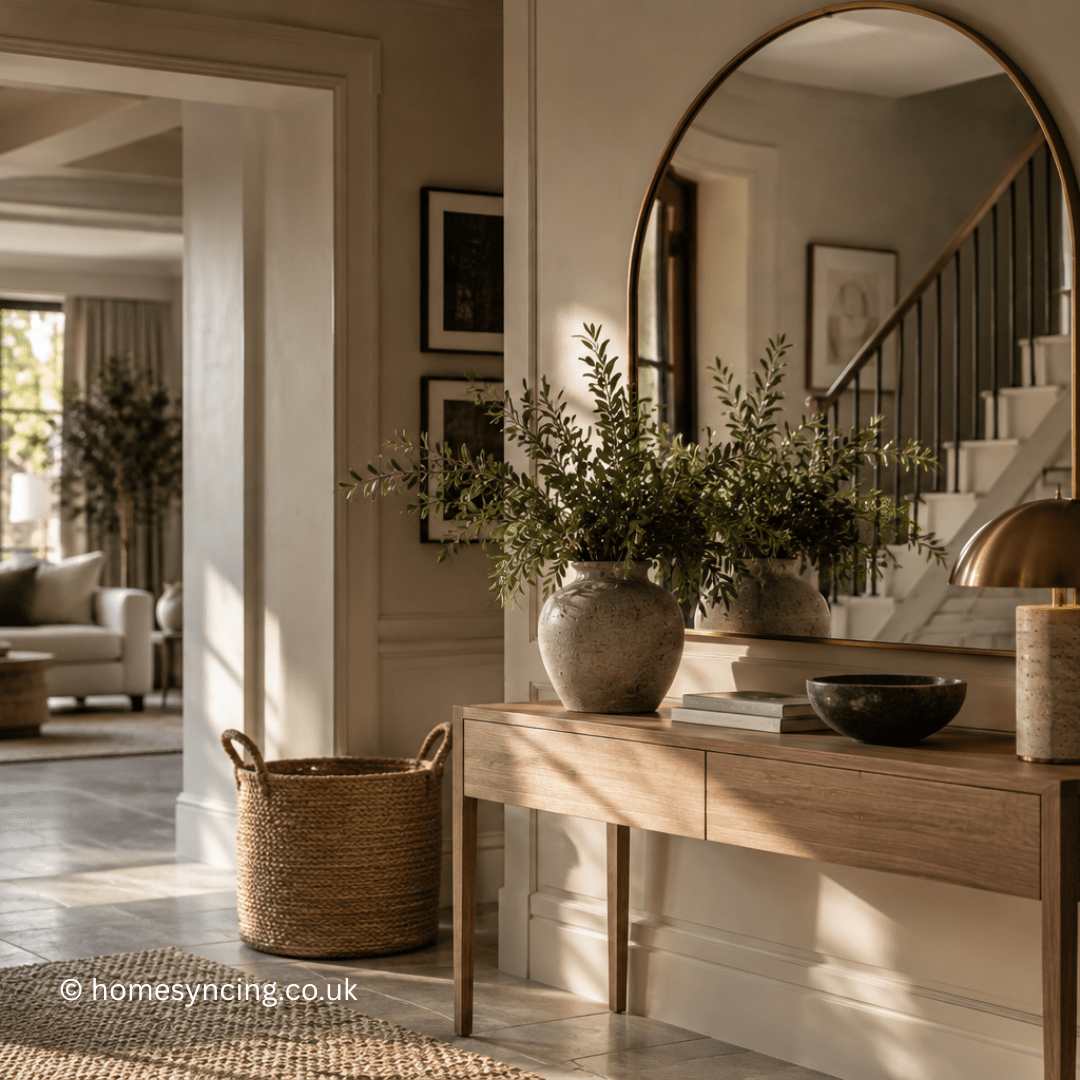
Choosing the Right Mirror for Your Home

Long before the flick of a switch could illuminate a room, mirrors had an important part to play in the home. Positioned to catch daylight, candlelight or the glow of a fire, they brought brightness into shadowy corners and lent a greater sense of space to even the most modest room.

Walk through an old country house today and you can still see this quiet ingenuity at work. A mirror might catch the light from a tall sash window, reflect the greenery beyond a doorway or multiply the warm glow of lamps and candles after dusk.

The principle remains remarkably useful.

A well-placed mirror can make a narrow hallway feel more generous, bring light into a darker sitting room and draw attention to a particularly lovely view. It can also provide a focal point, introduce a new shape to a scheme and help a room feel more balanced.

Choosing one, then, is about rather more than finding an attractive frame. Size, proportion, shape, position and even the view within the glass all have a part to play.

Consider the View

Before considering the mirror itself, think about what you would like to see within it.

A mirror effectively creates another view in a room. Whatever stands opposite it becomes part of the composition: perhaps a window overlooking the garden, an old painting, a vase of seasonal branches or an architectural detail worth noticing.

Of course, the opposite is equally true. A mirror facing an untidy corner, television or busy doorway may simply give greater prominence to something you would rather overlook.

Take a little time to experiment before reaching for the picture hooks. Stand where the mirror is likely to hang and consider the sightline from different parts of the room.

A mirror positioned opposite or adjacent to a window can be particularly effective. As the light changes through the day, so too does the reflection, bringing glimpses of sky, foliage and shifting sunlight further into the house.

It is a simple decorative idea, but one that can subtly alter the atmosphere of an entire room.

Get the Proportions Right

Scale matters enormously with mirrors.

Choose one that is too small and it can look rather lost, particularly above a substantial fireplace or sideboard. Go too large without considering its surroundings and it may overpower everything nearby.

Above a console table, chest or sideboard, a mirror measuring roughly two-thirds to three-quarters of the width of the furniture beneath it will often create a pleasing sense of proportion. It is a useful starting point rather than an inflexible rule; period features, ceiling height and the character of the furniture should always have the final say.

Do not be afraid of using a generous mirror in a small room, either.

It may seem counter-intuitive, but one substantial mirror can often make a compact space feel calmer and larger than several small decorative pieces. A tall mirror in a narrow hallway draws the eye upwards, while a large mirror resting against a wall can give a bedroom or dressing room an appealing sense of depth.

In older houses, where walls and alcoves are rarely perfectly symmetrical, exact measurements are not always the answer. Sometimes a slightly unexpected scale feels far more natural than something meticulously matched.

Find a Shape That Suits the Room

The shape of a mirror can subtly change the character of a space.

Round mirrors have an appealing softness. Against the straight lines of doors, cupboards, fireplaces and furniture, a circle provides contrast and can make a scheme feel more relaxed. They are especially effective above console tables, washstands and smaller pieces of furniture.

Oval mirrors have a similarly gentle quality, but often feel a little more traditional. Their elongated proportions work beautifully above a dressing table or chest of drawers and sit particularly comfortably in period interiors.

Rectangular mirrors provide greater structure. Hung horizontally, they can emphasise the width of a room or a long mantelpiece; vertically, they draw the eye upwards and give a greater impression of height.

Then there is the enduring appeal of the arch.

Although arched mirrors have enjoyed renewed attention in contemporary interiors, there is nothing particularly new about the shape. Arches have appeared in British architecture for centuries, from ecclesiastical windows and stone doorways to garden gates and Victorian interiors. A well-proportioned arched mirror therefore has the useful ability to feel both current and established.

Look to the architecture of the room for clues. Curves can soften a space dominated by straight lines, while a simple rectangular mirror may provide welcome restraint in a room already rich in decorative detail.

Choose a Frame with Character

A frame can make the difference between a mirror that merely fits and one that feels as though it has always belonged.

Timber brings warmth and texture. Oak, walnut and darker stained woods work particularly well alongside natural materials such as stone, linen and wool, while painted or gently weathered timber can feel wonderfully at home in cottages and country interiors.

Metal offers something different. Antique brass, bronze and aged gold introduce warmth without excessive ornamentation and can sit surprisingly well alongside both old and new furniture. Slim black frames provide stronger definition and are useful where a cleaner architectural line is wanted.

More decorative mirrors deserve consideration too. Gilt frames, foxed glass and carved timber can introduce a sense of history, particularly in rooms with original fireplaces, panelling or traditional furniture.

An antique mirror need not live in an entirely traditional interior. In fact, the contrast of an old, imperfect frame against a restrained contemporary wall can be particularly effective.

Perfection is not always the goal. Patina, small marks and the gentle signs of age can give a mirror much of its charm.

Make More of Natural Light

Few decorative objects can alter the light in a room quite as effectively as a mirror.

The key is positioning.

Rather than automatically hanging one in the centre of an empty wall, look first at where daylight enters the room and where it fades. A mirror placed where it can catch that light may carry a sense of brightness considerably further into the space.

Hallways are especially good candidates. Often narrow and with limited natural light, they can benefit enormously from a generously sized mirror. As well as being useful for a final glance on the way out, it can make the entrance to a home feel lighter and more welcoming.

In a dining room, a mirror can take on a different character as evening falls. Reflected lamps and candlelight add depth and atmosphere, recalling one of the reasons mirrors became such valued features of historic interiors in the first place.

Bedrooms generally call for something gentler. Position a mirror to reflect daylight, a favourite picture or perhaps a view through the window rather than placing it where the bed dominates the reflection.

The best position is often discovered by observing the room at several times of day.

Think Beyond the Obvious Places

Mirrors need not always sit above fireplaces and console tables.

A small mirror tucked between pictures can add an unexpected glimmer to a gallery wall. A tall design placed at the end of a landing can make a confined space feel longer. A mirror opposite an open doorway can offer an intriguing glimpse into the room beyond.

Alcoves are another opportunity, particularly in older properties. A mirror placed behind a table lamp, collection of ceramics or arrangement of flowers can give the display considerably more depth.

Even kitchens can benefit. A carefully positioned mirror or antiqued mirrored panel can introduce light without making a hardworking room feel overly polished.

The most memorable interiors often use mirrors in places where they perform a purpose rather than simply occupying an empty wall.

Look for Quality

A mirror is likely to remain in your home far longer than many smaller decorative accessories, so it is worth looking closely at how it has been made.

The reflection should be clear and consistent without obvious distortion. Frames should feel properly constructed, corners neatly joined and decorative finishes convincing rather than superficial.

For larger mirrors, the quality of the fittings is every bit as important as the appearance of the frame. Always use fixings suitable for both the weight of the mirror and the type of wall, and seek professional advice where necessary for particularly large or heavy pieces.

Vintage and antique mirrors require slightly different judgement. Their glass may be softly mottled or foxed with age, creating a reflection that is less than perfect but infinitely more atmospheric. In such cases, signs of age are not necessarily defects; they are part of the object’s history.

Allow a Room to Evolve

Perhaps the most appealing interiors are those that do not appear to have been assembled all at once.

A mirror inherited from family, discovered in an antiques shop or moved from another room can sit happily beside newer furniture. Different periods and materials give a home depth and prevent it from feeling too carefully coordinated.

There is little need for every metal finish to match, either. An aged brass mirror can coexist perfectly well with iron curtain poles, pewter handles or a contemporary lamp. What matters is that the room feels connected as a whole.

Before buying something new, it can even be worth wandering through your own home. A mirror that has become unremarkable in one room may feel entirely different when moved somewhere unexpected.

A Different Way of Seeing Your Home

The most successful mirrors do something rather clever: after a while, you stop noticing the mirror and begin noticing what it reveals.

A patch of afternoon sunlight. The branches of a tree moving outside. Candlelight across a dining table. A favourite painting seen from another angle.

That is perhaps why mirrors have remained such enduring features of our homes. Their usefulness may be practical, but their appeal is atmospheric.

Rather than choosing a mirror simply to fill a vacant stretch of wall, consider what you would like it to bring to the room. Perhaps that is more light, a sense of height, a stronger focal point or simply a beautiful view worth seeing twice.

Choose carefully and a mirror becomes more than something to look into. It becomes another way of looking at the home itself.

See Our Range of Mirrors here.

Further Reading: Affordable Decorating Ideas That Will Transform Your Home, Sustainable Chic: A Beginner’s Guide to Circular Design, How to Choose Wall Art for your Home

Daily Inspiration: Follow Us on Instagram, BlueSky, Threads , Pinterest, Twitter, TikTok

Translate »