How to Choose Wall Art for Your Home

A blank wall can be an appealing thing.

It offers the possibility of a much-loved painting, a collection of family photographs, an old map of somewhere significant or perhaps a picture found unexpectedly in an antiques shop and carried home because you simply couldn’t leave it behind.

What we hang on our walls can tell us a surprising amount about the people who live among them.

In houses assembled over generations, pictures rarely appear to have been chosen according to a single decorating scheme. Portraits sit beside landscapes, botanical studies mingle with family photographs and contemporary works find a place alongside inherited pieces. It is this mixture – of periods, subjects and memories – that gives a room its individuality.

Choosing wall art for your home, then, needn’t begin with what happens to be fashionable. A better starting point is the room itself, followed closely by the question of what you actually enjoy looking at.

Here is how to choose and hang wall art in a way that feels considered, personal and entirely at home.

Begin with What You Love

It is tempting to choose artwork because it matches the sofa.

Colour certainly matters, but it needn’t be the reason you bring a picture into your home.

Art is something you may look at every day for years. Choose pieces that provoke a response – perhaps because the subject is familiar, the colours are particularly beautiful or the picture reminds you of somewhere you have been.

This doesn’t require a considerable budget or knowledge of art history.

Original paintings and limited-edition prints can be wonderful, but so too can old exhibition posters, family photographs, maps, children’s drawings, botanical studies and inexpensive prints discovered at markets and second-hand shops.

You might even frame something that was never intended as wall art at all: an old letter, a fragment of interesting fabric, a pressed plant or a beautifully illustrated page from a damaged book.

A home becomes more interesting when the things within it have stories.

Look at the Room as a Whole

Before deciding what to hang, spend some time looking at the wall from across the room.

Consider the architecture surrounding it. Where are the doors and windows? Is there a fireplace, panelling or an alcove nearby? What furniture sits beneath the space?

The best wall art ideas tend to work with these features rather than ignoring them.

A tall, narrow piece might echo the proportions of a window. A horizontal landscape can work beautifully above a long sideboard. A collection of smaller pictures may bring life to an awkward stretch of wall beside a staircase.

It is also worth considering the character of the room.

A bedroom might call for quieter imagery, while a kitchen or hallway can be an opportunity for something more playful. A sitting room used for conversation can comfortably accommodate a collection of pictures that reward closer inspection.

Don’t feel that the style of the artwork must match the age of the property. Contemporary art can look particularly striking against old plasterwork or panelling, just as an antique landscape can bring warmth and depth to a modern room.

Contrast often creates far more interest than perfect coordination.

Get the Scale Right

If there is one practical consideration that can make an immediate difference, it is scale.

Artwork that is too small can look stranded on a large wall. This is particularly noticeable when hanging a picture above substantial furniture such as a sofa, bed or sideboard.

As a starting point, a picture or group of pictures measuring approximately two-thirds to three-quarters of the width of the furniture beneath it will often feel well proportioned.

This is a guide rather than a rule.

A very large painting can look magnificent in a modest room, while a tiny artwork can be captivating when deliberately positioned in a small alcove or between architectural details.

What matters is that the scale looks intentional.

For a particularly large wall, don’t assume you need one enormous piece. A pair of paintings, a group of prints or a gallery wall can occupy the space just as successfully.

Before committing to a position, cut sheets of paper to the dimensions of your pictures and temporarily fix them to the wall. It is a remarkably effective way of judging proportion without making unnecessary holes.

Hang Art at a Comfortable Height

Pictures have a tendency to creep upwards.

Perhaps it is the expanse of wall above them, but one of the most common mistakes when hanging artwork is positioning it too high.

As a broad guide, the centre of a picture should sit at approximately eye level. In many rooms, this means placing the centre somewhere around 145–150cm from the floor.

But, as ever, the room should have the final say.

Artwork above a sofa or sideboard needs to relate visually to the furniture beneath it. Leave too great a gap and the two elements can appear disconnected.

In rooms where people are mostly seated – a dining room, for example – pictures can often sit a little lower than expected. The result feels more intimate and allows the artwork to become part of the room rather than floating above it.

Old houses provide their own challenges. Sloping ceilings, dado rails, panelling and uneven walls may make conventional rules irrelevant. Work with the architecture rather than forcing symmetry where it doesn’t naturally exist.

Choosing Wall Art for a Living Room

The sitting room is often where artwork has the greatest opportunity to make an impression.

When choosing wall art for a living room, first identify the natural focal points. The space above a fireplace, sofa or sideboard will usually command attention, making it a good place for a substantial picture or carefully arranged group.

Not every wall needs something on it.

Leaving some areas relatively quiet gives the eye somewhere to rest and allows important pieces to have greater presence.

If the room already contains patterned upholstery, colourful rugs or decorative wallpaper, artwork doesn’t necessarily need to compete. Something quieter may provide balance.

Conversely, in a restrained room of plain walls and neutral furniture, art can introduce much-needed colour and personality.

A particularly good painting can even provide the starting point for an entire room. A small shade of green within a landscape might reappear in a cushion or lampshade; a warm ochre might inspire the colour of a chair.

The connection can be subtle. There is no need to match everything exactly.

Let Colour Connect the Room

Artwork can be a wonderful way of bringing seemingly unrelated colours together.

Look closely at a painting and you may find dozens of shades rather than the two or three that initially catch the eye.

Picking up one of these quieter colours elsewhere in the room can create a satisfying sense of connection. It might appear in a cushion, a vase, a painted piece of furniture or simply a bunch of flowers.

Alternatively, use artwork to introduce something unexpected.

A vivid painting in a largely neutral room can completely alter its energy. Deep red, cobalt blue, acid green or ochre can all be enormously effective when there is enough quieter space around them.

Don’t become too preoccupied with whether art ‘matches’.

A picture that disappears perfectly into the colour scheme may ultimately be less interesting than one that introduces a little tension.

Give the Frame Some Thought

The frame is part of the picture.

A good one should protect the artwork while complementing both the piece and its surroundings.

Natural timber frames bring warmth and work particularly well with landscapes, botanical art and prints. Slim black frames offer greater definition and can lend traditional subjects a more contemporary appearance.

Gilt frames have an enduring appeal, especially when their surface has softened with age. They needn’t be reserved for grand interiors. A small, slightly timeworn gilt frame can look wonderful against an informal painted wall.

And there is no requirement for every frame in a room to match.

In fact, a mixture of timber, black, painted and gilt frames can make a collection feel as though it has developed gradually. If there is some consistency in the artwork or overall palette, different frames often add rather than detract from the display.

When framing valuable, original or delicate works, seek advice on conservation-quality materials and suitable glazing to help protect them from damage over time.

Creating a Gallery Wall

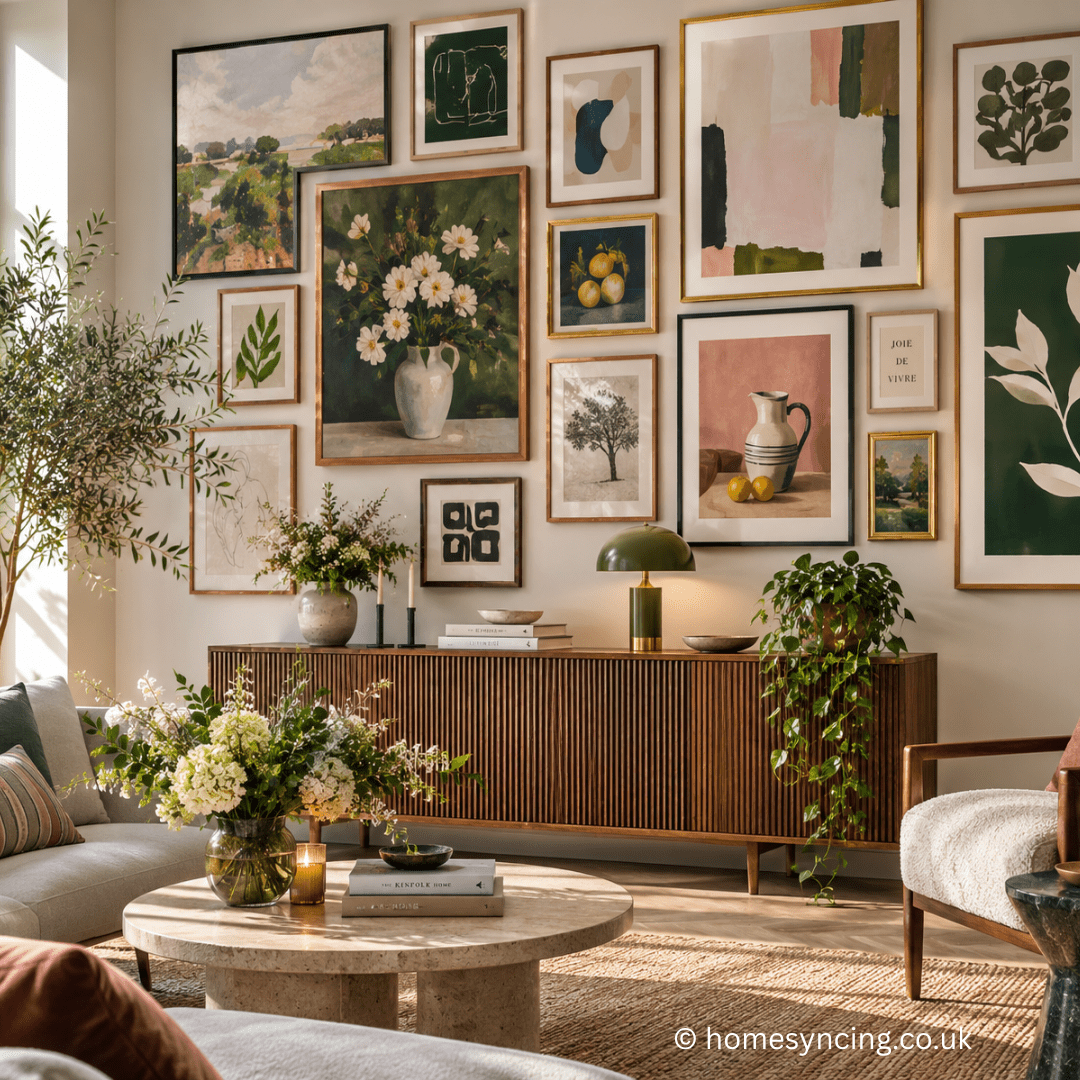
A gallery wall offers an opportunity to bring together pictures that might not command an entire wall individually.

The most interesting examples often mix subjects and formats: photographs beside paintings, small prints next to larger works and perhaps an unexpected object among them.

There are two broad approaches.

A formal gallery wall follows a grid, using consistent spacing and often matching frames. It creates a calm, ordered effect and works particularly well with sets of botanical prints, photographs or architectural studies.

A more informal arrangement can grow organically. Begin with one or two substantial pieces and gradually position smaller works around them, keeping the gaps between frames reasonably consistent.

If you are nervous about getting it right, arrange everything on the floor first.

Start with the largest piece and build outwards. Take a photograph of the arrangement once you are happy with it, then transfer it to the wall.

Don’t feel obliged to finish the gallery wall in a single afternoon. Collections often become more interesting when there is space for future discoveries.

Look Beyond Paintings and Prints

Walls can hold much more than conventional framed artwork.

Decorative plates have been displayed in homes for centuries and can create wonderful arrangements in kitchens and dining rooms. Old textiles bring pattern and softness, while tapestries and woven pieces are particularly effective on larger walls.

Maps can have enormous personal significance, especially when they depict a childhood home, favourite landscape or much-visited part of the country.

Pressed botanicals, vintage signs, architectural fragments and small sculptural pieces can all become part of a display too.

Mirrors can also be incorporated among artwork, reflecting light and providing contrast to flat framed surfaces.

The aim isn’t to find unusual objects simply for the sake of being different. Rather, it is to recognise that anything you find beautiful or meaningful has the potential to earn a place on the wall.

Protect Art from Light and Heat

Where you hang a picture matters for reasons beyond appearance.

Strong, direct sunlight can cause pigments, photographs, textiles and paper to fade over time. Particularly valuable or delicate works are best positioned away from prolonged direct sunlight.

Heat and moisture should also be considered.

Avoid placing vulnerable works directly above radiators or in areas prone to damp. Kitchens and bathrooms can be challenging environments for original works on paper because of changing levels of heat, humidity and moisture.

For anything especially precious, professional framing using appropriate conservation materials is worth considering.

After all, part of the pleasure of owning something beautiful is ensuring that it can continue to be enjoyed.

Allow Your Collection to Evolve

There is no need to finish every wall.

Homes are rarely at their most interesting when every surface has been decorated at once. Leaving a little space allows room for something you haven’t found yet.

Perhaps it will be a small landscape spotted in an antiques shop, a print bought on holiday or a photograph you finally decide deserves to be framed.

Move pictures around occasionally too.

An artwork that has become almost invisible through familiarity can feel completely new in another room. Changing the pictures on a landing or moving a painting from a bedroom into the sitting room can alter the character of both spaces without buying anything new.

Walls That Tell a Story

Ultimately, choosing wall art for your home is less about following decorating rules and more about deciding what deserves your attention.

The pictures and objects we choose to live with become part of the backdrop to everyday life. We pass them on the stairs, notice them while sitting with a cup of tea and gradually associate them with particular rooms, people and periods of our lives.

So measure carefully and consider scale. Think about colour, frames and where the light falls. But don’t allow practicalities to remove the pleasure from choosing.

Hang the landscape that reminds you of somewhere you love. Frame the photograph that makes you stop for a moment. Give the peculiar little painting from the antiques shop pride of place simply because it makes you smile.

A beautifully decorated wall doesn’t need to tell visitors that you understand interiors.

It should tell them something about you.

Further Reading: Affordable Decorating Ideas That Will Transform Your HomeSustainable Chic: A Beginner’s Guide to Circular DesignSmall Room, Big Impact

Daily Inspiration: Follow Us on Instagram, BlueSkyThreads , PinterestTwitterTikTok

Take a Look at our great range of Wall Art here
Choosing the Right Mirror for Your Home

Long before the flick of a switch could illuminate a room, mirrors had an important part to play in the home. Positioned to catch daylight, candlelight or the glow of a fire, they brought brightness into shadowy corners and lent a greater sense of space to even the most modest room.

Walk through an old country house today and you can still see this quiet ingenuity at work. A mirror might catch the light from a tall sash window, reflect the greenery beyond a doorway or multiply the warm glow of lamps and candles after dusk.

The principle remains remarkably useful.

A well-placed mirror can make a narrow hallway feel more generous, bring light into a darker sitting room and draw attention to a particularly lovely view. It can also provide a focal point, introduce a new shape to a scheme and help a room feel more balanced.

Choosing one, then, is about rather more than finding an attractive frame. Size, proportion, shape, position and even the view within the glass all have a part to play.

Consider the View

Before considering the mirror itself, think about what you would like to see within it.

A mirror effectively creates another view in a room. Whatever stands opposite it becomes part of the composition: perhaps a window overlooking the garden, an old painting, a vase of seasonal branches or an architectural detail worth noticing.

Of course, the opposite is equally true. A mirror facing an untidy corner, television or busy doorway may simply give greater prominence to something you would rather overlook.

Take a little time to experiment before reaching for the picture hooks. Stand where the mirror is likely to hang and consider the sightline from different parts of the room.

A mirror positioned opposite or adjacent to a window can be particularly effective. As the light changes through the day, so too does the reflection, bringing glimpses of sky, foliage and shifting sunlight further into the house.

It is a simple decorative idea, but one that can subtly alter the atmosphere of an entire room.

Get the Proportions Right

Scale matters enormously with mirrors.

Choose one that is too small and it can look rather lost, particularly above a substantial fireplace or sideboard. Go too large without considering its surroundings and it may overpower everything nearby.

Above a console table, chest or sideboard, a mirror measuring roughly two-thirds to three-quarters of the width of the furniture beneath it will often create a pleasing sense of proportion. It is a useful starting point rather than an inflexible rule; period features, ceiling height and the character of the furniture should always have the final say.

Do not be afraid of using a generous mirror in a small room, either.

It may seem counter-intuitive, but one substantial mirror can often make a compact space feel calmer and larger than several small decorative pieces. A tall mirror in a narrow hallway draws the eye upwards, while a large mirror resting against a wall can give a bedroom or dressing room an appealing sense of depth.

In older houses, where walls and alcoves are rarely perfectly symmetrical, exact measurements are not always the answer. Sometimes a slightly unexpected scale feels far more natural than something meticulously matched.

Find a Shape That Suits the Room

The shape of a mirror can subtly change the character of a space.

Round mirrors have an appealing softness. Against the straight lines of doors, cupboards, fireplaces and furniture, a circle provides contrast and can make a scheme feel more relaxed. They are especially effective above console tables, washstands and smaller pieces of furniture.

Oval mirrors have a similarly gentle quality, but often feel a little more traditional. Their elongated proportions work beautifully above a dressing table or chest of drawers and sit particularly comfortably in period interiors.

Rectangular mirrors provide greater structure. Hung horizontally, they can emphasise the width of a room or a long mantelpiece; vertically, they draw the eye upwards and give a greater impression of height.

Then there is the enduring appeal of the arch.

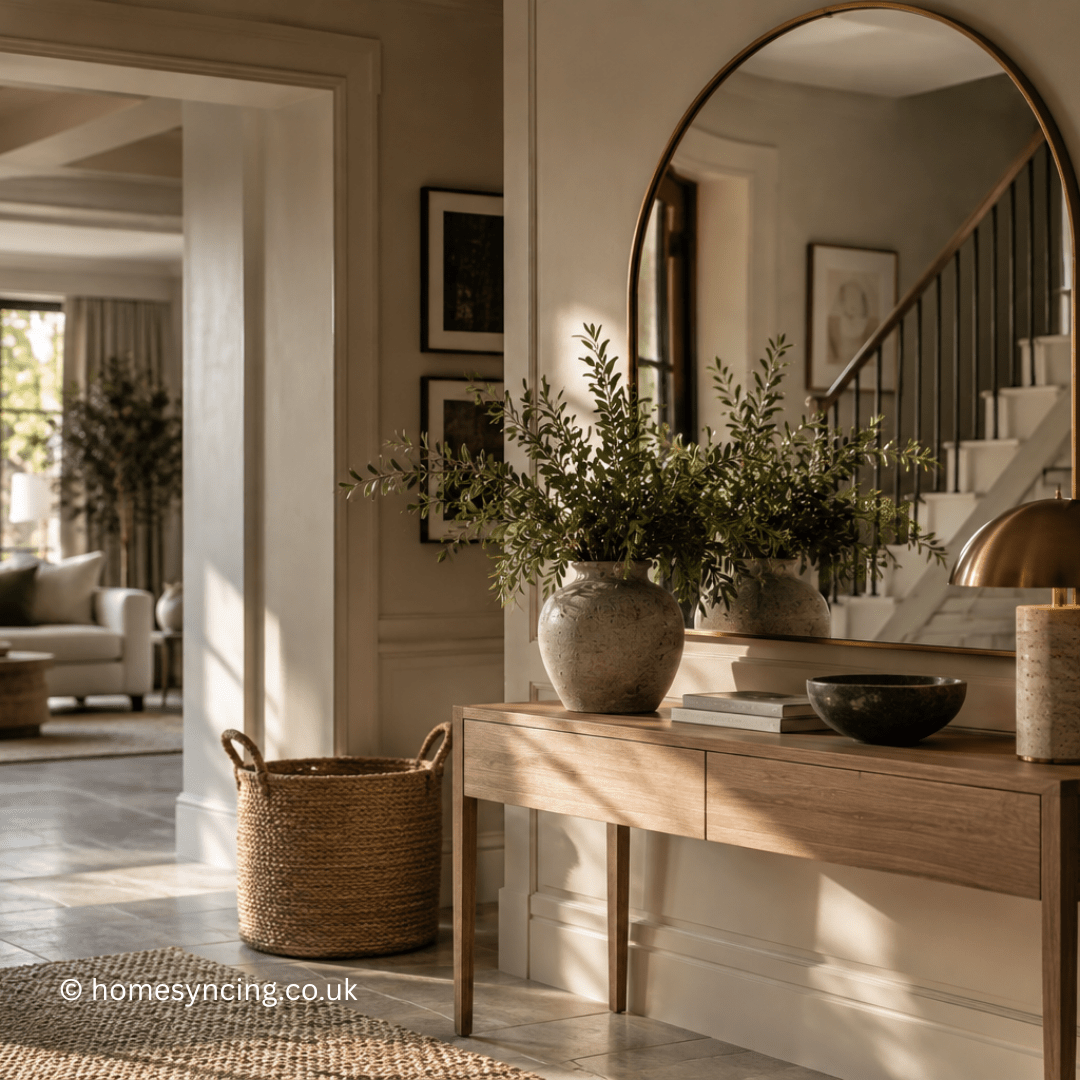
Although arched mirrors have enjoyed renewed attention in contemporary interiors, there is nothing particularly new about the shape. Arches have appeared in British architecture for centuries, from ecclesiastical windows and stone doorways to garden gates and Victorian interiors. A well-proportioned arched mirror therefore has the useful ability to feel both current and established.

Look to the architecture of the room for clues. Curves can soften a space dominated by straight lines, while a simple rectangular mirror may provide welcome restraint in a room already rich in decorative detail.

Choose a Frame with Character

A frame can make the difference between a mirror that merely fits and one that feels as though it has always belonged.

Timber brings warmth and texture. Oak, walnut and darker stained woods work particularly well alongside natural materials such as stone, linen and wool, while painted or gently weathered timber can feel wonderfully at home in cottages and country interiors.

Metal offers something different. Antique brass, bronze and aged gold introduce warmth without excessive ornamentation and can sit surprisingly well alongside both old and new furniture. Slim black frames provide stronger definition and are useful where a cleaner architectural line is wanted.

More decorative mirrors deserve consideration too. Gilt frames, foxed glass and carved timber can introduce a sense of history, particularly in rooms with original fireplaces, panelling or traditional furniture.

An antique mirror need not live in an entirely traditional interior. In fact, the contrast of an old, imperfect frame against a restrained contemporary wall can be particularly effective.

Perfection is not always the goal. Patina, small marks and the gentle signs of age can give a mirror much of its charm.

Make More of Natural Light

Few decorative objects can alter the light in a room quite as effectively as a mirror.

The key is positioning.

Rather than automatically hanging one in the centre of an empty wall, look first at where daylight enters the room and where it fades. A mirror placed where it can catch that light may carry a sense of brightness considerably further into the space.

Hallways are especially good candidates. Often narrow and with limited natural light, they can benefit enormously from a generously sized mirror. As well as being useful for a final glance on the way out, it can make the entrance to a home feel lighter and more welcoming.

In a dining room, a mirror can take on a different character as evening falls. Reflected lamps and candlelight add depth and atmosphere, recalling one of the reasons mirrors became such valued features of historic interiors in the first place.

Bedrooms generally call for something gentler. Position a mirror to reflect daylight, a favourite picture or perhaps a view through the window rather than placing it where the bed dominates the reflection.

The best position is often discovered by observing the room at several times of day.

Think Beyond the Obvious Places

Mirrors need not always sit above fireplaces and console tables.

A small mirror tucked between pictures can add an unexpected glimmer to a gallery wall. A tall design placed at the end of a landing can make a confined space feel longer. A mirror opposite an open doorway can offer an intriguing glimpse into the room beyond.

Alcoves are another opportunity, particularly in older properties. A mirror placed behind a table lamp, collection of ceramics or arrangement of flowers can give the display considerably more depth.

Even kitchens can benefit. A carefully positioned mirror or antiqued mirrored panel can introduce light without making a hardworking room feel overly polished.

The most memorable interiors often use mirrors in places where they perform a purpose rather than simply occupying an empty wall.

Look for Quality

A mirror is likely to remain in your home far longer than many smaller decorative accessories, so it is worth looking closely at how it has been made.

The reflection should be clear and consistent without obvious distortion. Frames should feel properly constructed, corners neatly joined and decorative finishes convincing rather than superficial.

For larger mirrors, the quality of the fittings is every bit as important as the appearance of the frame. Always use fixings suitable for both the weight of the mirror and the type of wall, and seek professional advice where necessary for particularly large or heavy pieces.

Vintage and antique mirrors require slightly different judgement. Their glass may be softly mottled or foxed with age, creating a reflection that is less than perfect but infinitely more atmospheric. In such cases, signs of age are not necessarily defects; they are part of the object’s history.

Allow a Room to Evolve

Perhaps the most appealing interiors are those that do not appear to have been assembled all at once.

A mirror inherited from family, discovered in an antiques shop or moved from another room can sit happily beside newer furniture. Different periods and materials give a home depth and prevent it from feeling too carefully coordinated.

There is little need for every metal finish to match, either. An aged brass mirror can coexist perfectly well with iron curtain poles, pewter handles or a contemporary lamp. What matters is that the room feels connected as a whole.

Before buying something new, it can even be worth wandering through your own home. A mirror that has become unremarkable in one room may feel entirely different when moved somewhere unexpected.

A Different Way of Seeing Your Home

The most successful mirrors do something rather clever: after a while, you stop noticing the mirror and begin noticing what it reveals.

A patch of afternoon sunlight. The branches of a tree moving outside. Candlelight across a dining table. A favourite painting seen from another angle.

That is perhaps why mirrors have remained such enduring features of our homes. Their usefulness may be practical, but their appeal is atmospheric.

Rather than choosing a mirror simply to fill a vacant stretch of wall, consider what you would like it to bring to the room. Perhaps that is more light, a sense of height, a stronger focal point or simply a beautiful view worth seeing twice.

Choose carefully and a mirror becomes more than something to look into. It becomes another way of looking at the home itself.

See Our Range of Mirrors here.

Further Reading: Affordable Decorating Ideas That Will Transform Your HomeSustainable Chic: A Beginner’s Guide to Circular Design, How to Choose Wall Art for your Home

Daily Inspiration: Follow Us on Instagram, BlueSkyThreads , PinterestTwitterTikTok

Selecting Soft Furnishings for Comfort & Style

There is a moment when a house begins to feel like a home.

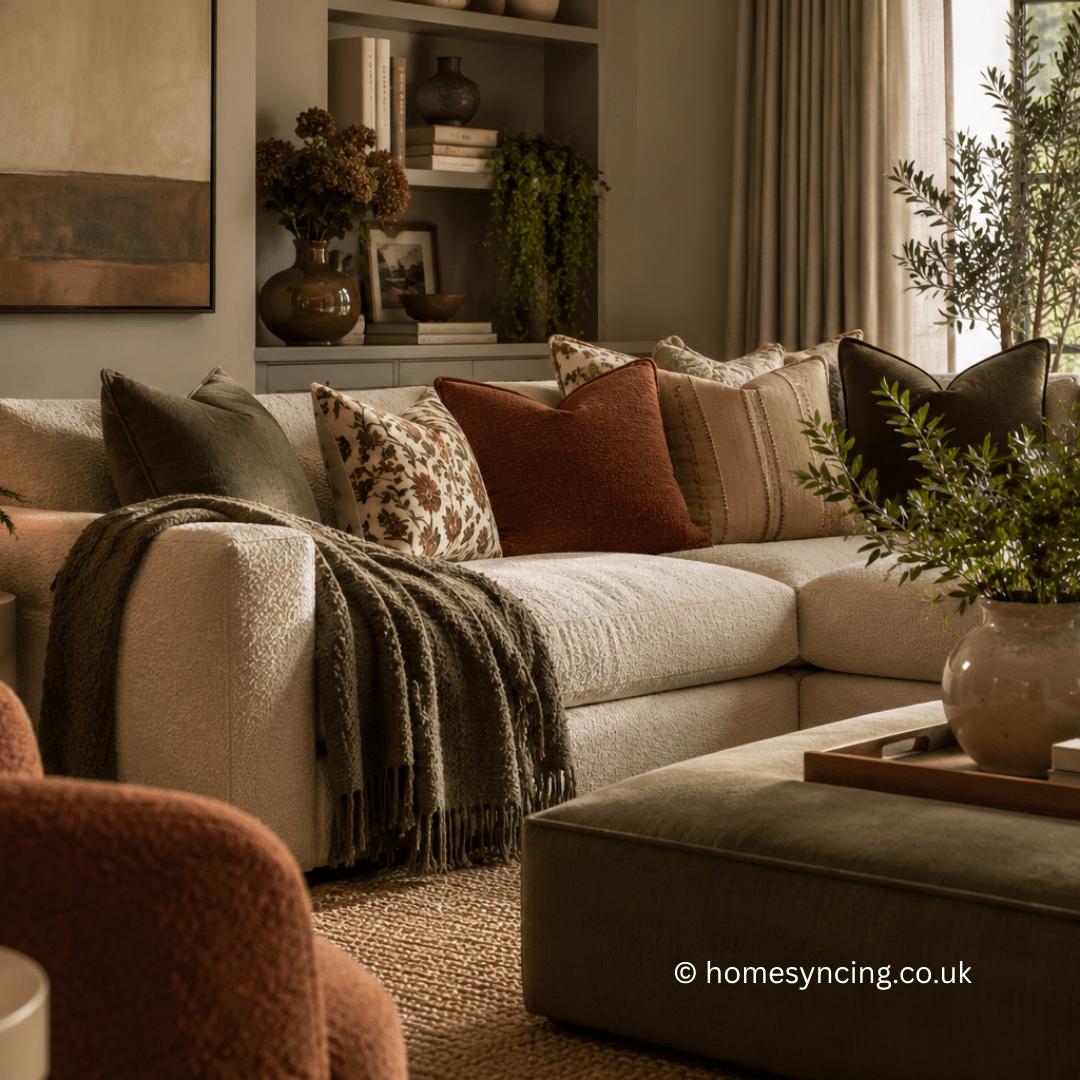
It rarely arrives with the installation of a kitchen or the painting of a wall. More often, it appears gradually. A favourite blanket draped across the arm of a chair. Cushions gathered on a sofa. Curtains that soften the morning light. A rug underfoot that feels warm on a winter’s day.

These are the details that invite us to settle in.

Soft furnishings are often overlooked in favour of larger design decisions, yet they play a remarkable role in shaping how a home feels. They bring warmth to hard surfaces, add colour and texture, absorb sound and create a sense of comfort that furniture alone cannot achieve.

More than decorative accessories, they help tell the story of how a home is lived in and enjoyed.

Choosing them well is not about chasing trends or filling every available space. It is about creating layers of comfort, character and practicality that reflect the way you live.

The Foundation of Comfort

Every successful scheme begins with materials.

The fabrics we surround ourselves with influence not only the appearance of a room but also the way it feels from season to season and year to year.

Natural fibres have remained popular for generations for good reason. They are durable, breathable and often improve with age.

Cotton is perhaps the most versatile of all. Comfortable, practical and easy to maintain, it lends itself beautifully to everyday living. From cushion covers and curtains to throws and upholstery, cotton provides a reliable foundation upon which other textures can be layered.

Linen offers something different. There is an effortless quality to linen that feels relaxed and welcoming. Its gently rumpled appearance never seems overly formal, making it particularly suited to homes that prioritise comfort and ease. As linen ages, it softens further, developing character through use.

When colder months arrive, wool becomes invaluable. Few materials create warmth quite so effectively. A wool throw folded over a sofa or layered at the foot of a bed introduces both texture and comfort, transforming a room into a place of retreat during darker evenings.

For those seeking greater richness, fabrics such as velvet can introduce depth and elegance. Their ability to catch and reflect light adds another dimension to a room, particularly during autumn and winter when natural light is more limited.

The most inviting interiors often combine several materials rather than relying on one alone. Smooth cotton alongside chunky wool. Relaxed linen against luxurious velvet. It is these contrasts that bring a room to life.

Colour That Feels Natural

Soft furnishings provide one of the simplest ways to introduce colour into a home.

Unlike paint colours or larger pieces of furniture, cushions, throws and curtains can evolve over time, allowing a room to develop gradually rather than all at once.

The most successful schemes often take their inspiration from nature.

The soft greens of woodland foliage. The muted blues of sea and sky. The warm ochres and terracottas found in autumn landscapes. These colours tend to sit comfortably together because they are combinations we encounter instinctively in the natural world.

A limited palette often creates the greatest sense of harmony. Rather than introducing numerous competing colours, consider selecting two or three complementary shades and exploring them through different tones and textures.

This approach creates cohesion without becoming predictable.

Texture then becomes just as important as colour itself.

A woven cushion, a knitted throw and a smooth linen curtain may share similar tones, yet each contributes something unique. Together they create depth that feels subtle rather than overwhelming.

The Art of Layering

Much like a garden planted over time, the most comfortable interiors rarely emerge fully formed.

They are built in layers.

Layering is perhaps the single most effective technique when working with soft furnishings. It introduces warmth, softness and visual interest while allowing a room to feel collected rather than decorated.

Consider a sofa.

On its own, it serves a purpose. Add a selection of cushions in varying sizes and textures, introduce a throw casually draped across one corner and suddenly the room feels more inviting.

The same principle applies throughout the home.

Bedrooms benefit from layered bedding, combining crisp sheets with textured blankets and cushions. Dining areas become more welcoming through the addition of upholstered seating or fabric runners. Even hallways can feel softer with the inclusion of a well-placed rug.

Layering should never feel forced. Instead, it should create the impression that each piece belongs naturally within the space.

Understanding Scale and Proportion

One of the most common mistakes when choosing soft furnishings is overlooking scale.

A cushion that appears perfect in a shop may look undersized on a large sofa. Equally, oversized accessories can overwhelm a compact room.

The key lies in creating balance.

Larger rooms often benefit from generous cushions, substantial rugs and layered textiles that help make expansive spaces feel more intimate. Smaller rooms typically respond better to lighter fabrics and carefully chosen pieces that add comfort without creating clutter.

Variety is equally important.

Combining square, rectangular and occasionally round cushions creates rhythm and movement. Different shapes help soften rigid lines and introduce a more relaxed feel.

As with so many aspects of interior design, contrast often creates the most pleasing result.

Practicality for Everyday Living

A beautiful home must also function well.

The reality of modern life means soft furnishings need to withstand everything from muddy paws and family gatherings to accidental spills and daily wear.

Choosing washable covers can make maintenance significantly easier. Durable fabrics are often worth the investment, particularly in high-traffic areas where furnishings are used regularly.

Quality should never be underestimated.

Well-made soft furnishings may cost more initially, but they often retain their appearance and comfort for many years. Over time, they represent better value and create less waste than cheaper alternatives that require frequent replacement.

A thoughtfully chosen cushion or throw can remain part of a home for decades.

Welcoming the Seasons

One of the greatest pleasures of soft furnishings is their ability to reflect the changing seasons.

Unlike permanent design features, they can evolve throughout the year.

As spring arrives, lighter fabrics, softer colours and breathable materials can create a sense of freshness and renewal. Summer may call for crisp linens and gentle neutrals that maximise natural light.

As autumn approaches, deeper colours and richer textures begin to feel appropriate. Woollen throws return to sofas, velvet cushions add warmth and layered textiles help create a sense of comfort during longer evenings.

Winter is perhaps when soft furnishings come into their own.

A room layered with texture feels warmer before the heating is even switched on. Thick blankets, soft rugs and tactile fabrics encourage us to slow down and enjoy the simple pleasures of home.

Creating a Home That Feels Lived In

Perhaps the most important thing to remember is that soft furnishings are deeply personal.

They are not simply decorative objects but companions to daily life.

The cushion that supports you during an evening spent reading. The blanket reached for on a chilly morning. The curtains that frame a favourite view.

These are the details that contribute to a sense of belonging.

Rather than striving for perfection, allow your home to evolve naturally. Move pieces between rooms. Experiment with different combinations. Introduce new textures gradually and notice how they change the atmosphere of a space.

The most welcoming homes are rarely the most carefully styled.

They are the homes that reflect the people who live within them.

And often, it is the soft furnishings—the cushions, throws, curtains and rugs—that quietly make all the difference, transforming a collection of rooms into somewhere that feels unmistakably like home.

We have a great range of cushions to add colour, comfort and warmth to your home.  To see them click here!

Further Reading: Affordable Decorating Ideas That Will Transform Your HomeSustainable Chic: A Beginner’s Guide to Circular Design

Daily Inspiration: Follow Us on Instagram, BlueSkyThreads , PinterestTwitterTikTok

Translate »